A Long Overdue Launch
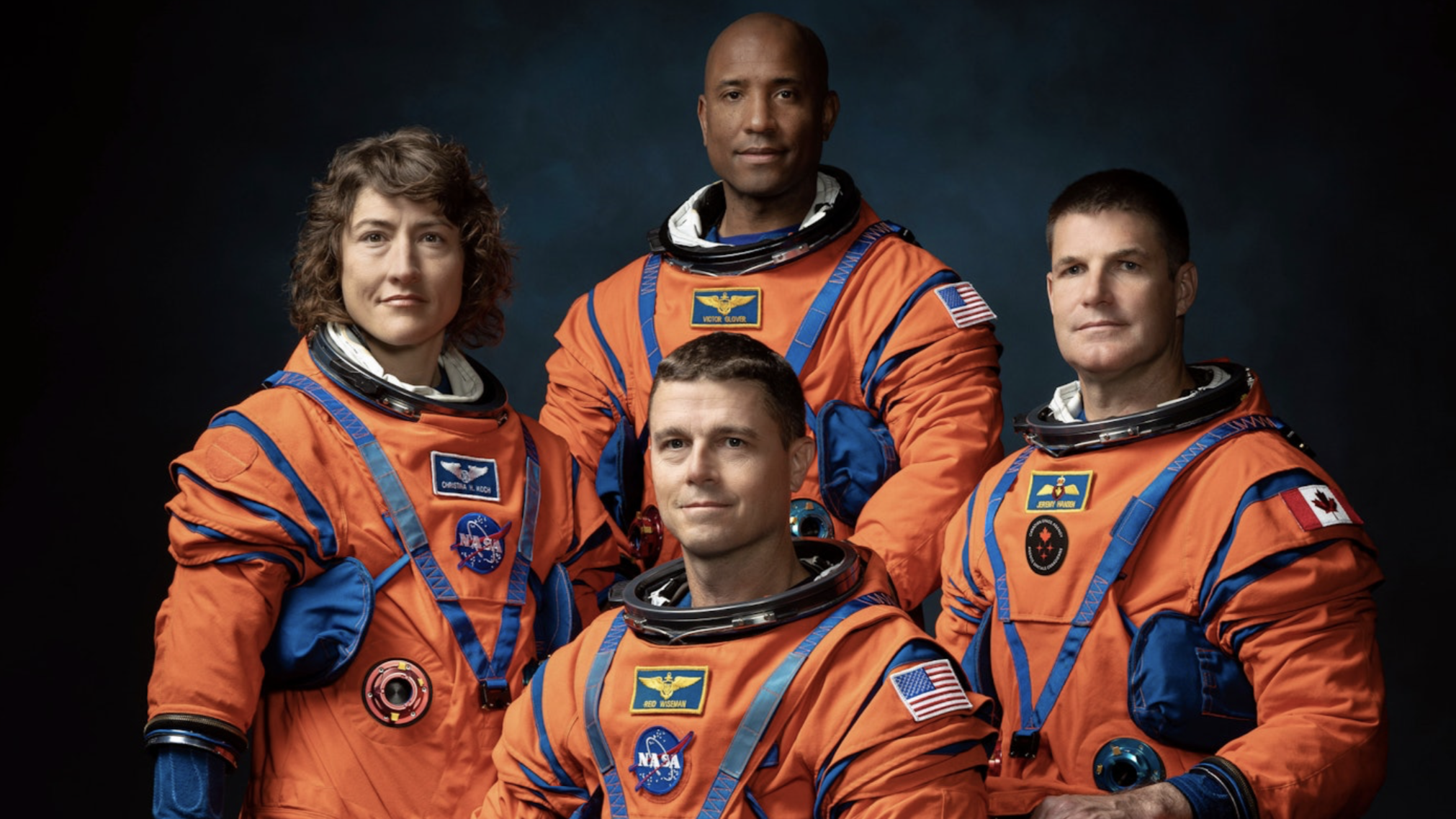
This file photo provided by NASA shows, from left, NASA Astronauts Christina Koch, Victor Glover and Reid Wiseman, and Canadian Space Agency astronaut Jeremy Hansen at the Johnson Space Center in Houston, March 29, 2023. (Josh Valcarcel/NASA via AP)
When people say shoot for the stars, they usually mean that in a figurative sense. But Artemis II—and NASA’s subsequent missions—are making this a reality. The 10-day journey into deep space concluded on April 10, marking the first crewed mission to orbit the moon since 1972. But what does this actually mean and why on earth should we care?
From a scientific and exploratory standpoint, the program itself pushes the boundaries of space travel. The historic journey marks the farthest humans have traveled from Earth, and the first images of the far side of the moon.
The Orion spacecraft, dubbed Integrity by the crew, has successfully demonstrated its capabilities to generate power, navigate, sustain life and withstand the heat upon reentry.
The success of this particular expedition serves as a mark for what is to follow—a return to our moon’s surface. It also celebrates the first woman and first man of color to orbit the moon. A groundbreaking achievement for space discovery, but a long-awaited—and far overdue—moment of representation for 50% of the population, women.
Women have long been excluded when compared to their male counterparts—even though they are equally qualified and capable of performing said tasks—all as a result of the cultural construct that gender determines someone’s superiority and intellectual capabilities. Specifically in STEM, women are vastly underrepresented, making up approximately 26% of workers across all STEM fields.
The lack of representation is not a coincidence; it’s a direct result of the systemic misogyny that has permeated not only this field, but our society. It’s a cycle that feels almost never ending.
Because of the lack of representation and equitable treatment, individuals not only think they have no place or role in those particular fields, but they are fundamentally underserved and mistreated, thus making it feel as though success is unattainable.
“There were male peers of mine who seemed to always get invited to go do things with all the engineers, and I was never included,” said Kristin Kulas, a teaching professor in the Department of Physics and Engineering Physics, on her time in graduate school. “I had to fight for my place to be in the lab.”
Despite the adversity faced by Professor Kulas, she has achieved a great deal in her career, including spending a year as a postdoctoral fellow at NASA Ames Research Center working on mid-infrared instrumentation for the SOFIA project. In addition to her work on how galaxies form and evolve over time, she is the mom of two daughters and a dedicated mentor to the Santa Clara University student body.
Christina Koch—a mission specialist aboard the Orion spacecraft for Artemis II—is both the first woman to orbit the moon, and the record holder for the longest single continuous spaceflight by a woman, making her arole model for a new generation of aspiring astronauts.
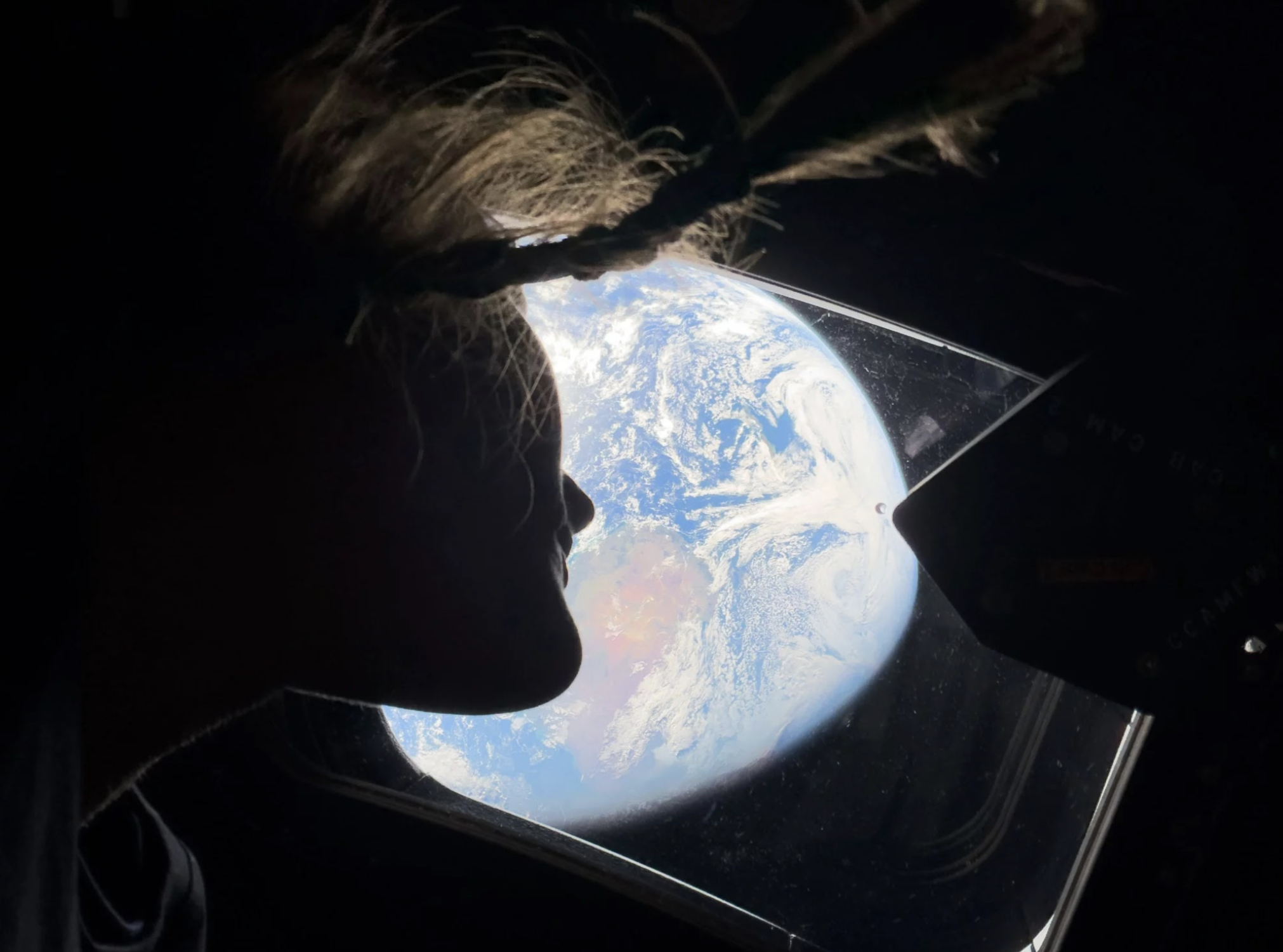
Astronaut and Artemis II mission specialist Christina Koch peers out of one of the Orion spacecraft’s main cabin windows, looking back at Earth, as the crew travels towards the moon on Thursday, April 2, 2026. (NASA via AP)
During the Artemis II press conference on April 17, Koch was asked about the fact that language from NASA’s website stating that the Artemis program would see the first woman and first man of color on the moon was removed.
The change, which occurred in March 2025, came as a response to President Donald Trump’s procedure to “eliminate diversity, equity and inclusion (DEI) practices at federal agencies.” While the language has shifted to accommodate Trump's policy, Koch's response points to a deeper commitment within NASA that has and will continue to exist: “everyone who has a dream gets to work equally hard to achieve that dream and if we are not going for all and by all, then we are not answering humanity’s call to explore.”
It seems Trump's initiative lacks understanding—a one-sided perspective as a result of his own privilege. DEI aims to provide equity to communities who have been—and still are—marginilized; essentially a means to hold organizations and companies accountable for the systemic oppression that has long existed in the United States.
“People aren’t going to be able to be included until they feel like they belong,” Professor Kulas said when I asked her why this launch is so important. “And they're not going to feel like they belong until they see that representation.”
Women and girls across generations are watching, and when they don’t see themselves represented, it reinforces the idea that their role is already predetermined by their gender.
Representation matters not just for the people who should be seen, but because when those physical or systemic barriers prevent an individual the right to be heard or noticed, the question must be asked: what insight are we losing?
Too often participation has been restricted. There are limits on who can partake in certain tasks, prejudices and stereotypes that shape who is acknowledged and who is dismissed. Artemis II is an exciting point in human history, displaying the capabilities of humanity when we push past those self-implemented boundaries. The mission could have a lasting impact because it’s reminding us what is possible when opportunity is not limited by identity.