Bringing AI to Life in the Classroom: How Dr. David Anastasiu is Shaping the Future of Tech at Santa Clara University
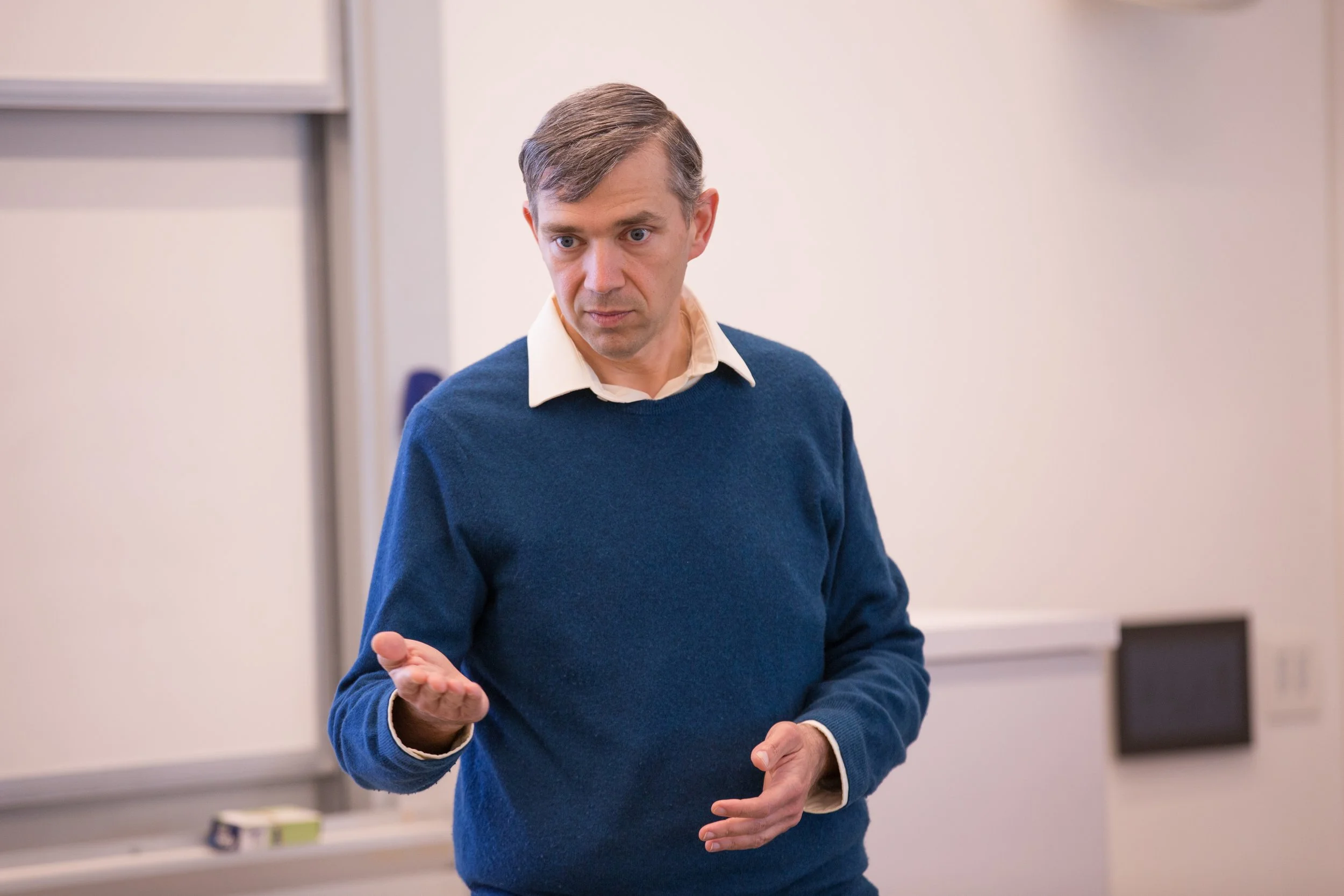
Photo by Elaine Zhang. Professor Anastasiu answering questions during a lecture.
When you step into one of his classes—such as Deep Learning, Machine Learning, or Algorithms—you’re not just encountering another lecture. You’re experiencing the culmination of a lifelong passion for computing, hands-on problem solving and an educator’s genuine joy in seeing students discover their potential.
Dr. Anastasiu’s journey began long before graduate school. “I played with computers all my life,” he recalls, earning certification as an HP technician and building networks and machines from scratch. After stints in pharmaceutical tech support and systems integration, he recognized a gap in available software tools. Undeterred by the lack of a formal degree, he taught himself to code, later returning to university to earn his bachelor’s and, ultimately, a Ph.D. in computer science from the University of Minnesota. His early research in information retrieval naturally evolved into data mining and machine learning—fields he taught at San Jose State University before joining our faculty.
In the classroom, Dr. Anastasiu is known for making complex topics accessible. In his Deep Learning course, which explores how neural networks can be used to model and solve problems in vision, language and beyond, he balances big‑picture overviews with deep dives into advanced concepts. Students with varied backgrounds work together to tackle real‑world AI challenges. A strong believer in ethical AI, he dedicates an entire lecture to the societal implications of machine learning systems, encouraging students to question biases in data and design. “Responsible AI is as crucial as technical skill,” he says.
When he’s not coding or grading, Dr. Anastasiu channels his love of challenge into hiking: He’s summited Mount Whitney, Fuji, Olympus, and Pompeii’s volcano—adventures he likens to research, where perseverance brings the greatest rewards. His favorite moments, though, are the “aha!” instances when students conquer concepts they once thought impossible. “Their joy becomes my joy,” he says.
As director of the High‑Performance Computing Center, he’s continuously expanding access to graphics processing units—or GPUs—so students never miss a chance to train their models. Looking ahead, he believes automation will reshape routine work but boost software development’s productivity through large language models. His advice to aspiring AI engineers: “Tackle problems yourself first, then use AI tools responsibly, with proper attribution.” Under his mentorship, students discover not only what AI can do, but what they can achieve.