Anonymity of Fizz Proves Dangerous to Student Life
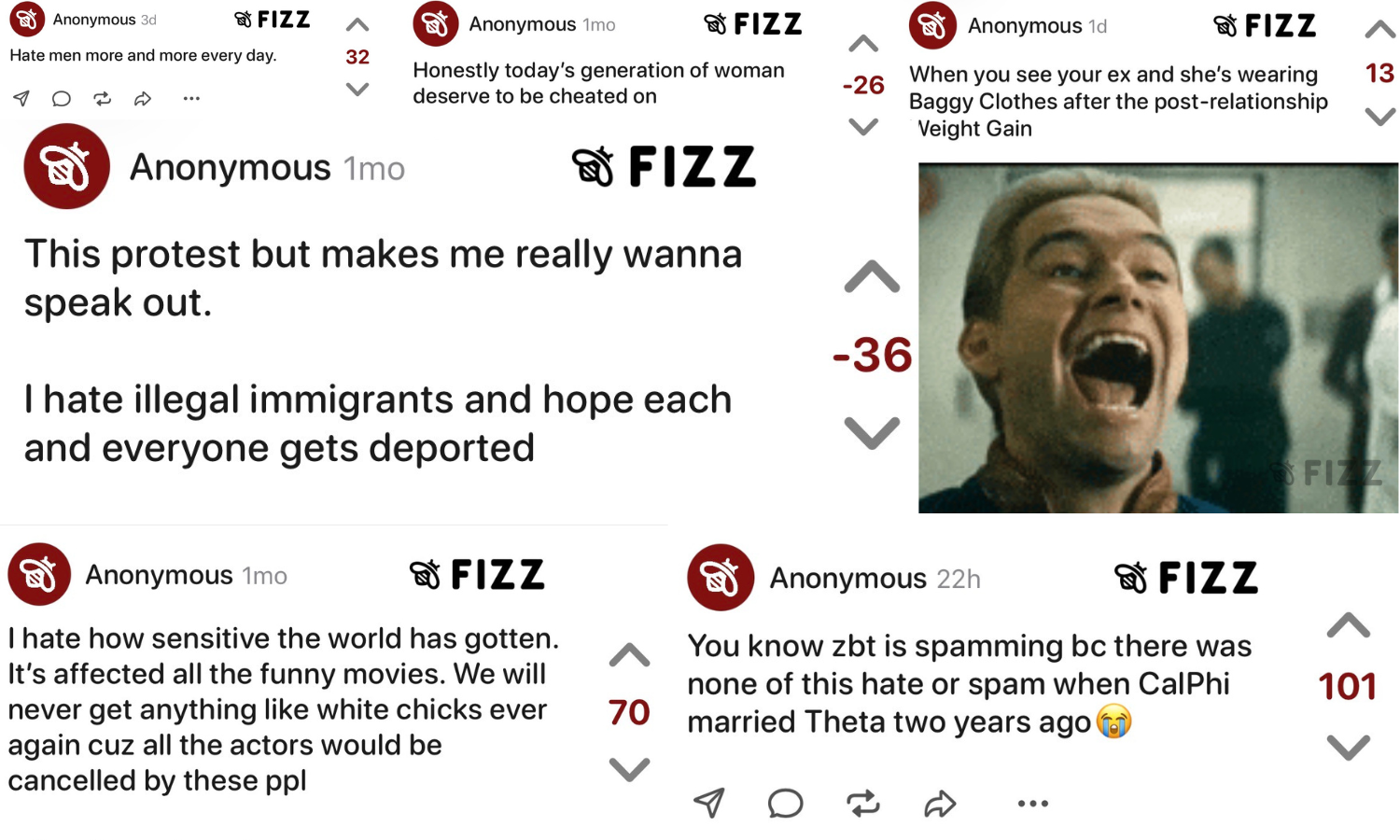
(Jack Kyle/The Santa Clara)
It was in my East Asian Literature and Christianity class that I figured out an appropriate way to verbalize my feelings about Fizz—the most notorious social platform on Santa Clara University’s campus. The worksheet we were completing included an interesting phrase: “outrage economy.”
The term is used most often to describe the algorithms that social media platforms use to determine which posts come across your timeline. On a platform like X, it’s rare to see quality and informative posts on your feed. Rather, inflammatory posts about polarizing topics such as political controversy or pop culture drama are pushed to the top.
Fizz is a campus-wide social platform that students can only sign up for by logging in with their Santa Clara University email address. Once on the platform, posting is completely anonymous. Most users choose to post without ever creating a username for themselves.
Every Santa Clara University student polled in Benson Memorial Center asked to remain anonymous when discussing the controversial app, with one quipping, “in honor of Fizz, I’ll stay anonymous.”
Most claimed to use the app more during their underclassmen years to find funny content, memes, and information about classes and events around campus.
A recent incident involving social media drama spilling into the University’s student life involves Ring doorbell footage of a student stealing a skateboard. In the days following, the student’s name was the most popular search, with many anonymous users pitching in their thoughts on the matter—sensationalizing and disparaging not only the act, but the person.
“People post videos of others with no shame,” said one student about the incident.
The danger here lies in the proximity and lack of accountability. Take X, for example. Your voice is so small that anything you say is bound to fade into obscurity. But on Fizz, all it takes is attaching a photo or video to your post and it is bound to skyrocket to the top of the feed. The ability to start a rumor or ruin someone’s reputation is within the grasp of almost every student on this campus.
“What she did is wrong, but it was dragged out too far,” said another student. “It was a simple mistake. The problem with anonymity means anyone could have posted that.”
No matter the time of year, logging onto Fizz is sure to present you with all kinds of drama. During the fall quarter, the messageboard is flooded with different fraternities claiming themselves as the best, disparaging everyone else in the process. Every time class registration comes around, spats about which students are most deserving to register first populate the board.
There is a notable difference between Fizz and other popular social platforms. If you get into an argument with someone on Reddit, the chance that you are going to ever meet them in person—or even know their name— is little to none. But with Fizz, the people you are belittling are the same ones sitting next to you in class.
“Part of it stems from the moderation itself,” said one student. Fizz moderators are trained student volunteers tasked with ensuring posts follow the app’s Community Guidelines. “For bigger issues like stalking, those are taken down pretty fast. For more tame problems, they don’t do much.”
During anti-Immigration and Customs Enforcement protests, he continued, multiple posts lit up Fizz claiming the protests should not happen on campus. “That should have been handled,” he said.
It’s unreasonable to recommend that the app lose its anonymity completely. Moderation, after all, is very subjective, and some inflammatory posts will remain up for hours while others are removed almost immediately.
There should be objective, standardized policies that protect both anonymity and students’ wellbeing. So, for any Fizz moderators out there (I know you’re reading this), maybe the change isn’t that hard to make.