SCU EMS Drill Tests Students Ability to Respond to an On-Campus Crisis
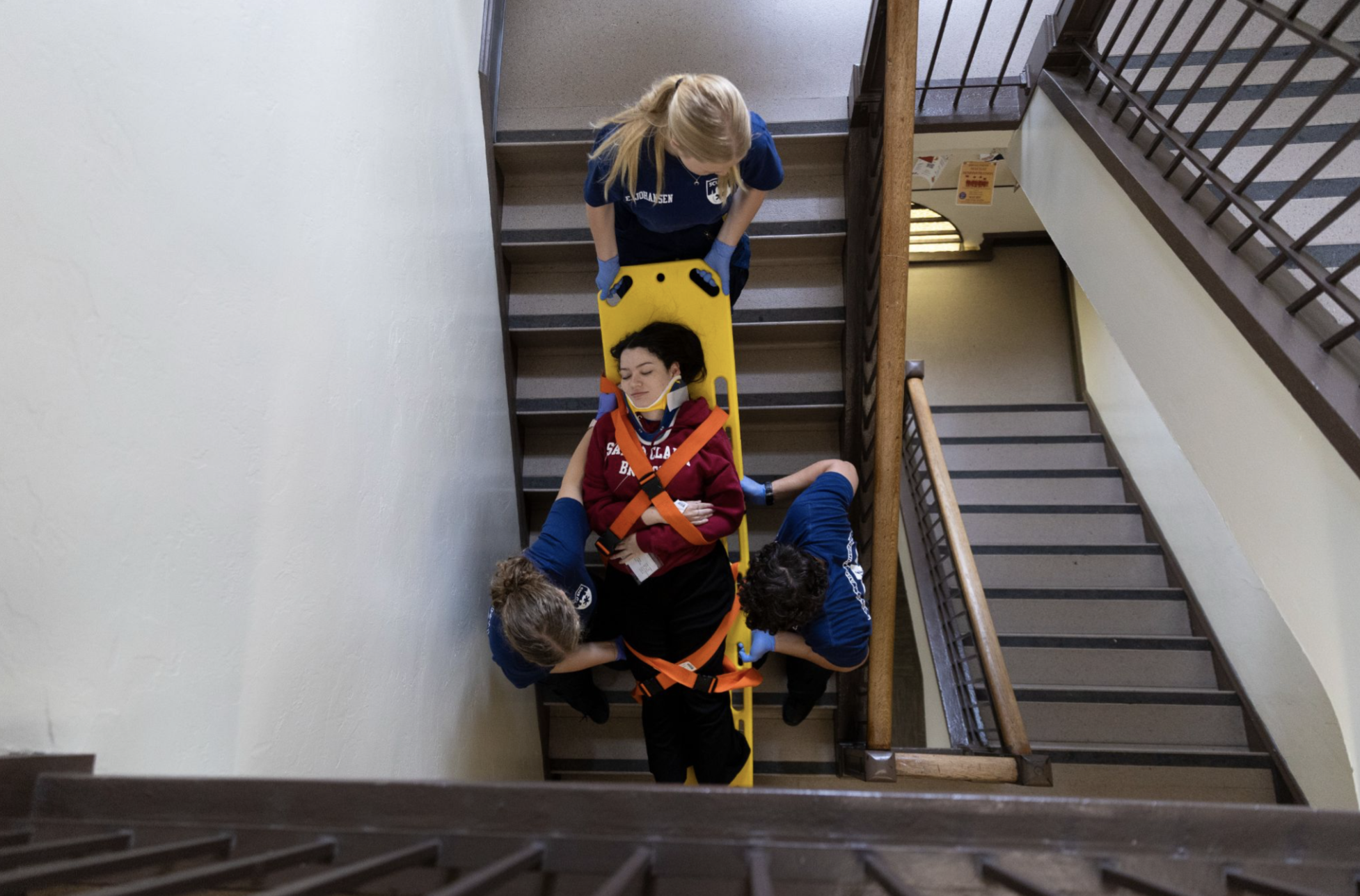
Members of Santa Clara University Emergency Medical Services (SCU EMS) carry a patient down the stairs of O’Connor Hall during their Mass Casualty Incident (MCI) training drill on Saturday, May 2, 2026. (Nina Glick/The Santa Clara)
Outside O’Connor Hall Saturday morning, members of Santa Clara University Emergency Medical Services applied fake blood and makeup onto fellow students.
They were preparing for their annual Mass Casualty Incident training drill, and those fellow students were preparing to be their patients.
The drill’s purpose is to test their ability to manage a large-scale medical disaster on campus. In the case of a mass casualty incident, SCU EMS alongside Campus Safety likely would be the first on the scene, although they are limited in what medical care they can provide.
The simulation began with an announcement that the building had been cleared by Campus Safety, allowing the EMS team to enter the building.
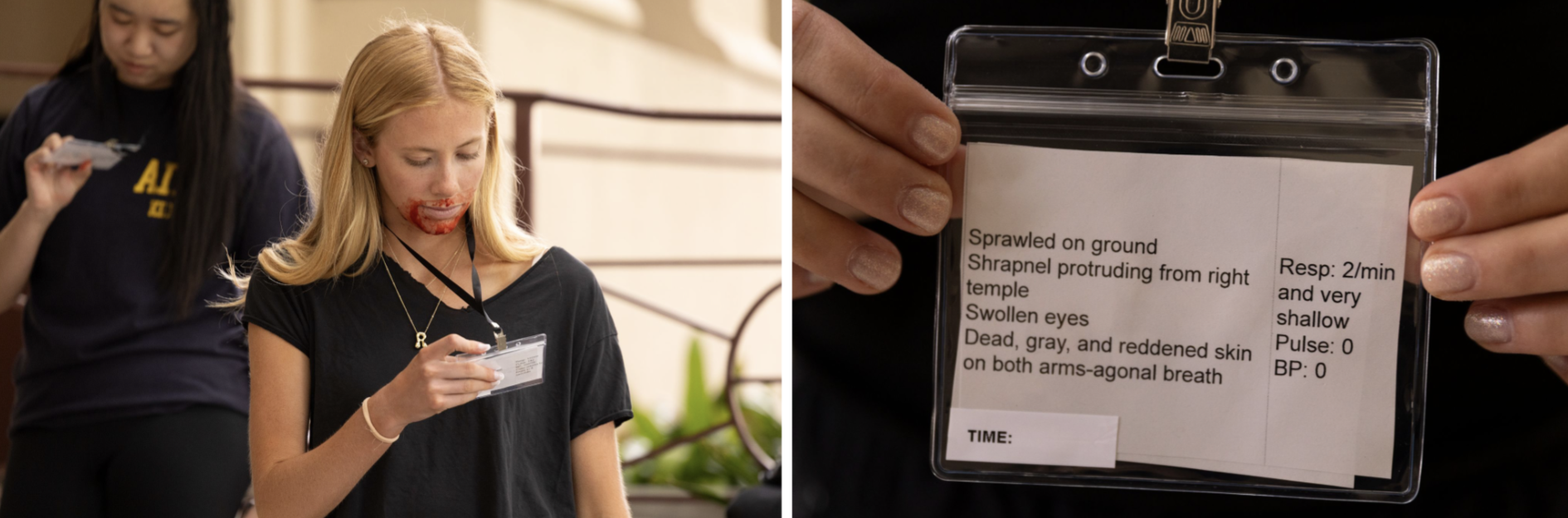
Left: A patient looks at her patient card before the drill. Right: Carolyn Bayram ’26 holds her patient card that describes the symptoms of the role she played. (Nina Glick/The Santa Clara)
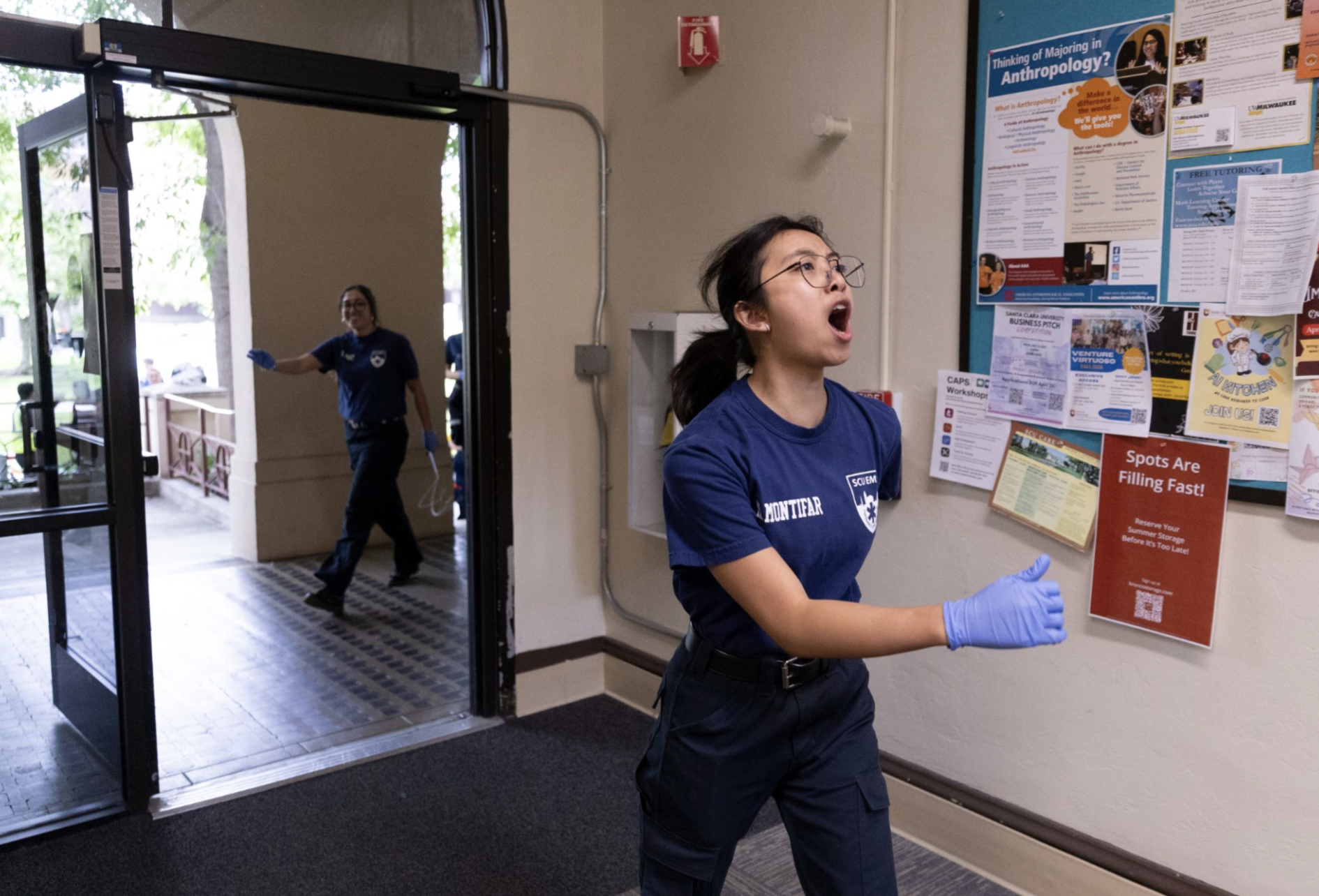
Mia Montifar ’28 yells to patients while entering O’Connor Hall at the start of the drill. (Nina Glick/The Santa Clara)
24 students volunteered to act as patients. Carolyn Bayram ’26 said before the drill “I never get an opportunity to be a dead person. Which I now am, dead.”
They simulated an earthquake situation in which students were in the building. Beforehand, members of EMS’ leadership team turned over chairs and played recordings of screams in classrooms.
Teams of four went into O’Connor Hall, first tagging patients as deceased, immediate, delayed or minor. From there, they extricated patients based on immediacy outside to the lawn for treatment starting with the patients tagged as immediate, the most urgent, then delayed.
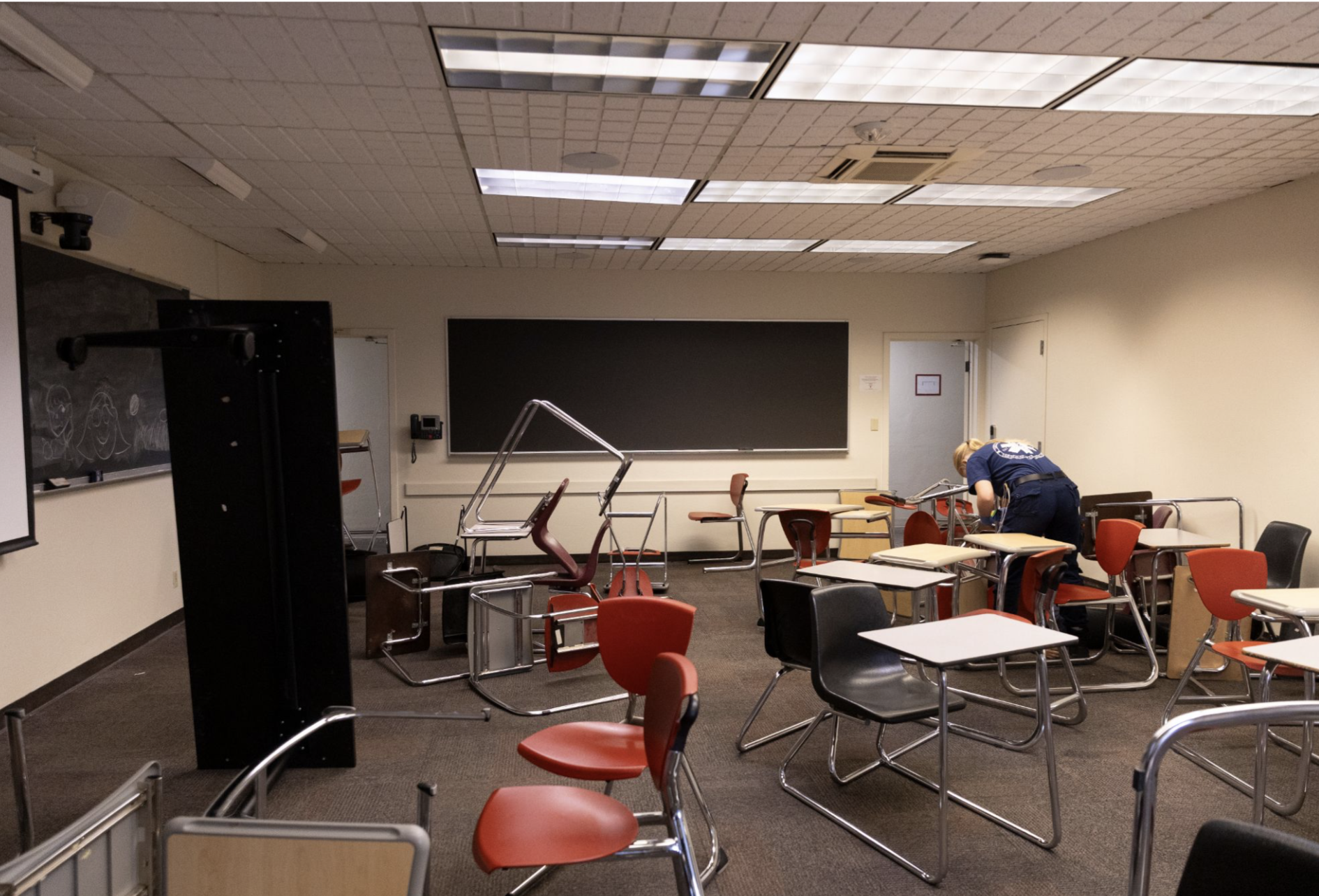
A member of SCU EMS tags a patient in a classroom on the second floor of O’Connor Hall. (Nina Glick/The Santa Clara)
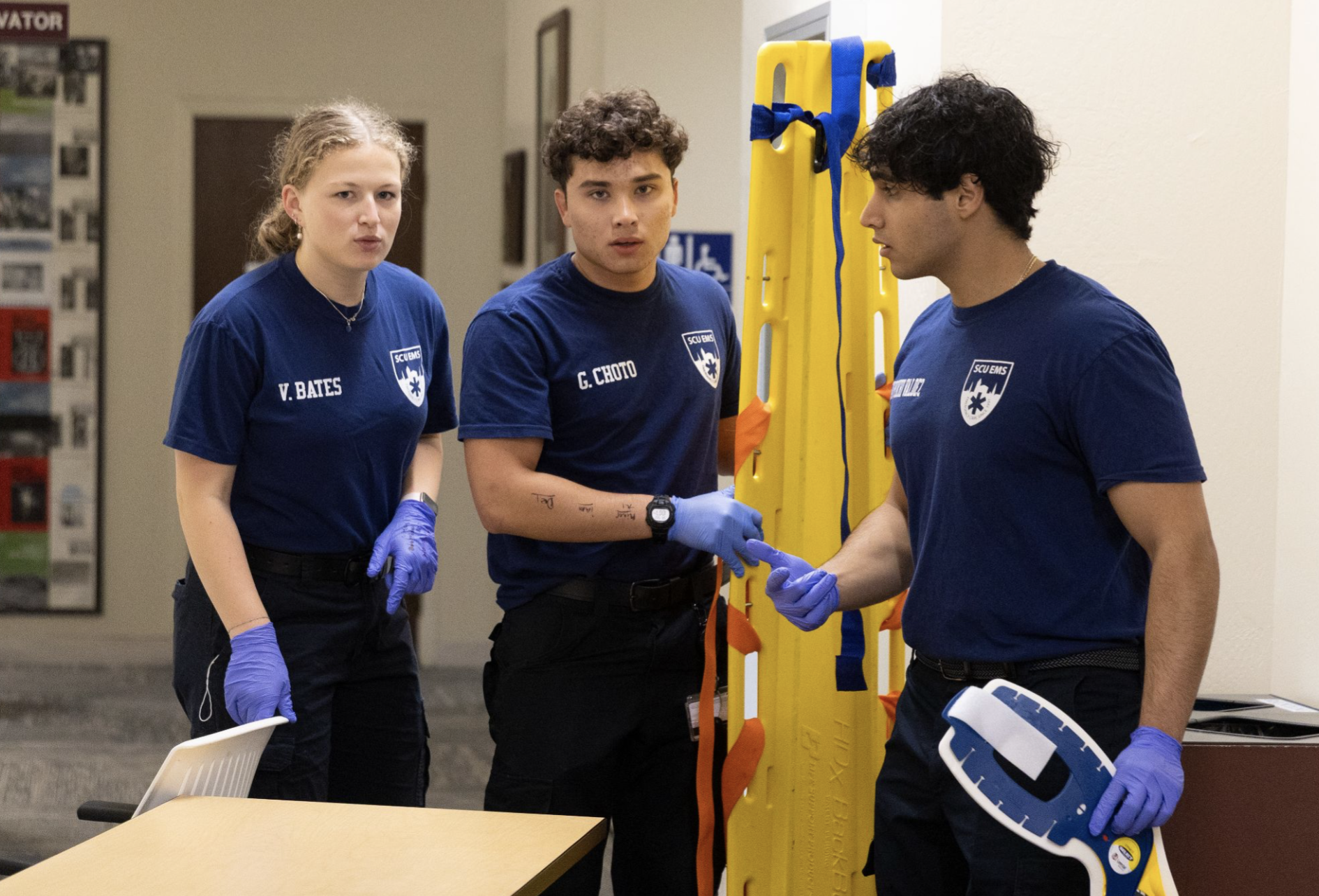
Vivian Bates ’28, Giovanni Choto ’27 and Parsa Farokhi Valdez ’28 work together to determine where the patient they were sent to extradite is. (Nina Glick/The Santa Clara)
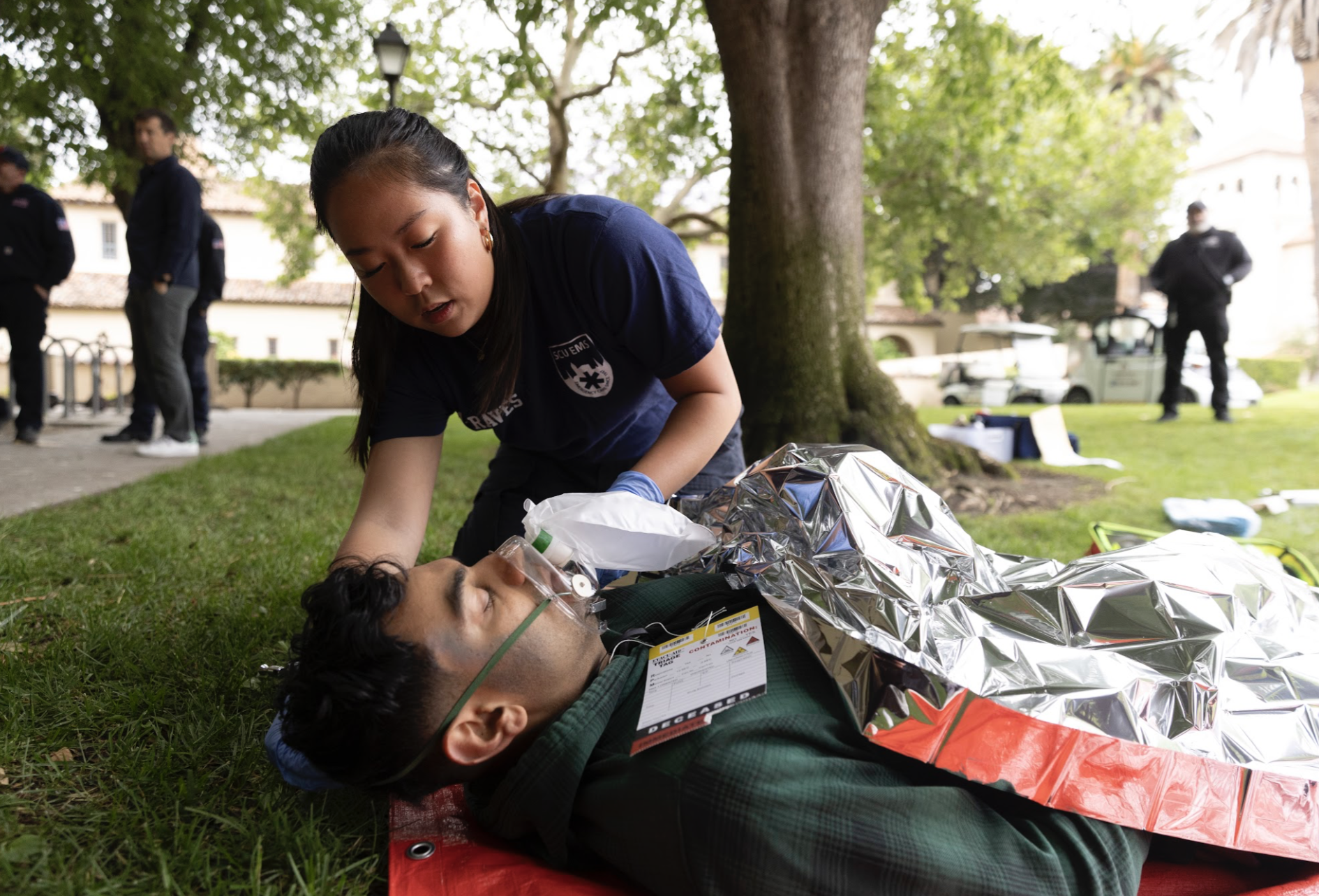
Michelle Graves ’28 places an oxygen mask on a patient on the immediate tarp. (Nina Glick/The Santa Clara)
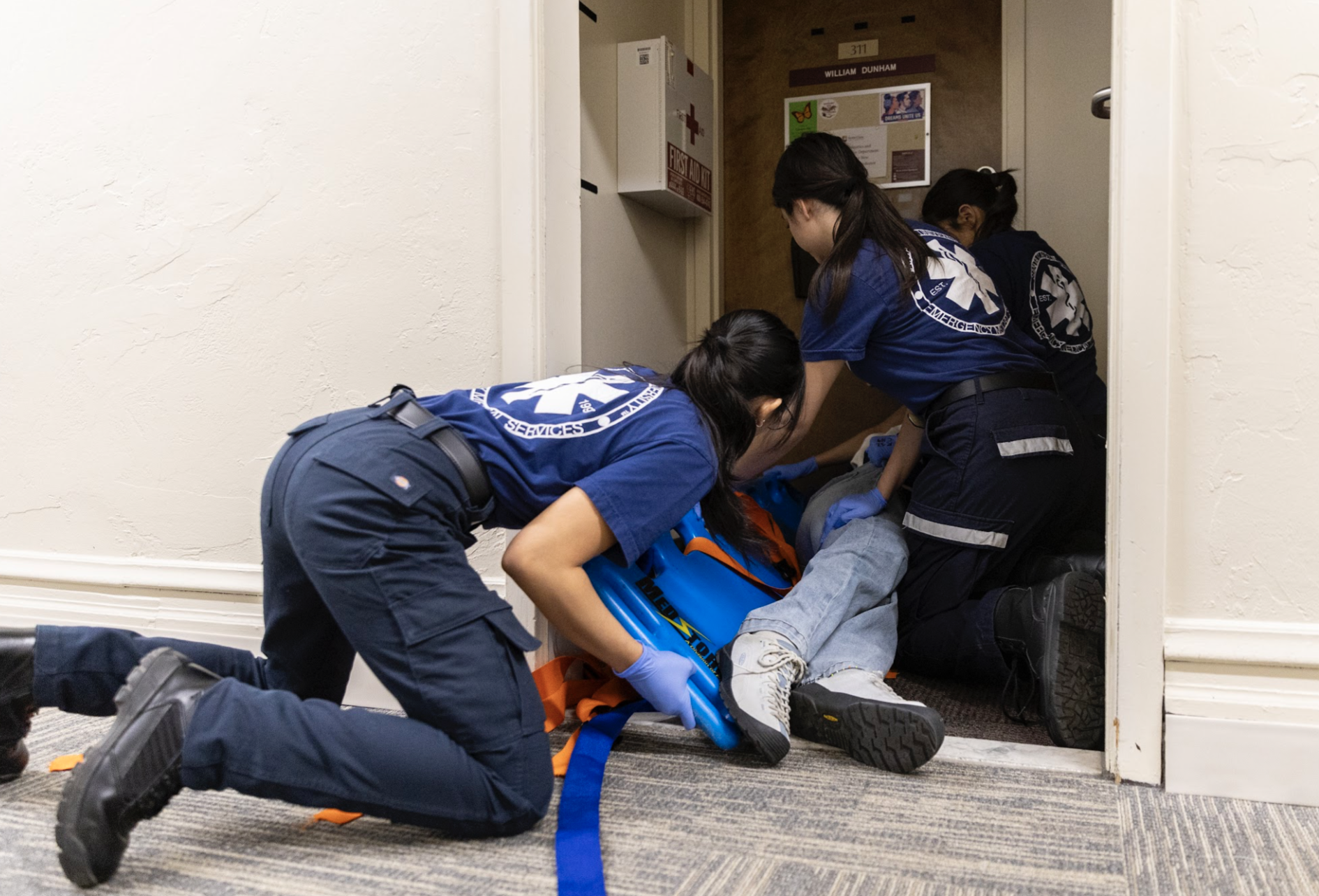
A group of SCU EMS members move a patient onto a back board. (Nina Glick/The Santa Clara)
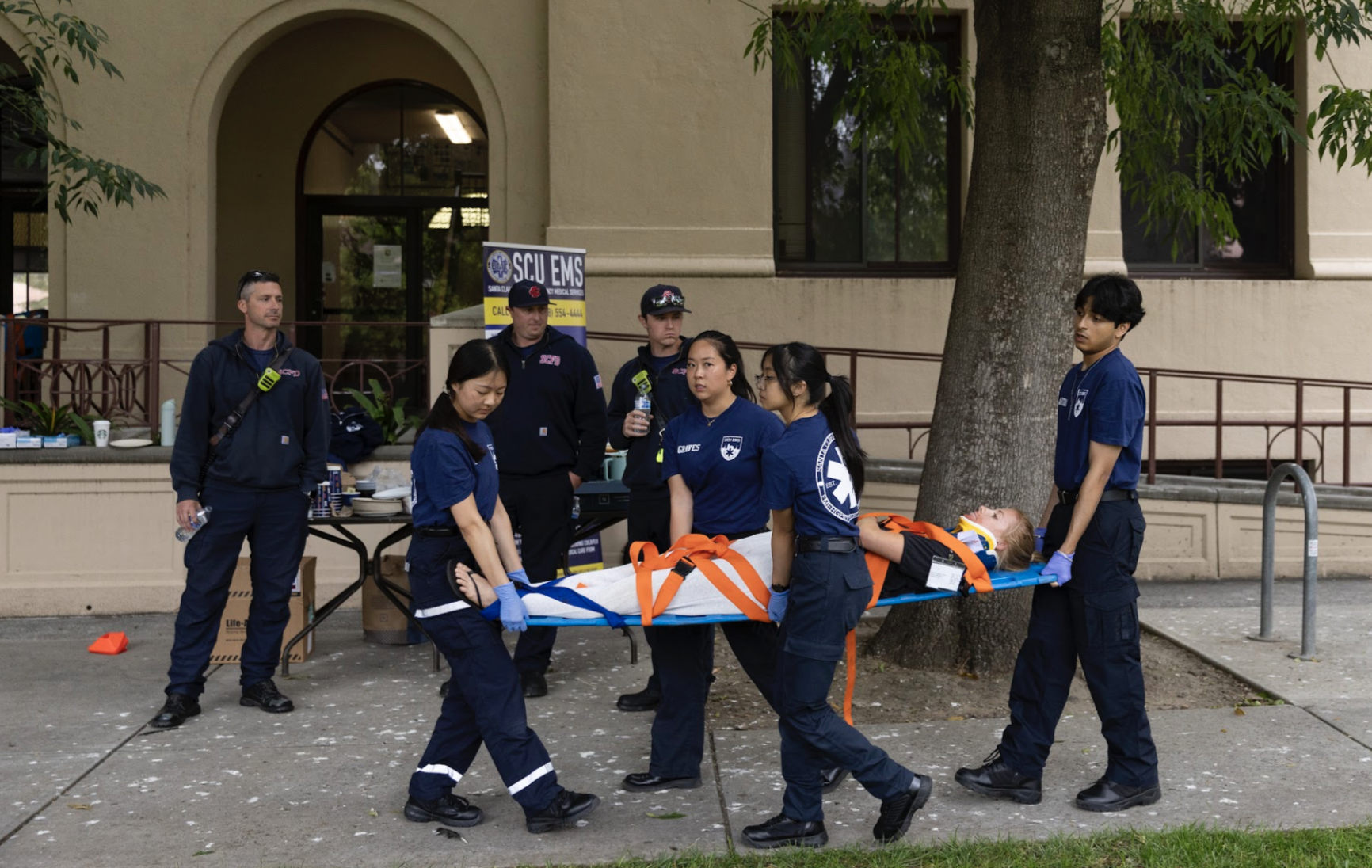
Emma Li ’28, Michelle Graves ’28, Mia Montifar ’28 and Amay Malhotra ’28 carry a patient on a backboard while firefighters from the Santa Clara FIre Department look on. (Nina Glick/The Santa Clara)
In the end, they extricated all 24 patients in less than an hour. SCU EMS Assistant Director Claire Richart ’27 congratulated the EMS team on their performance in the simulation, saying it was “pretty good” during the group’s debrief. All but one patient was diagnosed and tagged correctly.
“Extrication was a little slower than I’d like, but that’s why we prepare,” said Max Gundlach ’27, former director of SCU EMS, who led the drill. The leadership team felt they did well considering responders didn’t know what situation they would be addressing prior to the drill.
Incoming SCU EMS Director Callum Bolitho ’28 said “there’s a lot of good patient assessment skills that we get to practice here that we don’t get to practice as much on our calls, just because of the nature of our typical calls aren’t very traumatic injury focused.”
Firefighters from the Santa Clara Fire Department also provided the group positive feedback after observing the drill saying that “it was very obvious that you guys had very close attention to detail.”
“That’s like a real scenario. You guys are probably going to be utilized for patient movers or triage for the most part, and potentially put into some treatment areas if we ever came over here for a big MCI,” they added.
Bolitho said that “having the fire department here added some pressure for us, which was good to have more of an audience to perform for, especially a group that really knows what they’re doing and does this for a profession.”
The team was also prepared for other mass casualty incident scenarios, like fires and school shootings, that they train in other mass casualty incident drills.
This simulation focused on earthquakes, which is a particular risk as there is a 72% chance that the Bay Area will experience an earthquake over a magnitude of 6.7 in the next 17 years, according to a 2016 California Geological Survey report.
The shooting at Brown University this school year also highlights the need for preparation for a potential campus shooting on the Mission campus. According to the Gun Violence Archive, shootings at colleges and universities has increased from 36 in 2021 to at least 75 last year.
Whatever the potential disaster could be, the annual MCI drill helps ensure that members of SCU EMS are prepared in the face of emergency.