Curled Up With a Good Video Game
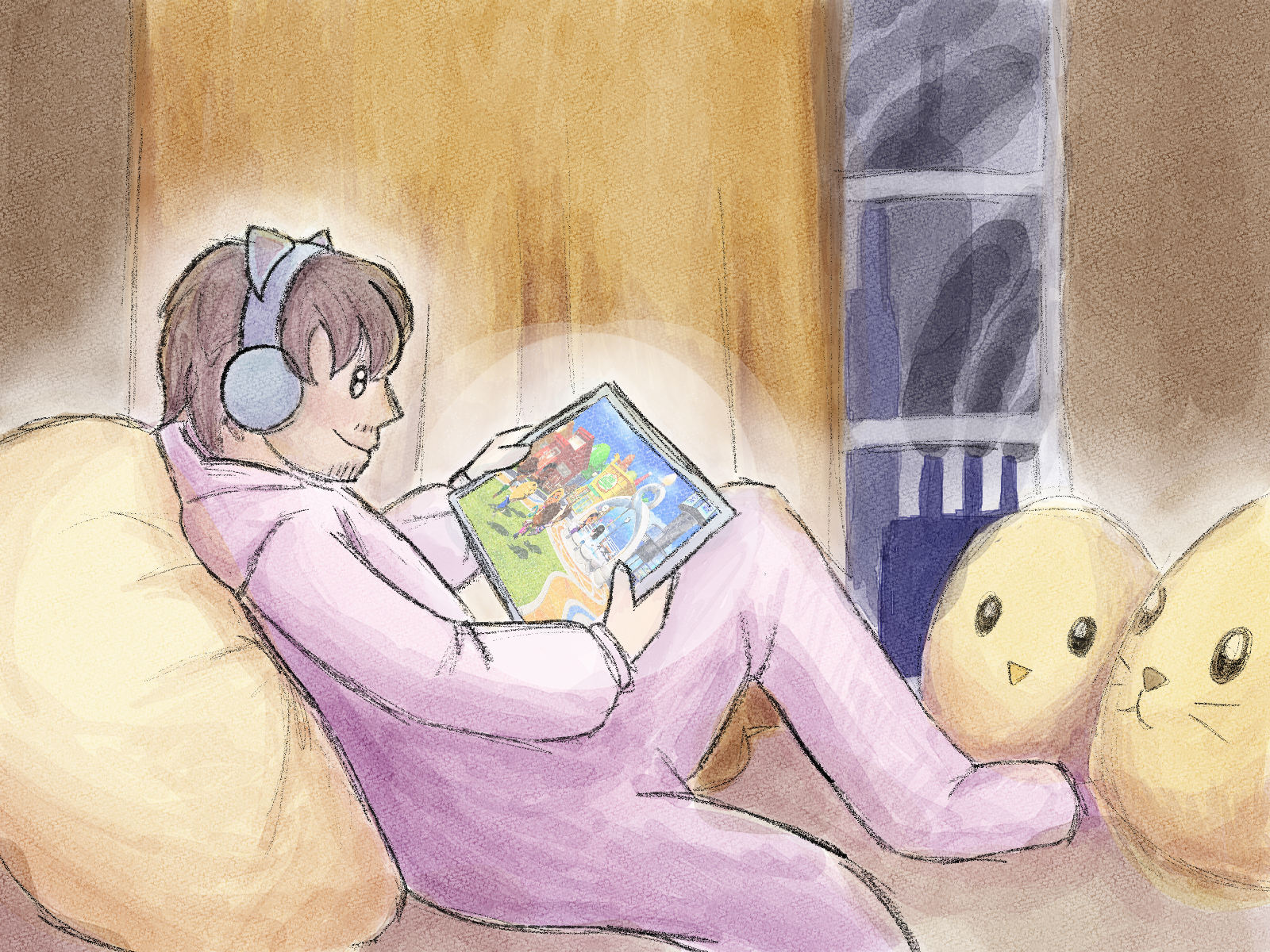
(Jenell Theobald/The Santa Clara)
After a long day of classes, many college students turn to video games to unwind.
Across social media, cozy games have become increasingly popular and visible. For many players, games such as Tomodachi Life, Animal Crossing and Stardew Valley offer a form of entertainment centered on customization, creativity and low-pressure gameplay.
The genre has also seen significant growth in recent years. From 2022 to 2025, the percentage of games identifying themselves as “cozy” in their Steam descriptions increased from 0.4% to 3.1%. Unlike competitive or skill-based games, cozy games often allow players to build communities, decorate spaces and create characters at their own pace.
What Makes a Game Cozy?
While cozy games are often recognized for their visual style, students said their appeal also comes from their gameplay structure. Many of these games do not require intense competition or advanced gaming experience, making them accessible to casual players.
“Cozy games usually have low skill floors, which makes them accessible for beginner and casual gamers,” said Amy Zheng ’27. “There’s no pressure to have the best playstyle or optimize the fun out of playing.”
Carlynda Hsu ’26 pointed to customization as another factor that contributes to the genre’s popularity.
“I believe that people may find Tomodachi Life cozy because of the new customization features in the game,” said Hsu.
Although cozy games are sometimes associated with aesthetics that may be perceived as feminine, students noted that the genre appeals to a much broader audience.
“I believe it’s not just a factor that attracts female gamers, but everyone in general,” said Hsu. “You can make your island as cute as you want, as aesthetic as you want, or as raunchy as you want.”
Others noted that the games may appeal to players who are more interested in creativity than competition.
“I think the games attract anyone who is interested in low-stakes gameplay with a large variety of customization options,” said Eric Wei ’27. “It gives players the freedom to express themselves in their own ways without judgment.”
Students also discussed how cozy games may feel more welcoming than some traditional competitive gaming spaces.
“Competitive multiplayer games like League of Legends or Counter-Strike tend to breed toxicity in general,” said Zheng. “But it’s especially discouraging for women and minority groups who are already discouraged from playing those kinds of games.”
Nostalgia, Comfort and Familiar Games
Students also identified nostalgia as a factor in the continued popularity of cozy games.
“I don’t think nostalgia is inherently good or bad. It’s good that old IPs are getting new, improved titles,” said Zheng. “Nostalgia becomes a problem when creators see it as a free pass to make bad or cash-grabby games, knowing people will still buy it for the nostalgia factor.”
Other students said nostalgic games can provide a sense of comfort during uncertain periods of life.
“I think given the state of the world right now, a lot of the people finding solace in nostalgic older games want to live out their inner child,” said Hsu. “Since we are currently in a time of so much uncertainty when it comes to job stability and the future, it’s nice to have a piece of my childhood revamped so I can still enjoy it as an adult.”
For some students, cozy games also provide a temporary break from academic and personal stress, offering a space for creativity, control and relaxation.
Through customization and non-competitive gameplay, cozy games allow players to engage with virtual worlds at their own pace. For students balancing academic work and busy schedules, cozy games can offer entertainment centered on comfort rather than competition.