A Celebration of Life in Honor of Death
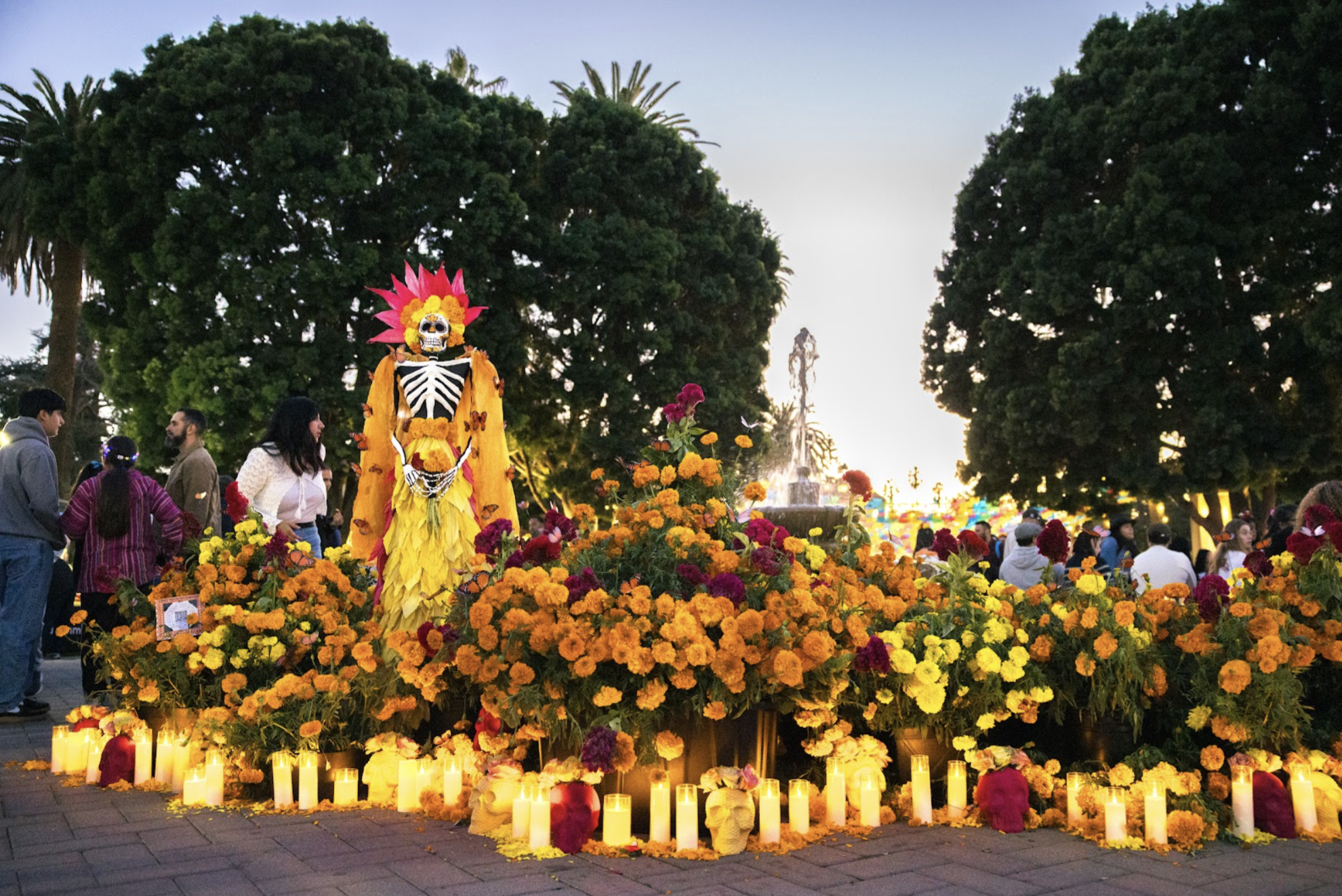
A large display of candles and cempasúchi flowers adorn the fountain outside Vari Hall. (Elaine Zhang/The Santa Clara)
“Camino de los Muertos” was hosted on the Santa Clara University campus, honoring loved ones connected to the Santa Clara community this past Saturday, Nov. 1.
The event ran from 5 p.m. to 9 p.m., featuring a variety of performances, vendors and scenery—immersing attendees in the culture of Día de los Muertos as it’s celebrated in Mexico and in Latino communities worldwide.
The event broke its inaugural record in 2024, exceeding 2023’s 3,000 participants with a record-breaking 7,000 in attendance. Official numbers for this year have not yet been released, but based on its collaboration with the Bay Area’s Univision 14 and the Mexican Consulate, it is believed to have surpassed last year’s turnout.
The Performance
Over the course of the evening, several performances took place in the Sobrato Campus for Discovery and Innovation courtyard. With Univision 14 at the helm, the space was closed off for each group to perform, creating a focused atmosphere for attendees.
Dance, a central part of Día de los Muertos, honors the dead and welcomes their spirits, often serving as a form of bodily remembrance that embodies the traditions of the deceased.
Ballet Folklórico featured several new dancers performing regional styles from Jalisco, Guerrero, Sinaloa, Michoacán, Veracruz and Baja California—some pieces reflecting colonial influence, others highlighting resistance through the preservation of Indigenous tradition.
The evening also included a Catrina costume competition. La Catrina—“elegant skull”—is a feminine embodiment of death, reminding viewers that death is natural and inevitable. Many Mexican women, myself included, choose to embody her as a way of connecting with tradition.
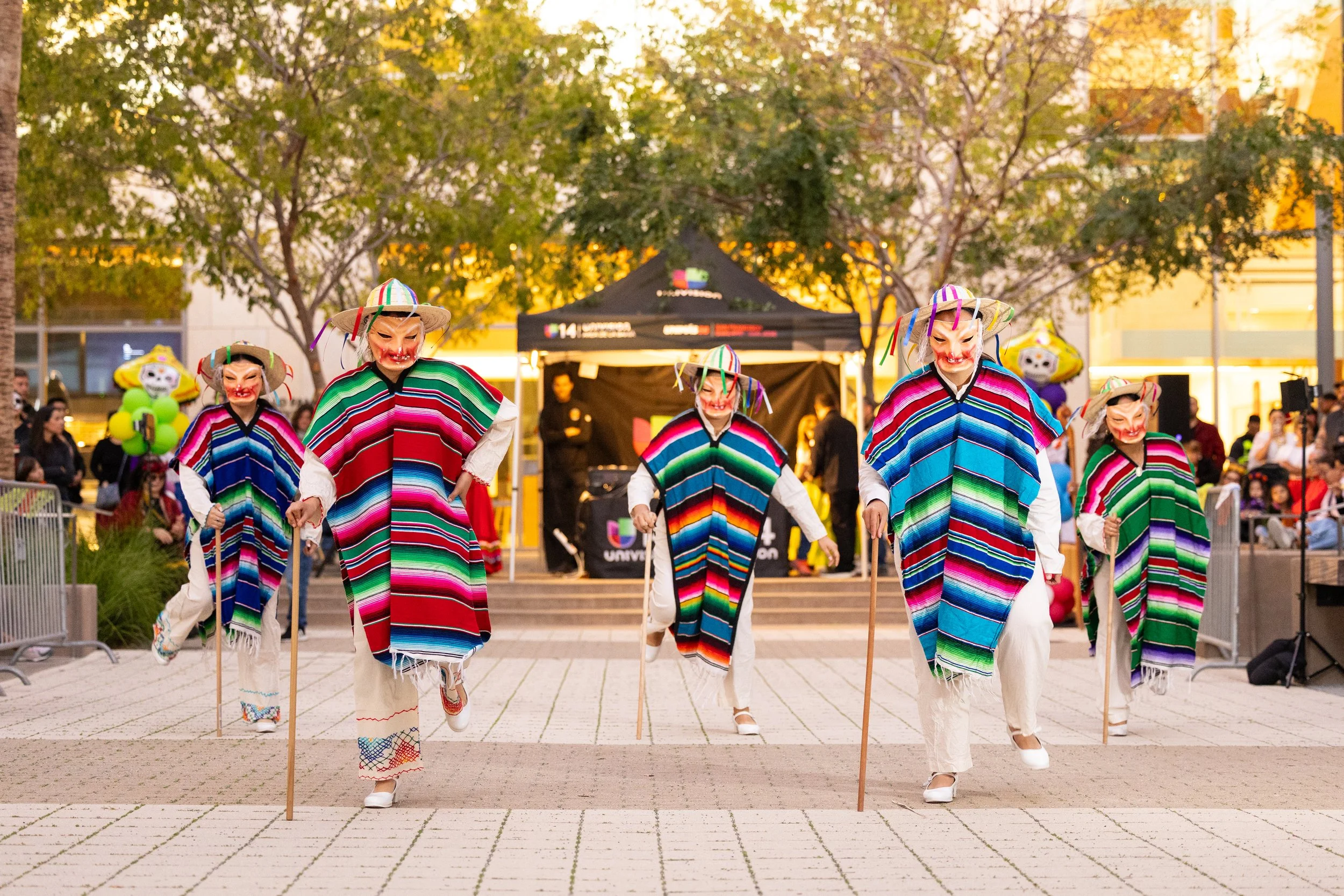
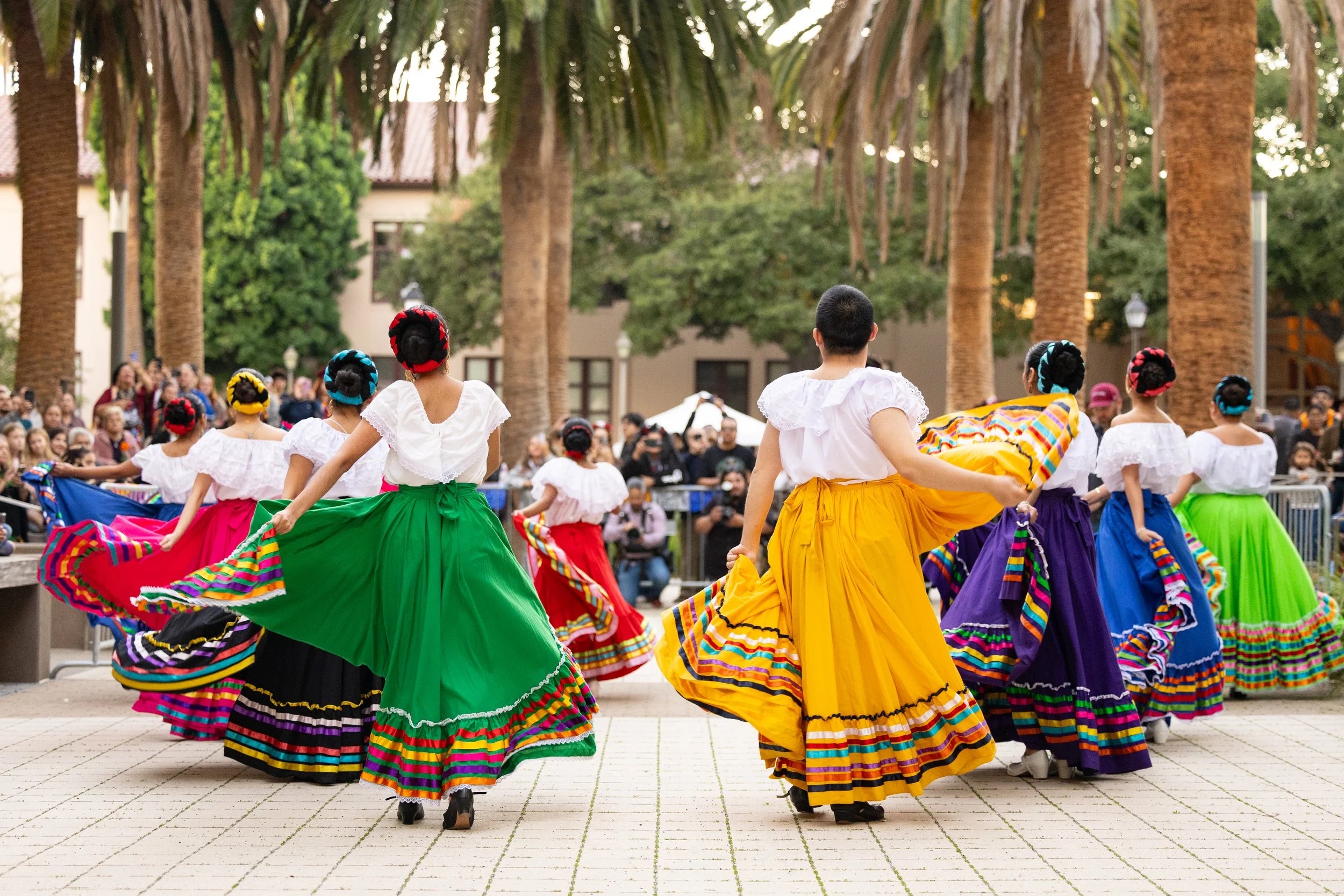
(Left) Ballet Folklórico dancers perform Danza de los Viejitos from Michoacán while (Right) Jalisco dancers fan their skirts in the Sobrato Campus for Discovery and Innovation courtyard. (Nina Glick/The Santa Clara)
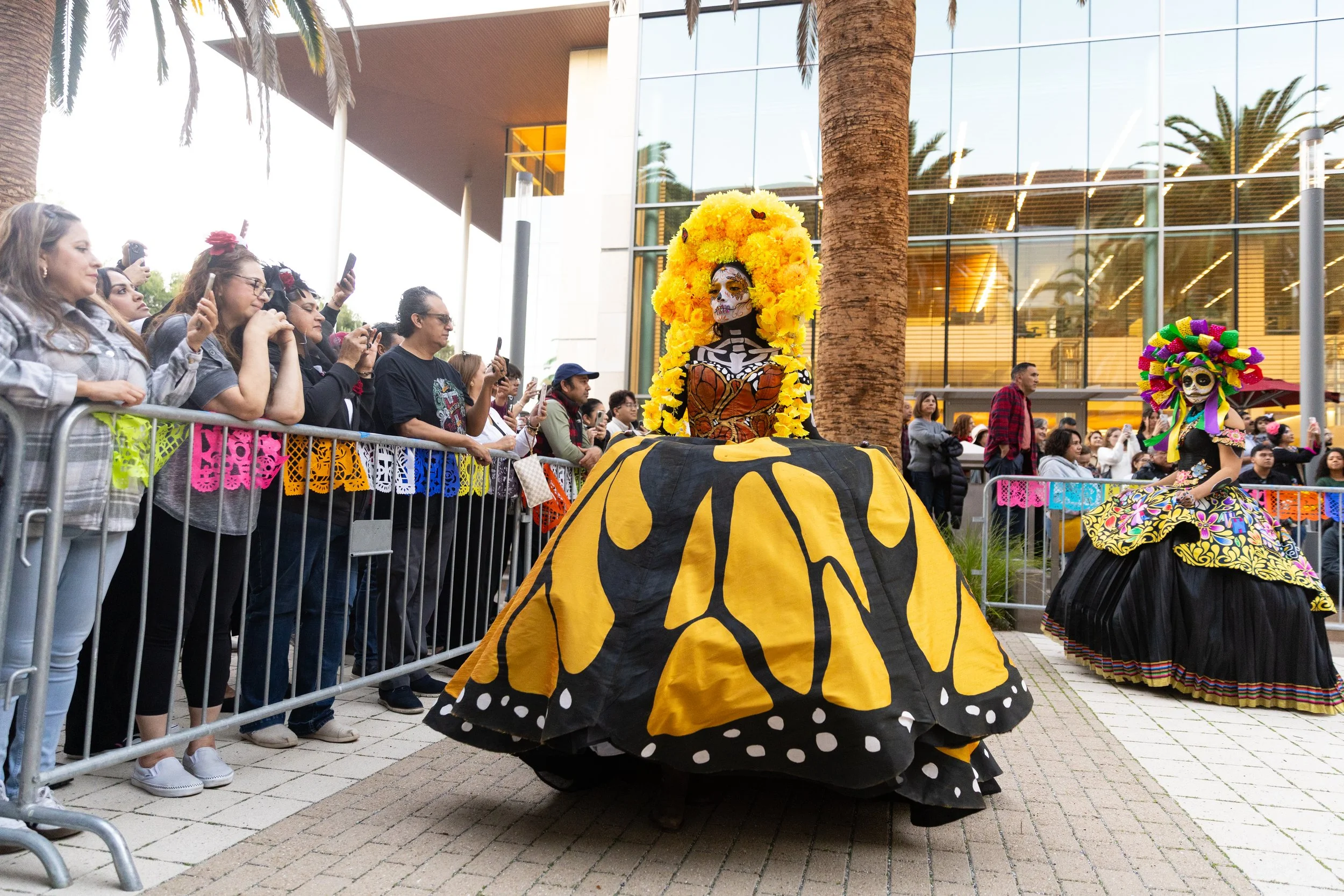
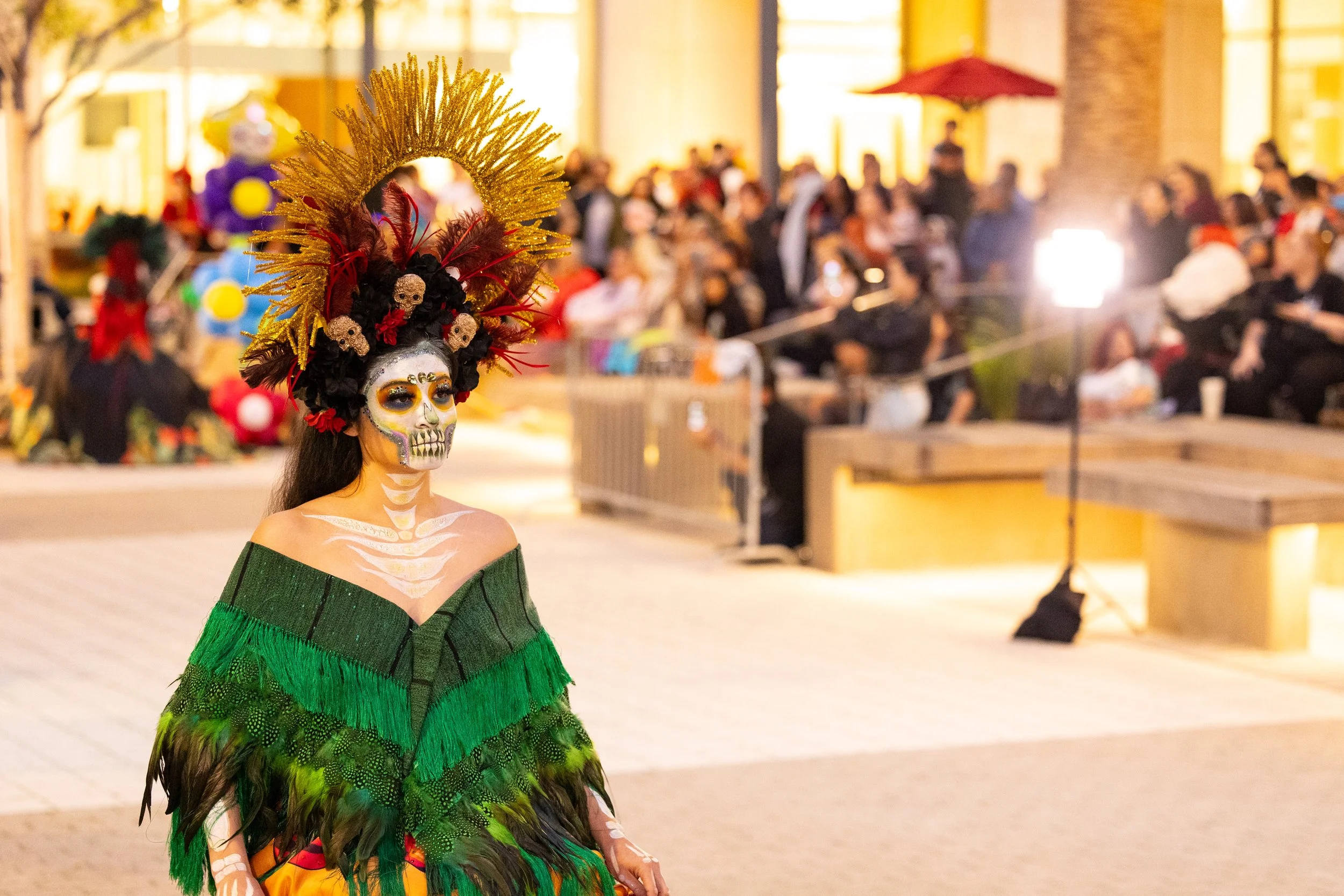
Several women participate in the Catrina costume contest, each one parading as La Catrina. (Nina Glick/The Santa Clara)
Folk presentations blended stomping, shaking and drum beats to evoke ceremonial traditions associated with Indigenous cultures. Live Mariachi music complemented the performances, with musicians moving through the crowd rather than remaining onstage, their music carrying across the event.
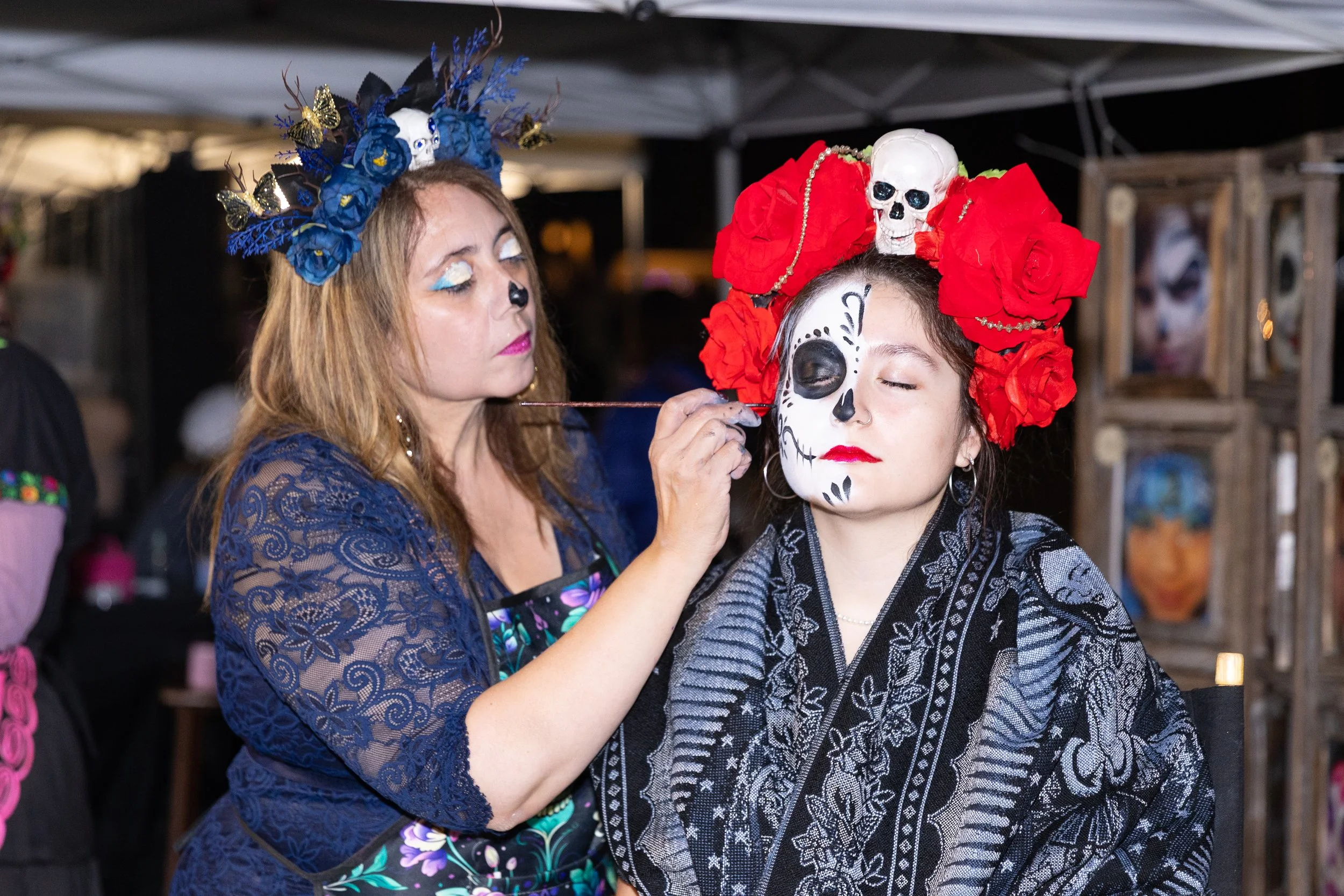
Sofia Ruvalcaba ’27 gets her face painted. (Nina Glick/The Santa Clara)
The Food
The aroma of food carried across the crowd, a deliberate part of the celebration meant to guide ancestors back to their proper place.
Taco trucks served marinated pork, chicken and beef with classic street-style toppings like onions and cilantro, while traditional Día de los Muertos dishes such as tamales—corn husks filled with masa and various fillings—and pozole, a hominy-and-meat soup, also made an appearance. Elote, or Mexican street corn, and bacon-wrapped street hot dogs in bolillos offered savory, handheld options for attendees on the move.
Desserts—churros, Mexican hot chocolate, pan de muerto, arroz con leche and colorful sugar skulls—provided a sweet counterpoint, their cultural significance rooted in the reminder that life is fleeting and meant to be savored like a dessert.
Together, the food brought the sights, smells and tastes of Día de los Muertos to life, creating an immersive experience.
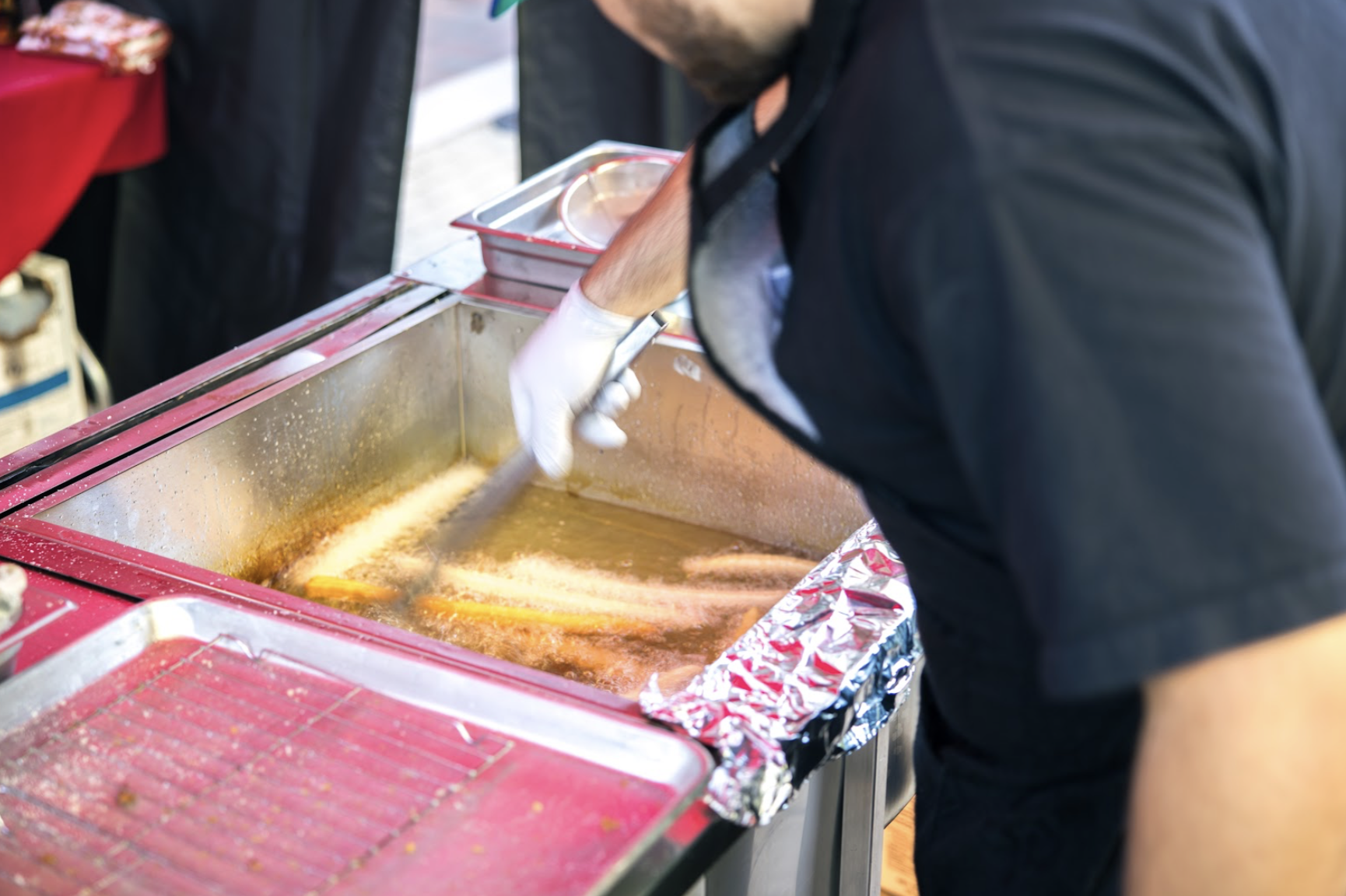
A vendor prepares filled churros. (Elaine Zhang/The Santa Clara)
The Vendors
The event hosted a wide range of vendors, including interactive stations and booths for local Mexican artisans to showcase traditional goods. Among them were several selling Día de los Muertos coronas—floral crowns that serve as a staple of the celebration’s attire. Traditionally considered feminine accessories, they are commonly worn with embroidered dresses and blouses.
A designated face-painting station allowed visitors to receive the classic sugar-skull look, offering accessibility to those unfamiliar with or unable to apply the makeup themselves.
Other stalls sold plants, leather goods, candles, sugar skulls, ponchos, traditional clay cups and pots, as well an assortment of handmade decorative items designed for ofrendas and home altars, featuring brightly colored figures and other Día de los Muertos motifs.
Most notably were the families working together at each stand. Children stocked items and translated for their parents, while mothers and fathers continued to market and sell on their behalf. Each negotiation unfolded in a mixture of Spanish and English—a heartwarming integration of language and culture.
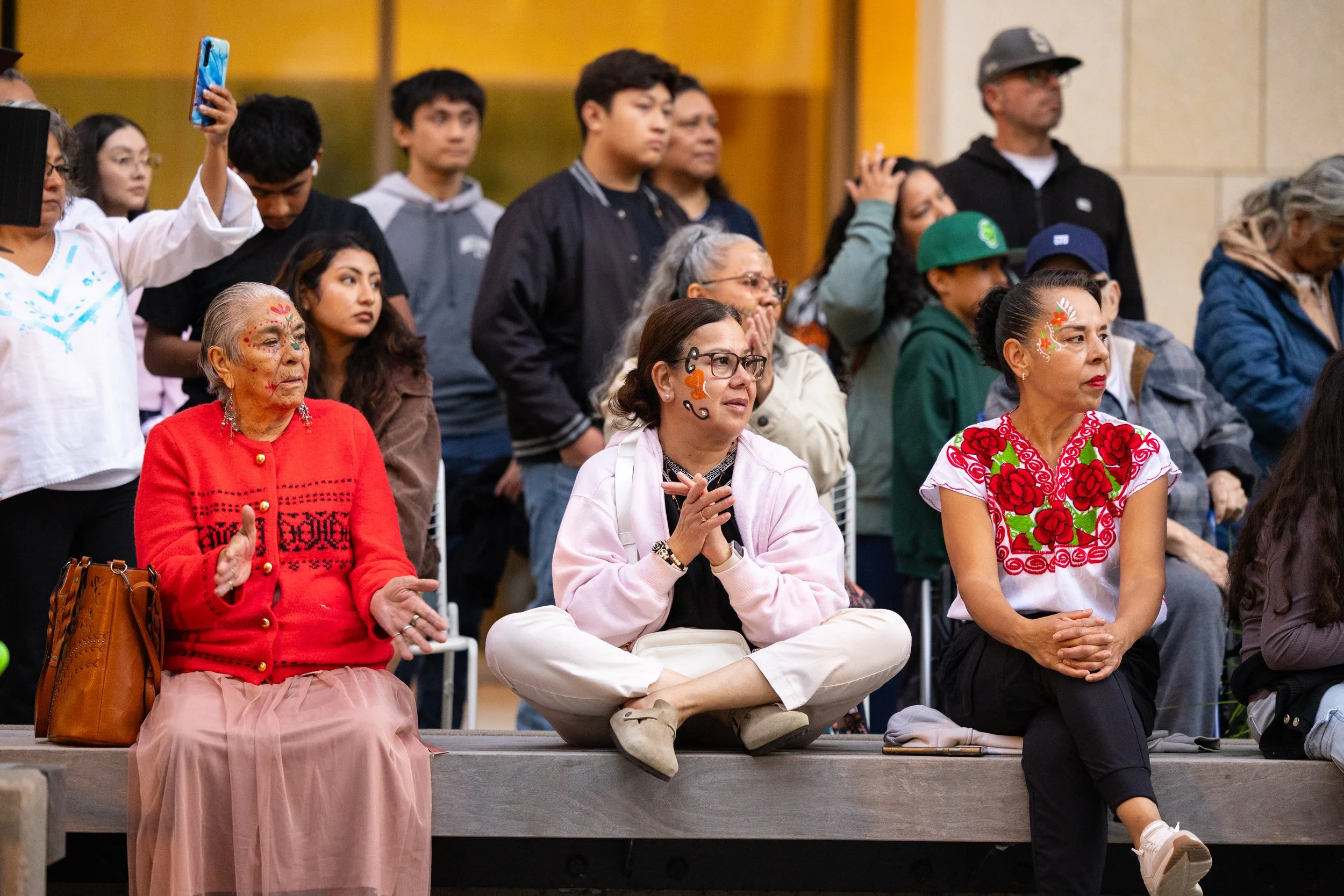
Multiple generations look on as performers move across the courtyard. (Nina Glick/The Santa Clara)
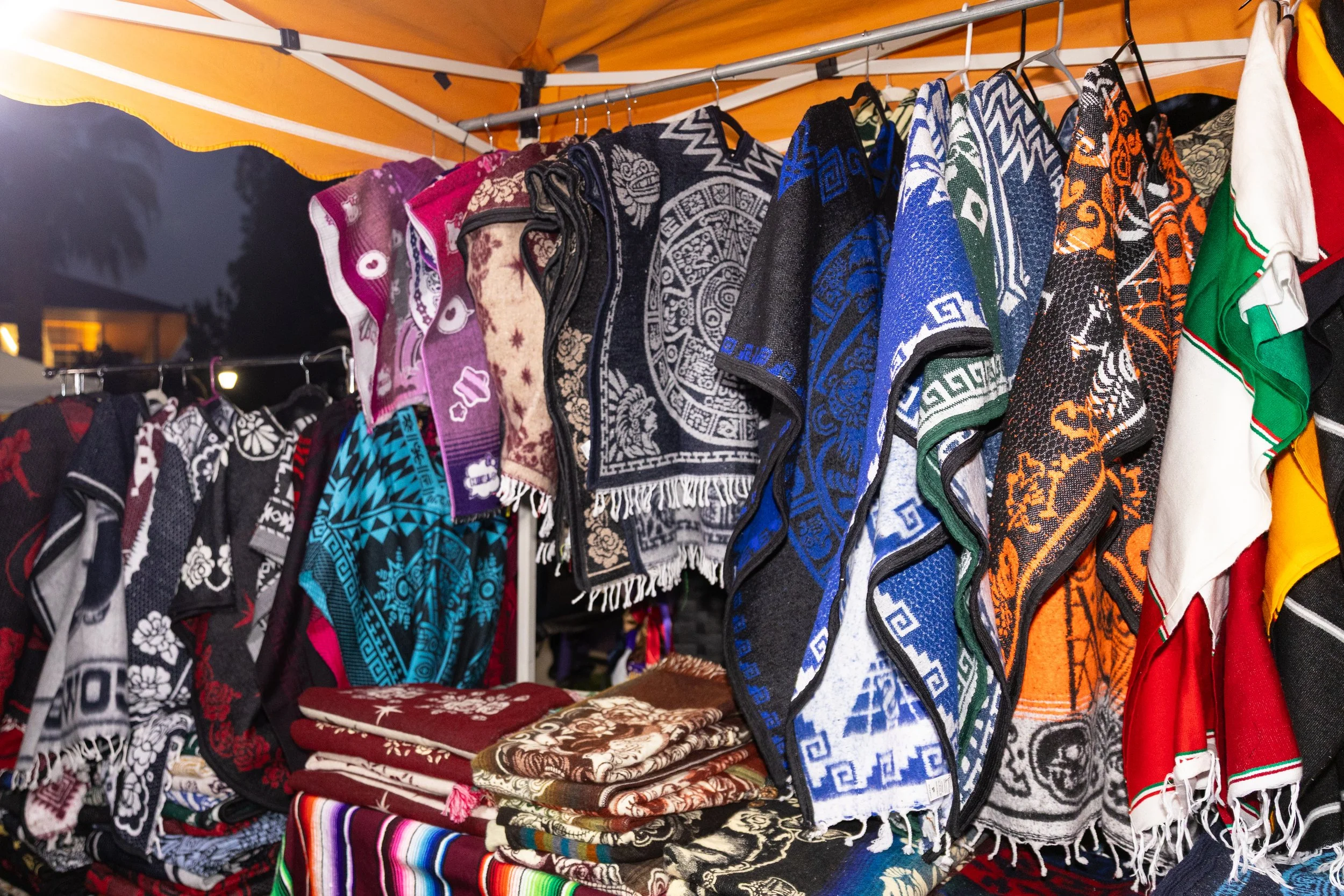
Ponchos and blankets hang in one of the vendor stalls, each one adorned with distinct cultural patterns. (Nina Glick/The Santa Clara)
Remembrance
The theme of the evening was remembrance.
Ofrendas, some personal and others created by larger organizations, lined the path from the Mission Church toward Vari Hall. Illuminated by candles, framed by cempasúchil petals and scented with incense, the altars held photographs, sugar, alcohol, food and whatever else the departed once loved—prepared so they may return home and celebrate with the living.
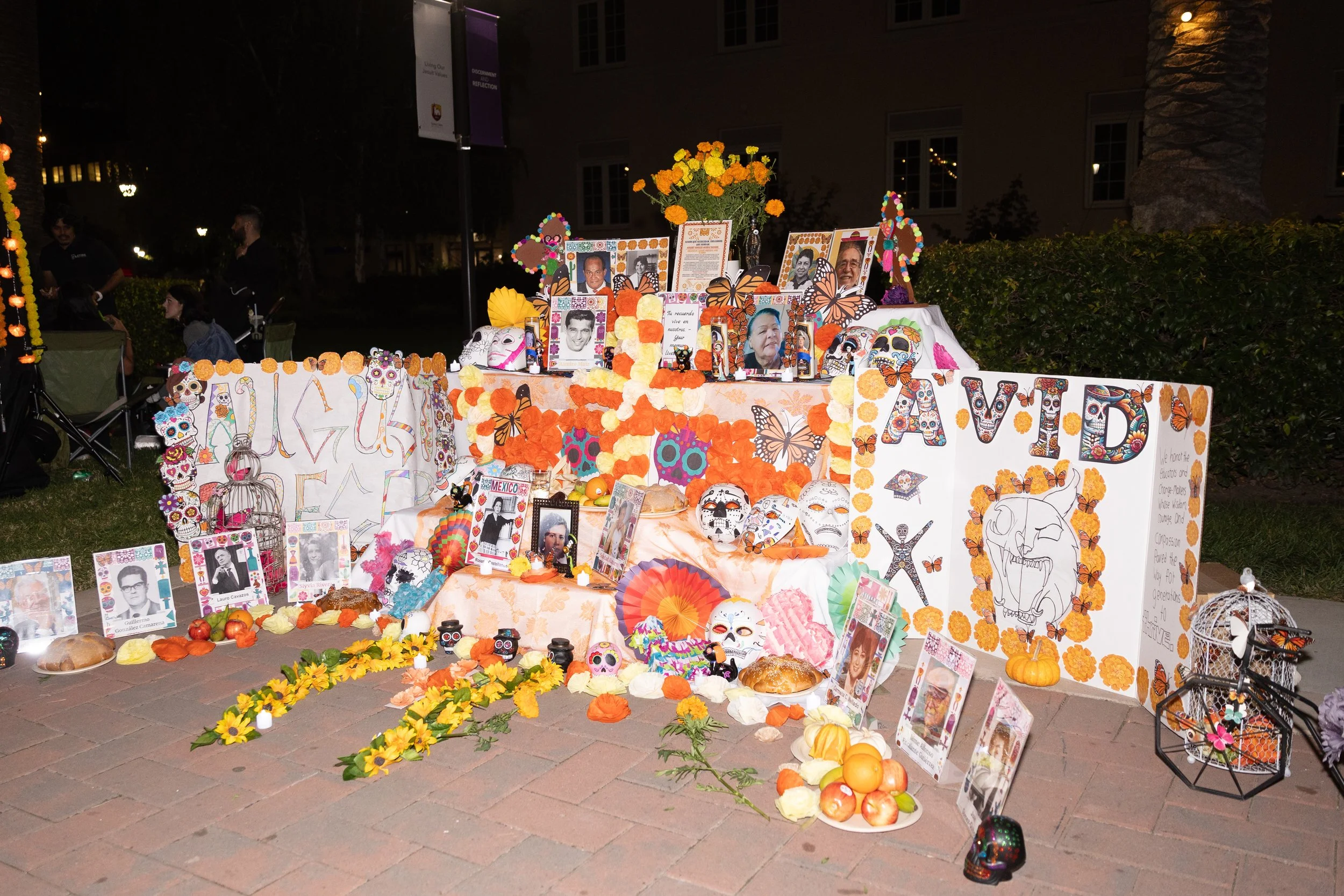
Ofrendas decorated with marigolds, photos, sugar skulls and food line the walkway from the Mission church to Vari Hall. (Nina Glick/The Santa Clara)
Mexican culture teaches that Día de los Muertos is our duty to our ancestors: to remember them so the afterlife may be peaceful and free, keeping them alive in heart and spirit. Death is not an ending, but another beginning—a continuation in a different cycle.
So, as the phrase goes, “Hay más tiempo que vida,” and together, as a community, we must live to the fullest.
Pan de muerto—“bread of the dead,” a traditional Mexican sweet bread
Arroz con leche—Mexican rice pudding
Cempasúchil—marigold (the traditional flower of Día de los Muertos)
Hay más tiempo que vida—“There is more time than life”