Four Santa Clara University International Students Impacted by Federal Visa Changes
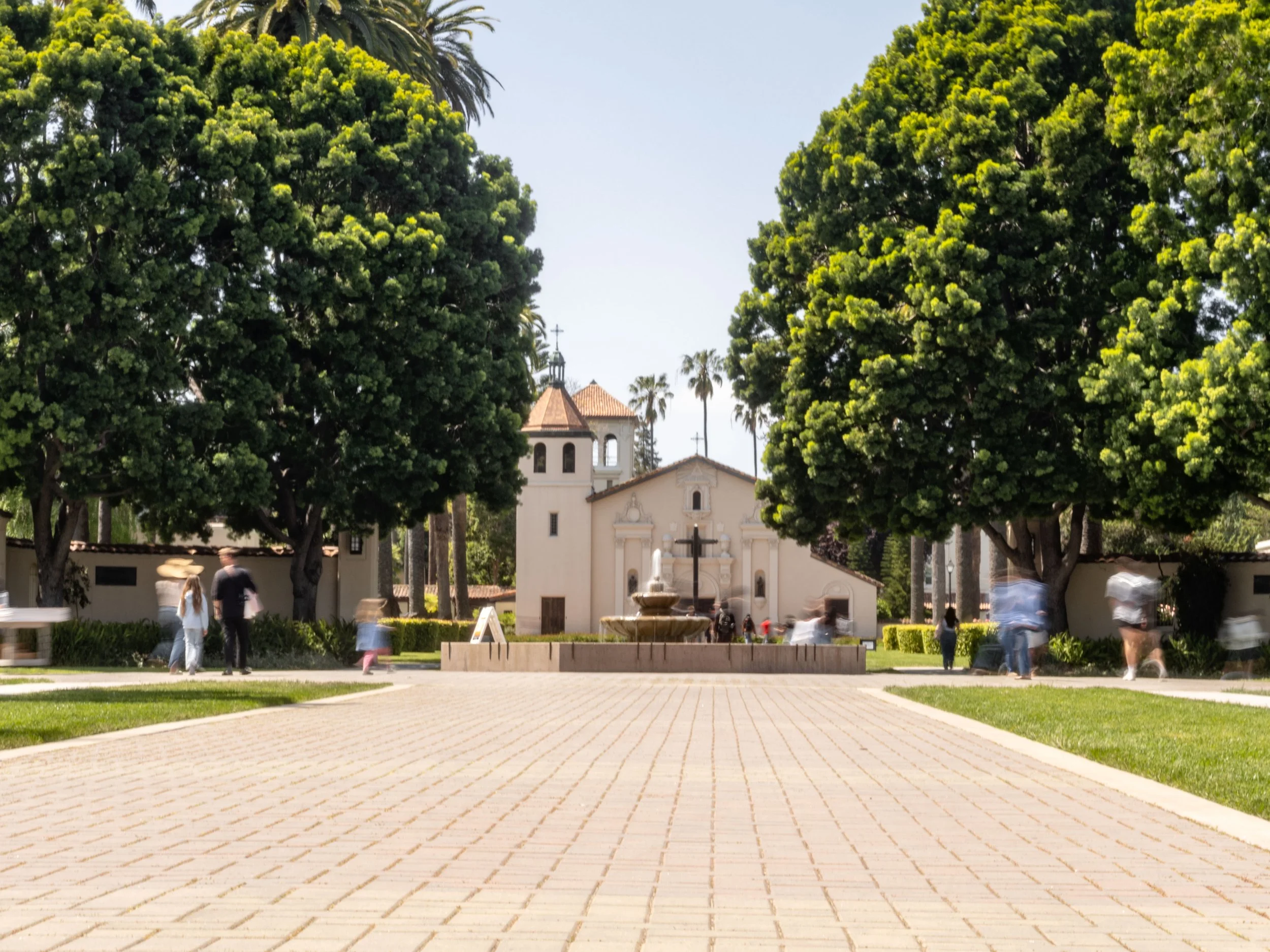
Santa Clara University claims to stand with international students based on their Jesuit values. Photo by Dylan Ryu
Four Santa Clara University students have been affected by Student and Exchange Visitor Information System terminations or visa revocations, according to Melissa Heid, director of the international students and scholars.
“If they were currently inside the U.S., their legal status here has ended or been terminated,” said Heid. “And then if they were outside the U.S., they were unable to enter.”
Those affected include students currently enrolled at Santa Clara University and recent graduates employed under Optional Practical Training, a program that allows recent graduates to work in the United States for up to a year post-graduation.
Hundreds of international students nationwide have received notices of legal status termination. According to University officials, the government has focused on “students found in a criminal database, involved in protests or found to have posted content that is anti-semitic or otherwise opposes U.S. foreign policy.”
“That aligns with what has happened here,” said Heid. For affected students, options are limited: reapply and attempt to have their status reinstated, or leave the country and try to reenter later.
In response, Santa Clara University has joined 86 other colleges in signing an amicus brief in support of a federal lawsuit challenging the policy, which they describe as a threat to student safety and the University’s Jesuit values. The lawsuit seeks to block recent government actions that cancel visas and detain students and faculty. This decision was announced by President Julie Sullivan in a University-wide email released April 11.
“It’s definitely very scary as an international student to even consider the prospect of something that you say or something that you do being the cause for visa issues,” said Erta Hoxha ’25, vice president of the University’s Associated Student Government. “It’s also uncertain how next year will look or if we will even have opportunities to continue for a job or get sponsor visas.”
“The 1,100 international students at Santa Clara are a vital part of our community,” Sullivan wrote in an email to the campus community. “They bring a global perspective and vitality to our campus.”
According to an April 9 update from the University’s Global Engagement Office, the affected students had their SEVIS records terminated, removing their ability to work, re-enter the U.S. or remain protected under their student visas. University officials reported that in several cases, students received minimal warning. Some terminations were connected to peaceful protest activity or minor legal issues. Others had no clear explanation provided.
“It’s all really unsettling. Despite following every legal requirement, there’s still so much uncertainty in pursuing an education here,” said a sophomore international student who declined to provide their name over safety concerns.
The University’s International Students and Scholars team is collaborating with Santa Clara University’s Katherine and George Alexander Community Law Center to provide legal assistance to international students, according to Heid.
Students are being advised to postpone international travel and exercise caution with public speech and social media, which may be reviewed in visa decisions. Officials recommend consulting with an immigration attorney about individual status, keeping attorney contact information accessible and carrying physical documentation of immigration status at all times.
“These situations are incredibly personal,” said Susan Popko, associate provost for international programs. “We’re doing everything we can to support our students one-on-one.”
Deborah Lohse, the director of media and internal communications for the University, clarified the situation in a statement: “No deportations have taken place at SCU, and we have had no physical ICE presence on our campus. However, four SCU international students have been impacted by ICE-initiated Student and Exchange Visitor Information System (SEVIS) record terminations and/or visa revocations to date.”
While some have advocated for Santa Clara University to declare itself a “sanctuary campus,” University leaders maintain that the term provides no legal protection. The University follows California law, which requires a court order for immigration agents to access student records or enter non-public campus areas.
The University has organized drop-in hours, coffee chats and panels in collaboration with the Global Engagement Office to provide information to international students. An upcoming Associated Student Government panel on April 16 will focus on supporting undocumented and international students.
For students experiencing anxiety over their status, Hoxha recommends both the Global Engagement Office and campus mental health resources. “It’s also a time where mentally it can be really challenging and emotionally, even if legally you’re all set,” she said.
The University has stated it will continue to monitor federal policies affecting international students and faculty while working with national higher education groups to advocate for student protections.