U.S. Government Shuts Down as Congress Fails to Come to Spending Agreement
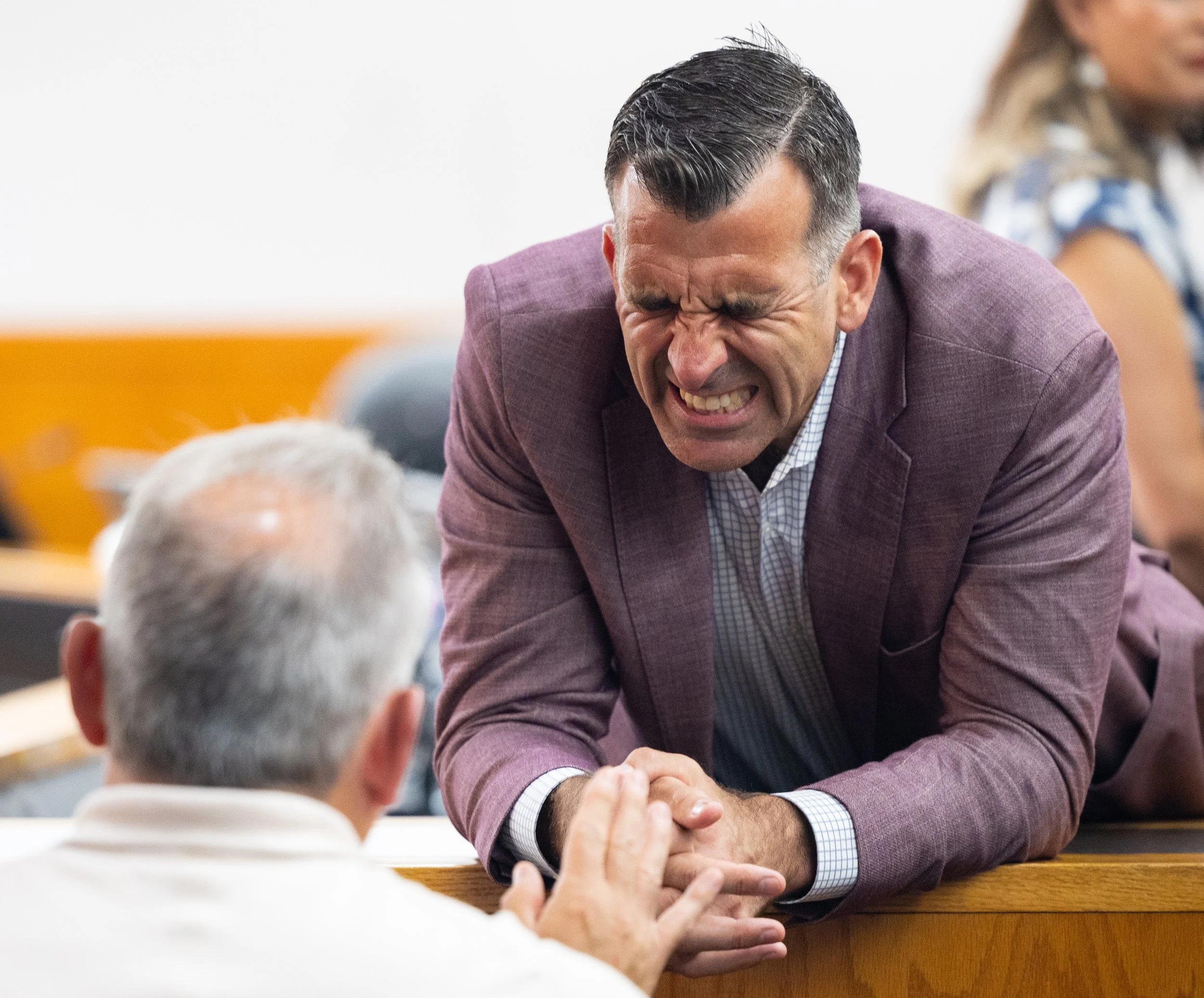
California congressman Sam Liccardo speaks with a community member at a town hall meeting on the impacts of H.R. 1, the One Big Beautiful Bill Act Photo by Nina Glick
The United States government has come to a halt for over a week with no clear end in sight, as the Senate is deadlocked in a vote on a federal funding plan.
With both the Democrats and Republicans unable to come to an agreement on how to fund government services from October onward, the United States government shut down on Oct. 1.
As of Oct. 8, the Senate has attempted to settle on an agreement a total of six times, but they have not yet been able to reach an agreement.
This shutdown has directly affected over 2 million Americans, with more indirect consequences. All non-essential government employees have been furloughed—temporarily granted leave—while essential workers are continuing to work without pay until a budget has been agreed upon. In California, over 150,000 government employees will go without pay during the shutdown. This includes air traffic controllers, military personnel and the Transportation Security Administration.
The Government Employee Fair Treatment Act—signed into law in 2019—states furloughed employees must be paid upon returning to work after the government reopens. However, Trump has threatened that there will not be payback to government employees when the shutdown ends.
Congress and the Executive Branch still will receive their paychecks throughout this shutdown.
“Santa Clara University leaders are closely monitoring the potential impacts of the federal government shutdown on the University,” said Deborah Lohse, Santa Clara University’s director of media and communications. “So far there has been no impact on core operations.”
“Units across campus are following developments and making contingency plans in case of a prolonged shutdown, and will share information with affected audiences should circumstances change,” Lohse added.
Students also face a unique challenge in the face of these financial disputes.
Political science student Sophia Baird ’26 expressed concern as she watched the shutdown unfold.
“We are living through such an important moment in American history right now, and it’s honestly frightening,” said Baird. “The government shutdown is shocking to witness.”
Student loan borrowers reliant on federal funding must continue making payments, which could leave them without help if complications arise. Along with that, the Department of Health and Human Services will stop awarding grants that support colleges and research, but will continue to deliver student aid such as Pell Grants.
In a recent NPR interview, Wisconsin Sen. Ron Johnson described the ongoing “shutdown showdowns” as a “ridiculous situation that doesn’t have to happen.” He said both parties use shutdown negotiations as “a well-honed process for mortgaging our children’s future,” arguing that Congress should adopt his proposed Eliminate Shutdowns Act, which would automatically continue funding at prior-year levels to prevent future impasses. Johnson added that both Democrats and Republicans “love the shutdown showdowns” because they create last-minute spending bills that increase the national debt.
Democratic Rep. Sam Liccardo, who represents California’s 16th congressional district and previously served as mayor of San Jose, offered a more pointed critique. “Shutdowns are about the failure of the president,” said Liccardo in an interview with CNN. “I think that’s true today.”
This marks the third government shutdown under a Trump presidency. The previous one, which began in December 2018, lasted a record 35 days. The only other president to face three shutdowns was former president Regan, though each lasted less than a day.
With the shutdown still being in place, the consequences are still unknown. However, the mere existence of a government shutdown is enough to cause worry in peoples’ minds.
“The fact that Congress cannot pass a spending bill perfectly exemplifies how polarized our government has become,” said Baird. “It is really concerning that lawmakers cannot even agree on basic human necessities like access to healthcare, and it is extremely alarming to watch.”
Box of Fun Facts:
Over 150,000 government employees in California will go without pay during the shutdown
Many are being affected by delays in airports as air traffic controllers begin working without pay
Many government employees have to continue to work with no pay including the military, emergency and disaster aid staff, and more.
Although National Parks are unstaffed, roads and trails will remain open, but keep in mind there will not be services such as cleaning, visitor centers, and trail maintenance.
Some sites that will be closed in the Bay Area include: Muir Woods, China Beach in San Francisco, Fort Point National Historic Site, and Point Bonita Lighthouse. Though some are unaffected including: Alcatraz, Golden Gate Park, The Presidio, and Point Reyes
Members of Congress, including senators and representatives, earn an annual salary of $174,000, according to the Congressional Research Service. Leadership positions receive higher pay, with the speaker of the House earning $223,500 and the majority and minority leaders and president pro tempore earning $193,400.