Shakespeare Takes on Zombies
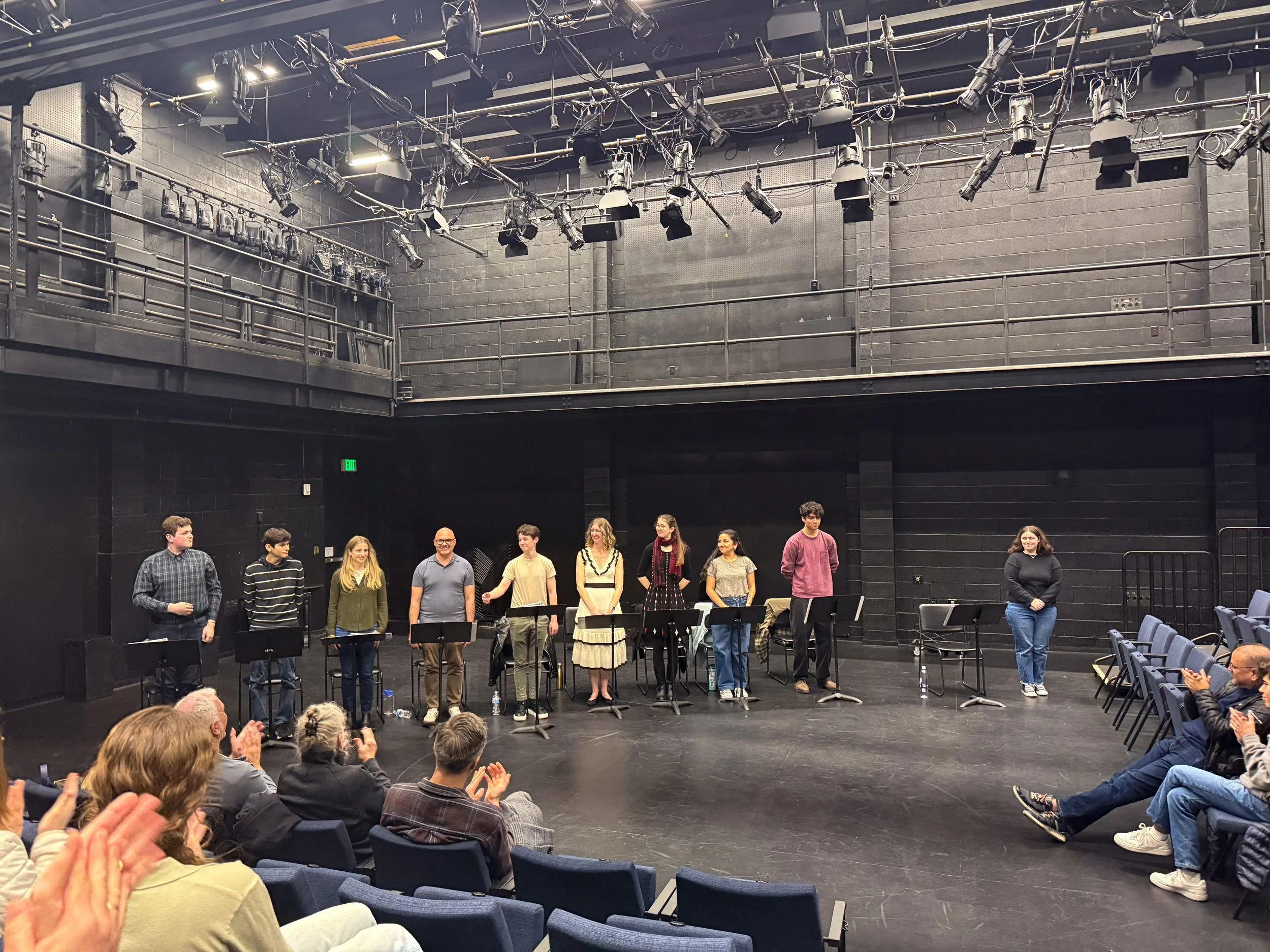
The cast prepares for a bow after the show. (Joshua Nola/The Santa Clara)
A group of student actors from Santa Clara University’s theater and dance program, alongside audience members, gathered at the Fess Parker Studio Theatre on Jan. 23.
The cast presented a First Look at “Shakespeare and the Zombie Plague of 1590.” Ten actors, including current students, alumni and a new faculty member, played a variety of roles in the satirical comedy.
“Shakespeare and the Zombie Plague of 1590” is a play originally written by Richard Henry and Eric Hissom. It combines a variety of Shakespearean characters, such as Macbeth, Romeo and Juliet, alongside the titular zombies.
“We use a First Look to gauge audience engagement to see if we want to continue with that play next year,” said Sherman Sherman ’27, who played Gravedigger #1 in the play.
The play contains fourth wall-breaking elements, as many plays did in the 16th century, with Shakespeare—played by Christian Barnard ’26—speaking directly to the audience.
The meta elements don’t stop there: they play centers on Shakespeare entering the world of his own plays and surviving a zombie apocalypse.
“I didn’t expect a lot of the tongue-in-cheek meta moments we saw, but it made the play super enjoyable,” said audience member Natalia Morphis ’28.
In a full scale production the play would be put on with a similar cast size, but different characters played by the same actor would be differentiated by costumes.
Due to its status as a First Look, the play was orated by Emma Fox ’27, who described the actions of scenes that would normally be physically shown on stage, whether that was a character stabbing another or activities involving props the actors did not have during the First Look.
The First Look also lacks much of the preparation time that would come with a typical production.
“The First Looks—we don’t get much rehearsal at all. Three hours ago was the first time most of us had read the script,” said Sherman.
The University put on a previous First Look last year on Oct. 3, entitled “In the Blood,” and will have another on April 17 called “Quixote Nuevo.” These are modern retellings of “The Scarlet Letter” and “Don Quixote,” respectively.
Time will tell which of these modern spins on classic tales the University will respond to best.
As for this eccentric recreation of Shakespeare, Morphis concluded, “I think it is a fantastic play, and I really hope we get to do it!”