Inside a Hackathon Team’s Quest for a Hack for Humanity Win
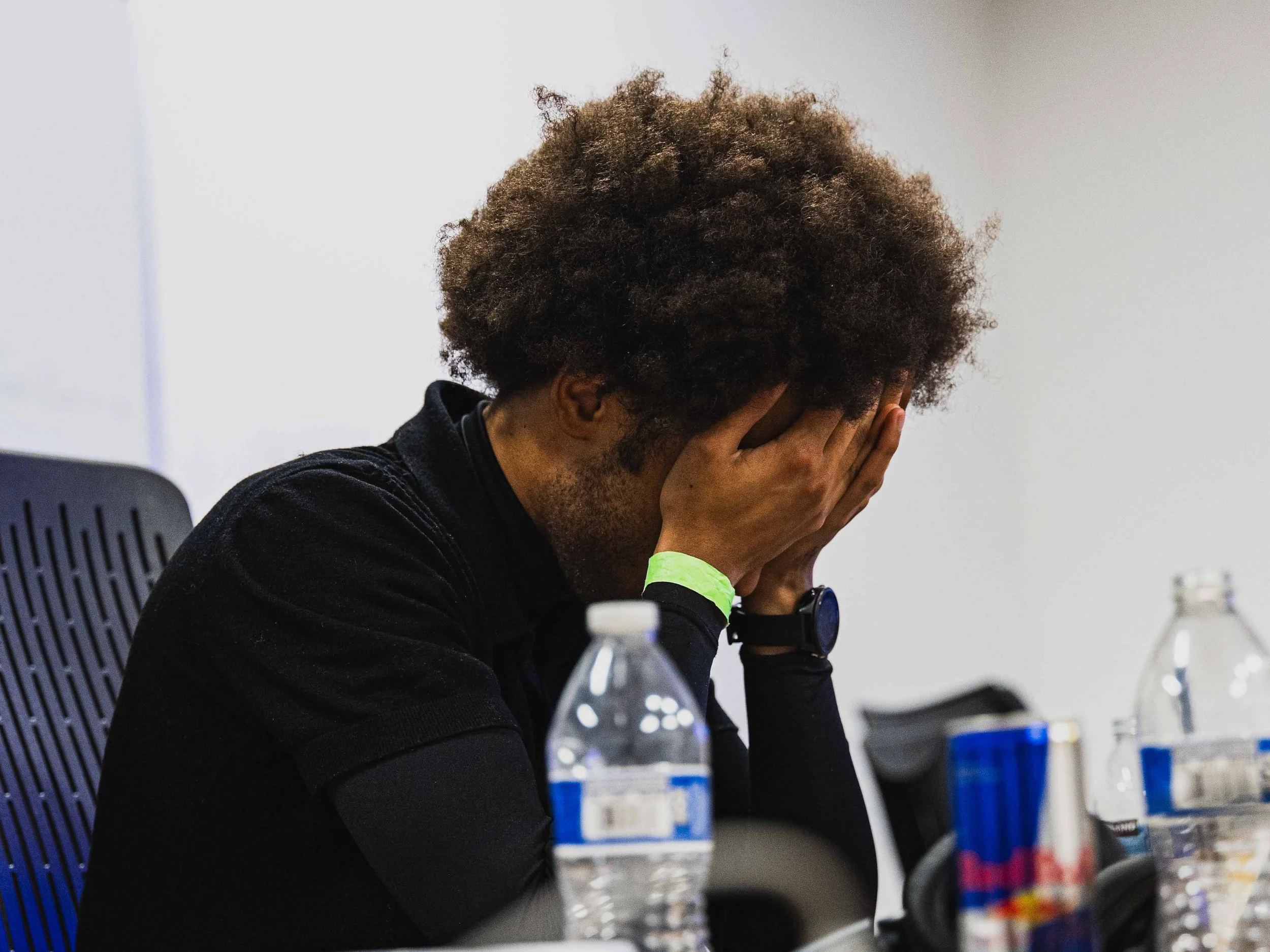
Oumarou Dodo Garba puts his hands on his head during the middle of the Hackathon. (Dylan Ryu/The Santa Clara)
It was just past 2 a.m. when John Jamison ’26 placed a green banana—then a brown one—inside a plastic Tupperware, and watched the sensor readings on his laptop screen. If the device could identify ripeness, his Hackathon team believed it could also detect the chemical fingerprints of bacterial infections like strep throat—the ambitious idea they had been coding for nearly 15 hours.
Jamison and his teammates—Oumarou Dodo Garba ’27, Emily Ramos ’27, Joshua Colleran ’26, Liam Park ’27 and Sargun Singh ’27—were among the 483 participants competing in Santa Clara University’s 13th annual Hack for Humanity from Feb. 28 to March 1, hosted by the Association for Computing Machinery and ACM Women’s Chapter.
Over the course of around 26 hours, more than 70 teams set out to design technology addressing social issues, competing for cash prizes of up to $2,250 and sponsor awards totaling more than $10,000.
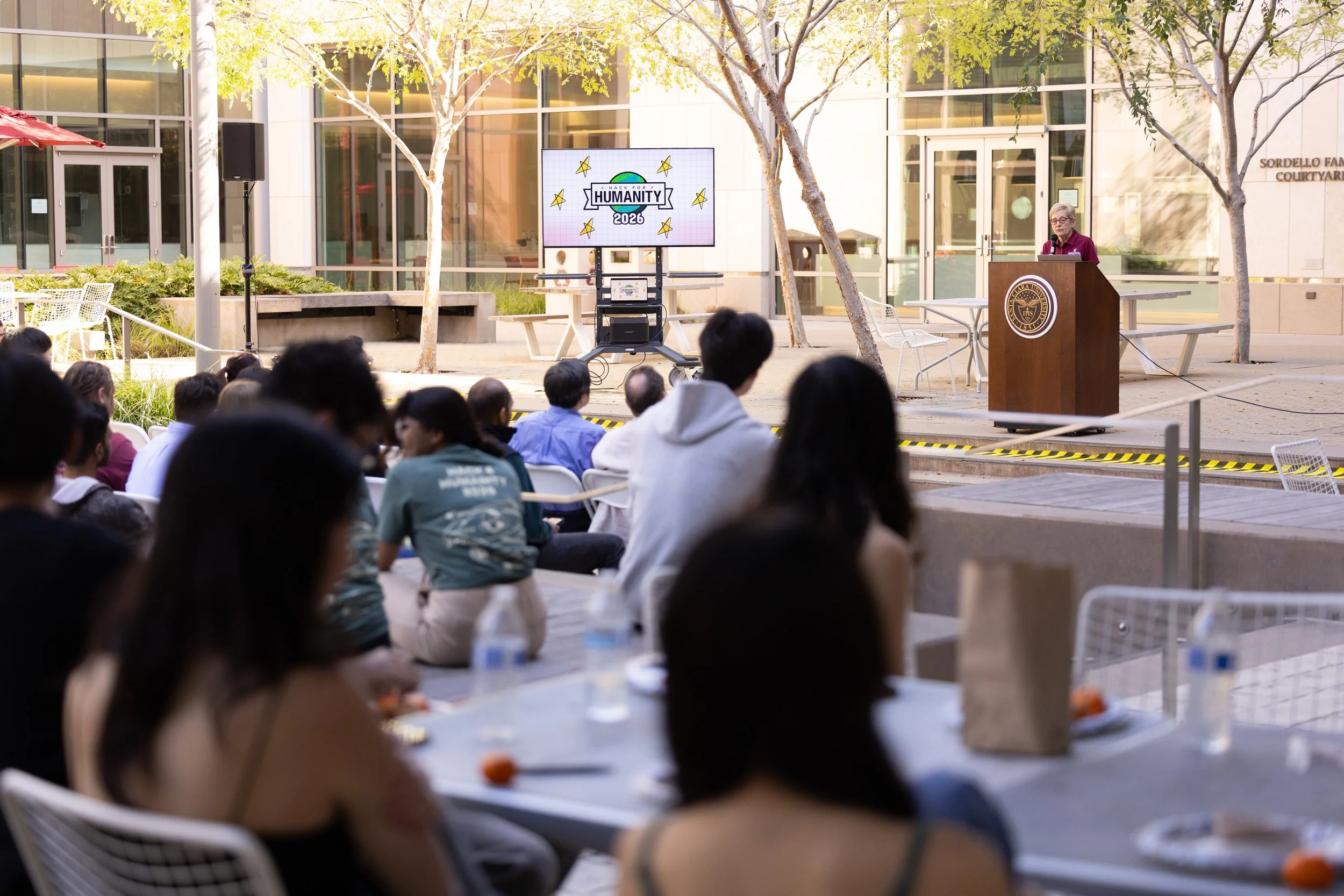
Julie Sullivan speaks to the Hack for Humanity groups before they start. (Nina Glick/The Santa Clara)
The team started their hack in a classroom in Bergin Hall, while other groups had to resort to the nearby atrium in Heafey Hall as each room in the joined building was occupied by Hackathon teams. Once they settled in, the team deliberated three possible projects: a device to help with attention for people with ADHD, another to help with addiction and a third using a new technology referred to as a “smart nose” or e-nose which uses a sensor to detect smells associated with certain chemical compounds.
“Which one are we doing?” said Singh a few minutes after the competition began.
“He said we’re going to discuss it,” responded Ramos, referring to Dodo Garba.
“Oh, we’re cooked,” Singh said back.
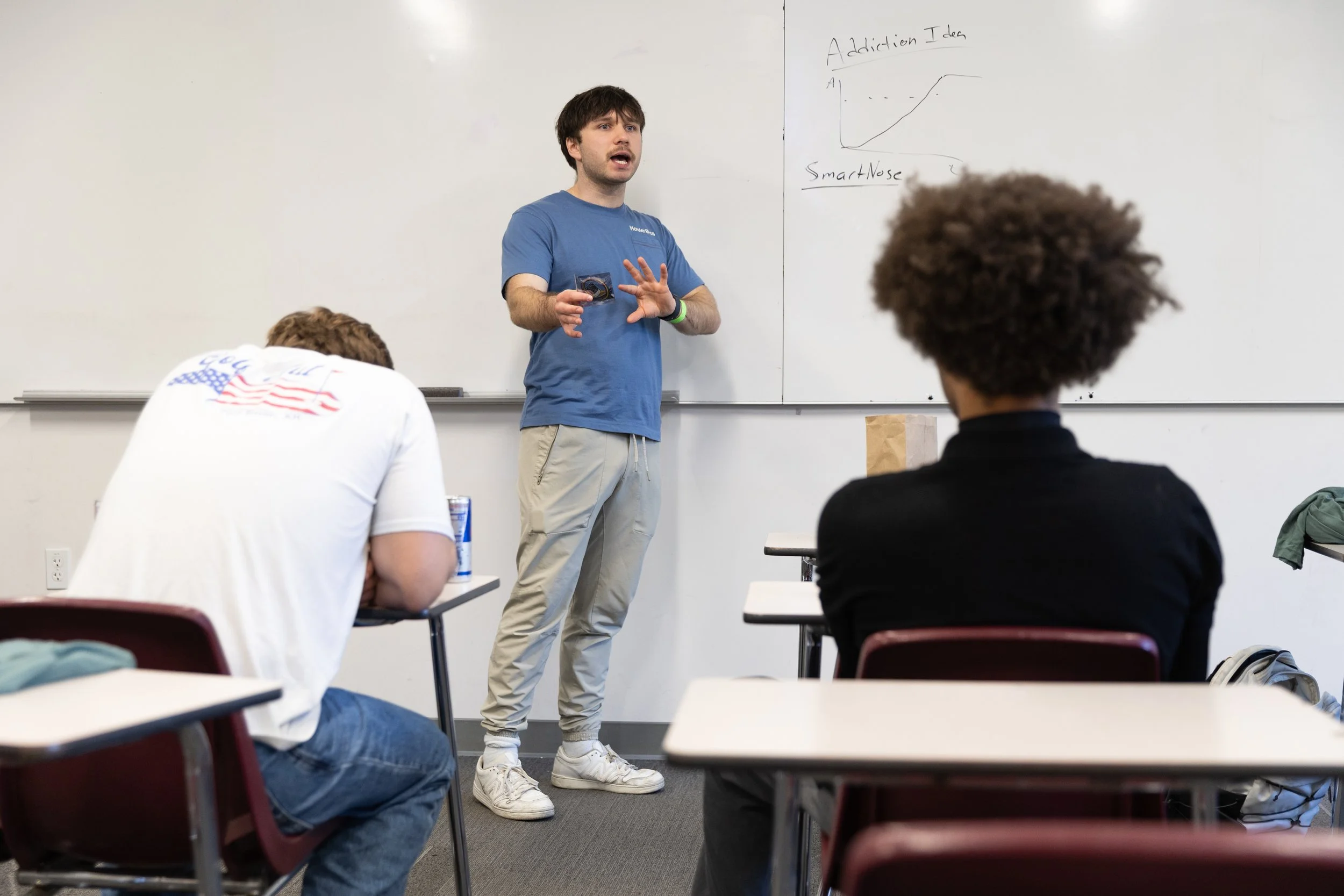
John Jamison pitches the smart nose technology to his team while they deliberate on what project to do around 11:30 a.m. (Nina Glick/The Santa Clara)
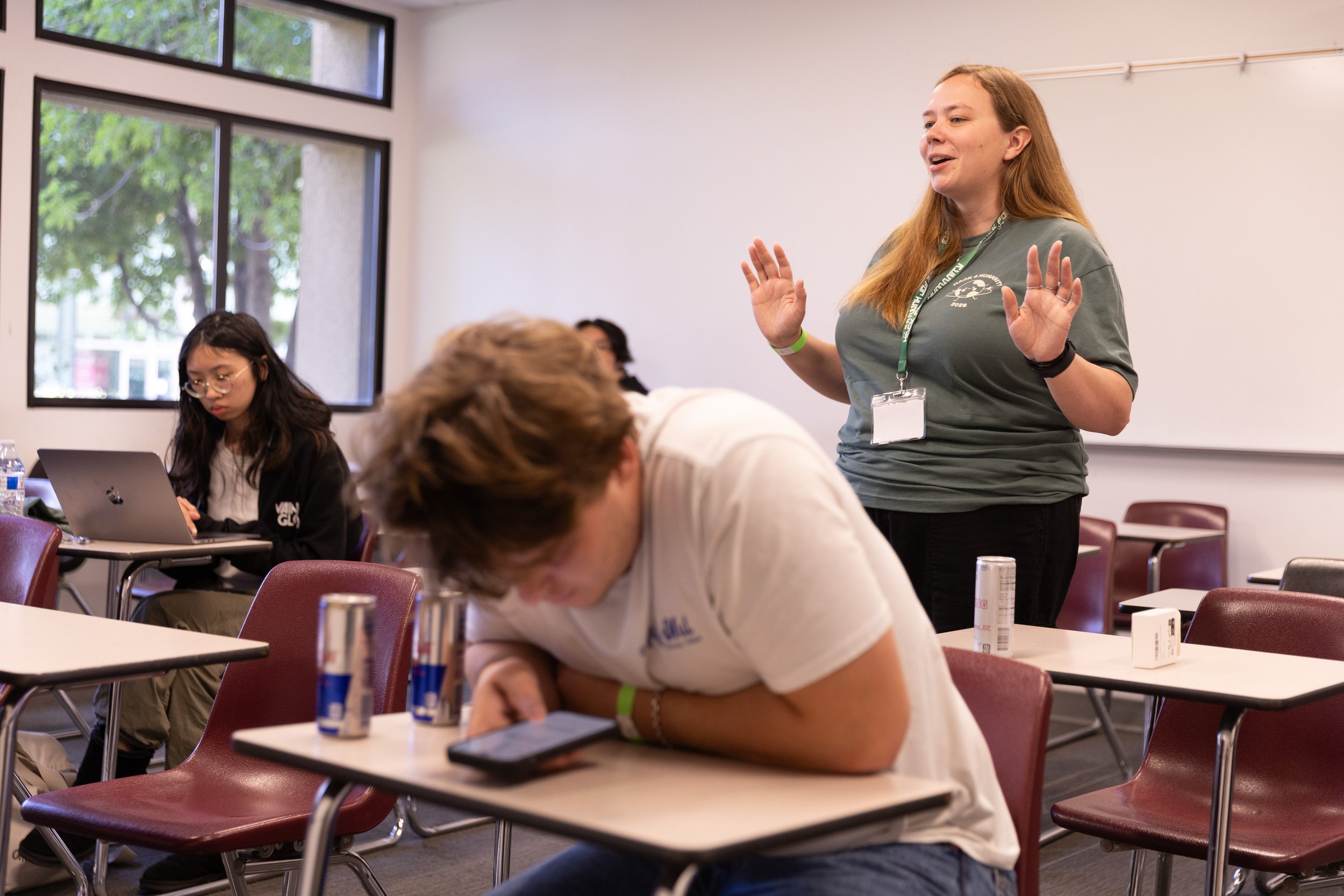
The team gets advice from a mentor who liked their ideas. (Nina Glick/The Santa Clara)
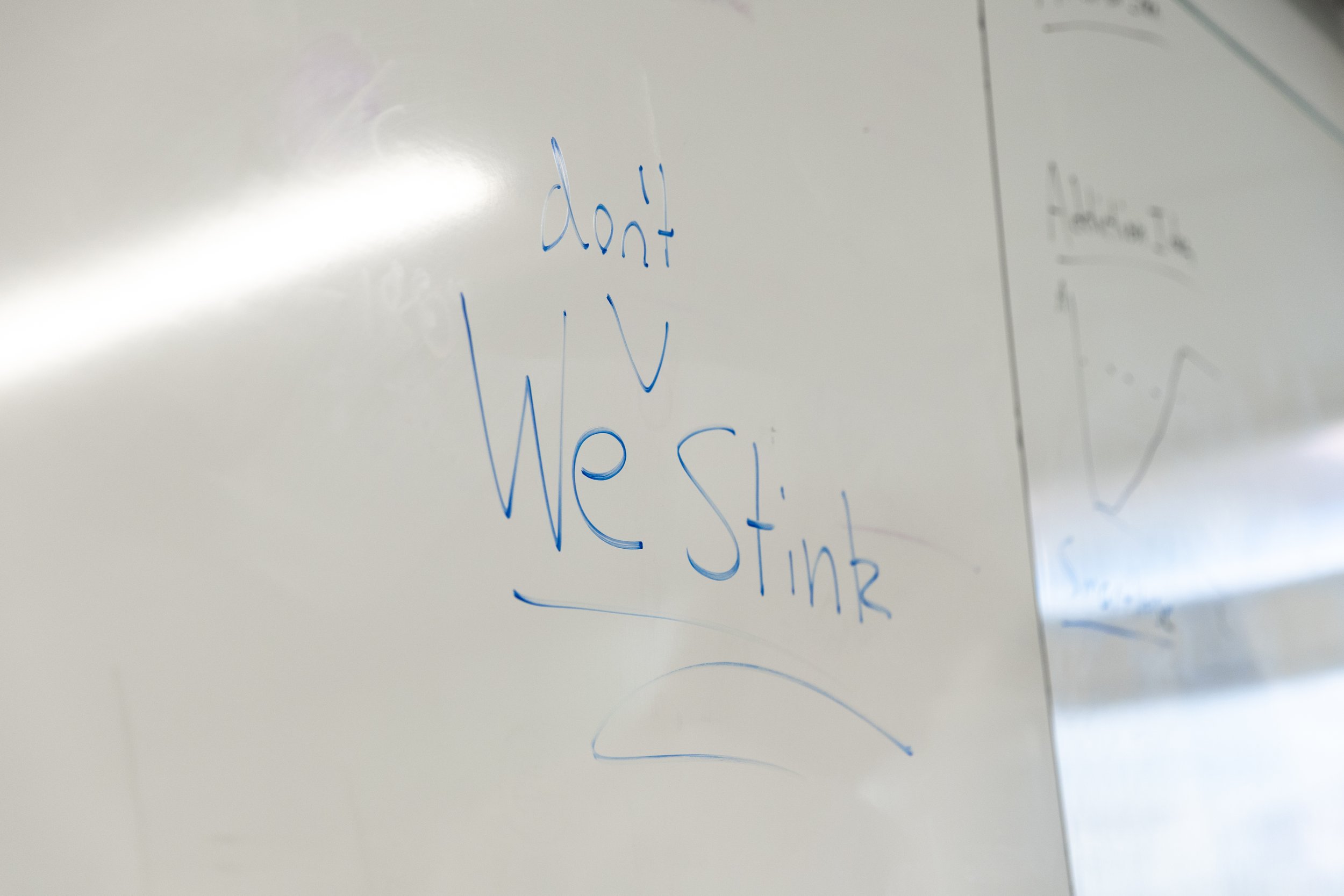
Joshua Colleran wrote “We Stink” on a white board while they deliberated what project to do. After they consulted a mentor who gave them positive feedback, he added “don’t” to the board to say “We don’t Stink.” (Nina Glick/The Santa Clara)
By 12:00 p.m., the debate was still unsettled.
From the start, the team worried they had set the bar too high. Jamison, Ramos, Singh and Dodo Garba had won multiple hackathons together in the past, while Colleran had joined them for one previous victory.
“Overcomplicating means death for hackathon,” Dodo Garba said.
Still, they gravitated toward the most ambitious idea of using a metal oxide gas sensor to detect volatile organic compounds—chemical byproducts released by bacteria—in human breath. Each type of bacteria produces a distinct chemical signature. If they could train a model on those biomarkers, the team could create a daily-use breath test for users to flag infections early.
A cost-effective, easy-to-use device which detects abnormalities in your breath by tracking biomarkers present in bacterial infections such as strep throat would allow particularly immunocompromised people or those around them to detect signs of disease early on.
They named it SensAir, however it was accidently officially named “SenseAir.”
Throughout the night, they struggled to get the device to detect breath. Around 1:30 a.m. Dodo Garba said, “What if we just gave up? What’s some funny stuff that we can detect?”
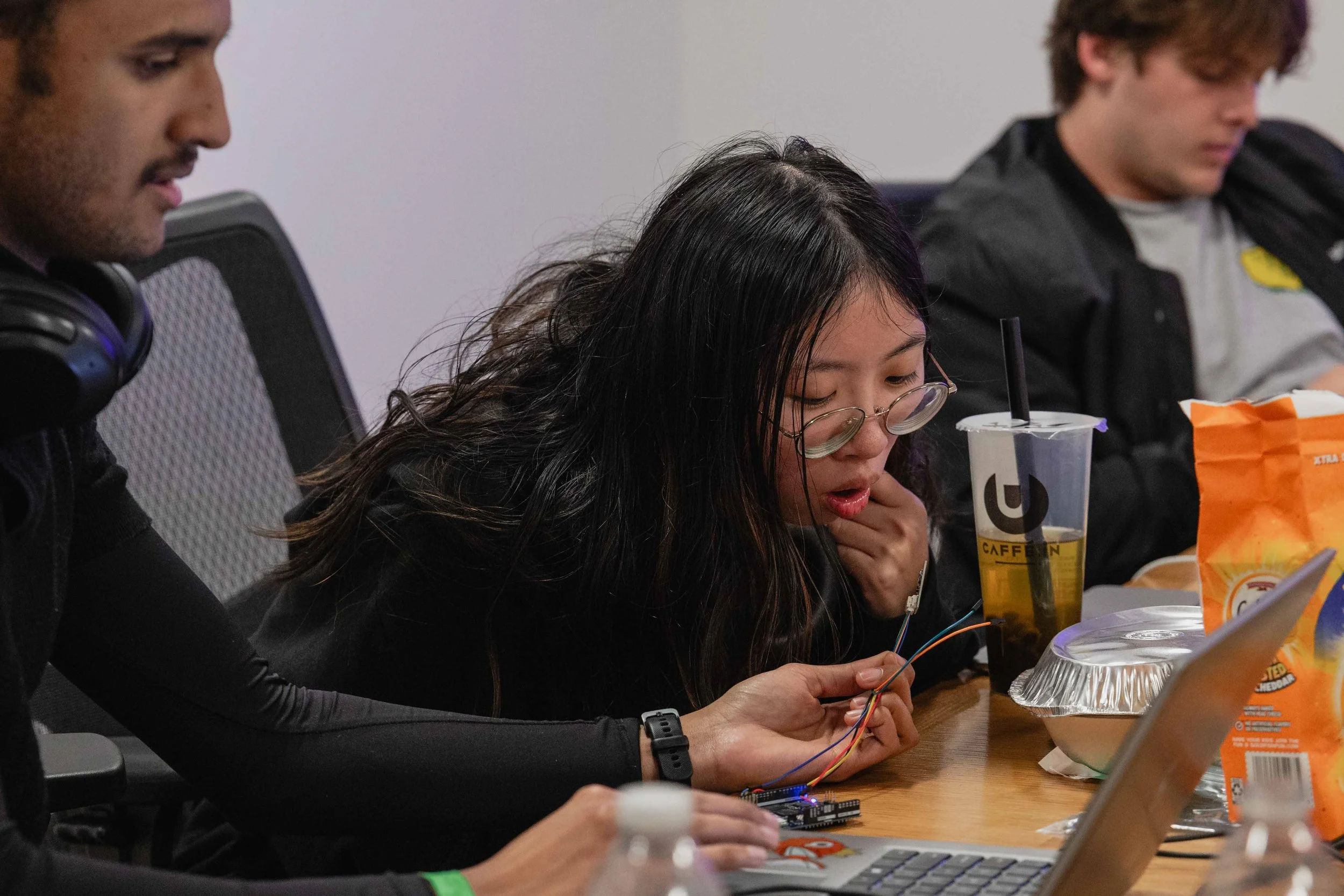
Emily Ramos blows into the sensor during testing. (Dylan Ryu/The Santa Clara)
While Jamison and Colleran refined the model and dataset for bacterial biomarkers, Park—who was participating in his first hackathon with the group—left campus in the middle of the night to 3D-print a housing unit for the sensor.
At 4:41 a.m., as exhaustion set in, Dodo Garba laughed.
“We always do ambitious stuff, and we never learn,” he said.
By then, multiple team members had slept only a few hours with sparse breaks for food.
“We need to hope max, not despair max,” Jamison said.
Before claiming the project could detect biomarkers in human breath, they tested bananas.
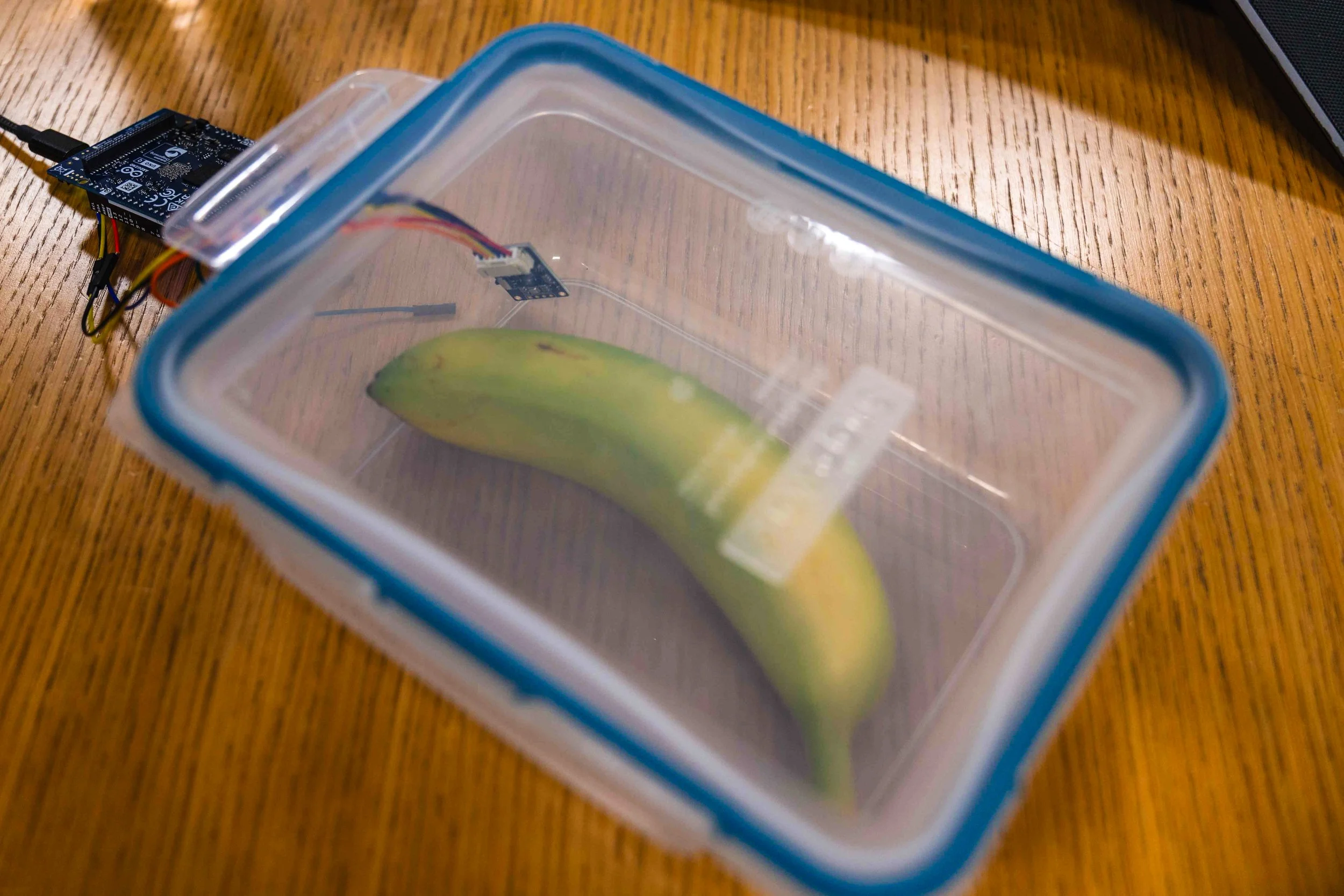
The e-nose sensor sits in a tupperware with a banana while the team tested whether the sensor could tell whether the banana was ripe or not. (Nina Glick/The Santa Clara)
The team had learned that ripening fruit releases the same kind of chemical signals their sensor was designed to detect. If the device could distinguish between a green banana and a brown one, it would prove the sensor was responding to real chemical differences in the air.
“If more of it’s in the air, it can tell,” Jamison said, referring to the alcohol-based compounds released by riper bananas.
The bananas weren’t the final product, but they were a proof of concept. Once the sensor could detect chemical differences in fruit, the team turned to what they were really building it for: human breath.
They used Colleran as their primary test case. Recently diagnosed with strep throat, he was no longer contagious but still carried bacterial biomarkers in his breath.
The interface flagged elevated risk in Colleran’s breath, just as the model predicted.
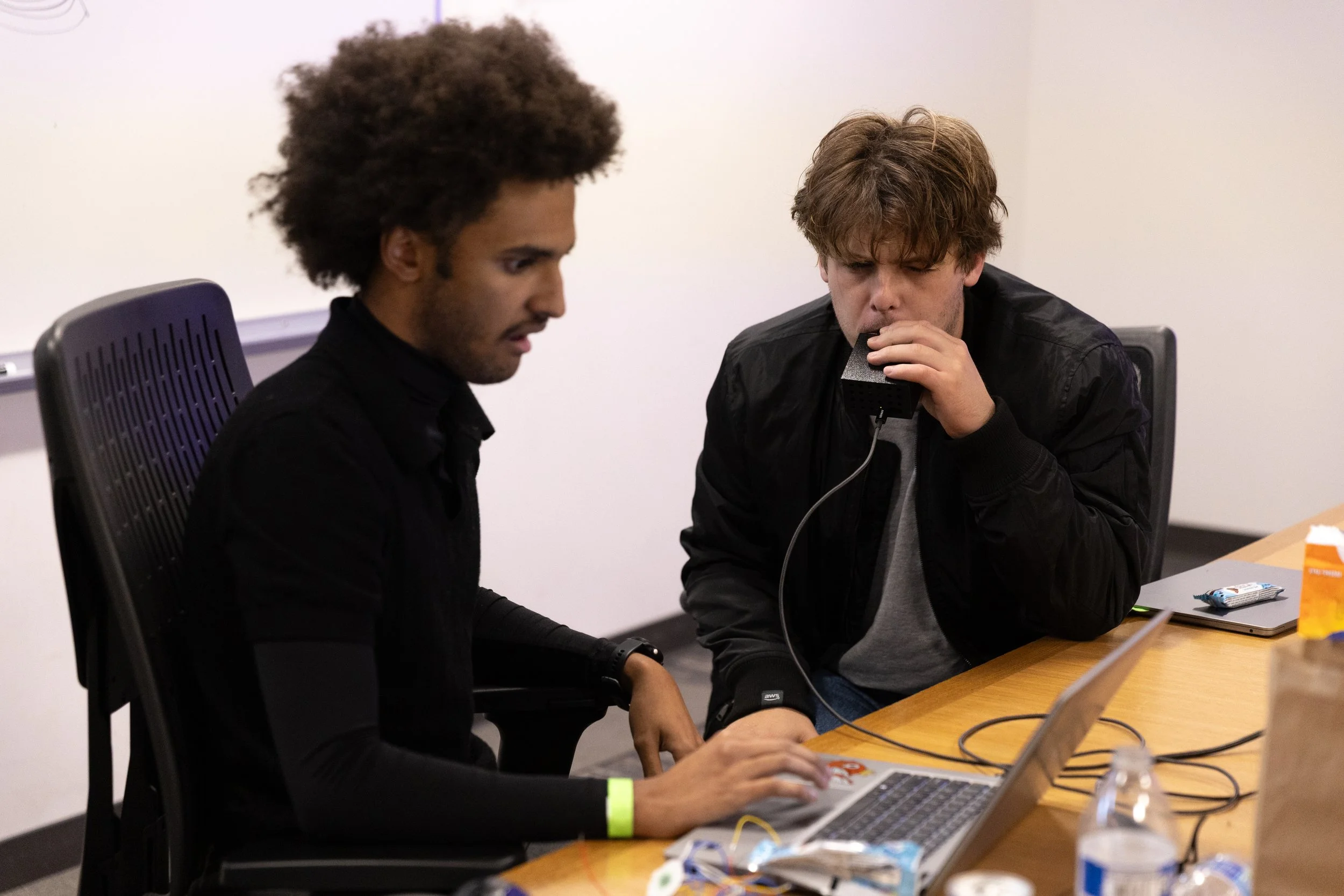
Joshua Colleran blows into the device around 8:45 a.m. (Nina Glick/The Santa Clara)
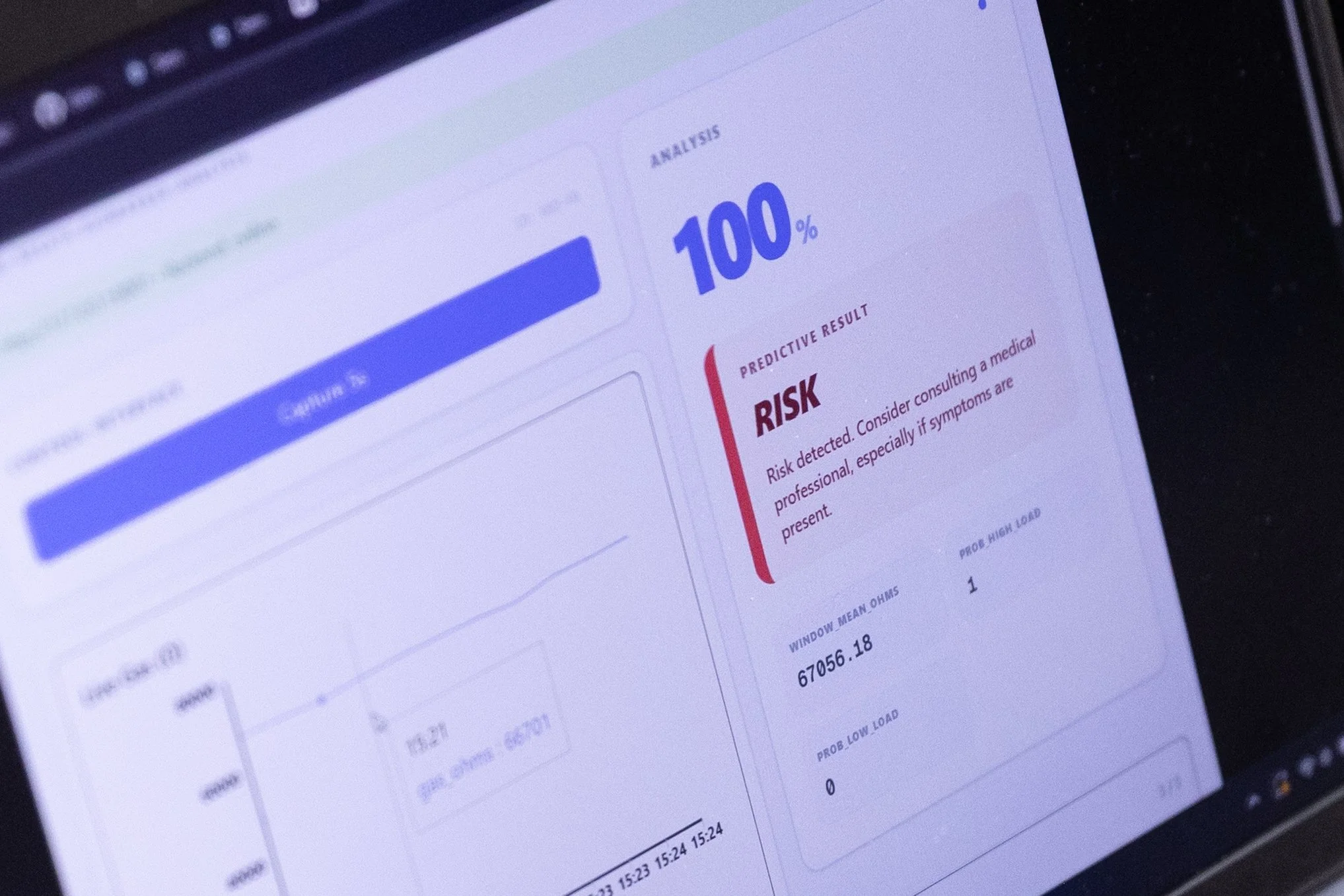
The device’s software reads “RISK” after detecting biomarkers associated with strep throat after Colleran blew into the device during the first round of judging. (Nina Glick/The Santa Clara)
Most of the coding—connecting the hardware to the backend and training the model on live data—had been finalized just before 5 a.m., leaving the team just over four hours to plan their pitch to the judges at 9:30 a.m.
For part of this time, Jamison, Ramos, and Singh went back to their rooms, and Colleran slept while the others worked slowly on the presentation.
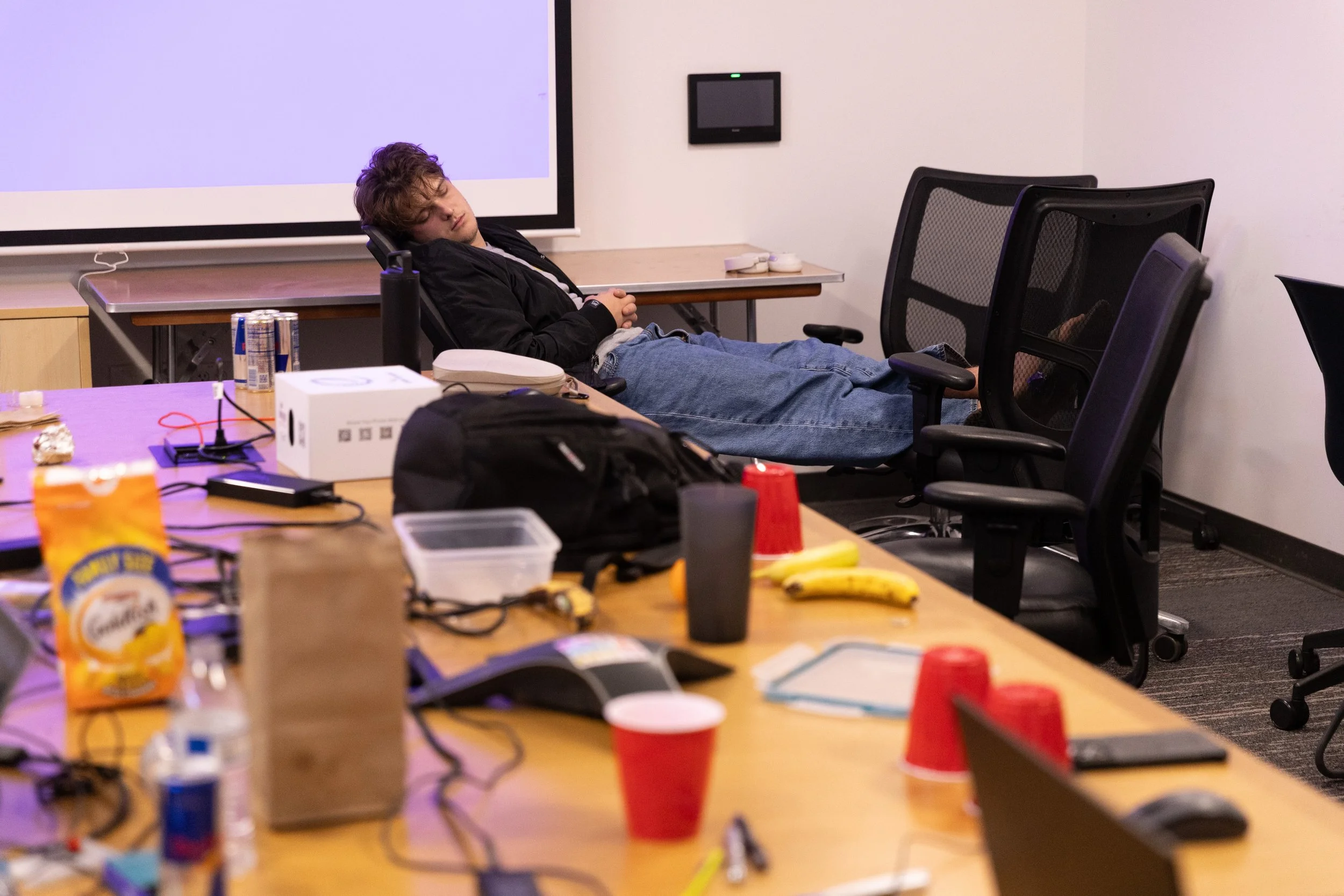
Joshua Colleran sleeps around 8 a.m. (Nina Glick/The Santa Clara)
By the final hour, they lacked urgency, frustrating Colleran when he finally woke up.
Up until two minutes before the submission site locked, he implored his teammates to add a video of him testing the device to contrast with an already existing video of Dodo Garba testing it. The contrast was the key to demonstrating the device worked.
They failed to do it in time.
In the 30 minutes they had between submission and their first round of judging, they only ran through the presentation once before heading to their first presentation, which was quickly interrupted.
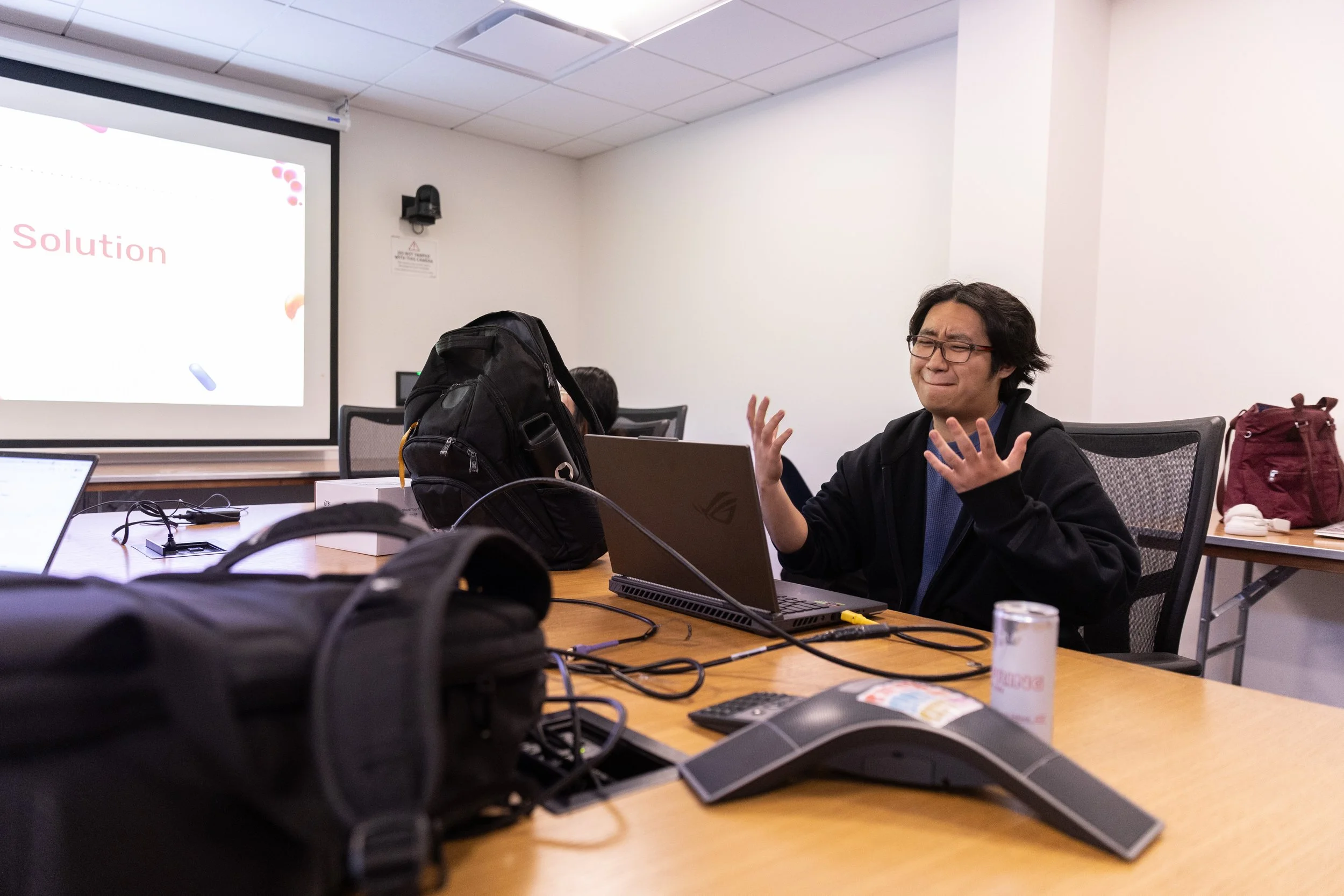
Liam Park pleads with himself to remember the terminology he has to say during the presentation. (Nina Glick/The Santa Clara)
An organizer told them they had to move to the next station. A mistake by another group had caused their team to be moved after the judging time had already started.
Even though they interrupted one another and Jamison talked too long about bananas, the group felt it was their best first presentation they had done together. Colleran’s teammates were especially impressed by his fake cough, emphasizing his sickness.
In their second presentation, one of their judges suggested they should continue with SensAir beyond the Hackathon.
“We nailed the live demo on both of our first two rounds,” Dodo Garba said later. “Live data that we can’t really fake. If it were hard-coded, that wouldn’t happen. Our thing is real, it’s not fake.”
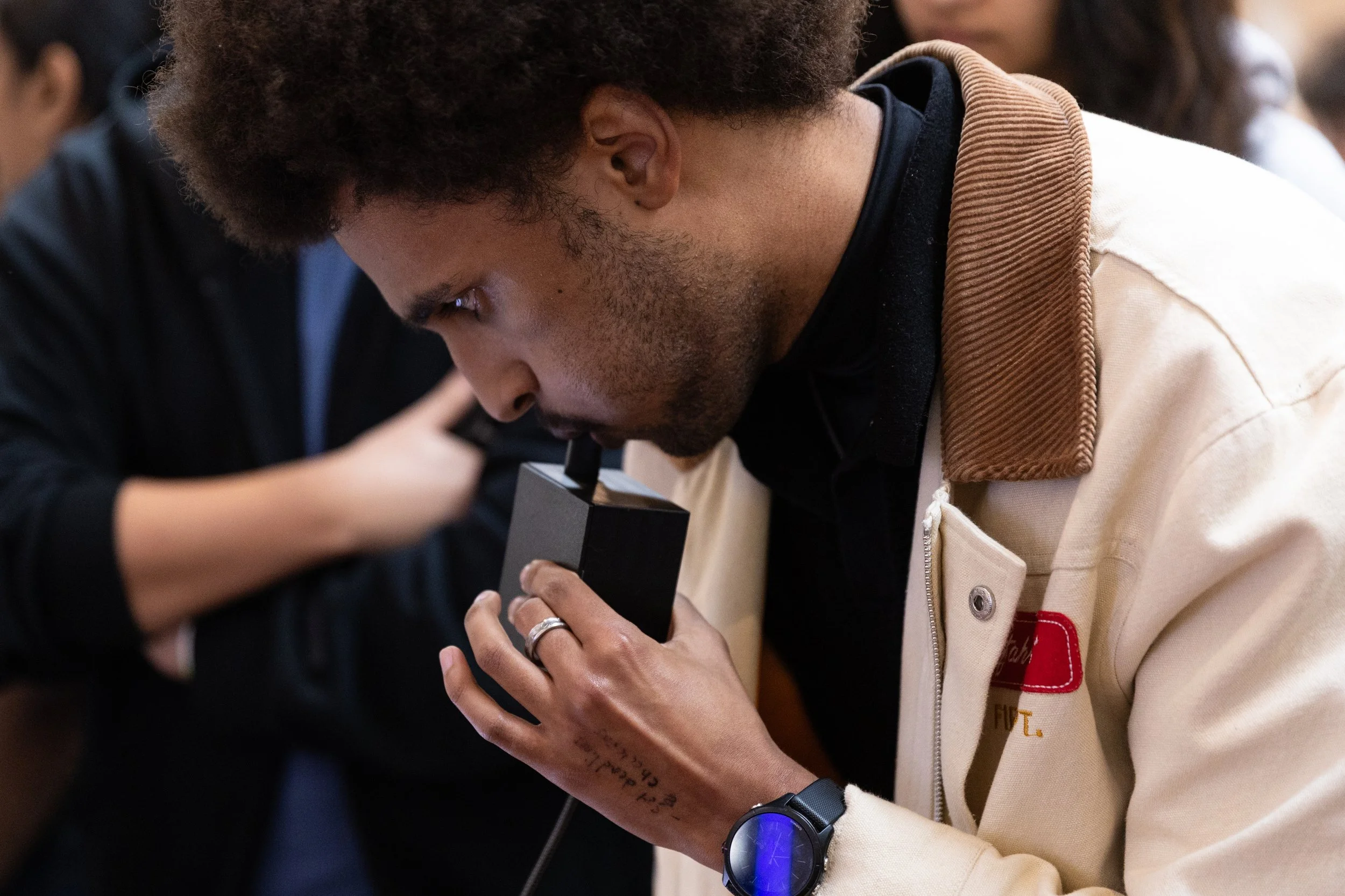
Oumarou Dodo Garba blows into the device during their first round of judging. He acted as the control case. (Nina Glick/The Santa Clara)
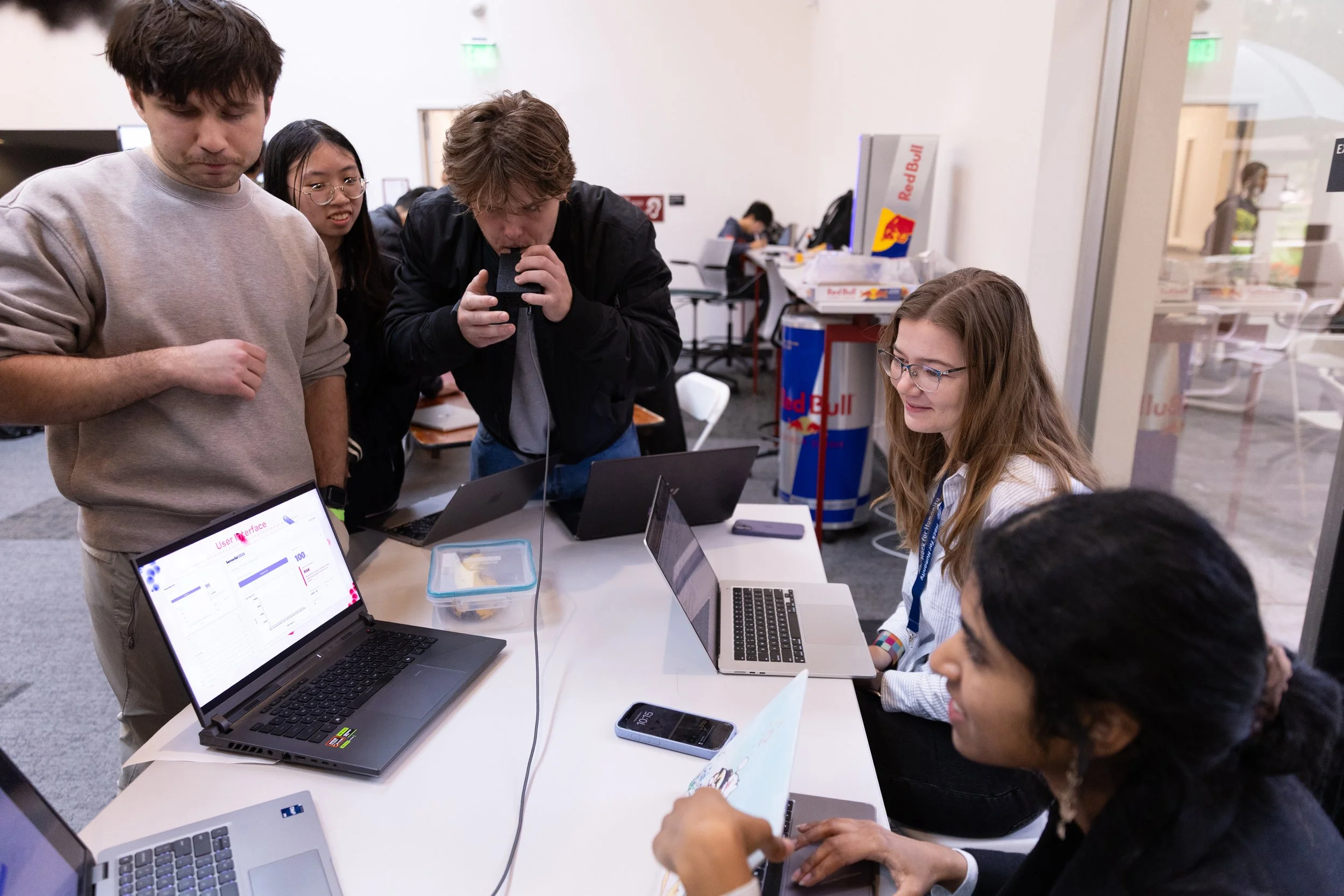
The judges smile watching the machine detect abnormalities in Colleran’s breath during the first round of judging. (Nina Glick/The Santa Clara)
By 11:30 a.m., they were waiting for results.
They learned through an announcement on Discord they were chosen as one of the eight finalists, and that they were going first, which left them with less than 15 minutes to prepare to present in front of all of the judges.
During the presentation, something unexpected happened.
Moisture had built up inside the sensor housing after repeated tests. The circuit board shorted. The device would not power on.
“Every demo except the last one worked,” Colleran said afterward. “It’s just cooked.”
“It’s okay. It happens,” Dodo Garba said.
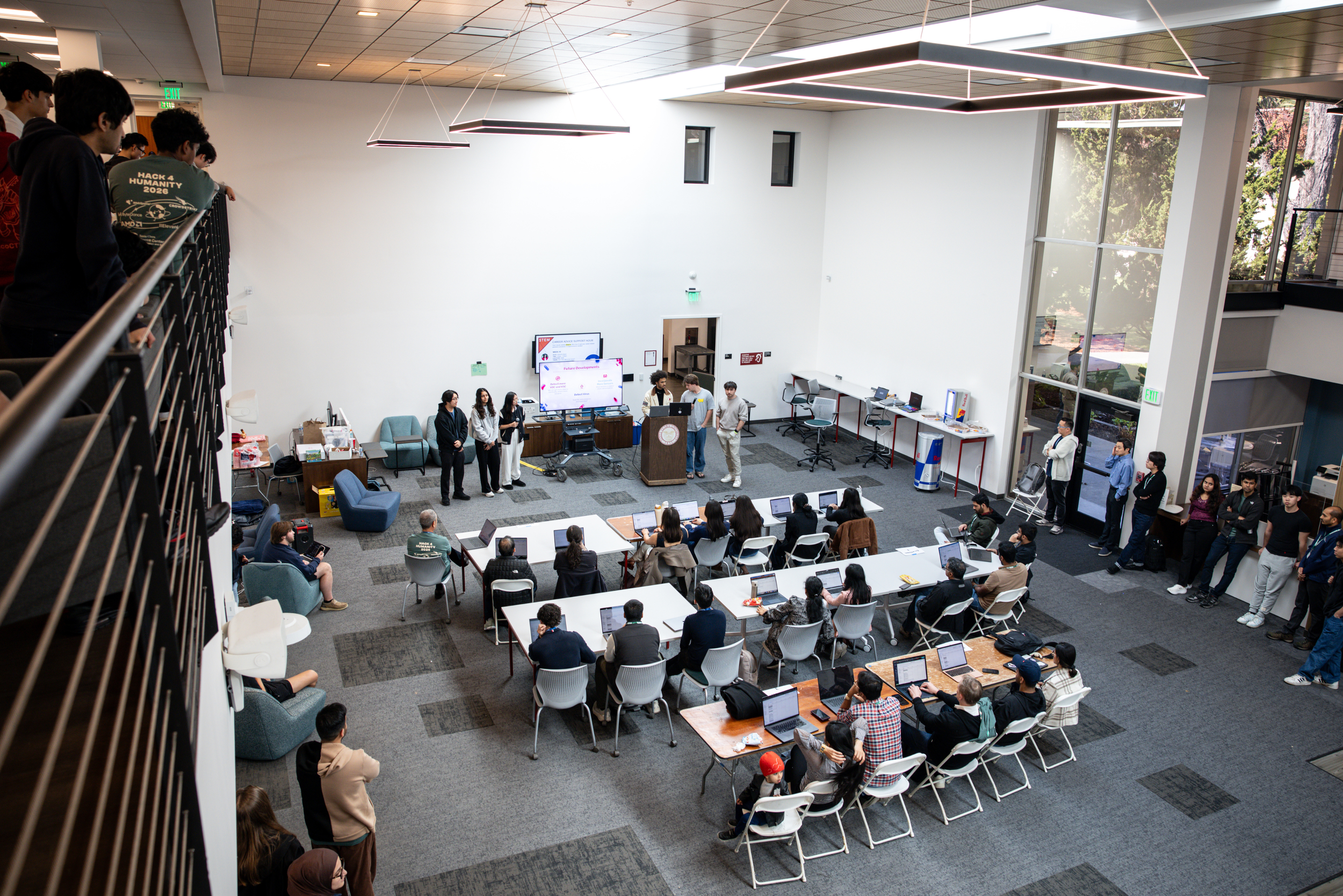
The team presents to the judges and their competitors. (Elaine Zhang/The Santa Clara)
Less than 15 minutes later, the device turned back on.
They had prepared for coding errors, model inaccuracies and skeptical judges. They had not prepared for condensation.
When the finalists were announced, SensAir was not among the top three, nor did it win Best Use of Responsible AI. SaveBox, a team including Gordon Yang ’29, Joseph Hissen ’26, Tongtong Wang ’29 and a student from California State University, Chico, took first place.
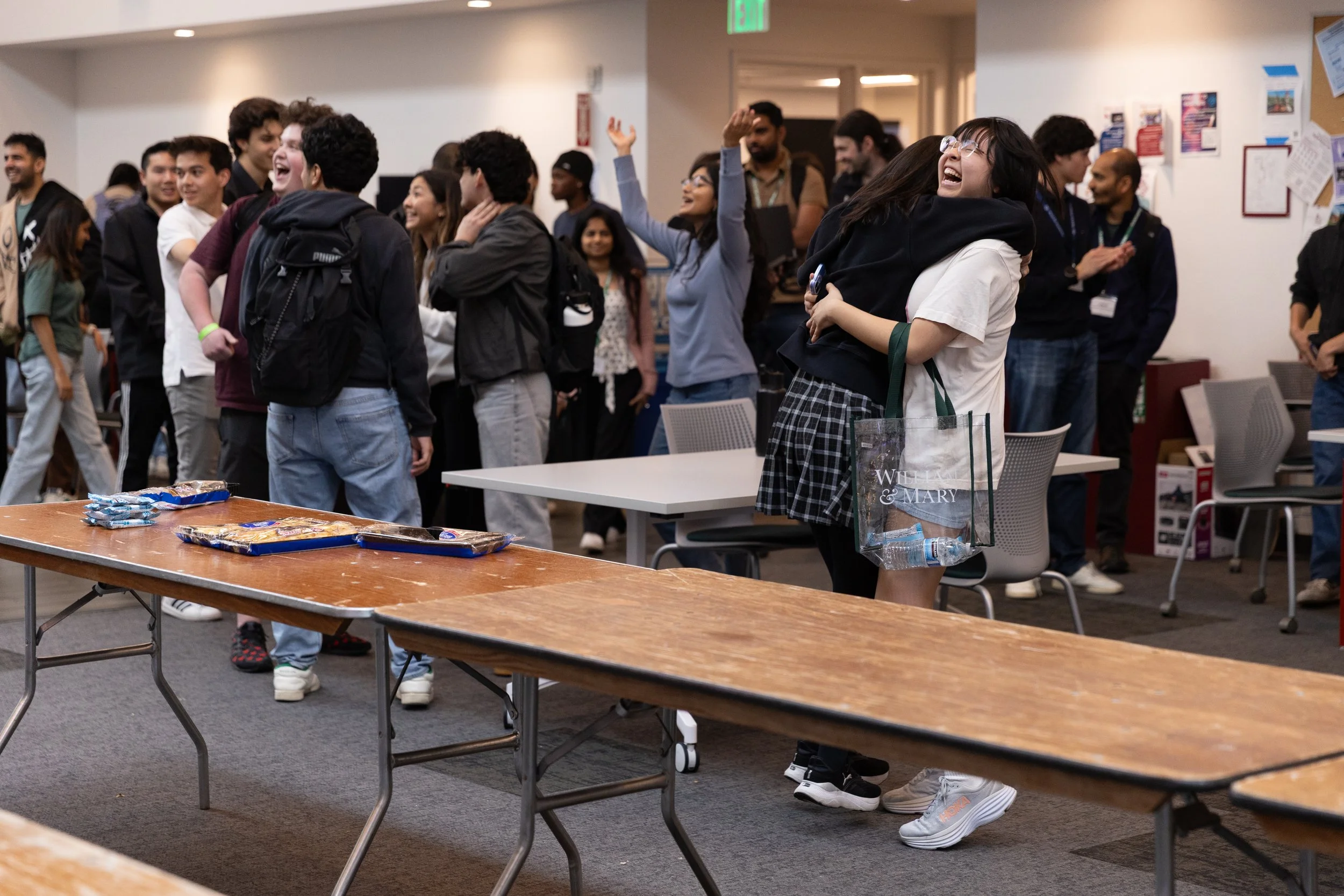
Hack for Humanity teams celebrate winning. (Nina Glick/The Santa Clara)

The SensAir team after hearing the results. (Nina Glick/The Santa Clara)
The questions came quickly. Should they have practiced their presentation instead of playing Fibbage between judging rounds? Should their Devpost submission have been stronger? Did the malfunction cost them everything?
Ramos didn’t have a satisfying answer.
“A loss is a loss,” she said. “I think the presentation wasn’t as good as it could’ve been. Our product doesn’t mean anything if you can’t sell it. But I’m open to doing it again because I want revenge.”
Despite the outcome, pride lingered.
“I’d say I’m pretty proud of us as a team,” Park said. “Everyone kind of filled in their own role. Even though we didn’t show it in front of all the judges at the end, we still showed that it did work to some of them. It was my first hackathon, and I learned a lot.”
For Dodo Garba, the lesson was simpler.
“There’s always going to be a situation you hadn’t prepared for,” he said. “At the end of the day, as long as you put your best foot forward, that’s what matters. I think we did.”
Just before dawn, it had worked. The model flagged bacterial risk, and for a few flickering moments on a laptop screen, SensAir was exactly what they imagined it could be.
And even if the team didn’t place, their product proved something to them—that sometimes the difference between failure and success is just a little moisture in the air.