"Midnight Mass" isn't a Vampire Show
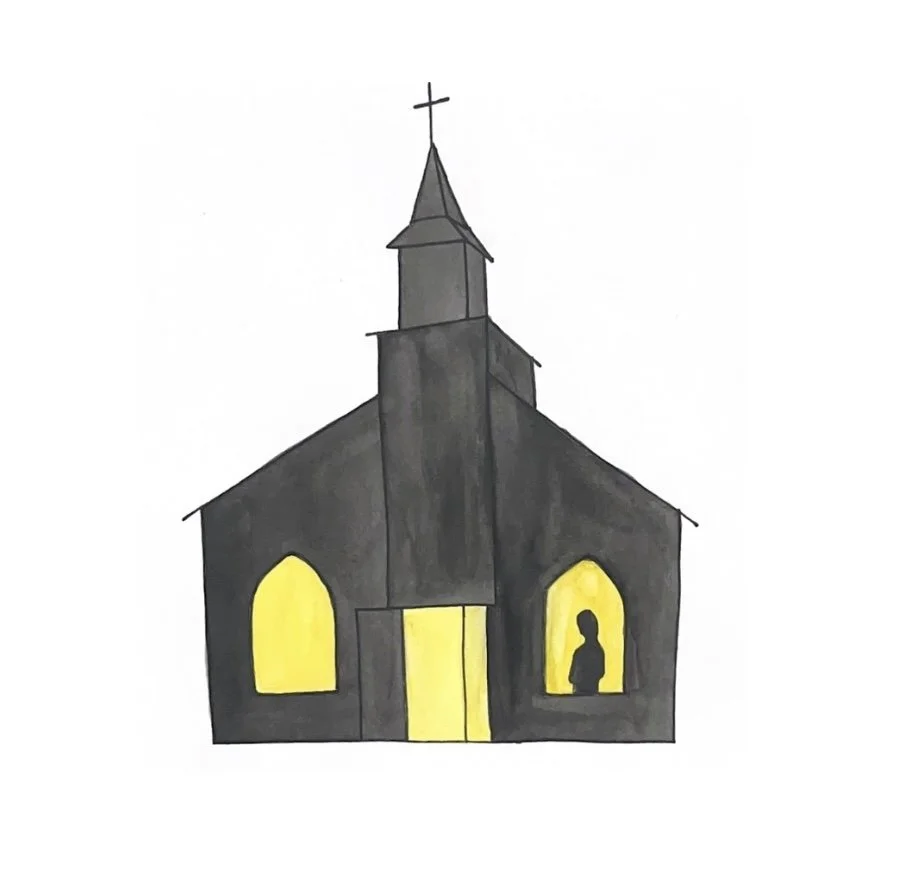
Graphic by Evelyn Crothall
Almost all horror shows are frightening. But few are enlightening.
“Midnight Mass” is a vampire Netflix miniseries that was released during the pandemic…that isn’t really about vampires. It’s about addiction. And belief—the good parts and the bad. It’s nuanced, entertaining and chock-full of nightmare fuel.
Now, I normally don’t go for horror. What can I say? I like my beauty rest. But several friends couldn’t recommend the show enough, so I caved. It gave me the most terrifying night of my life on Bellomy Street—I could have sworn there were vampires out on frat row—but it was awesome. Spoilers ahead!
The show centers on a small fishing town called Crocket Island and takes inspiration from other famous horror works like Stephen King’s “Salem’s Lot,” and classic vampire stories. The town’s parish priest believes that he’s found an angel who can restore the health and well-being of the town—a blood-sucking, murderous angel that burns up in the sun. It ain’t no angel! The show’s monster looks as if a raisiny Nosferatu finally got some fashion sense, rocking some sick fits like old-timey hats, liturgical get-ups, and dramatic grandpa coats. What the creature lacks in looks, it makes up for in pure slaying, literally and figuratively.
The show’s central character is recently out on parole Riley Flynn, a young man still struggling with the aftermath of a drunk driving crash where he took the life of a teenage girl. Through a series of Alcoholics Anonymous meetings, we start to see the show’s actual monster: addiction.
The townspeople are slowly being turned into vampires via communion wine spiked with the vampire’s blood. Once they’re infected with this ‘vampire virus,’ they become overwhelmed by a hunger that prompts them to suck the blood out of their neighbors. But they can resist it too. It’s a near one-to-one in the addiction metaphor, but that’s the catalyst for showing us the mundane horrors of our world: racial and religious discrimination, economic turmoil, long-held regrets, disease and old age.
I think that’s what makes “Midnight Mass” really scary. The villains seem more or less well-intentioned—the priest thinks he’s helping people, and the townsfolk are ordinary people in extraordinary situations. They say the road to hell is paved with good intentions, but the road to vampires is paved with the hope that the world can get better and no one has to suffer. After all, isn’t that what we all want?
Belief is presented to us like alcohol: neither inherently good nor bad, but certainly something which can be used constructively and destructively. The Sheriff’s grounding in Islam leads them to try to be courageous and heroic; the Doctor’s upbringing in Christianity leads her to want to help others as the vampire virus spreads; and Riley’s agnosticism and desire to do right leads him to self-sacrifice, so he can’t cause harm to those he loves as a vampire.
On the flip side, the show explores the pernicious problem of blind belief, a belief that doesn’t think, which is used to justify hatred, violence or atrocity. In history, and even in the present, we may recall times where the belief that good was being done was used to justify something awful. For instance, Stalin imposed the bloody “great purge” upon the Soviet Union, killing countless men, women, and children, all the while believing that it was for a greater cause and a better world. We might say prayers for the poor and hungry but do little to clothe or feed them. Or sometimes belief even leads to a sense of superiority, never stopping for introspection.
Introspection, pausing to understand oneself and others, is what ultimately saves the town from suffering, but even so everyone dies at the end from what can only be described as a lack of proper sunblock. In a way, there’s a sense of peace and happiness as the whole town of vampires came together and supported one another, singing together, right before they become extra crispy.
Supporting and caring for one another in times of crisis is what Crocket Island discovers they needed all along. Love conquers all, even in death. Maybe it's what our world today needs too—if we spent more time with one another, and understood each other, and helped each other, then maybe we wouldn’t need vampires. But we do need each other.
At the end of the day, just in time for the vampires to start walking the night, “Midnight Mass” will spook and surprise. A vampiric epidemic, a divided, struggling community and a sense of isolation and connection: “Midnight Mass” is the perfect show for a world that’s lived through so much more than just a pandemic, than war and economic uncertainty. We’re still learning how to be neighbors again.