Politics of Patriotism
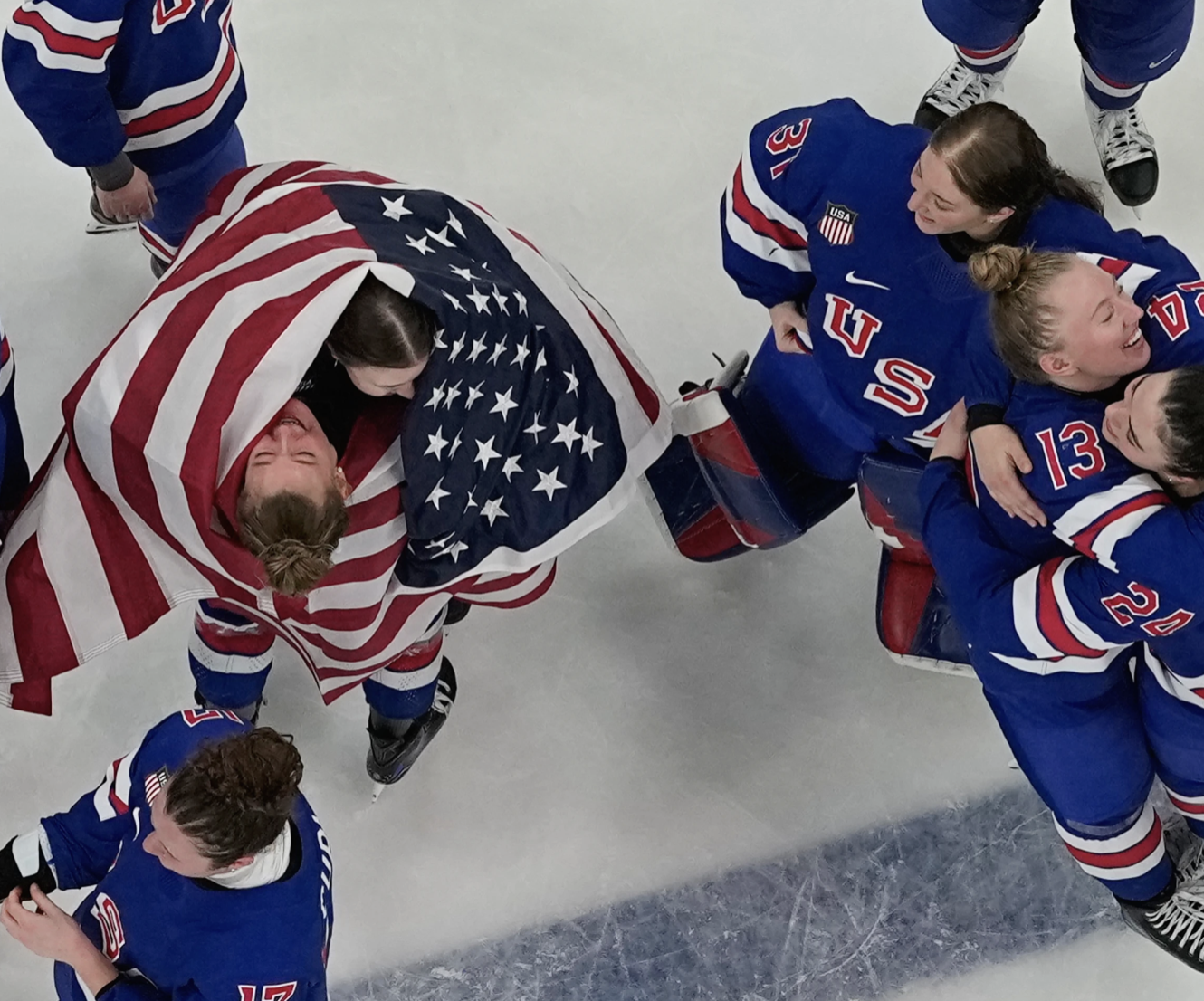
Team United States players celebrate after beating Canada 2-1 in overtime in the women's ice hockey gold medal game at the 2026 Winter Olympics, in Milan, Italy, Thursday, Feb. 19, 2026. (AP Photo/David J. Phillip)
The Olympics provide athletes the chance to compete at the highest level and potentially bring honor to their country. This year, a sexist undercurrent added a caveat to the patriotism fans felt upon medal wins.
U.S. hockey fans who woke up for the 5 a.m. puckdrop of the men’s hockey gold medal game on Feb. 22 knew the odds going in. Not only has the men’s team not won a gold medal since the 1980 miracle run, but just last year lost to Canada in the Four Nations Faceoff final despite beating them earlier in the tournament. The casual fan might not realize the significance of this win, but it is potentially once in a lifetime.
After the game, President Trump called and invited the team to the State of the Union, begrudgingly inviting fellow gold medal winners, the U.S. women’s hockey team. “We’re going to have to bring the women’s team,” Trump joked, saying otherwise he would risk impeachment. This joke was met with laughter in a moment that can be called locker room banter at best and straight-up misogyny at worst.
Goaltender Jeremy Swayman was the first player to admit even an ounce of wrongdoing. “We should have reacted differently,” Swayman said.
Brothers Jack and Quinn Hughes, both scoring important golden goals in the tournament, remained far more neutral. “People are so negative about things,” said Jack Hughes in response to online backlash.
Despite most U.S. men’s players not directly condemning Trump’s sexist joke, the team has demonstrated overwhelming support for the U.S. women’s team in general. Misogyny still permeates sports’ spaces, but the recognition of the women’s team accomplishments could potentially bridge this gap.
I understand the serious ramifications of any player criticizing President Trump’s comment and why no one has addressed the problematic nature of his comment head on. However, failure to admit that laughing at a sexist joke causes harm further isolates female sports fans in male dominated fanbases.
Casual sexism and straight-up misogyny are not uncommon in the hockey world. Hockey culture is littered with sexism, both on the part of fans and players. Online community spaces come off as hostile to female fans, and refusal to condemn sexism in the community speaks volumes. Sexual assault allegations permeate the atmosphere of the NHL, with the most memorable case recently playing out in the summer of 2025. The five players charged with and acquitted of sexual assault have all reentered professional hockey. This incident is just one more in a long line of dismissal of women from these male-dominated spaces.
Many of the U.S. men’s team players have responded to the incident with overwhelming support for the U.S. women’s team’s success in the Olympics. While this support is touching and genuine, it does not ease the discomfort that many female fans and athletes, including myself, continue to feel. While I do not expect athletes to be politicians, I expect morality.
“The joke was distasteful. It’s not my responsibility to explain someone else’s behavior,” said Hilary Knight, U.S. women’s captain. This response sums up the burden some feminist fans face. They can lower their expectations and come to terms with the fact that women aren’t made welcome in many sports spaces or they can withdraw their loyalty to a sport.
The Hughes brothers cameoed SNL’s latest episode alongside U.S. women’s hockey gold medal winners Knight and Megan Keller. While this moment shifts the narrative, it reeks of PR scrambling. Would SNL invite the women’s team if it were not for the outrage caused by President Trump’s comments? Despite the obvious attempt at damage control, the united front presented by both men’s and women’s players does ultimately benefit U.S. hockey and those who support the teams.
This monumental Olympic win will go down in U.S. sports history without a doubt, but it is a shame that this moment will remain tainted in the hearts of many fans. Past generations can recall watching the miracle on ice in 1980. Will this generation remember the U.S.’s victory over Canada with the same affection that the past Americans remember the miracle run?