Pope Leo XIV: The First American Pope
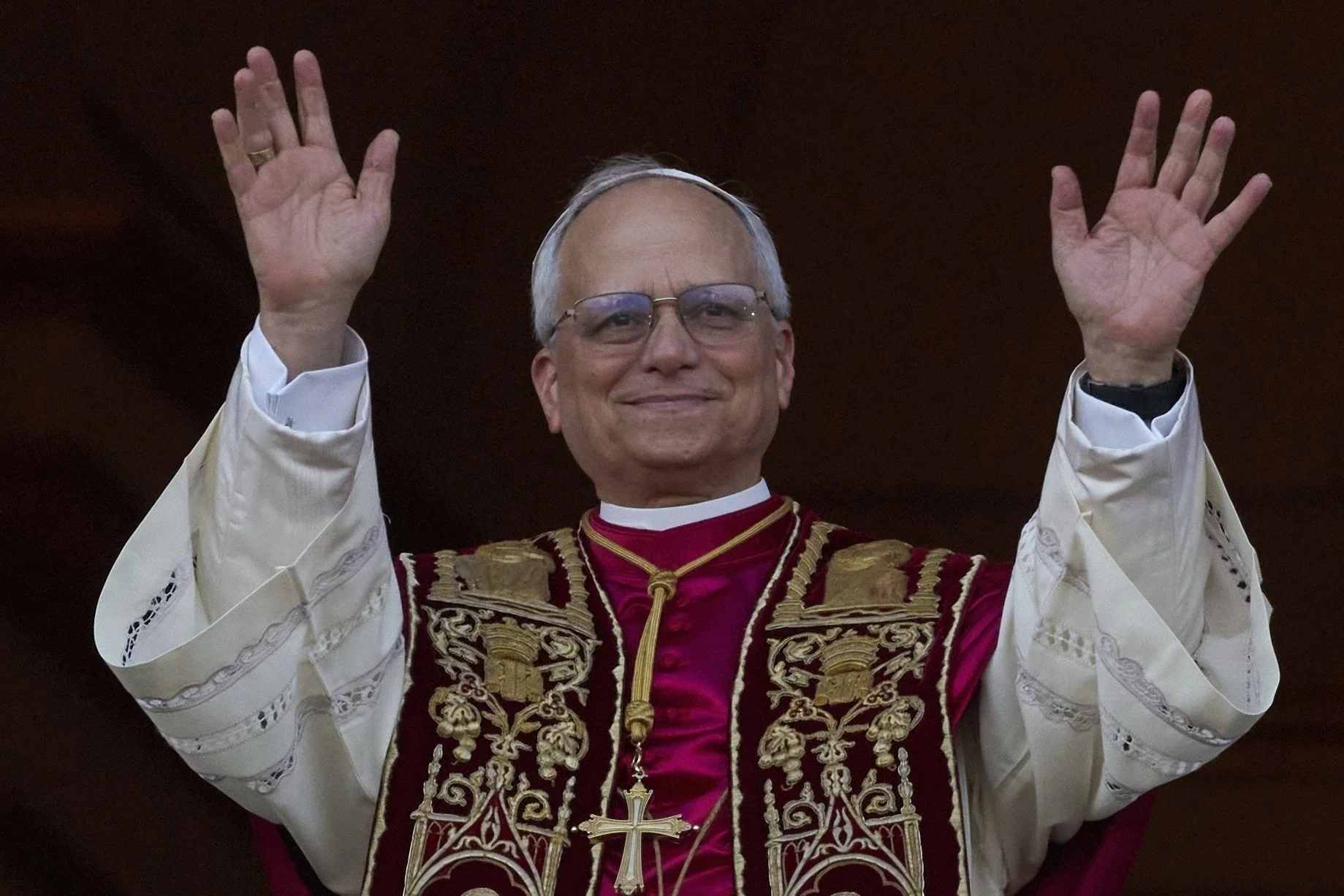
Newly elected Pope Leo XIV appears at the balcony of St. Peter's Basilica at the Vatican, Thursday, May 8, 2025. (AP Photo/Andrew Medichini)
White smoke rose above the Sistine Chapel as church bells rang out across St. Peter’s Square on Thursday, signaling the election of a new pope to lead the Roman Catholic Church. Cardinal Robert Francis Prevost, an American-born prelate who spent most of his ministry in Latin America, was elected pope Thursday after two days of conclave deliberations. He has taken the name Leo XIV and is the first U.S.-born pontiff in Catholic history.
The decision surprised many not only for its geographic significance, but also for the symbolism invoked in his papal name. Pope Leo XIV follows in the footsteps of Leo XIII, a transformative figure known for championing workers’ rights and inaugurating modern Catholic social teaching in the late 19th century.
“The initial shock this morning was that we have an American pope at all,” said Elyse Raby, professor of Religious Studies at Santa Clara University. “And then there was another level of surprise that he chose Leo XIV—that name connotes a particular style of papal authority and an emphasis on Catholic social justice.”
Prevost’s American roots, however, belie a deeply global background. Born in Chicago, he entered the Augustinian order and spent much of his adult life in Peru, eventually becoming a bishop in a rural northwestern province far from Lima. Matthew Carnes, S.J., vice president for mission and ministry at Santa Clara University, emphasized that this global perspective is central to understanding the significance of his election.
“He's bringing the experience of people not in Lima but from a far-flung province,” Fr. Carnes said. “This is as much an embrace of the global South as it is of the United States.”
While the deliberations of a papal conclave are a closely guarded secret, it’s widely thought that the Vatican has historically been reluctant to elevate an American to the papacy, wary of appearing too closely aligned with a global superpower. Robert Barron, bishop of the Diocese of Winona–Rochester in Minnesota, who was appointed by President Trump to the new White House Commission on Religious Liberty, commented in an interview with CBS: “
But Prevost, now Pope Leo XIV, complicates that narrative. “Among the candidates, and especially among the Americans, he’s the most ‘non-American’ American,” Raby said. “He grew up in the U.S. but spent most of his life ministering abroad.”
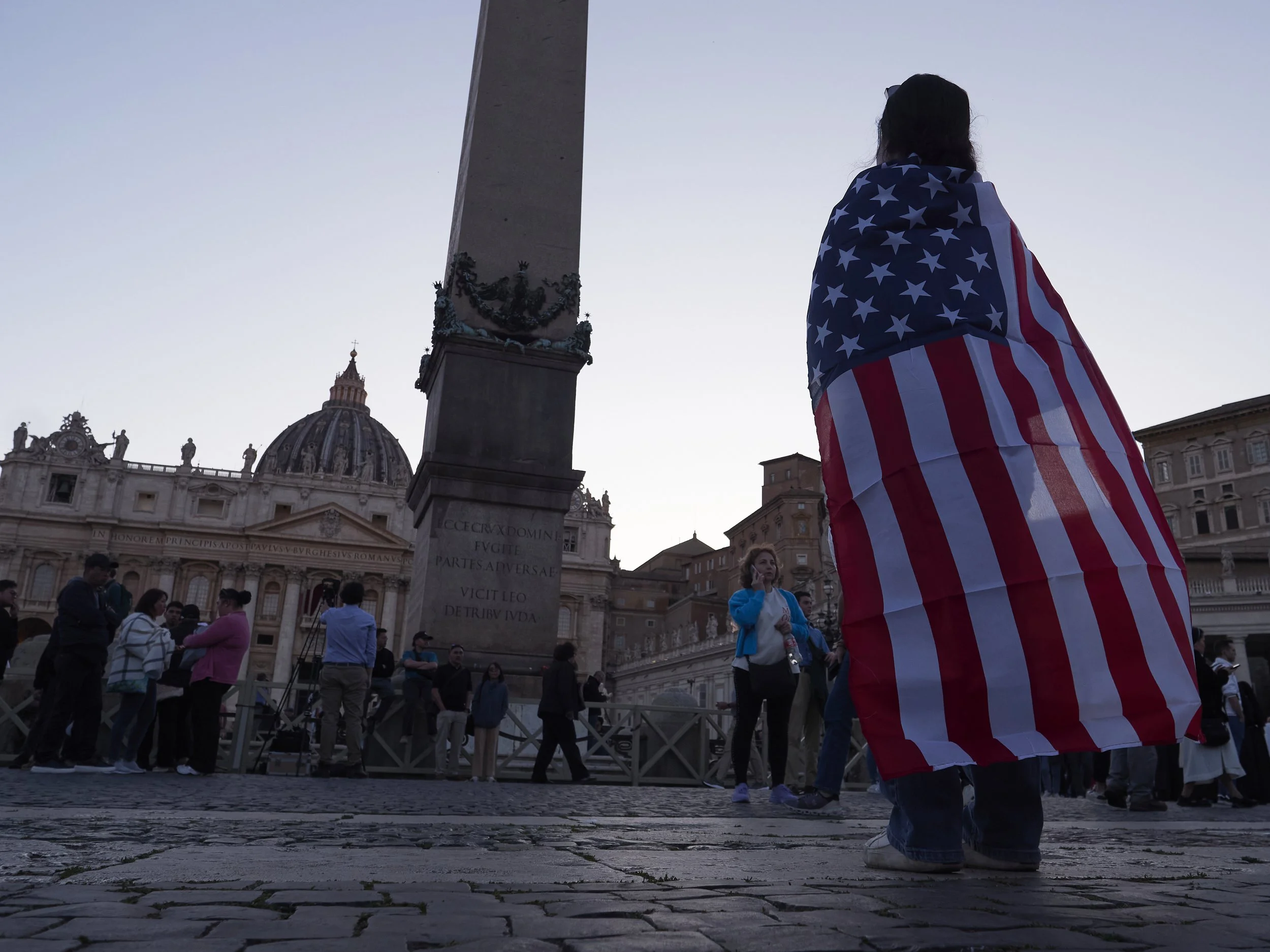
Andrea Gallardo, 20, from Texas, wears an American flag after Pope Leo XIV appeared on the balcony of St Peter's Basilica following his election, at the Vatican, Thursday, May 8, 2025. (AP Photo/Paolo Santalucia)
According to Fr. Carnes, the church’s choice of Leo XIV may signal a reappraisal of America’s role on the world stage. “The U.S. standing in the world is in a really kind of shaky spot right now,” he said. “To choose a leader from there who can speak with a moral voice says a lot about the way the Church sees the U.S.—not as dominant, but as one more place with something to contribute.”
Pope Leo’s first public remarks echoed many of the themes championed by his predecessor, Pope Francis. He emphasized the need for a "synodal" church—one that listens—and spoke of building bridges, inclusion, and peace.
“He talked about the church needing to ‘build bridges,’ which was a favorite line of Pope Francis,” said James “Matt” Ashley, professor of Christian Spirituality at the Santa Clara University-owned Jesuit School of Theology. Ashley pointed out that Leo XIV mentioned wanting to be a ‘synodal’ church in his small balcony speech. According to Matt, synodality was one of the more radical moves that pope Francis made.
Matt, like others, sees in Leo XIV a quieter, more reserved figure than Francis. “He’s less flamboyant. I think the cardinals were looking for someone who wouldn't surprise them quite so much,” he said. “The Vatican press office might not need spin doctors every time he talks to journalists.”
Still, there are questions about how Leo XIV will confront the darker legacies of the Church, particularly regarding past abuse cases. Fr. Carnes expressed cautious optimism, acknowledging the complexity of the issue.
“My sense is he’s very committed to trying to root out abuse and trying to then, with humility, engage people who have suffered abuse, and really recognize their important voice in the church,” Fr. Carnes said. “But I’d want to learn more before commenting deeply on specific cases.”
In his years as head of the Dicastery for Bishops, Leo XIV advised Pope Francis on episcopal appointments worldwide. His name choice has inspired numerous theories about the path of his papacy; whether he will push for a more progressive Church, or take a traditionalist approach.
“I really don’t know yet what to make of the choice of the name Leo XIV.” said Raby. “I think it’s too early to tell, because they say that the office changes the man in some way.”
“On the one hand, Leo XIII, who was pope from the late 1800s to the early 1900s, was known for really kind of promoting and developing the Catholic Social Teaching,” said Raby. “One of his early documents was kind of a really vigorous defense of the dignity of workers, the rights of workers, and care for the poor. So he stands in that social justice tradition that we’ve come to see in Francis”
“But Leo XIII also published more encyclicals than any of his papal predecessors combined,” she continued. “So in my particular field, Leo XIII connotes a particular style of papal authority and a particular way of saying, ‘I am the Supreme teacher of the church.’”
Asked what guidance he would offer the new pope, Fr. Carnes drew on the Ignatian tradition: “St. Ignatius emphasized that the Holy Spirit is working in every single person. If he can actually keep listening to the voices, especially of those who are humble, those who are on the ground, the kind of people he knew in Peru that will make us a better church.”
As the faithful across the globe react to the dawn of Leo XIV’s papacy, one thing is clear: though he may hail from Chicago, his vision for the Church transcends borders. Whether that vision will lead to bold reforms or cautious continuity remains, as Raby put it, “too early to tell.” But for now, the bells of St. Peter’s have rung—and history has been made.