Residence Life Workers Question Stability of University’s RLC Model
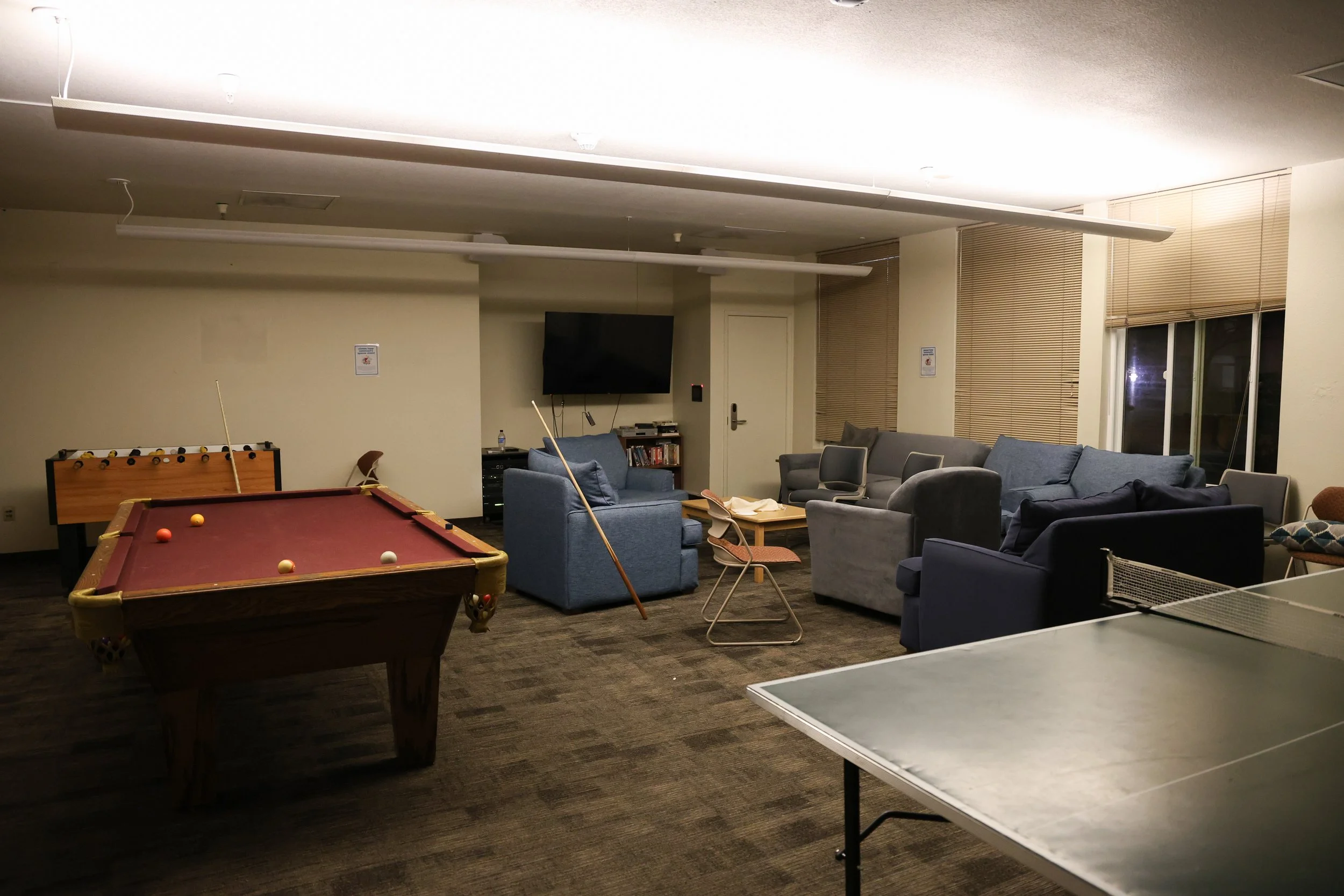
A common room in Sobrato Residence Hall sits unoccupied. (Nina Glick/The Santa Clara)
The email naming an interim resident director arrived weeks too late. By the time an assistant resident director in University Villas saw it, she said, she had already spent nights answering questions that were supposed to go to her supervisor: what to do after a resident’s mental health emergency, who could approve a purchase, where to send an escalating roommate conflict.
The resident director—her boss—was gone. But life in the buildings didn’t stop.
“The one and only email I got was weeks after the old RD had left,” she said.
She asked not to be named for fear of retaliation, but her account echoed through interviews with Residence Life student workers and campus partners: a year of abrupt departures, rotating interim supervisors and a dorm system where student staff said they were left to fill gaps as professional leadership changed.
Seven of nine resident directors left Santa Clara University during the 2024–2025 academic year. Resident Life staff said the turnover left some residence halls operating without permanent resident directors for stretches of time and others relying on interim leaders responsible for more than one community—a dynamic they said blurred the chain of command and pushed student workers into expanded responsibilities.
“It felt like we had no RD,” the assistant resident director said despite having an interim residence director. “When there’s supposed to be another point person and that’s completely gone, you just get looked at for a lot more things.”
In a statement provided to The Santa Clara, Deborah Lohse, the University’s director of media and internal communications, said the Residential Learning Community experience “is a vital part of student life,” and that residence halls are “currently nearly fully staffed with committed and caring Resident Directors.”
Lohse acknowledged that staffing disruptions have affected student workers in the past and said the University reaches out when it becomes aware of uncertainty caused by midyear departures.
“When we become aware of such situations, we reach out to those students to provide guidance, clarify expectations, and ensure continuity of support,” Lohse said in the statement.
But multiple Residence Life staff contested that description. Various student staff said they were not contacted during an extended absence of their residence directors and only received an email after administrators had selected an interim RD.
“In my recollection I was not reached out to until it was an email about who is my interim RD,” the staff member said.
The accounts from staff members point to a broader question than staffing alone. They suggest that a Residential Learning Communities model built on student labor, and dependent on trust and continuity, may falter during professional turnover, leaving student workers to navigate crises with limited information and little assurance that the institution will follow up.
Santa Clara University’s residential learning communities rely on a network of roles meant to keep student life stable. Resident directors, assistant resident directors and community facilitators live in the residence halls, supported by campus partners on leadership teams, including faculty directors, spirituality facilitators and therapists-in-residence.
Both student staff and pro-staff said the model can work when leadership is consistent and communication is clear. But several student workers said stability was fragile last year.
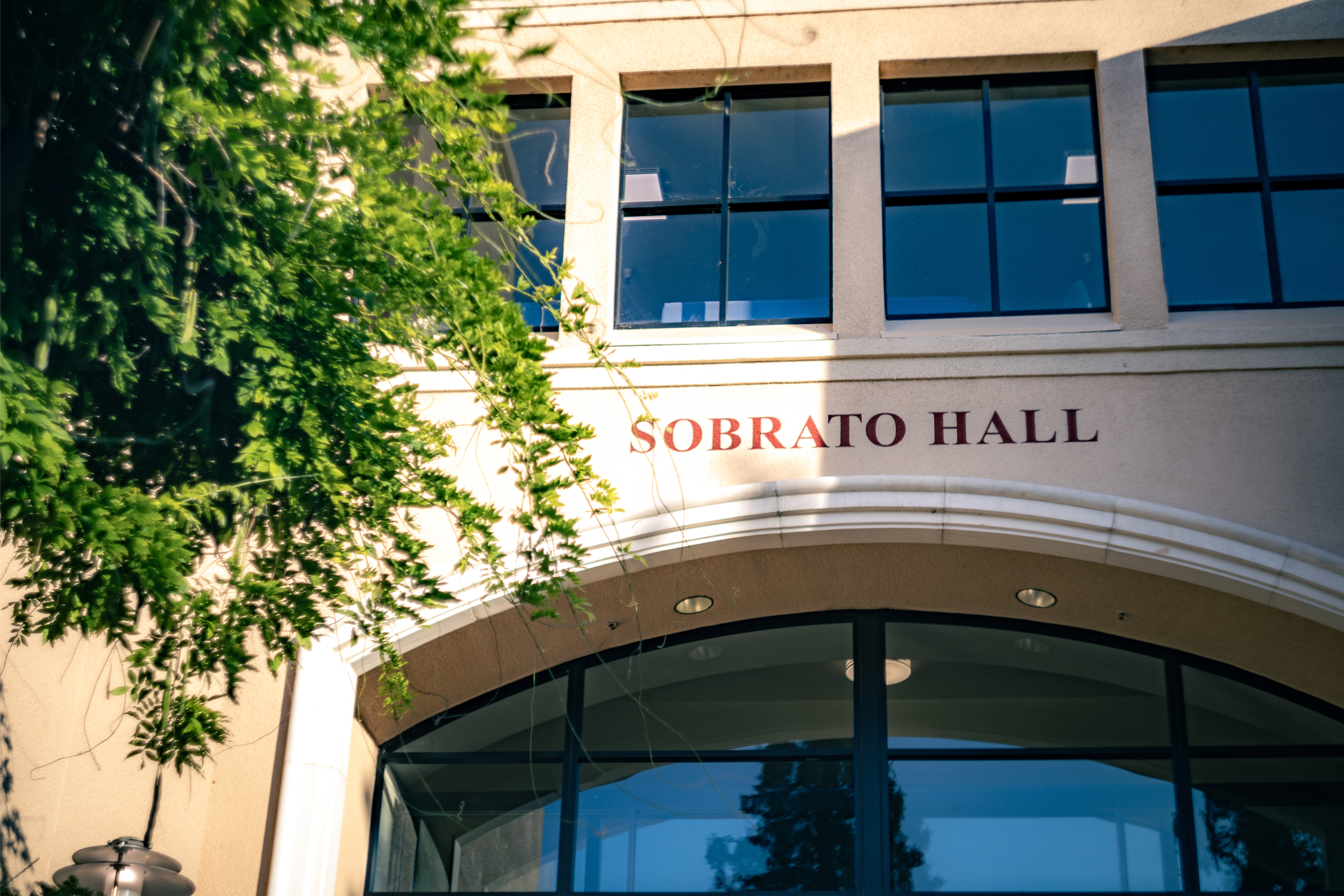
At Santa Clara University, the Sobrato residence hall is one of the eleven undergraduate residence halls on campus with over 300 student residents. (Elaine Zhang/The Santa Clara)
“A Hole Was Left in Our Building”
A community facilitator in Sobrato Hall described the loss of their resident director as a rupture that changed the mood and direction of an entire building.
“I remember feeling like a hole was left in our building,” the facilitator said, requesting anonymity because of concerns of losing their housing for speaking up. “There was a lack of direction and guidance. Their presence alone kind of was very helpful and warming.”
Without that presence, the facilitator said the work began to feel unmoored.
“I didn’t really feel like I was really a CF,” the facilitator said. “I just felt like I was another person in the res-hall at that point.”
A former assistant resident director said interim arrangements sometimes reinforced the feeling that leadership was technically assigned but practically absent.
“The interim RD was never in our building,” she said. She noted how many of the neighborhood representatives she helped manage didn’t feel comfortable approaching the interim RD with issues. “They didn’t build rapport or trust with them.”
A 3 a.m. Crisis—Even Off Duty
The same assistant resident director described how the job can follow student staff even when they are not officially on call. She said it was around 3 a.m. when a student knocked on her door seeking help.
The student said they had been walking home and encountered another resident experiencing serious suicidal distress. According to the assistant resident director, the student tried to intervene but panicked and didn’t know what to do next.
“People know where the ARDs live,” said the assistant resident director, who requested anonymity because of fear of retaliation. “It’s all labeled and like we are advertised as sources of support.”
The assistant resident director said she responded despite being off duty, and followed the same protocol she would have used on call. She contacted the resident director who was officially on duty, and Campus Safety Services also responded. While professional staff ultimately took over, she said the incident still required student involvement, including supporting the resident who had witnessed the crisis.
While professional staff ultimately took over, she said the incident still required prolonged student involvement. She remained with the resident who had witnessed the crisis, describing it as something you cannot simply “walk away from.”
“It was a hard thing to respond to,” she said, adding that the experience underscored “the super high responsibility” student staff carry in Residence Life.
The assistant resident director said similar situations happened twice more in later years—incidents she responded to while on call—and said that after each one, the Office of Student Life and Residence Life discussed that “a student shouldn’t be handling that.” But she said the repetition suggested deeper protocol failures, arguing the University should consider routing these crises away from student staff and toward professional mental health responders.
Questions About Leadership
For some Residence Life staff and campus partners, the turbulence over vacancies has fed into criticism of University administration, including Lafayette Baker, the University’s director of Residence life.
Baker declined to be interviewed for this story.
Baker will resign at the end of the academic year to “pursue other personal and professional opportunities,” according to Lohse’s statement.
Multiple staff members described Baker as distant from the daily reality inside dorms.
“We wouldn’t really see him around,” a current assistant resident director said.
Professor Chan Thai, the faculty director of the Finn Residence Hall as well as the chair of the faculty directors, said collaboration has been strained and questioned whether Residence Life leadership has approached the work as a partnership. Not all staff within the residence halls report to the Residence Life Office—faculty directors, spirituality facilitators and therapists in residences report to the Office of the Provost, Campus Ministry and the Cowell Health Center respectively.
“I do kind of question some of the leadership in Residence Life,” Thai said. “It has not felt like a partnership in a lot of ways.”
Elise Dubravec, a campus minister who supervises spirituality facilitators—graduate students embedded into residence hall leadership teams, said residence communities need imagination and redesign, but she found those conversations hard to advance.
When Vacancies Spread Beyond Residence Life
Faculty directors said staffing gaps don’t only create an empty office—they redirect problems to whoever remains visible. Thai said that can mean faculty directors become the landing point for housing conflicts and logistical issues, even when they have no authority to resolve them. She pointed to ongoing instability after last year’s RD turnover, including residence halls operating without a permanent resident director and others relying on interim leaders who supervise more than one community.
“We don’t have an RD in Cura right now,” Thai said. “So I get emails like, ‘I want to talk to you about a roommate conflict.’ And I’m like, I would love to talk, but I actually can’t do anything to change your room, because that’s not my job.”
Dubravec said the RLC’s broad collaboration can sometimes mean diffuse responsibility—a structure that feels supportive, but can also feel directionless.
“The benefit is you have all these cross collaborators,” she said. “A hindrance is, like, there’s too many cooks in the kitchen.”
Thai warned staffing stability may be temporary without structural fixes.
“If none of the larger structural things changes, then in like two years, we’re going to start seeing the Exodus again,” she said in reference to a majority of the Residence Directors leaving the University in recent years.
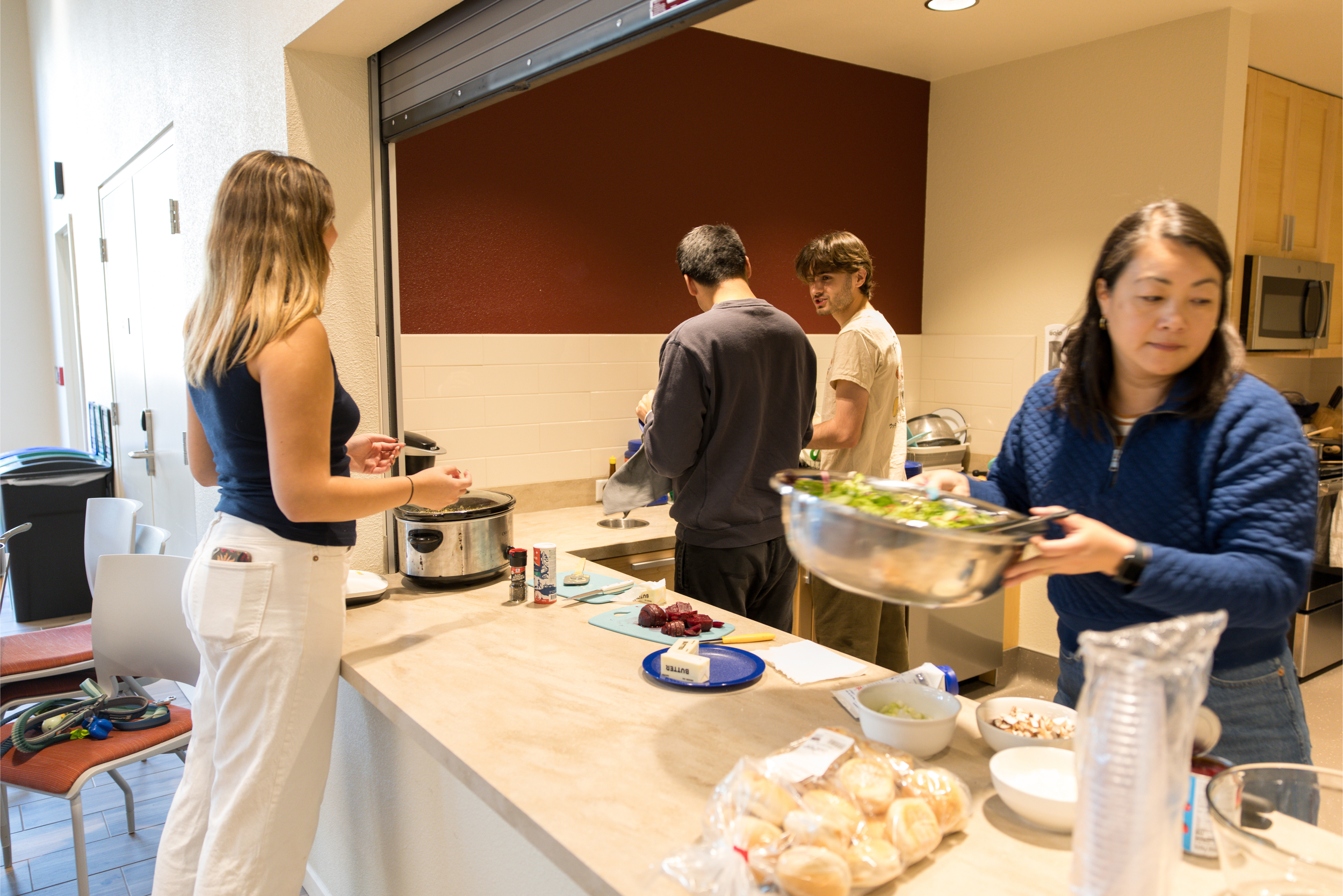
Professor Chan Thai, faculty director of the Finn residence hall, alongside other residence life staff helps prepare Thanksgiving dinner over the break for students who did not return home. (Elaine Zhang/The Santa Clara)
ASG Resolution Calls for an Audit
Concerns about Residence Life are now being debated publicly through student government.
A resolution authored in part by Tiago Moreno ’28, a sophomore senator in Santa Clara University’s Associated Student Government, calls for reforms to residence life and new protections for student workers. The proposal asks the University to do an audit to look into the working conditions for Residence Life staff and to evaluate whether the Residential Learning Communities model is adequately structured and resourced.
“The purpose of the resolution is to grant, you know, compile the results of 17 interviews that I did in a single cohesive document to identify both problems and solutions,” Moreno said.
“People have been very receptive and also very concerned about the content that we’ve provided to them about the contents of the resolution that we’ve then been indicating to them,” Moreno said when speaking on conversations he’s had with University administrators.
“Yes, there’s a lot of work to be done, and there is a lot of space to grow, but it isn’t that administration hasn’t been receptive. They’ve been very willing to talk with us and figure out a way to move forward.”
But for the second week in a row, senators did not move the measure to a vote.
On Jan. 22, after multiple hours of debate, the student senate voted to table the resolution again, delaying a decision for at least another week. Recording of the meeting is available on the student governments YouTube.
Video from Associated Student Government of Santa Clara University Senate Meeting on Jan 22, 2026
“The Student Senate voted to table the resolution another week,” Matthew Van Dyke ’26, the student government’s vice president of public relations, said. “This decision was made to take one last thoughtful look at the document to see if it can be made any stronger to make the biggest impact for student life.”
Van Dyke further clarified saying “As far as I am aware, the reason to table is to clean up some of the language within the document. I would not expect there to be any major revisions content wise, but since I am not a senator I can’t speak fully to what might happen over the next week.”
Mental Health Crisis and the Limits of Student Labor
Residence Life staff described mental health crises as the point where the mismatch between training and reality is most visible.
“There’s a lot of confusion over what the role of therapists in residence are supposed to be,” Moreno said.
Moreno said mental health staffing is limited outside standard business hours, arguing that counselors are largely unavailable after the Cowell Health Center closes.
“There aren’t any mental health respondents who are active the rest of the time,” Moreno said.
Therapists in residence said their program is designed for accessibility and prevention, not constant emergency response.
“The whole point was really to just make mental health services a bit more accessible,” said Kristin Tappan, a therapist in residence.
Mitchell Gale, another therapist in residence, said CAPS maintains an on-call structure and partners with a 24/7 hotline vendor called YouWill, while in-person response typically occurs only after major incidents.
“When we are going to show up in person is after something we would consider to be a critical event,” Gale said, “like a death in the residence hall, or an incident that has impacted multiple students.”
Tappan emphasized boundaries student staff are encouraged to understand.
“I think that, there’s a misconception that, because we live in residence, that one of us is always available to respond in person, even if someone's like, I'm having a panic attack, but like, a panic attack is not a mental health crisis, like it’s a mental health incident, but it’s not a mental health crisis,” she said. “No one’s expecting you to be therapists.”
Tappan did clarify there have been times when therapists have responded in person even when they were not officially scheduled to be on call, including after “a student death on campus a few years ago.” She said senior administrators reached out to the therapists in residence around midnight and asked if someone could respond to support the affected community, and she agreed to go to the building within minutes.
But Residence Life workers say that after a crisis ends, student staff remain close to the aftermath—expected to check in on residents while knowing little about what happens next.
“Something that really concerns me is the follow up aspect, what happens when a case has happened, it has been sent up the chain, but action hasn’t been taken yet,” Moreno said. “The pressure falls back on the student staff member to make sure that the person is okay, worrying that the person might attempt to kill themselves or something else, and then pouring their days and their nights into that student, instead of taking care of their own life, which is also important because they are students before they are staff members.”
Fear Shapes Who Speaks—and How
Several staff members requested anonymity, citing concern that speaking openly could jeopardize their employment and housing. One student staff member described how they and others who feared they could “lose my job” for speaking up and said a recurring perception among student workers was that retaliation was possible within the Residence Life chain of command.
One former Residence Life staff member described how this culture has contributed to high turnover.
“They really do bad name you. And that’s why I know at least three RD’s left,” they said. “It’s because they became problems, and I don't want to become a problem, even though I know I'm not there anymore.”
Baker denied that retaliation has a place in Residence Life.
“Retaliation in any form is not tolerated,” Baker responded via Lohse. “It is the highest priority that student and professional staff are supported and feel confident that they can raise any concerns.” Baker said staff can raise concerns with Residence Life senior leadership, Dean of Students Matthew Duncan, or file an anonymous report through EthicsPoint.

A sticky note posted in a residence hall reads “be NICE to your CF! Please.” (Nina Glick/The Santa Clara)
Some Staff Cite Strong Experiences Under Consistent Leadership
Not all Residence Life staff described the year as chaotic. Some said their experience depended heavily on whether their RLC had steady professional leadership—particularly a resident director who remained present and consistent.
Sam Hallstrom ’26, assistant resident director of Swig Residence Hall, said Swig’s staff structure has been more stable than other communities and that consistent leadership shapes everything from duty expectations to team morale.
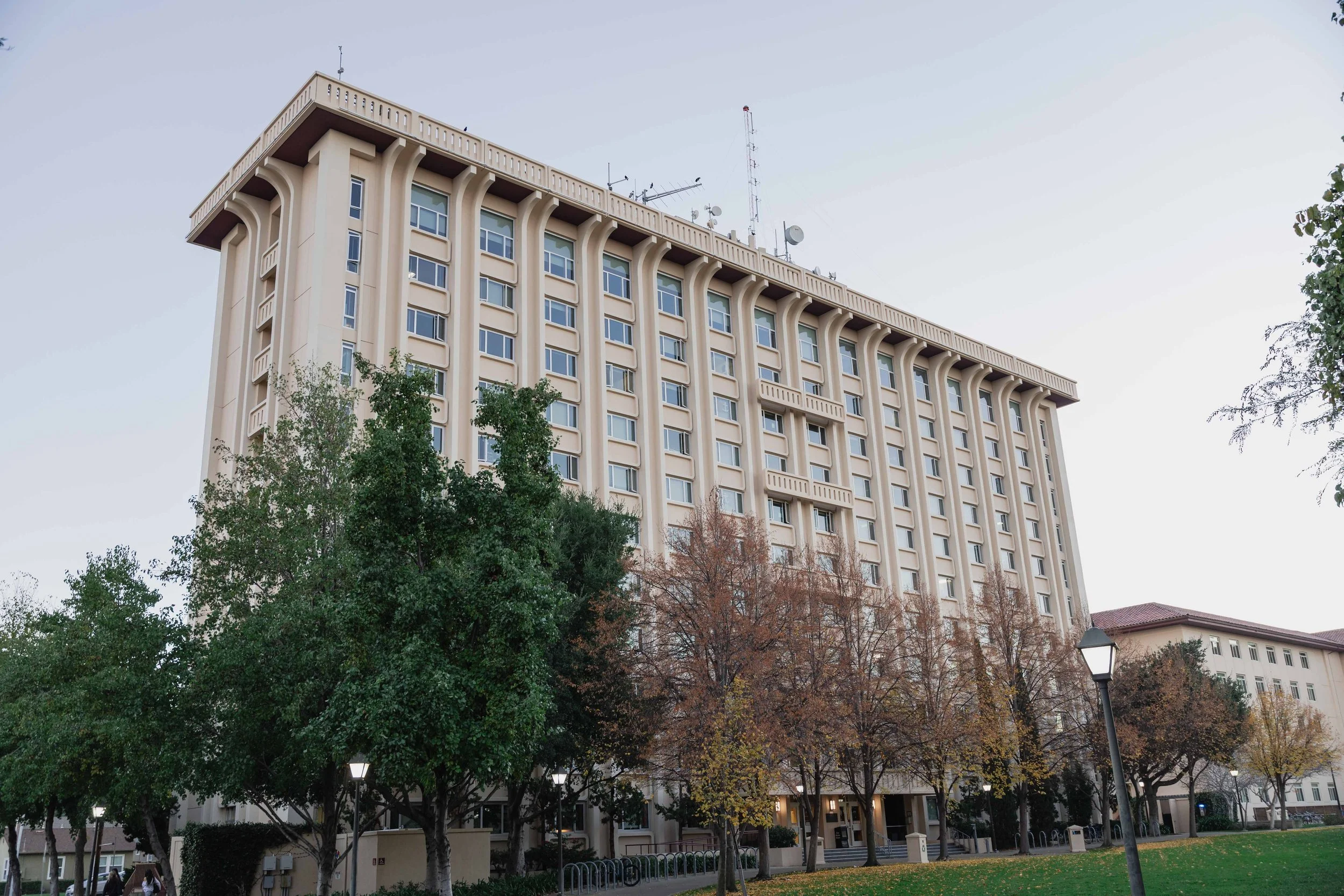
Swig residence hall stands as the largest dorm hall on campus, and is well known for frequent behavioral citations from its residents, but for many they call it home. (Dylan Ryu/The Santa Clara)
“It’s a pretty tight ship,” Hallstrom said, describing how the building runs when roles are clear and supervisors are consistently involved.
Hallstrom said that when staff have a resident director who is accessible and stays in place, student workers are better able to focus on the parts of the job they were hired for—building relationships, supporting residents and plenty of arts and crafts—rather than improvising systems during vacancies.
But even in a stable building, Hallstrom said the work can be demanding, especially given the frequency of emergencies in first-year halls.
“The hardest part of the job is just the volume of incidents and emergencies,” he said, pointing to alcohol, drug and medical calls that can take a toll on student workers who respond repeatedly.
Despite these challenges, Hallstrom finds the work to be rewarding. “You get to be really close with your fellow coworkers, and you meet a lot of people in the building.”
“A Sacred Responsibility”
University officials say staffing stability has improved. Lohse said student workers participate in “comprehensive formation training each summer” and cited partnerships with offices including Title IX, the Wellness Center and the therapists in residence program.
But Dubravec said residence life is not simply an administrative unit. It is the infrastructure of students’ lives—and in her view requires the University to treat student worker conditions as inseparable from student safety.
“It’s, to me, a sacred responsibility when we have people’s children live here and this is their home,” Dubravec said. “It’s a great responsibility for us to take care of them, make sure that they’re safe, and especially the students who are working for us.”
As Baker’s departure nears, marking another leadership change, Residence Life staff described a desire for clarity, stability and leadership that shows up in the buildings—not only in policies or organizational charts.
One assistant resident director said the first clear guidance she received after her RD left was an email naming an interim replacement. By then the dorm had already adjusted—not because anyone told them how, but because they had to.