Santa Clara University Introduces Gender-Inclusive Housing Community
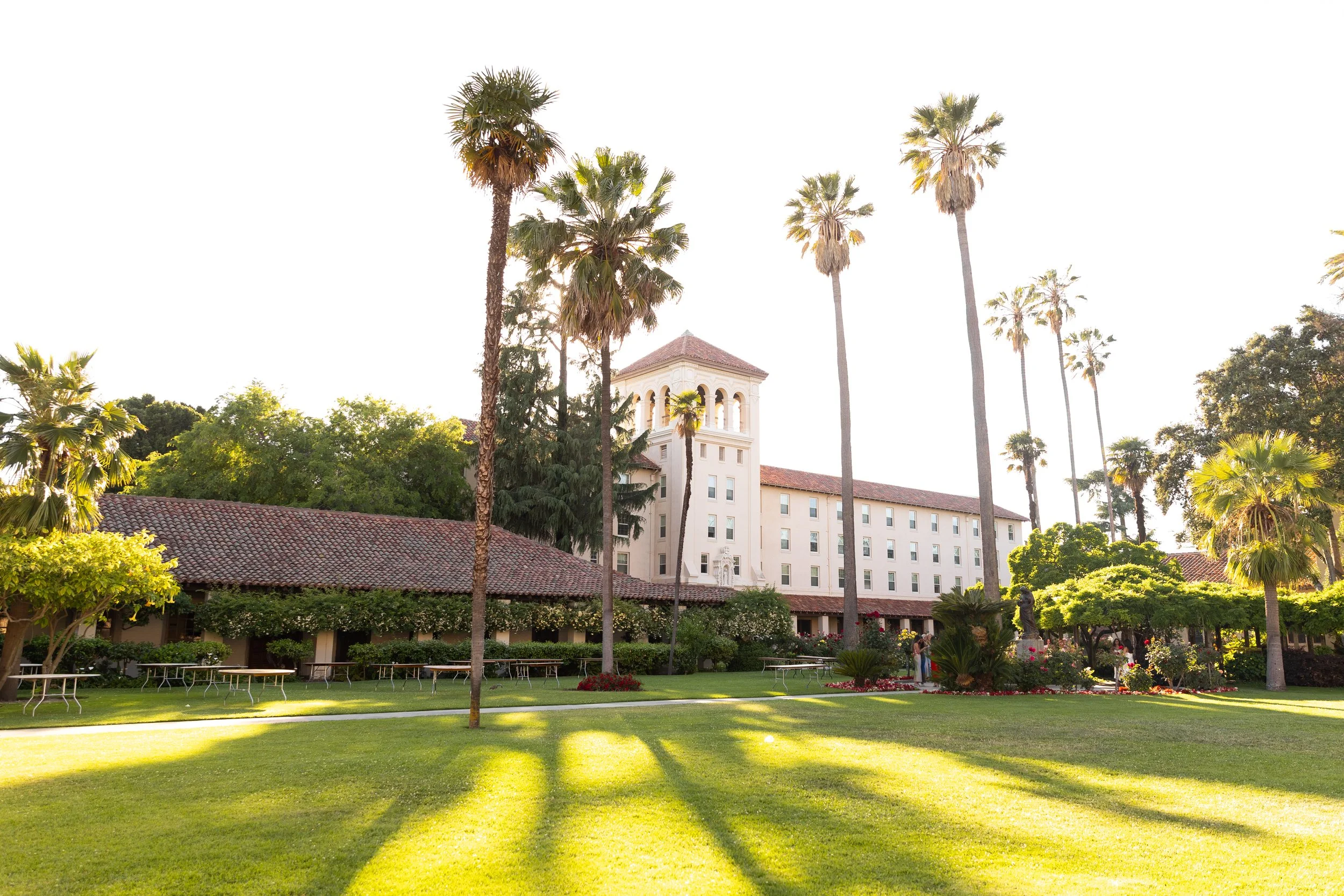
Nobili Residence Hall is slated to hold gender-inclusive rooms for the next academic year. Photo by Nina Glick
Santa Clara University will offer students the opportunity to live in a Gender-Inclusive Housing Community, a group of rooms within the Unity Residential Learning Community designed to meet the needs of LGBTQ+ students, beginning in the fall quarter.
The initiative was spearheaded by Maggie Malagon, director of Housing Business Services, and the University’s LGBTQ+ Equity, Justice and Belonging Working Group—a collection of students, faculty and staff members from across campus who seek to make Santa Clara University more attentive to the needs of LGBTQ+ students.
“It is mixed gender dorm rooms, but it’s also housing for those that are gender-nonconforming or nonbinary that don’t fall within the current binary housing system in the first place,” Grett said, explaining that gender-nonconforming students do not need to label their sex on the housing application. “It is also a floor that will be a space for community where residents can have a safe space on campus.”
Options for students in the Gender-Inclusive Housing Community, or GIHC, will be a suite-style in Nobili Residence Hall with bathrooms adjoining the room, or rooms in McLaughlin-Walsh Residence Hall featuring a traditional communal bathroom setup. All of the rooms and floors in the GIHC will be available to all students without limitation based on gender.
The addition of a GIHC question to the first-year housing form allows for interested students to indicate their desire to live in the community using a simple checkbox, with no additional explanation needed.
“Up until this point, anytime a student has needed gender inclusive housing, it’s been on a case-by-case basis,” Davis said. “Oftentimes it’s really bureaucratic—like having to prove that you need it, which is just really exhausting.”
In its first year, the GIHC will offer 60 beds to interested students. So far, a total of 56 students—29 returners and 27 first-years—have expressed interest using the housing application, according to Malagon.
“We are working with already built infrastructure, and it would take far too long to try to renovate a dorm or residence hall to fit our proposal,” said Tay Grett ’25, who has been a member of the Gender Inclusive Housing Subcommittee within the working group since last school year.
The organizers valued allowing GIHC-interested students to have a choice between different residence halls so that students could access whichever living environment most appealed to them.
“Part of wanting McWalsh was that Nobili is further off, and it’s kind of more secluded,” Grett said. “So we wanted to have an option that also was a social dynamic that gender-inclusive housing students opting in wouldn’t be missing.”
According to Malagon, who has worked at the University for over 26 years, four different proposals for gender-inclusive housing options on campus have been submitted in the last decade.
“It’s been a long time of different starts, pauses, starts, pauses,” said Malagon. “But I kept it on my to-do list and then kept moving it forward, so finally we were able to push it through.”
Previous proposals found difficulty overcoming the challenge of proving that there was a need for gender-inclusive housing on campus.
“Sometimes we were asked to give information that we would need data in order to give, but we couldn’t ask those questions at the time, because there’s also a privacy piece to it,” Malagon said.
The successful proposal benefited from the inclusion of stories from Santa Clara University students to illustrate the need for gender-inclusive housing.
“There was support from different areas, but it was really the storytelling and the impactful stories of our students that made a case: ‘We need to have this,’” Malagon said.
The formal proposal for the plan, developed last school year, was met with immediate support from the highest levels of administration.
“They drafted this proposal and took it to President Sullivan’s office, and she was really on board with it,” said Grace Davis ’25, a member of the Gender Inclusive Housing Subcommittee.
This support allowed the project to be officially greenlit for implementation in the 2025-26 academic year.
Davis said that removing this burden of proof from students makes these accommodations more accessible to those who could benefit from them.
“Even upperclassmen and seniors that aren’t going to get to benefit from this still are really happy to see it happen, because we remember being first and second-year students and knowing that wasn’t a possibility,” Davis said.
“It’s definitely an amazing achievement, and I wish I would be here to see it come into fruition, but I have a lot of faith in the task force and the committee to see it through, and it’s very nice, because I've obviously been surrounded by people who have been wanting this for a long time, and for them to be able to finally have the option is incredible,” Grett said of the initiative’s success.
Having been involved with the initiative since its earliest days a decade ago, Malagon is uniquely able to reflect on the entirety of the journey towards more equitable housing for Santa Clara University students.
Asked to reflect on what the success of this proposal means to her, Malagon kept returning to one word: gratitude.
“Gratitude for all the folks who had something, who played some kind of role in getting us to where we are now, and gratitude for the folks who are going to continue to move it forward,” Malagon said. “Gratitude for all the people along the way and to be able to actually live out so much of what we talk about. This is a manifestation of building community, of building a sense of belonging, because a sense of belonging for some folks may look different than for others.”