SCU EMS Share their Mission to Serve Students
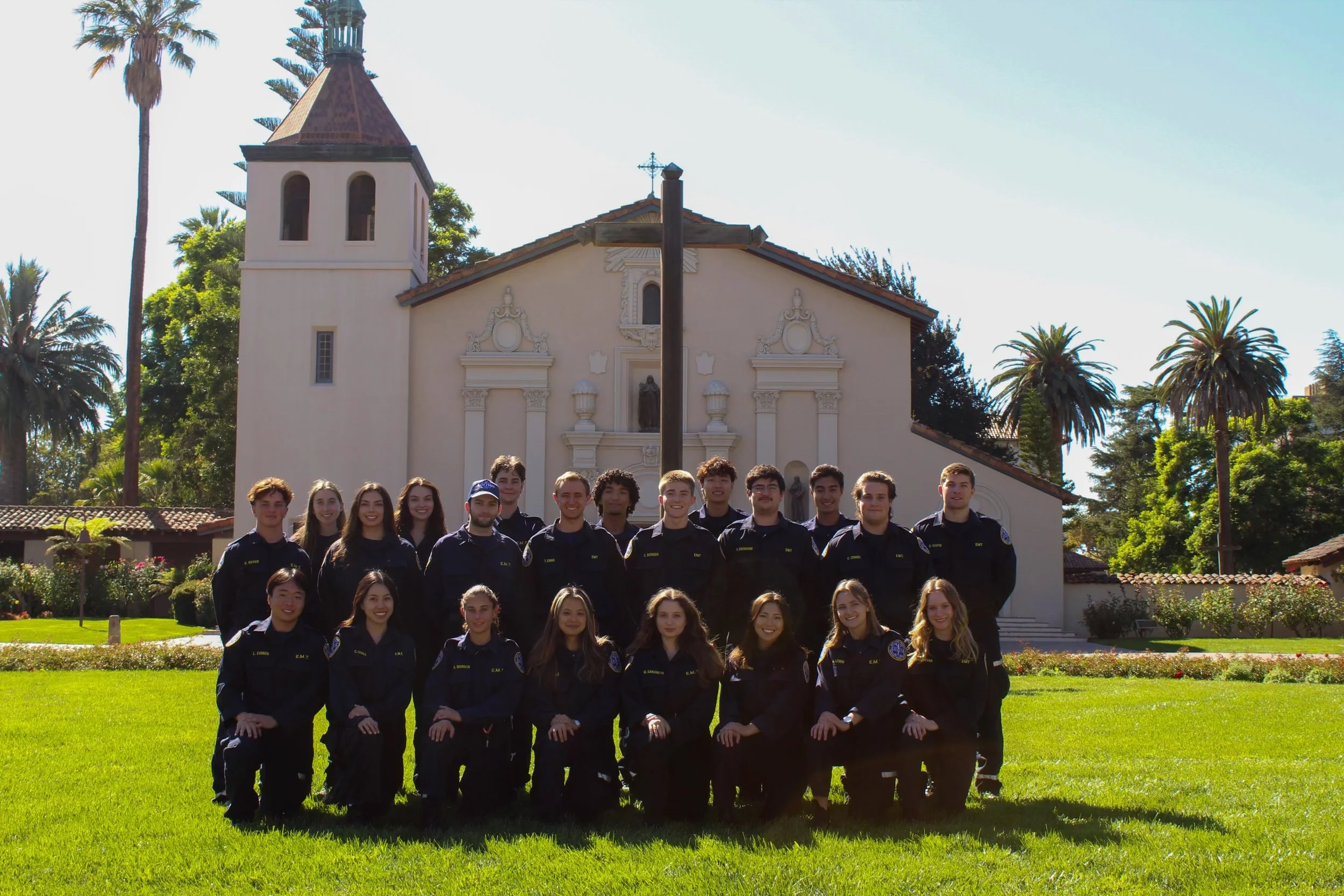
Group photo of the SCU EMS team. Photo provided by SCU EMS
Most Santa Clara University students are familiar with the University’s emergency medical services organization, most commonly known as SCU EMS. However, many aren’t aware of the true scope of their practice and their vitality to the University community.
SCU EMS is a student-led emergency medical care organization that operates under the Cowell Health Center, organized and started by students. Their staff consists of student volunteers who are EMT licensed and provide assistance and a second opinion if you’ve found yourself in a medical issue and are unsure of what to do.
“We aren’t there to get anyone in trouble,” said SCU EMS Director Max Gundlach ’27. “We’re just there to help.”
By calling the Campus Safety emergency phone number, SCU EMS can provide life-saving support or simply check in anywhere on campus within 3 minutes. There are no fees or expenses, and all cases are reported through the Cowell Health Center, so the same confidentiality rules apply.
“If you have some worry about some medical problem, like your blood pressure, or have some other medical condition, you would call us,” said Gundlach. “The call would go through Campus Safety, they dispatch us to the scene, we would show up, and then we would look at the scene size up.”
The staff is equipped with a range of treatments and can provide stabilizing care and basic life support, which includes administering oxygen as well as first aid. If other medical care can’t get there in time, SCU EMS can also help ensure students will make it to the hospital.
“If somebody is having a heart issue, we’re the first people on scene, so we have to be able to save their life,” Gundlach said.
SCU EMS has had a total of 178 calls at the time of writing this article. The overwhelming majority of these calls are “suspected EtOH,” or alcohol poisoning and/or overdose. “Those can actually end up being really serious,” said Claire Richart ’27, the organization’s assistant director.. “Checking on them to see if they’re okay, staying with them and taking vitals, all that stuff is pretty important.”
Recently, the organization has expanded its response areas to the south neighborhood units, mainly on Bellomy Street and Market Street.
“This is pretty big for us,” says Gundlach. Until now, legal jurisdiction has strictly limited SCU EMS to responding only to medical emergencies on the main University campus. They pushed for a change because they believed there was a better way to serve all students.
“There was some particular cases that we wanted to respond to, but we couldn’t because of how our procedures work,” said Gundlach. “We had some incentives from the community that wanted us to go to the area, so we were able to expand.”
They note the importance of being able to reach these areas, as it’s where most fraternities and sororities are located. The organization is focused on ensuring students have access to SCU EMS, even if they’re not located on campus.
“I think that getting the word out is the most important part,” Richart said. “I’m not sure if people know that is an option for them.”
If students need to call SCU EMS, they receive medical amnesty—an assurance that they can receive medical attention while under the influence of alcohol or drugs and will not be disciplined.
“For any call where you might be in violation of campus rules, you will not get in trouble at all for that very first call,” Gundlach said.
In the future, SCU EMS hopes to expand to different areas around campus and serve even more Santa Clara University students. They also hope to grow with the different care they can offer, get new materials and receive more training.
“If they see us and they know we’re a campus utility that they can lean on,” Gundlach said. “I think it’s good for us and good for them, that they know we exist and we are there if they need us.”