Students Demand Action to Prevent Future Traffic Injuries
The World Day of Remembrance for Road Traffic Victims on Nov. 16 served as a reminder of the 120 people killed on US roadways daily, according to San Francisco Bay Area Families for Safe Streets. The group’s 11th annual program comes as many in the Santa Clara community are beginning to wonder: What is being done about road safety for students?
Last November, Santa Clara University student Kephas Pope ’27 was killed as he waited in the median while attempting to cross El Camino Real, a six-lane street cutting the campus in two.
A collision less than half-a-mile south after El Camino Real joins with The Alameda flipped a truck driven by a Santa Clara University student two weeks ago, leaving him uninjured yet shaken.
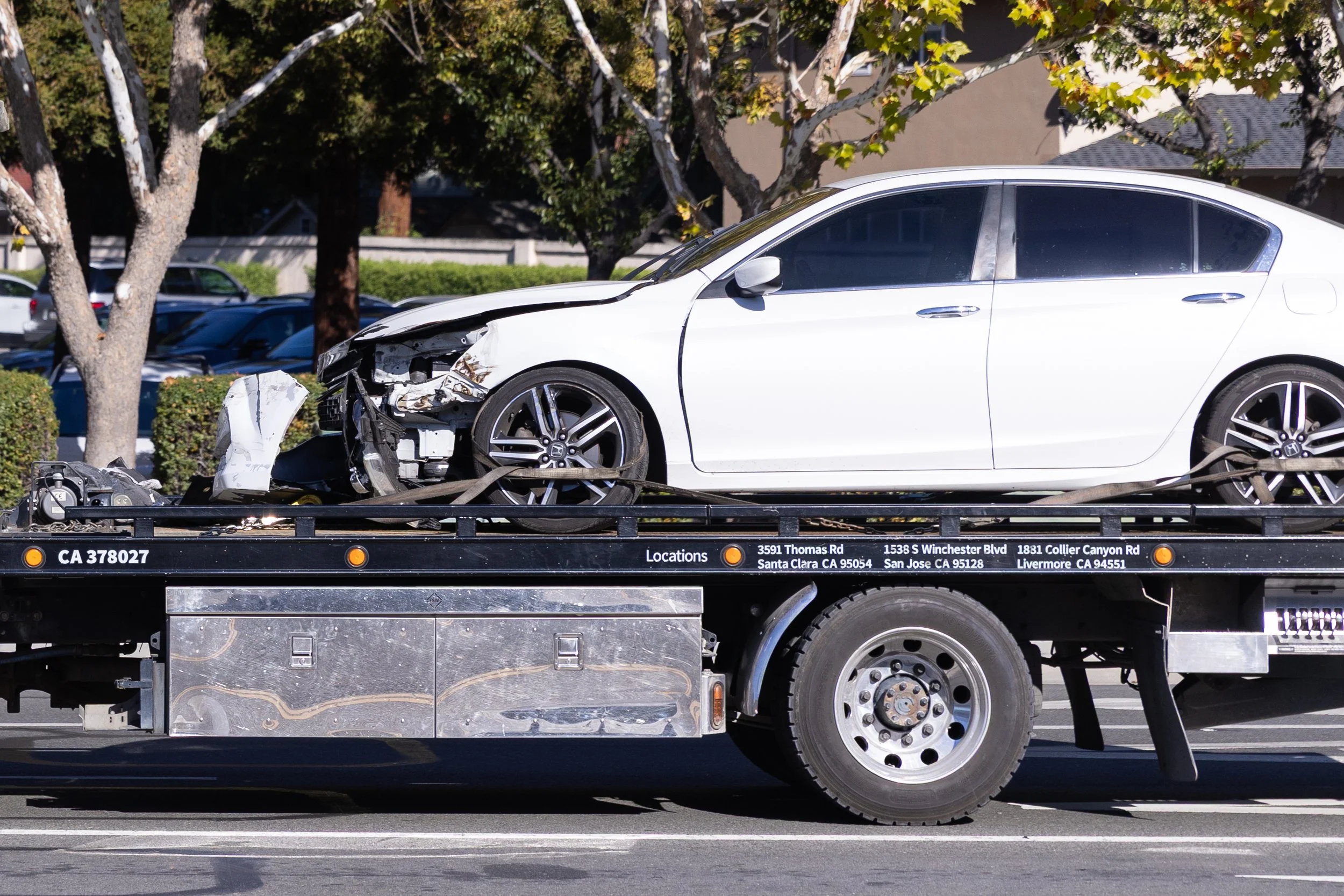
The car crash shut down southbound lanes on El Camino Real on Oct. 29, 2025 before both vehicles were removed via tow truck. (Nina Glick/The Santa Clara)
El Camino Real loops around Santa Clara University’s campus in a semi-circle. The road divides on-campus housing for upperclassmen, the School of Education and Counseling Psychology, Stephen Schott Stadium, Human Resources and the Domicillo apartment complex from the main campus.
“El Camino Real is curved right where the baseball field, Villas and Domicilio are; you can’t have a good line of vision,” said Grace Pope ’26, Kephas Pope’s sister. “It looks like a racetrack because it’s so wide. I guess it would be tempting if you have a sports car to just whip around it.”
“I see a lot of students still crossing over in the median instead of the crosswalk,” she said. “I understand it’s more convenient, but I see it almost every day, and that’s exactly how my brother died.”
Pope said media misinformation surrounding her brother’s death contributes to continued lack of awareness about road safety among students. “A lot of news titles said ‘cyclist,’” though Pope’s family claims Kephas was walking his bike across the street.
After witnessing yet another crash after the one that took her own brother’s life, Pope said she was further convinced the roads near campus are a “hazard.” Sitting at Voyager Craft Coffee, a popular off-campus café for students, she witnessed the aforementioned gray pickup truck driven by a student flip over and a white car’s bumper get crushed.
“Around here, I see California drivers going way too fast—way too fast,” said Hope Saena ’27, another student who witnessed the crash in front of Voyager.
El Camino Real isn’t the only problem road for students. “Pedestrians always have the right of way,” according to California’s driver handbook, even in intersections without stop or yield signs. Yet many students say they see drivers ignoring pedestrian crossing signage.
In-street pedestrian crossing signs are not enough to slow drivers at the intersection of Bellomy Street and Alviso Street, said Abby Wilwerding ’26. From her bedroom window, she hears drivers hitting the signs often—at least three times in the last year.
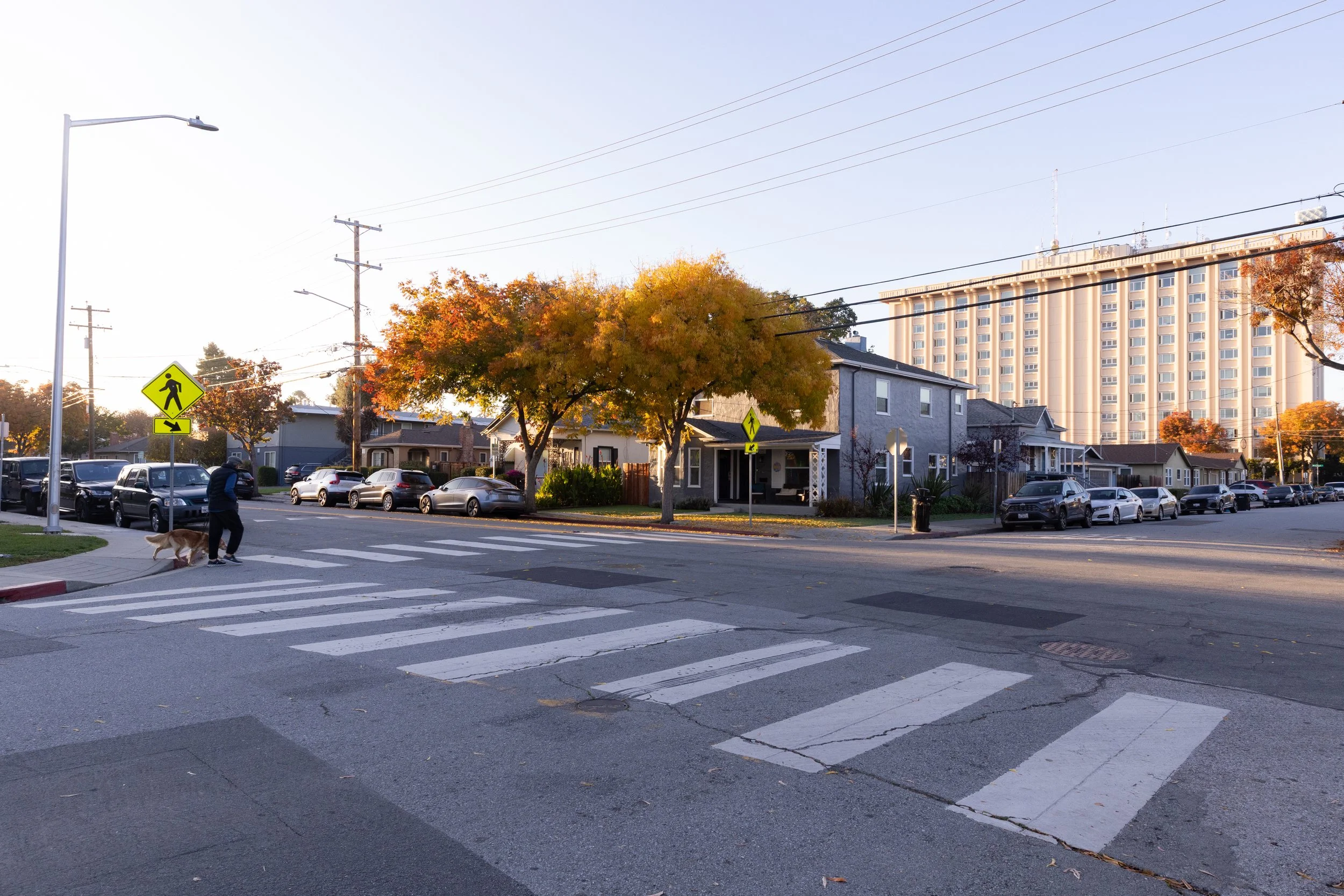
Intersection of Bellomy Street and Alviso Street, next to the Benson Memorial Dining Hall. (Nina Glick/The Santa Clara)
“It definitely needs to be a four-way stop,” she said. “Cars are always speeding through, and I often feel like I’m in danger when I’m crossing the street or trying to park my car.”
Wilwerding attributed the number of accidents near campus more to road design flaws than reckless driving. The Alameda borders the southern and western sides of campus, separating Safeway and several popular student restaurants from dorms.
“I’ve been contemplating calling the cops so many times and asking them to just put speed bumps on The Alameda because people go so fast it’s actually insane,” said Avery Marquis ’29, who lives in Finn Residence Hall directly across from Safeway.
There are flashing yellow lights to alert drivers of pedestrians crossing, activated via a button. Marquis said, “Even when I turn the flashing lights on to cross the street, every single car is going so fast I swear they’re going to hit me.”
“Cars usually don’t stop when they see students, or if they do it’s at the last minute,” said Regina Arrocha ’27. “I’ve almost been hit by a car three times in the past quarter.”
“The city can enforce stop signs instead of right-of-way signs, as well as speed bumps,” Arrocha said. “I’ve seen a lot of commotion about that on Facebook,” with both parents and alumni voicing concern.
Vision Zero, an international traffic safety network formed in Sweden in the 1990s, is under review for City Council adoption. The strategy of Vision Zero aims to “eliminate all traffic fatalities and severe injuries, while increasing safe, healthy, equitable mobility for all,” according to their website.
However, limited other action has been taken by Santa Clara University or the city to ensure student safety, causing wide-spread concern amongst students, faculty and staff, parents and alumni.
Grace Pope still tries to stop pedestrians from jay walking on El Camino Real whenever she can, though her efforts alone cannot
