Pope Francis, first Jesuit pope, dies at 88
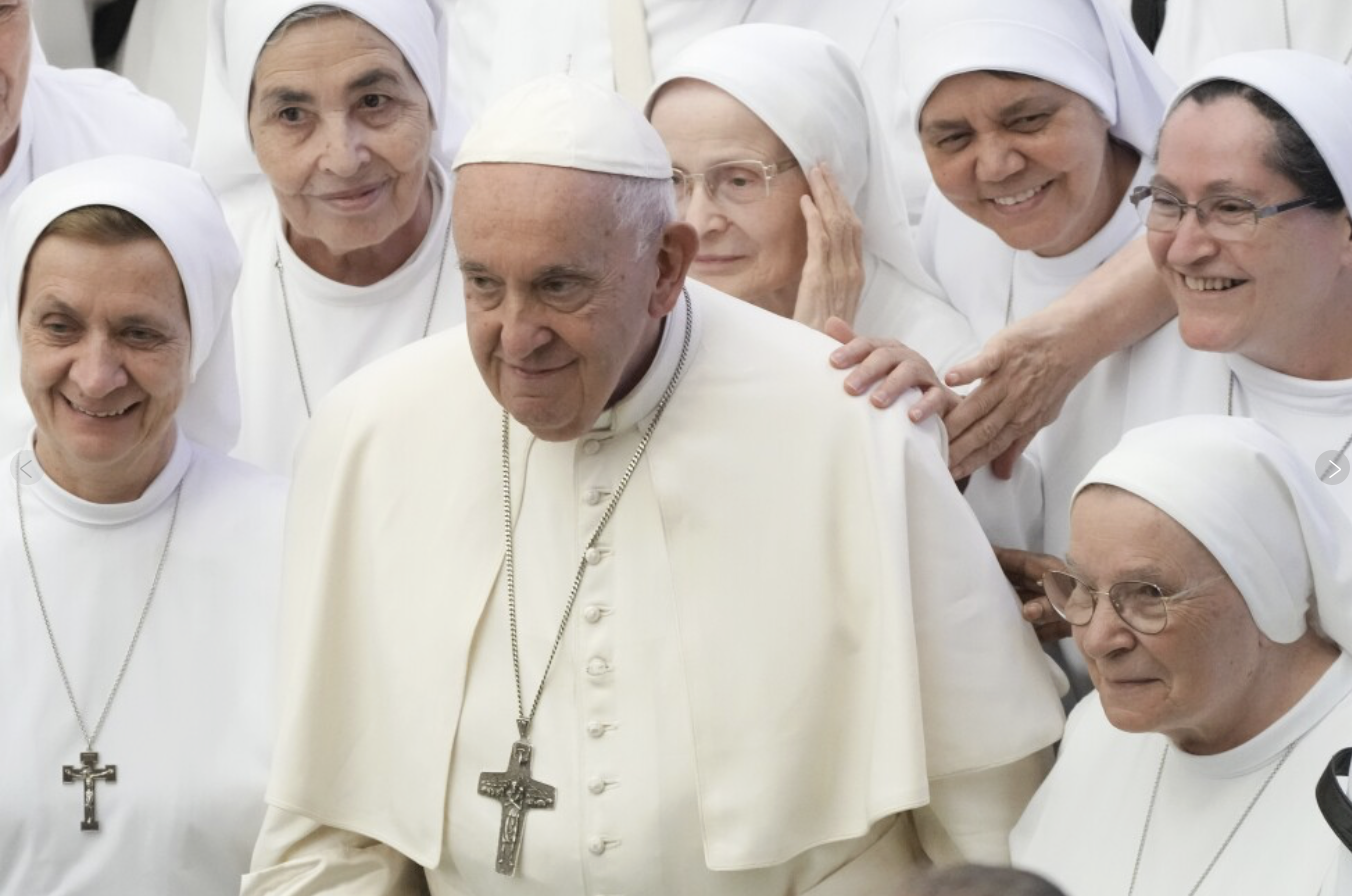
AP photo by Gregorio Borgia. The Pope poses for a photo with a group of nuns at the Vatican, Aug. 9, 2023.
Pope Francis, the first Jesuit and first Latin American priest to hold the papacy, died Monday morning at the age of 88.
Francis’ death marks the end of his 12-year tenure notable for progressive reforms to one of the world’s oldest religious institutions.
The Society of Jesus released a statement following the pontiff’s death. Fr. Brian Paulson, S. J., the president of the Jesuit Conference of Canada and the United States, released a statement following the pontiff’s death: “I believe Pope Francis will always be remembered for how he brought marginalized individuals and communities to the heart of the church,” Paulson wrote.
Francis developed a reputation throughout his tenure as pope as an advocate for various social issues.
His second papal encyclical, titled “Laudato si’,” implored Catholics worldwide to heed the dangers of climate change and take collective action to avoid potential climate catastrophe.
More recently, Francis weighed in on the ongoing conflict between Israel and Hamas, calling for an investigation into Israel’s actions in Gaza and raising awareness of humanitarian crises in the region.
Francis also expressed a number of theologically progressive views on LGBTQ+ rights, perhaps most notably permitting the blessing of same-sex couples within the Catholic Church.
“What we saw in Francis is a focus on the loving mercy and compassion of God being first and foremost before any doctrinal changes or additions or reforms happen,” said Dr. Elyse Raby, an assistant professor in Santa Clara University’s religious studies department. “So regardless of whatever issue he was talking about, he was always looking for how doctrine could best express the infinite loving mercy of God as made known in Jesus.”
Raby cited Francis’ changes to the Synod of Bishops, a mechanism through which church leaders discuss and reach consensus on issues of doctrine, as one of the most impactful reforms of his papacy.
“Francis mandated consultative procedures for those so that bishops could actually hear from their people, and he made it a much longer, more built-out process that is responsible to the whole people of God, rather than being a kind of enclosed mechanism just for the bishops to talk amongst themselves,” Raby said.
Santa Clara University President Julie Sullivan, who met privately with Francis in March 2024, mourned the pope’s passing in a statement to the University community.
“We have felt a special connection to Pope Francis here at Santa Clara,” Sullivan said. “As the first Jesuit pope, he often spoke about and embodied our ‘Jesuit language’ of cura personalis, showing special care, love, and mercy for each person in their unique God-given dignity and seeking to address the crucial world issues of our times with hope, courage, and compassion.”
The College of Cardinals will begin the process of choosing Francis’ successor next month through a Papal conclave, the customary method of electing a pope.
There are 135 cardinals in the College of Cardinals, 108 of which were appointed by Francis.
“That's a pretty significant majority, especially in light of the fact that to be elected Pope, you need a two-thirds majority of votes in a conclave,” Raby said. “So it's just—as a numbers game—more likely than not that we would see the next pope being someone who shares some affinity with Pope Francis.”
Raby also noted that appointment by Francis alone is not necessarily indicative of similar views to Francis. Cardinals may have been consecrated by Francis due to other factors such as leadership style or home diocese.