Building a Show, Learning a Culture
Update 11:24 a.m. April 24, 2026: The photo caption for the “Modern Fusion” Dance was incorrectly labeled as “Sayaw da Bangko” in our printed edition. A correction has been made for online. If you believe there is an error in work produced by The Santa Clara newspaper, email editor@thesantaclara.org.
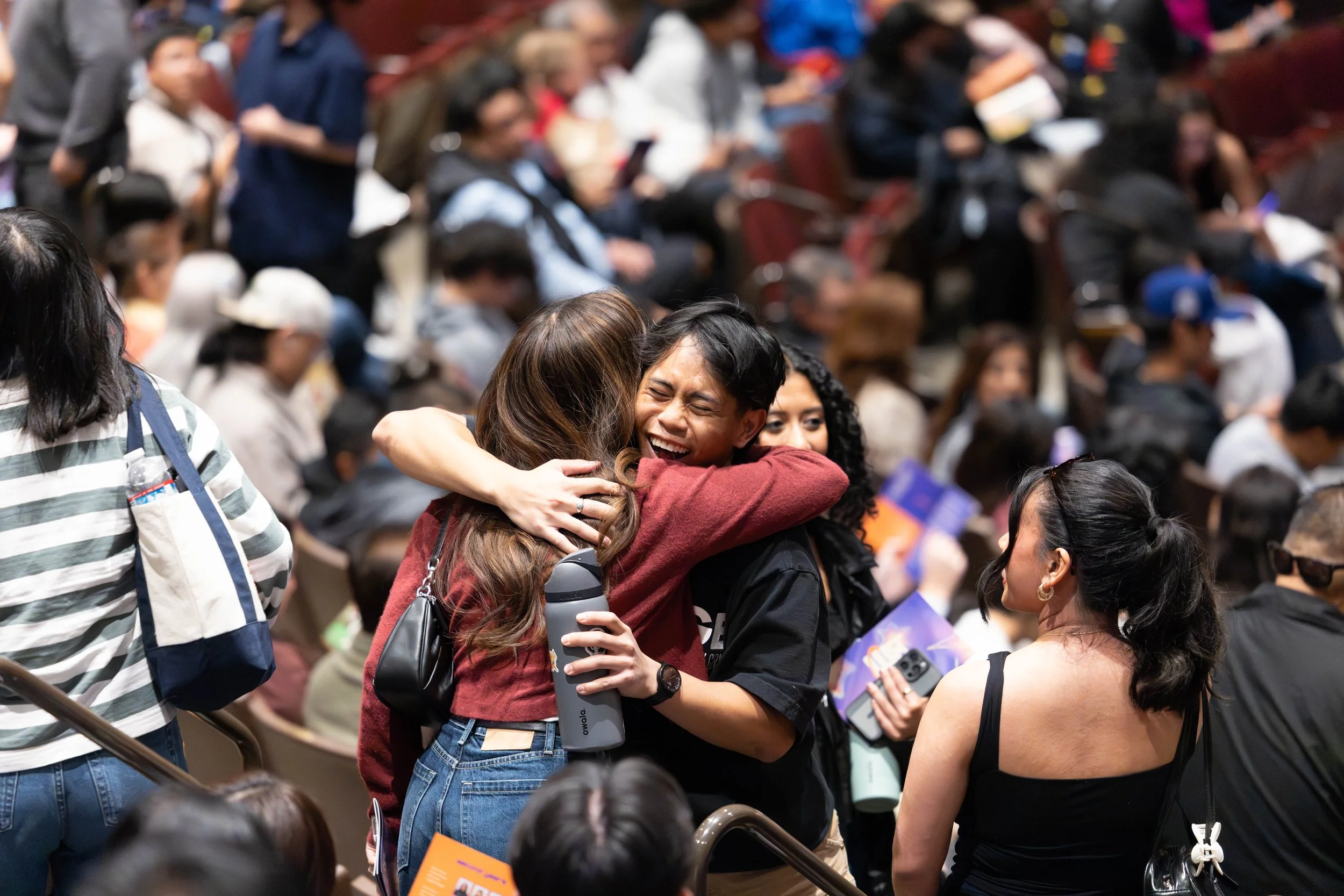
Mack Atencia ’25 M.S. ’26, a teacher for the culture show and former PCN director, hugs an audience member after Pilipino Culture Night. (Elaine Zhang/The Santa Clara)
James Logan Catoera ’26 moves from one dance to the next without pause—first an energetic, all-male mountain routine, then, minutes later, stepping into the slow, deliberate rhythm of Singkil. Each movement carries meaning and history, but also an expectation. And like many of the students on stage, Catoera is performing traditions he only recently began to understand.
For Catoera, Pilipino Culture Night is more than performance. “Being a part of a culture show really helps me connect more with my roots as a Filipino-American,” he said. Performing in front of his parents—who immigrated from the Philippines—adds another layer of meaning. “It gives me a sense of fulfillment and deeper connection with my roots.”
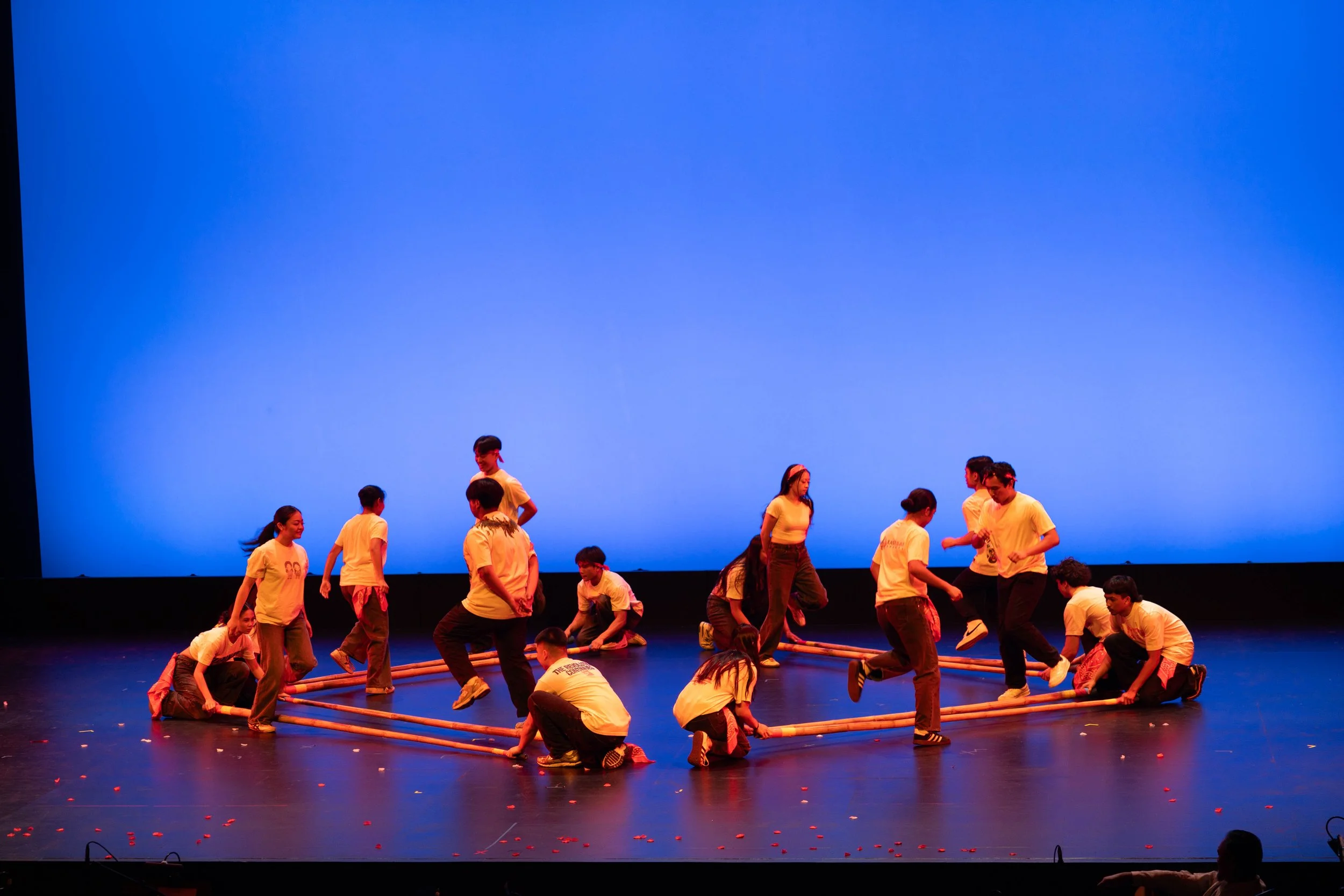
Barkada members dance with the Tinikling sticks during Pilipino Culture Night in Mayer Theater on Friday, April 17, 2026. (Elaine Zhang/The Santa Clara)
That experience reflects a broader reality within Barkada, Santa Clara University’s Filipino cultural organization. Each year, more than 100 students come together to produce PCN, a large-scale show that blends dance, storytelling and music. The production rivals professional performances in scale, however many of the students building it are not trained performers, producers or cultural experts—and many are still learning the culture they are tasked with representing.
For co-director Danica Ibus ’26, that dual role was intentional. “Sam and I had a lot of intention behind putting an emphasis on the culture,” she said.
Co-director Sam Solomon ’26 described PCN as not just showcasing Filipino traditions, but teaching them—especially to students who may not have had prior exposure. “It’s a good opportunity for people who aren’t really knowledgeable about the different parts of the Philippines to really embrace and immerse themselves into the dances that they’re doing.”
That emphasis reflects a diasporic reality. For many students, PCN is their first sustained interaction with Filipino culture. Co-director Sam Solomon described growing up with limited cultural exposure, where engagement was often confined to family gatherings. In college, PCN became something different: a space to experience culture actively rather than passively.
Through rehearsals, costumes and performance, students begin to understand traditions not just as ideas, but as lived practice.
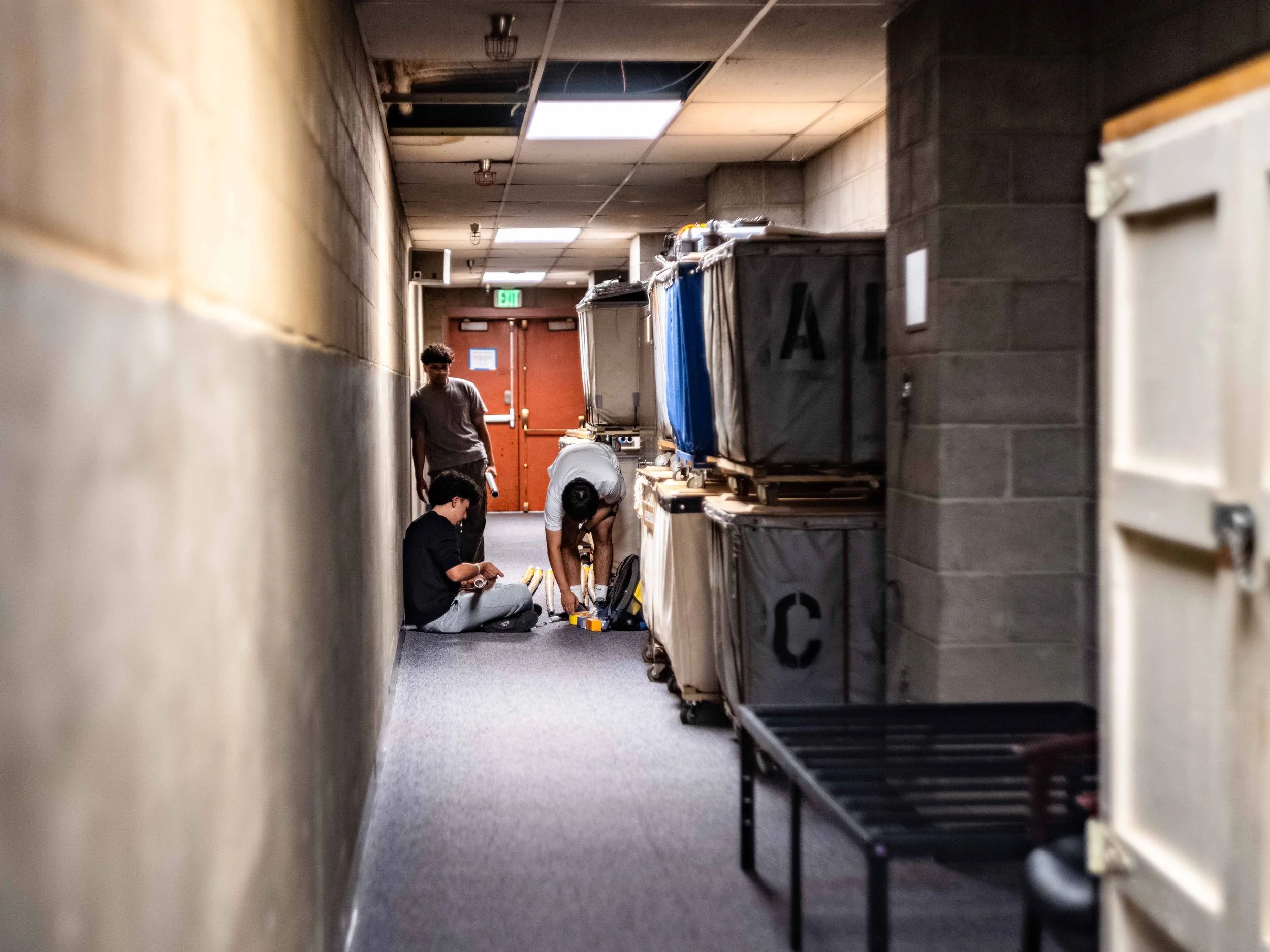
Sam Solomon and other Barkada members put together Tinikling sticks backstage during dress rehearsals at Mayer Theatre on Tuesday, Apr. 14, 2026. (Dylan Ryu/The Santa Clara)
“I have learned a lot about my own culture through doing PCN,” Solomon said.
That learning is structured and gradual. Before rehearsals begin, students are introduced to the origins of each dance—its region, its history and the people it represents. “There’s always been an explanation before the dances are taught—like the history, the tribe it’s from and so on,” Ibus said. But understanding deepens over time, as dancers embody those traditions through repetition and performance.
Still, the responsibility of teaching and representing culture does not come with complete expertise. As directors, Ibus and Solomon oversee nearly every aspect of the production—from logistics to storytelling—but they do so while navigating their own limitations. “There’s so much that Sam and I can do,” Ibus said, noting that their knowledge is often supplemented by others.
Instead, PCN relies on a broader network. Alumni return to teach choreography and share cultural context, while professional dance groups provide guidance on authenticity. “We’re very fortunate that we have a good network of alumni who come back to teach the dances and teach the students about the culture and the history behind it,” Ibus said.
This collaborative model reflects how culture is sustained in diaspora—not as something fixed, but as something passed down, adapted and relearned across generations.
For performers like Catoera, that process carries both pride and pressure. Learning the dances meant learning the history behind them, often for the first time. “I never knew this much about Filipino culture as I do now,” he said. But performing in front of families and community members raised the stakes. “It felt like we were being tested; how well we know the culture and how good we can present that culture.”
That tension—between learning and representing—defines much of PCN.
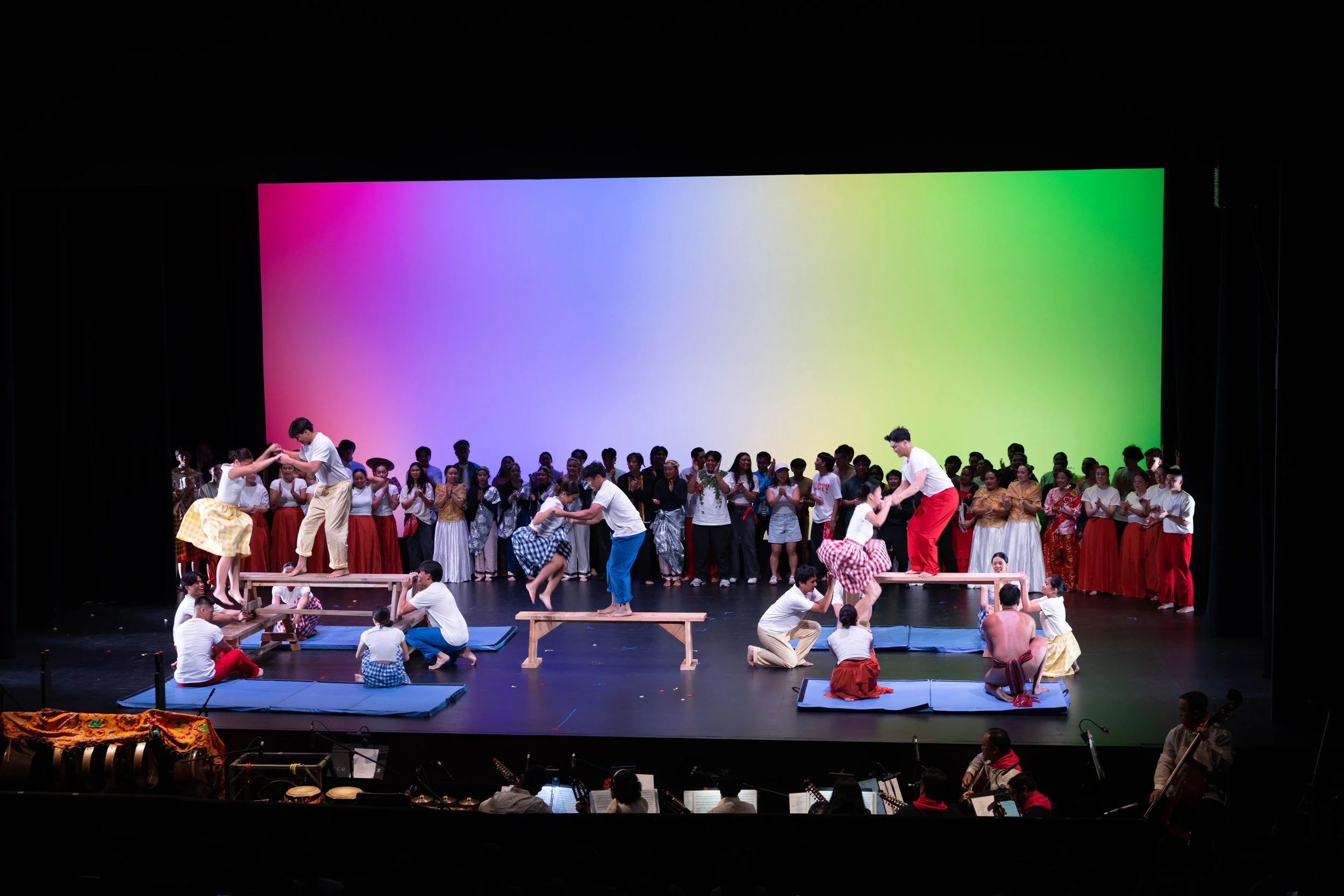
Barkada members perform the Sayaw sa Bangko dance during Barkada’s culture show on Friday, April 17, 2026 at Mayer Theatre. (Elaine Zhang/The Santa Clara)
That pressure intensifies during Hell Week—the six days leading up to the performance—when rehearsals stretch to six hours each night. Even then, things don’t always go according to plan. “We missed two of the songs and two of the scenes because we just ran out of time,” said stage manager Ethan Sychangco ’26 during rehearsal.
By the time the curtain rises, that process is no longer visible. The audience sees a seamless performance, where dances flow into one another and stories unfold without interruption.
What they do not see is everything behind it: the uncertainty, the collaboration and the gradual construction of both the show and the cultural understanding it represents.
In that sense, PCN is more than a performance. It is a space where students are not only becoming producers, but participants in their own cultural discovery—learning what it means to represent a culture they are still coming to know, and, in the process, shaping how it is seen.
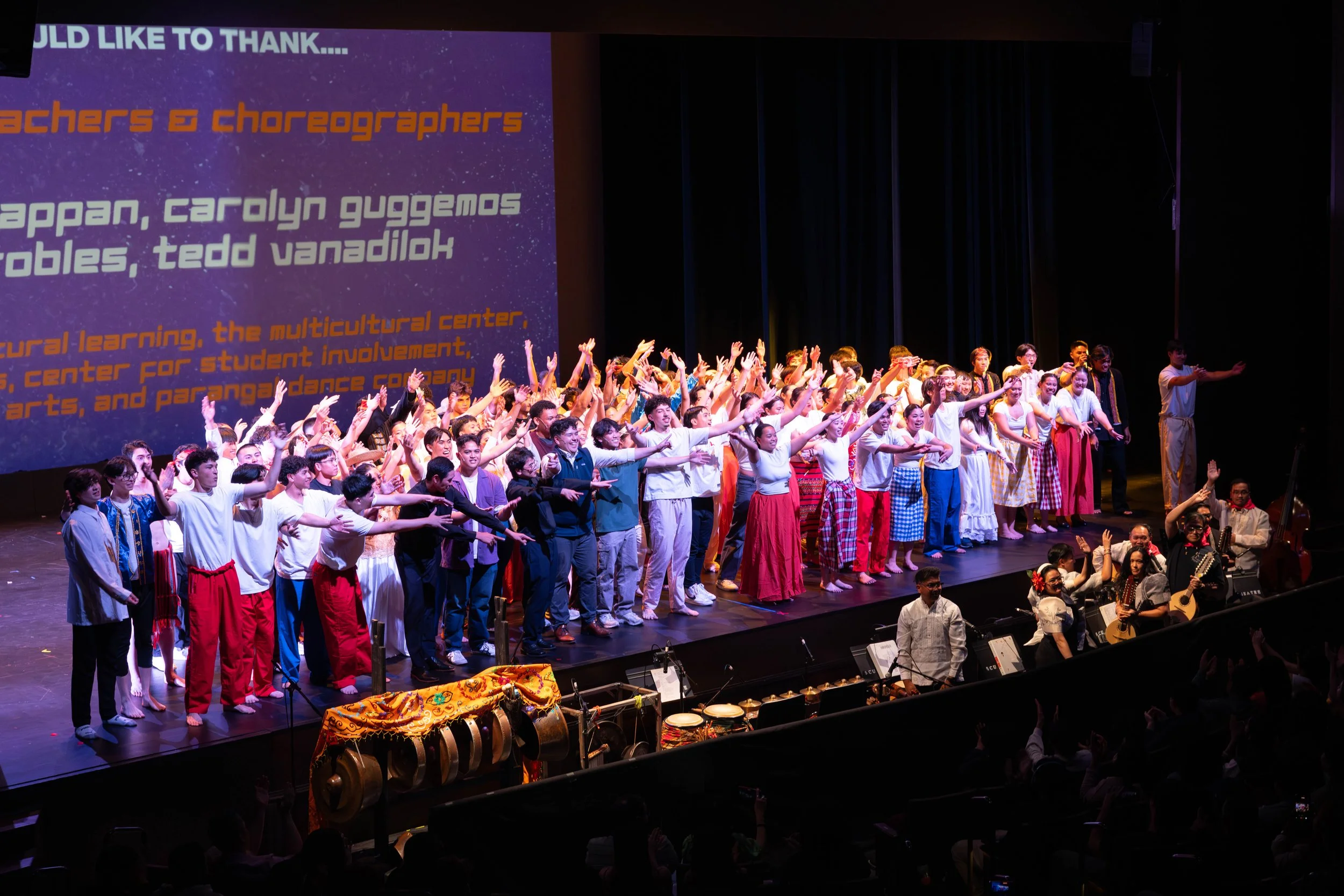
The cast for the Pilipino Culture Night bows after their performance on Friday, Apr. 17, 2026. (Elaine Zhang/The Santa Clara)