Can the Federal Reserve Do Its Job Anymore?
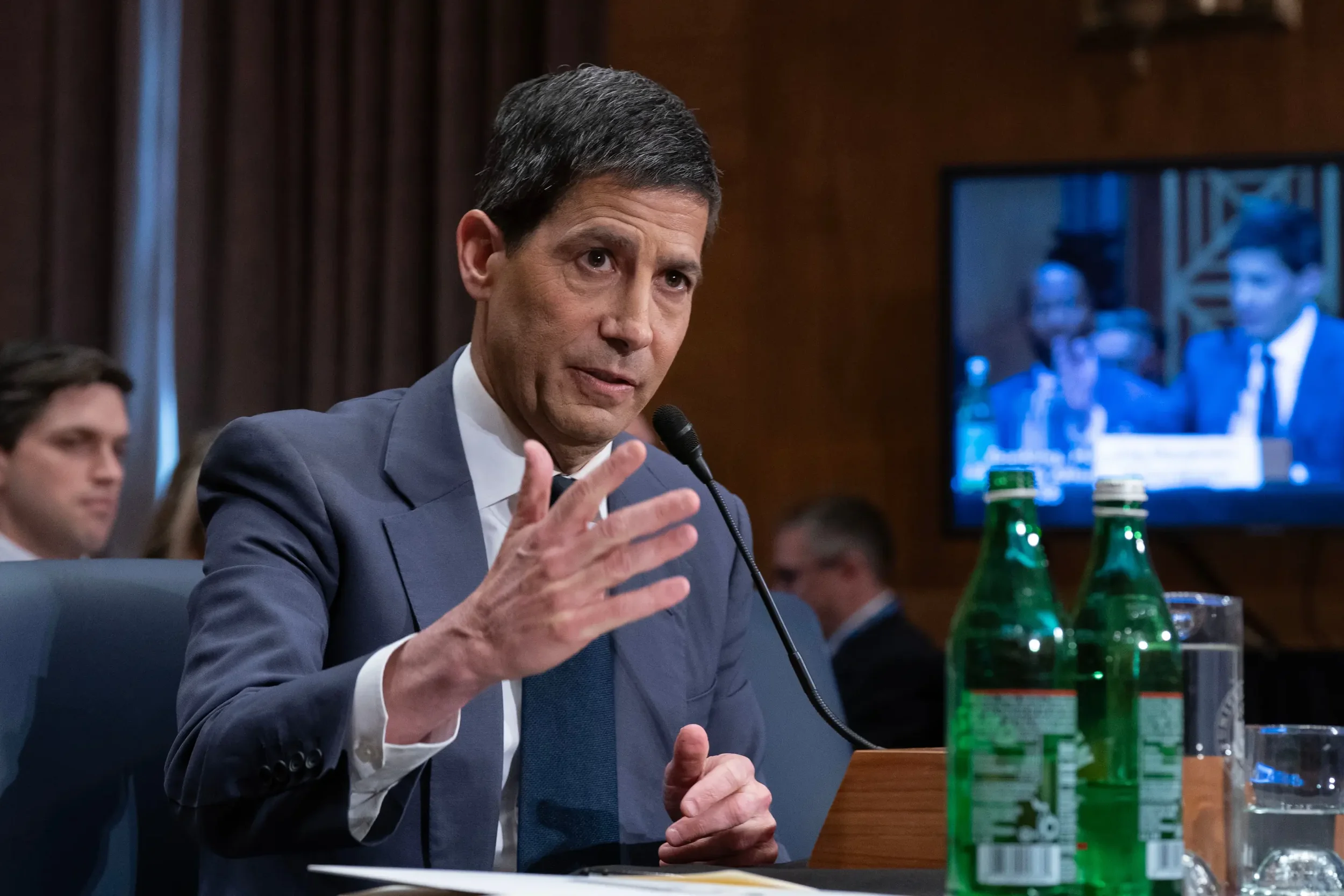
Kevin Warsh testifies during his nomination hearing to be a member and chairman of the Federal Reserve Board of Governors before the Senate Banking, Housing and Urban Affairs Committee on Capitol Hill, in Washington Tuesday, April 21, 2026. (AP Photo/Jose Luis Magana)
In their Economics 2 class, Santa Clara University students learn about why the Federal Reserve, the Central Bank of the United States, is a critical institution to not only our country, but to the world as a whole. It dictates monetary policy in order to carefully balance inflation and employment, all while providing key oversight on America’s financial system.
Jerome Powell, the Fed’s chair of eight years, will see his term end on May 15. Kevin Warsh—President Donald Trump’s pick to replace Powell—is set to take over the position, barring an unlikely reversal from the Senate.
Warsh’s resume is as impressive as it gets. A graduate of Harvard Law School, just a few of the positions he’s held throughout his career include vice president at Morgan Stanley, executive secretary of the National Economic Council under George W. Bush, and a member of the Board of Governors at the Fed from 2006 to 2011. Kevin Warsh has the skills and experience to be a competent and successful chair of the Fed. The environment that Warsh is stepping into, however, is consistent with Trump era politics, where the most crucially apolitical institutions are dangerously politicized.
Warsh’s Senate banking committee hearing on April 21 had plenty of partisan animosity. Massachusetts Senator and known Democrat Elizabeth Warren thoroughly interrogated Warsh, pressing him on his personal investments and calling him President Donald Trump’s “chosen sockpuppet.” Stressing the courage required of a Fed chair, Warren then cut right to the chase. “Mr. Warsh, did Donald Trump lose the 2020 election?” she asked.
Warsh didn’t answer yes. He tried to sidestep the question suggesting he and Senator Warren avoid such topics. While it’s easy to sit from afar and call Warsh a coward for not giving a definitive yes, can we totally blame him? If we consider the fear Donald Trump has struck in the Fed, probably not.
To the Democrats’ credit, the question about the 2020 election is an immediate way to test for loyalties. If someone can’t admit that Donald Trump lost the 2020 election, they are either a die-hard supporter of his or feel uncomfortable upsetting him. Republicans do a similar thing to Democrat appointees when they ask, “What’s a woman?” Answers to this question warrant more nuance than the election one, but the premise is similar—they’re ‘gotcha’ questions. Appointees don’t want to answer with something that’s out of line with their group’s ideology.
This seems to be the spot that Warsh is in. Of course he didn’t want to say that Trump lost the 2020 election. Trump was the one to appoint him to this incredibly prestigious position, and Warsh has seen the way that the president has treated Warsh’s predecessor, Jerome Powell, who has remained unswayed by Trump’s antics.
We shouldn’t blame Warsh for the pressure he feels. But we should worry about what the effect might be of a Fed that’s unable to function separately from politics.
As of May 2026, weeks from when Warsh is predicted to become chair, economic criteria are ambiguous. While growth remains relatively strong, inflation is an issue; the consumer price index rose 3.8% from a year earlier, the highest annual increase since May 2023. This is largely attributed to the Iran War, which has restricted oil supply and thereby shot up energy prices. It’s reflected by lower confidence in the economy among the public according to measurements like the Gallup Economic Confidence Index.
There also remains significant uncertainty regarding the near future, particularly with respect to how long the conflict in the Middle East will last. At the same time, there are reasons to be optimistic about the future, as advancements in artificial intelligence could prove to be massively fruitful.
No matter how you slice it, Warsh will be leading the Fed at a time when it’s grappling with novel circumstances. The Fed is tasked with navigating these times with independence, and as Elizabeth Warren stated in the hearing, “Independence takes courage”—courage to not be influenced by President Donald Trump. For example, if the economic effects of the Iran War prove to be long-lasting and substantial, the Fed may need to raise interest rates, theoretically slowing growth. Warsh has also noted that an AI productivity boom could warrant lower rates.
Meanwhile, President Trump has strict expectations for Warsh. Trump explicitly stated on air with CNBC that he would be “disappointed” if Warsh didn’t cut interest rates right away, because when borrowing is cheaper, spending and investment tend to rise, stimulating the economy in the short run—while Trump is in office.
Trump’s main problem centered on this issue exactly—Powell’s hesitancy to cut interest rates. Presidents often voice support for lower rates while they’re in office, because it associates them with a thriving economy, but the increase in demand that follows low interest rates can eventually cause inflation. This is precisely why the Fed is designed to remain politically independent: while politicians pander to the public, the Fed makes decisions based on objective methodologies. Allowing presidents to have significant influence on the Fed’s process is—in theory—economically disastrous because it makes the field less scientific.
Trump has gone farther in criticism of the Fed than any other sitting president, ever. The Department of Justice’s criminal investigation into Powell, the first of its kind, accused him of misrepresenting the finances of a building renovation before it was dropped prior to Warsh’s advancement through the banking committee. Most people saw right through it as a bullying tactic.
To Warsh’s credit, despite avoiding the topic of the 2020 election, he firmly vowed his independence during his hearing in front of the banking committee. “I’m honored the president nominated me for the position, and I’ll be an independent actor if confirmed as chairman of the Fed,” Warsh said in response to Louisiana Senator John Kennedy’s questioning. Also, one of Warsh’s primary policy objectives that he’s discussed is realigning the Fed with its very much non-partisan mandate: stable prices and full employment.
Nevertheless, Warsh inherits a position that has faced severe scrutiny from a president who has proven time and time again both his potent ability to imbue politics into apolitical institutions, and the tenacity he has for getting what he wants. Considering the inherent loyalties Warsh must feel toward Trump—owing him his ascension to Fed chair and having seen Trump’s attack on Powell—it’s hard to imagine him acting without fear. If you combine that dynamic with an already uncertain economy, it is impossible to predict a great result.