A History of Protest at Santa Clara University
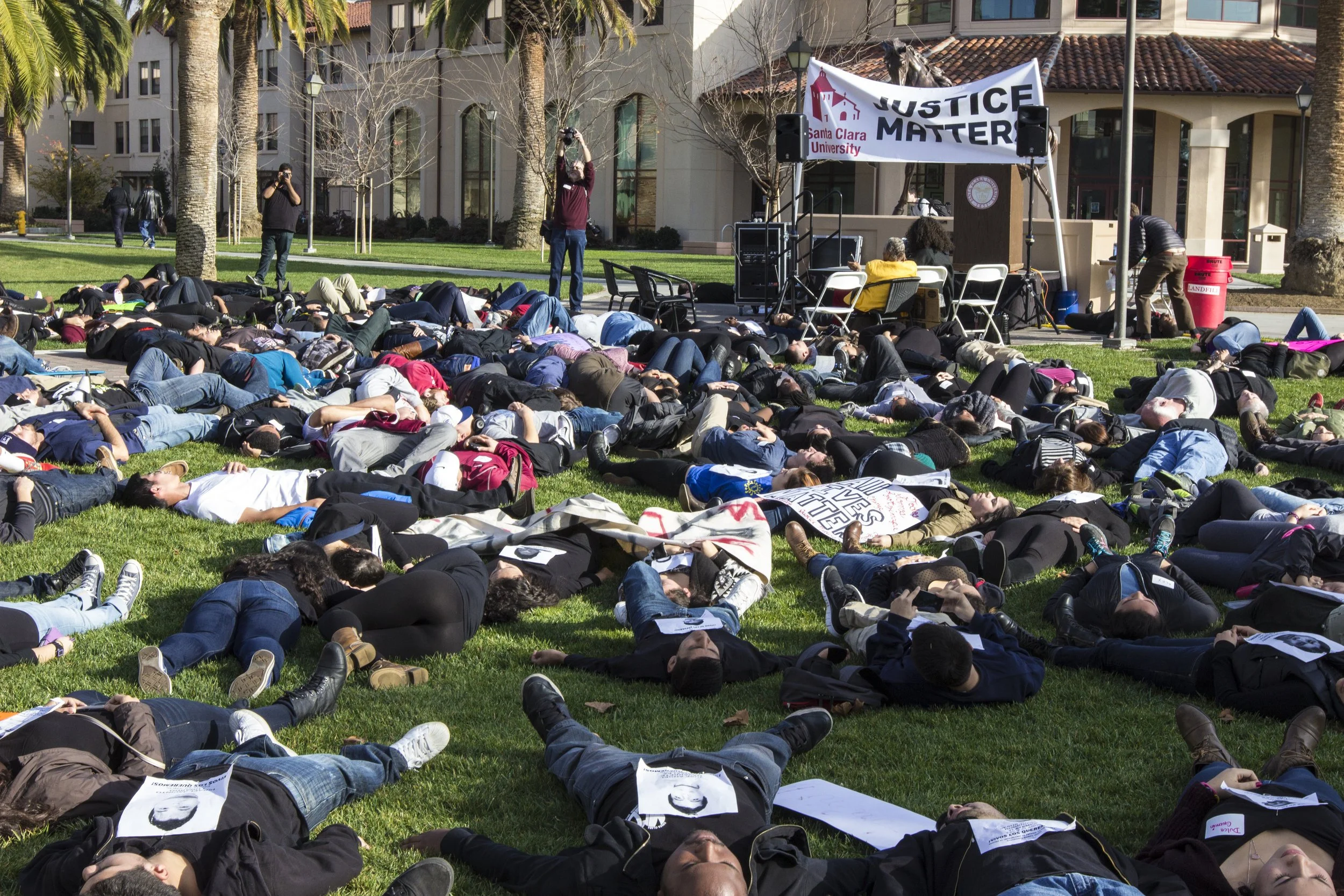
On Jan. 22, 2015, Martin Luther King Jr. Day, Santa Clara University community members participated in a protest against police brutality. They staged a “die-in” by the Bronco statue for four and a half minutes, symbolizing the four and a half hours Michael Brown’s body lay in the streets after he had been shot by a police officer, igniting unrest in Ferguson, Missouri and across the nation. (Danielle Velasco/The Santa Clara)
Three weeks ago, over 600 Santa Clara University students and community members gathered to participate in a nationwide day of action against recent measures taken by United States Immigration and Customs Enforcement.
The event highlighted both the spirit of the Santa Clara University community and the rarity of similar protests, reflecting the absence of the activist culture seen at other universities.
While colleges and universities across the nation—and in our area—were grappling with Gaza Solidarity Encampments, our campus showed few signs of the issue beyond the occasional “CEASEFIRE NOW” poster in an office window or a Palestinian flag in the Multicultural Center. Over a month after the encampment movement gained momentum nationwide, Students for Justice in Palestine organized a teach-in that was remarkably less confrontational than demonstrations at universities like Stanford, where students who occupied buildings are now facing charges of felony conspiracy to trespass and felony vandalism.
This disconnect made me go looking for instances of student activism throughout the University’s history.
Santa Clara University students, faculty and staff have participated in demonstrations addressing national and international issues—such as the “ICE OUT” protest—as well as activism focused on campus-specific concerns, often arising from disputes with University administration. Some of these protests include demonstrations against the wars in Vietnam and Iraq, apartheid in South Africa, police brutality, anti-immigration policies at the state and national level, U.S. involvement in Central America, and in support of enhanced rights for farmworkers. On-campus issues include the existence of the ROTC program, lack of mental health resources, and treatment of non-white students and cultural clubs by both administration and fellow students.
Responding to off-campus issues
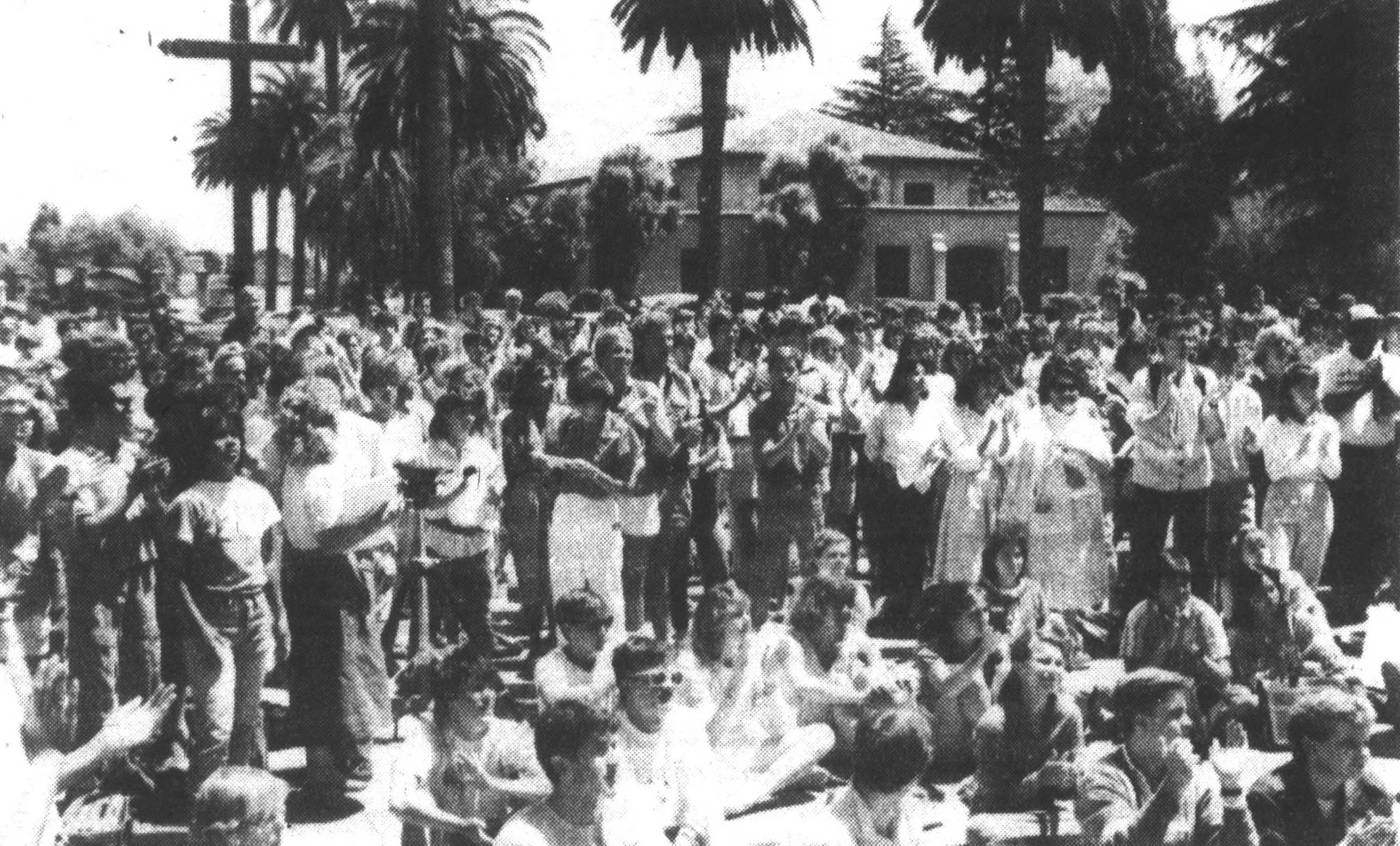
In 1985, around 200 people gathered at the Mission Church to protest apartheid in South Africa. The group Students, Faculty, and Staff Against Apartheid pushed for Santa Clara University to review their investment portfolio and make public information about any investments by the University in US companies and banks doing business in South Africa. (Guy Zanovich for The Santa Clara)
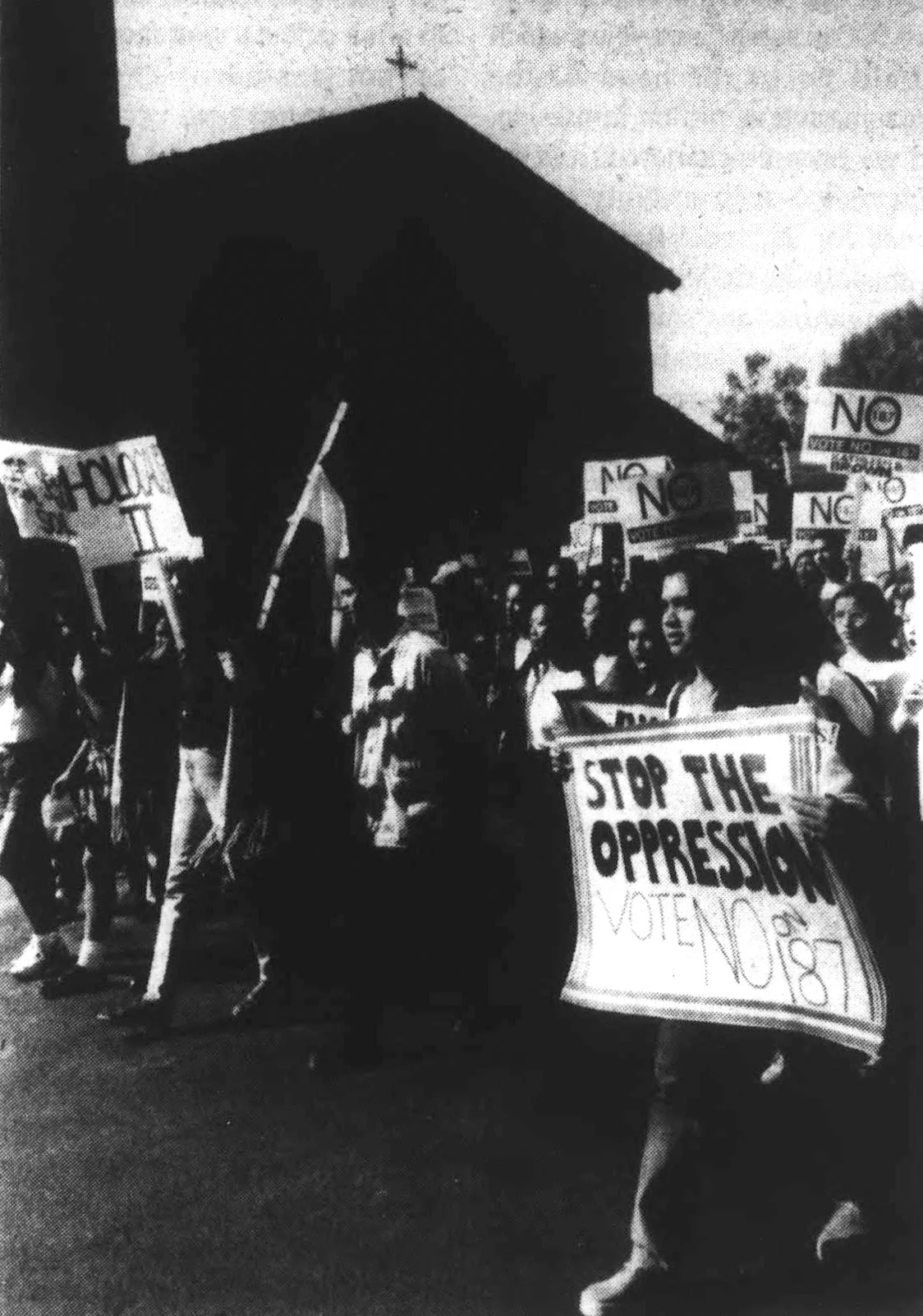
In 1994, Over 200 people rallied outside of the Mission Church against California Proposition 187 a few weeks before California voters voted to approve the measure. Proposition 187 would have made undocumented people ineligible for public social services like public health care and public education. The proposition never took effect. (Steve Schooley for The Santa Clara)
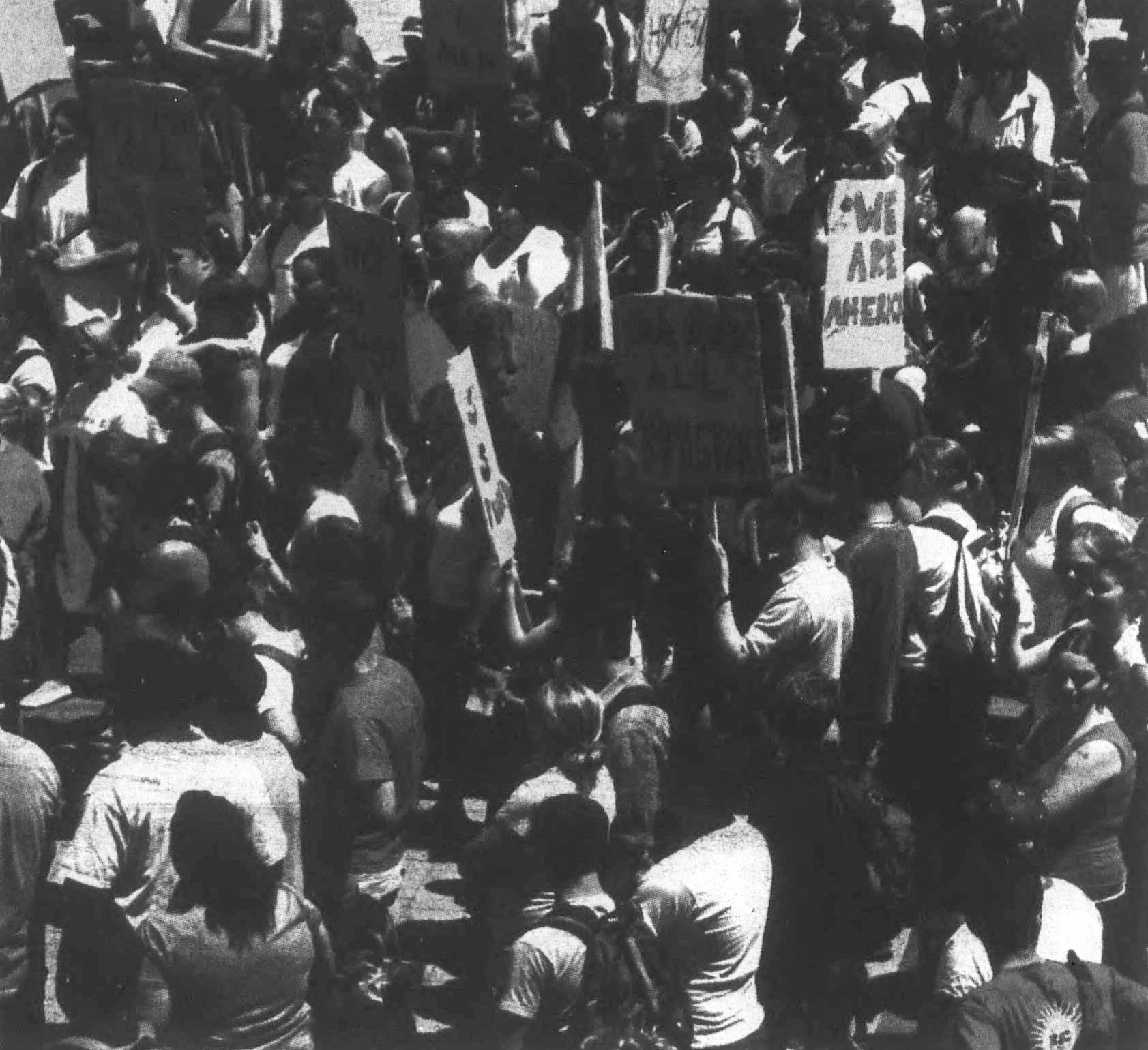
200 people attended a protest apart of the national “Day Without Immigrants” in the free speech zone between Shapell Lounge and the bookstore in May 2006. (Sophie Asmar/The Santa Clara)
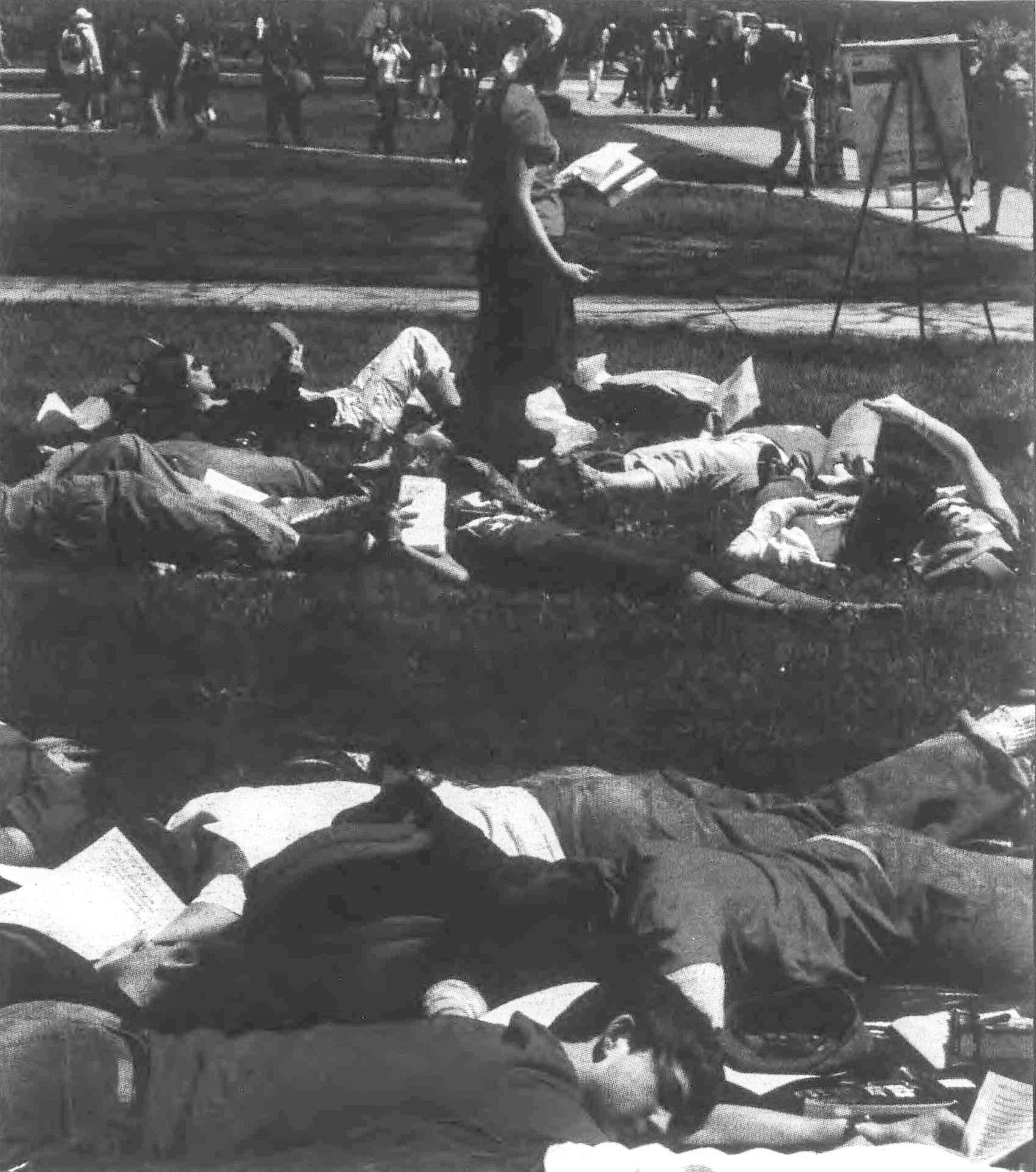
In 2006, Over 50 students from the group Taking Action Now for Darfur staged a “die-in” outside the Benson Memorial Center to raise awareness about the genocide in Darfur, Sudan. At the time, the United Nations reported that over 400,000 civilians had been murdered. (Shawn Hanna/The Santa Clara)
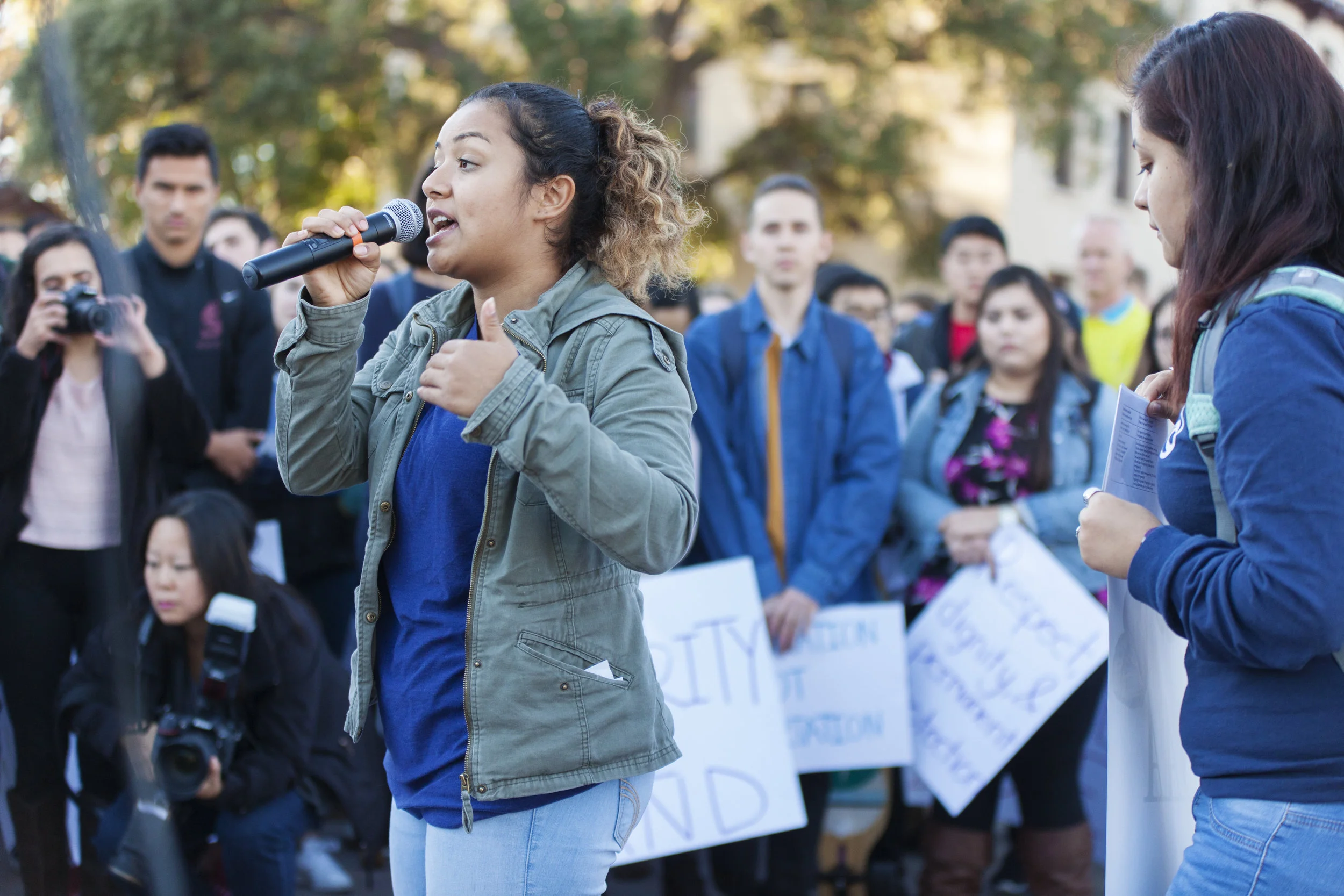
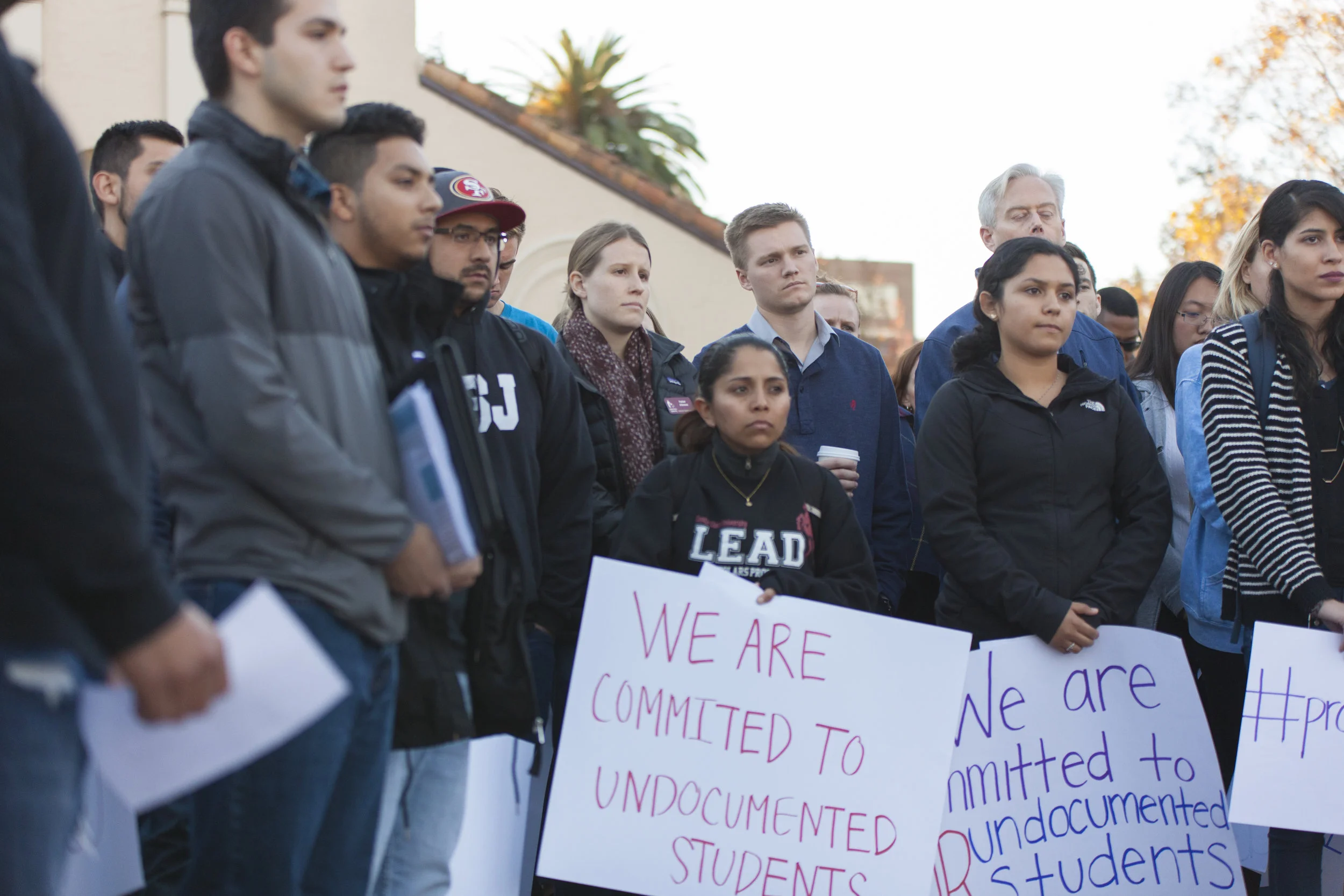
On Nov. 17, 2016, nine days after the 2016 presidential election, there was a campus-wide walkout outside the Mission Santa Clara de Asis to show solidarity with undocumented students at the University. The walkout was attended by more than 400 people. (Photo by The Santa Clara)
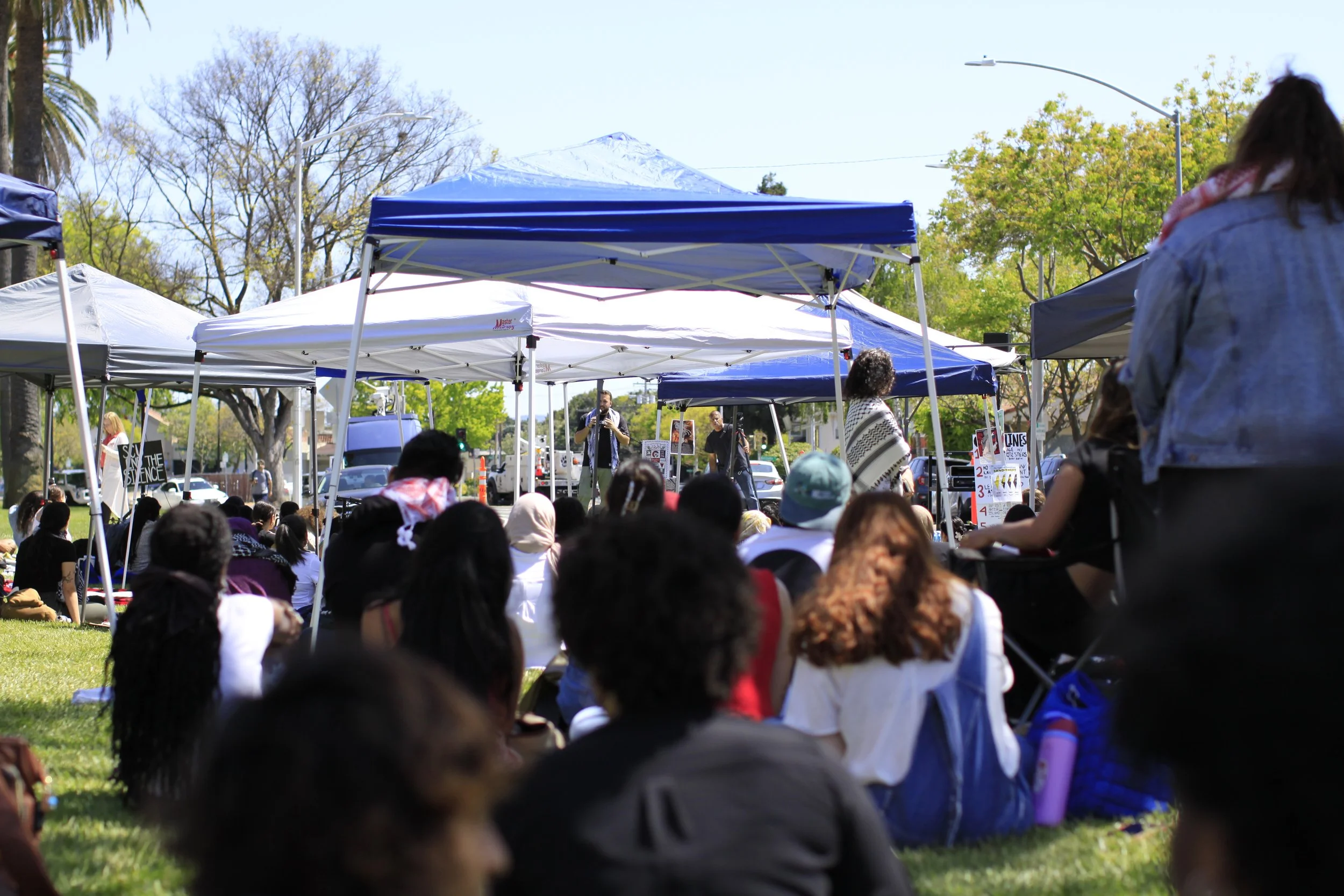
Santa Clara University community members listen to a speaker during an eight hour teach-in in support of Palestine on Alameda Lawn on May 1, 2024. (Isa Montes for The Santa Clara)
On-Campus Advocacy
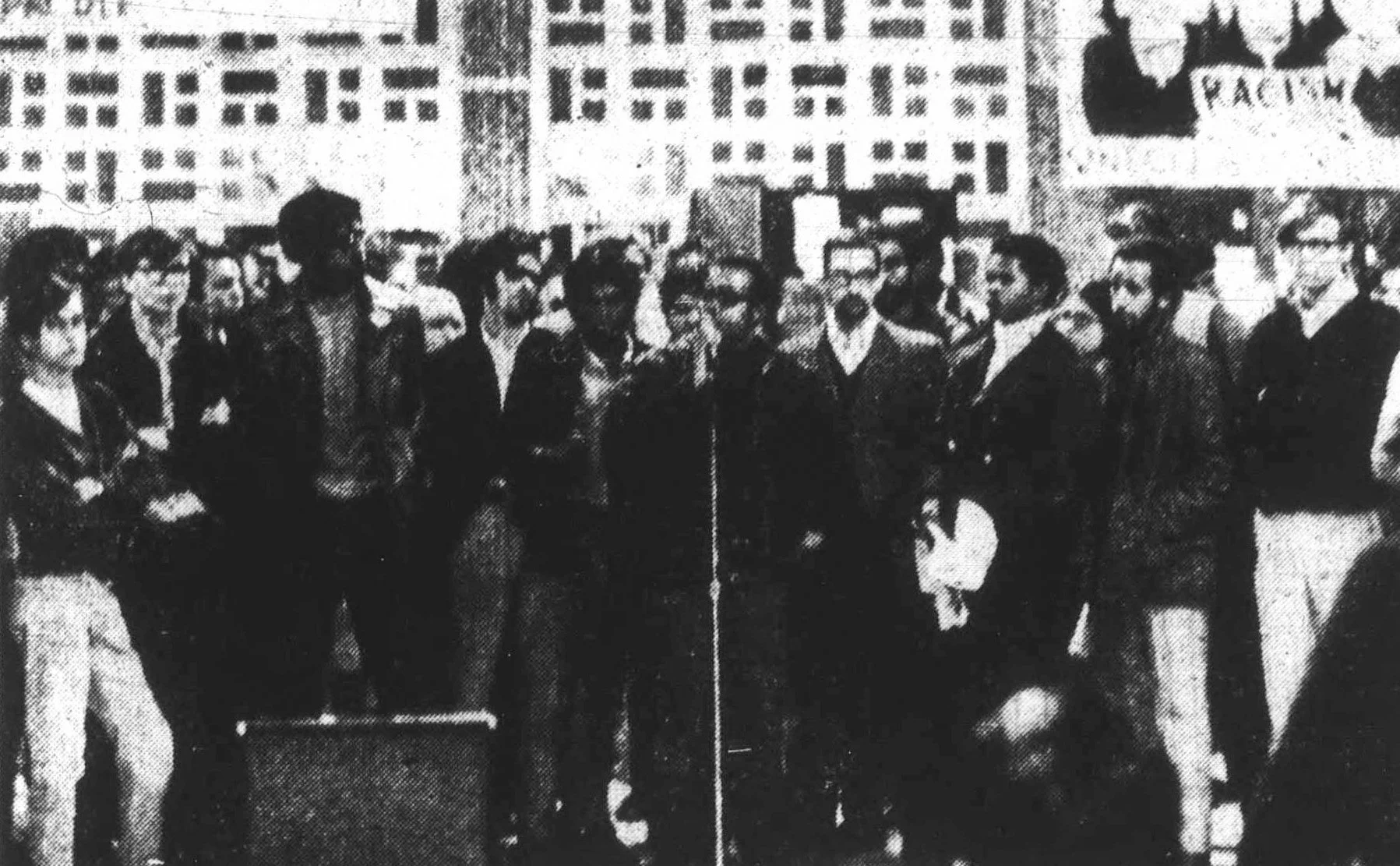
In 1969, members of the Black Student Union, Mexican-American Student Confederation and Students for Democratic Action address members of the student body in the dining hall demanding that their affluent white peers recognize their implicit racism and hear minority voices across campus initiatives and for the university president to meet their non-negotiable demands of fund allocation, mandatory Black and Chicano Studies courses, and the power to review all articles concerning minority students. The white students were reported as seeming apathetic to the concerns of the student activists. (Eskridge Photo for The Santa Clara)
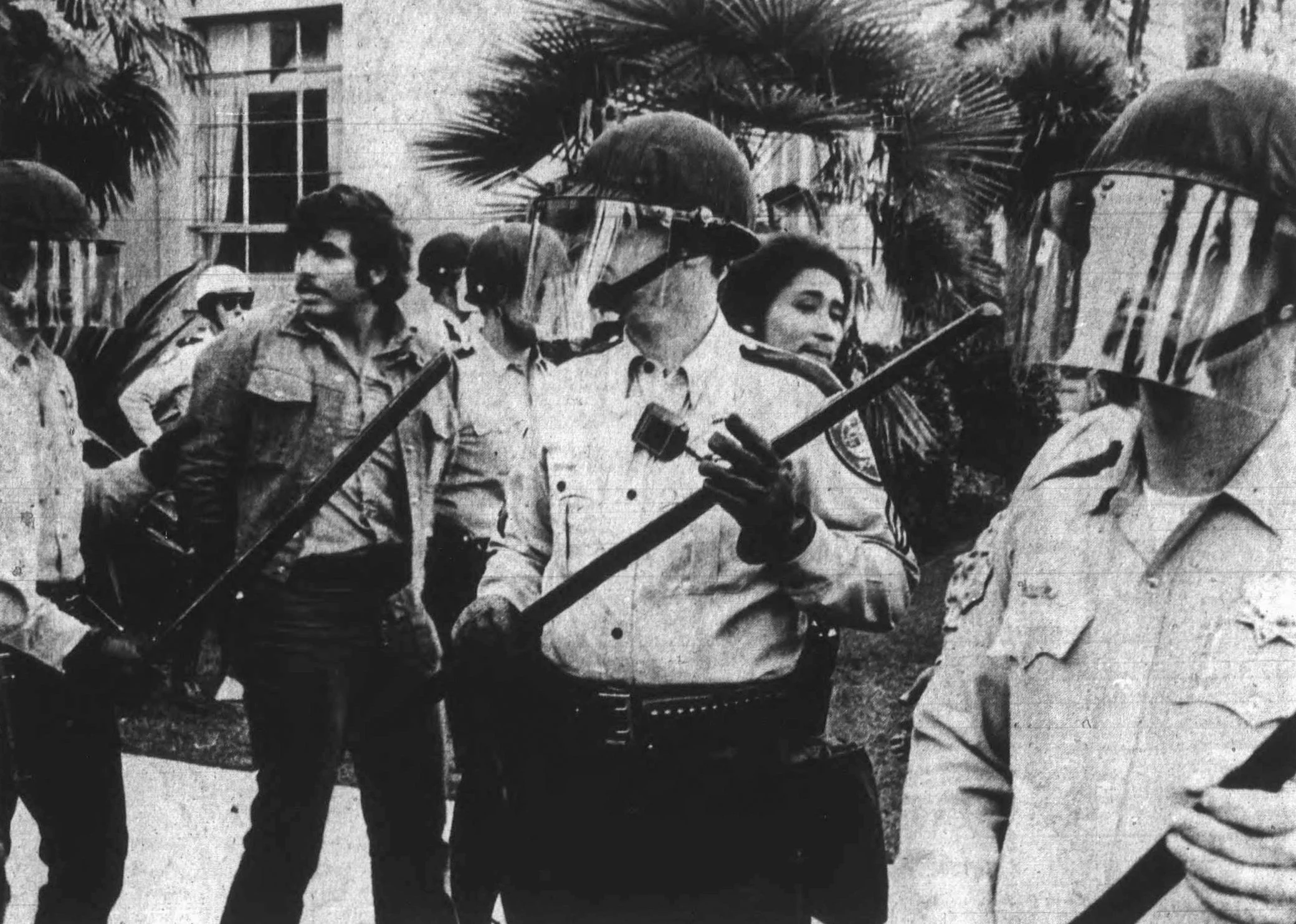
In 1972, six students representing MEChA-El Frente, the Chicano student union, met with then-President Thomas D. Terry, SJ about issues they had with firing of staff and a proposal to remove a pre-college orientation program for minority students. After Terry concluded that the meeting should be over, the students refused to leave and wanted to negotiate more. Terry then called in the police, who arrested them. (Bruce McClelland for The Santa Clara)
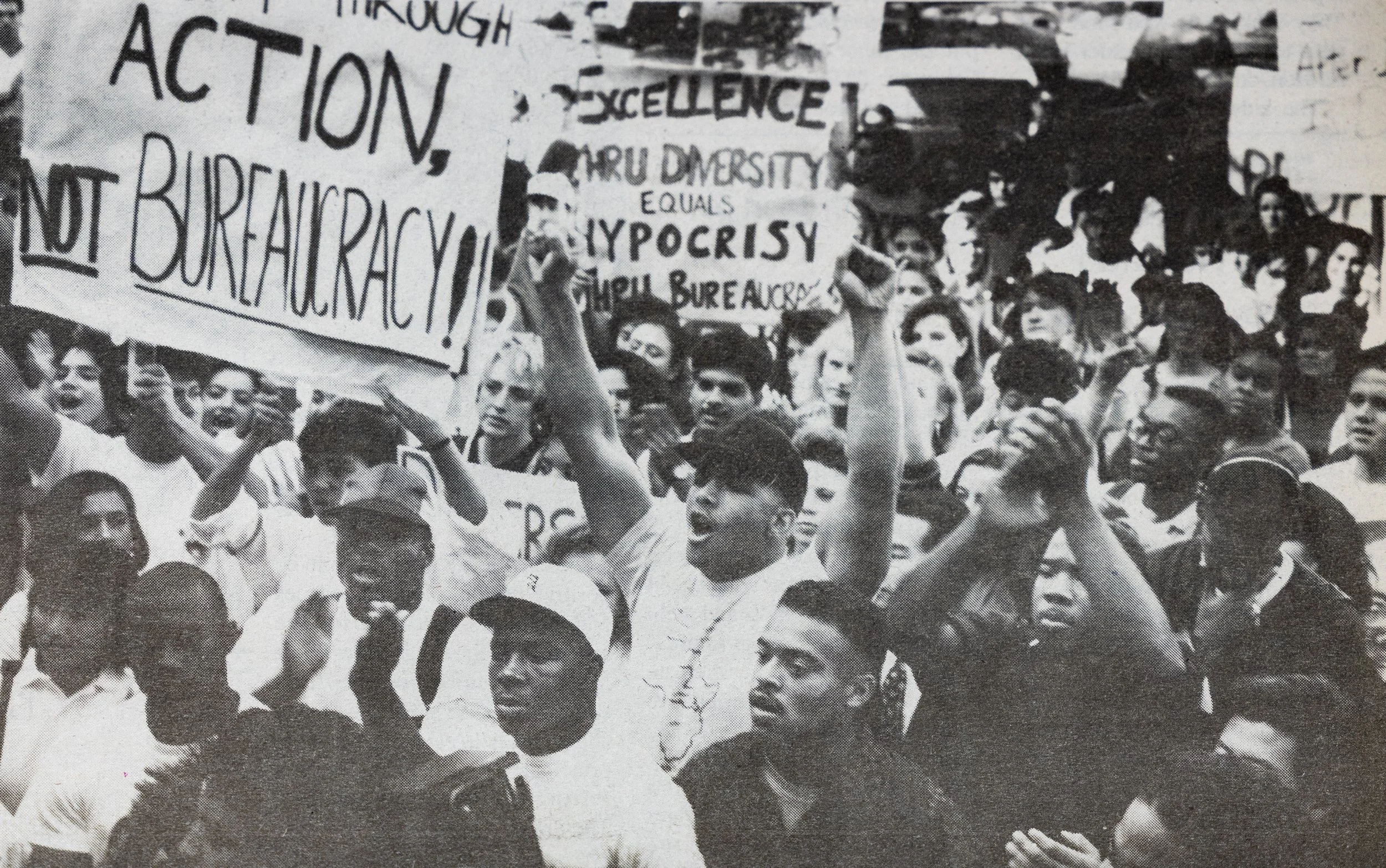
In 1991, as a part of what is known now as Unity 2, around 250 students, faculty, and staff marched from the Multicultural Center, that was in the Graham Residence Hall basement at the time, to the Walsh Administration Building to hand a list of recommendations to then-President Paul Locatelli, SJ including moving the Multicultural Center from the Graham Residence Hall basement to a more visible location on campus, intensifying minority recruitment efforts, and incorporating ethnic and women’s studies into the University’s requirements for graduation. (Rich Kirlin/The Santa Clara)
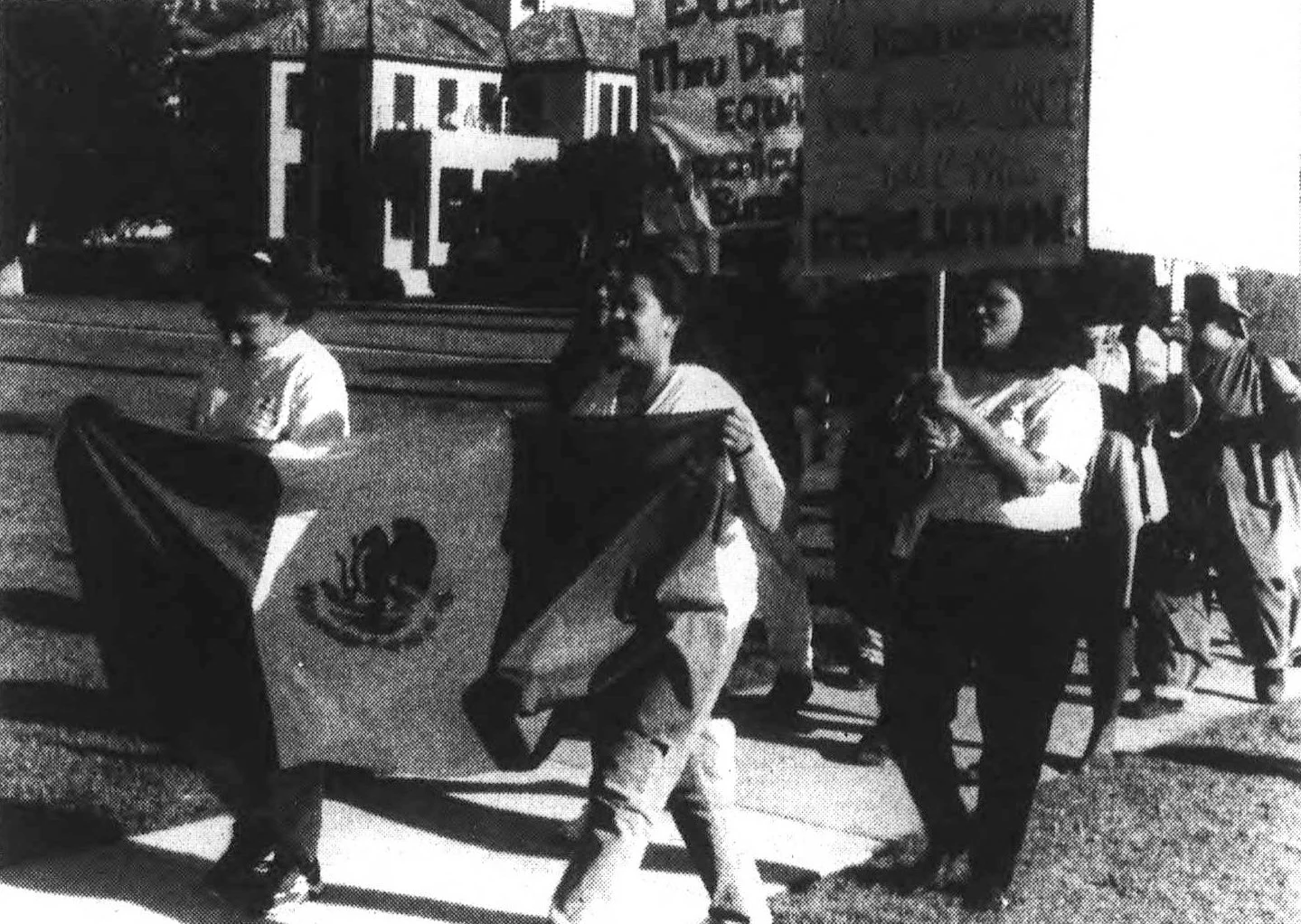
In 1995, more than 150 students, mostly non-white, rallied in support of Affirmative Action and to raise awareness for their demands to relocate the Multicultural Center and their feelings that the needs of new students and faculty of color were not being met. (Yoon Chung/The Santa Clara)
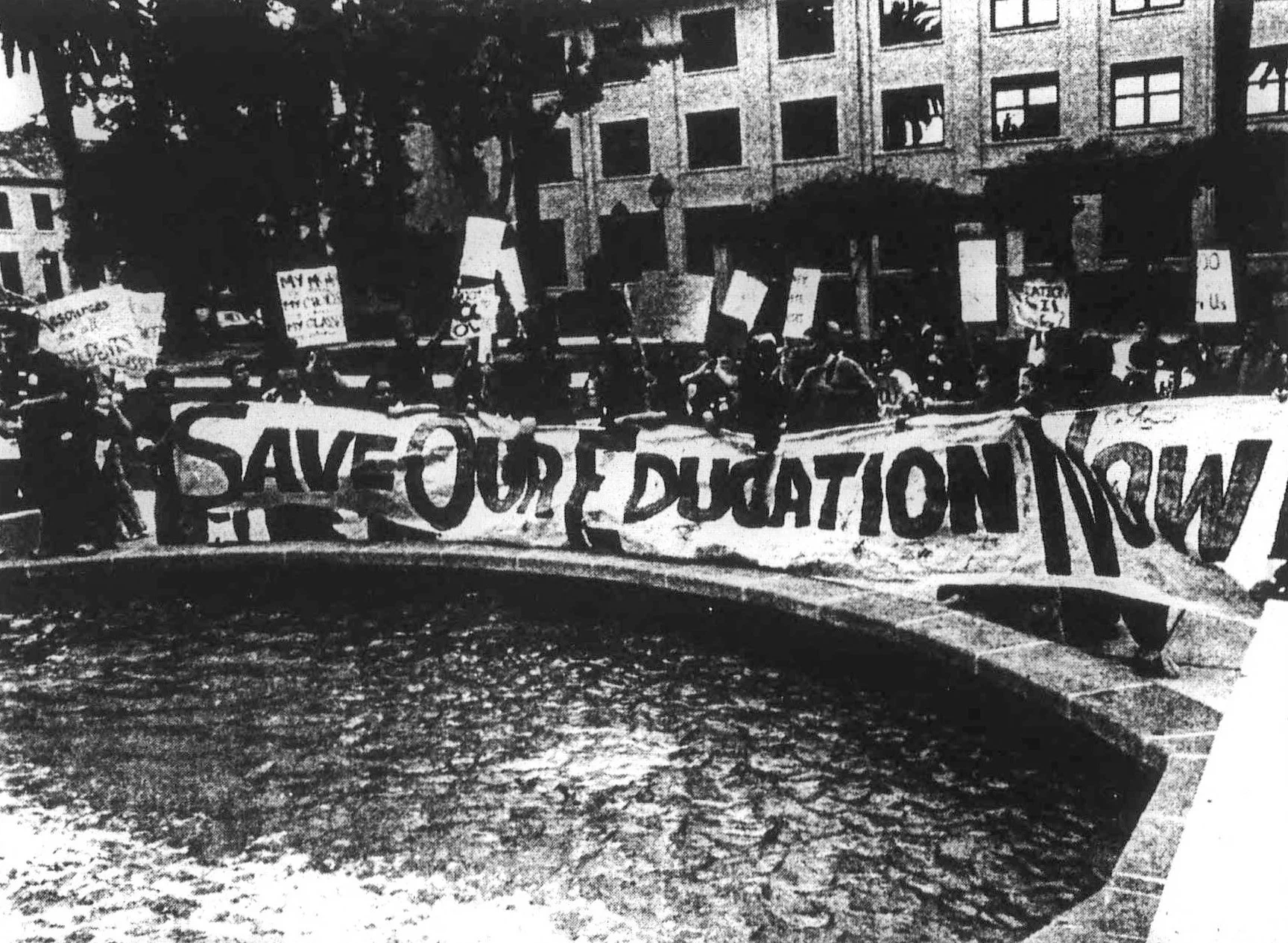
Students protest in front of the Benson Memorial Center during a three-day demonstration known as UNITY 3 in 1999. They held protests advocating for the university granting exclusive access for the MCC to the Shapell Lounge and legitimizing the Ethnic Studies Program as a university department with funding and support. The protests lasted three days and nights until they reached an agreement with the University. (Heidi Lloyd/The Santa Clara)
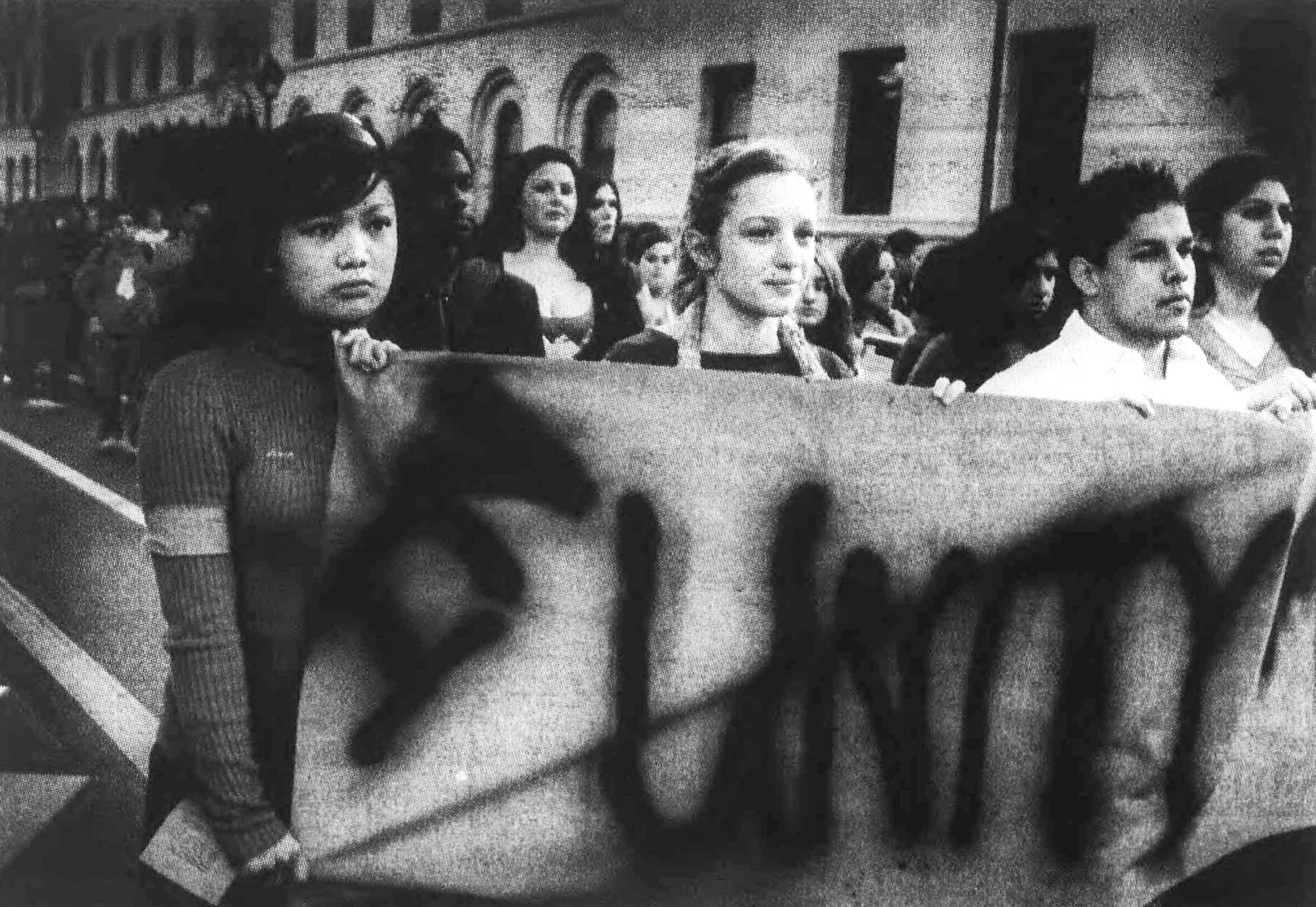
250 students, faculty members, and administrators, organized by the Multicultural Center, silently marched to then-President Paul Locatelli’s, SJ 2007 State of the University speech carrying a banner that said “In unity there is strength” in response to a “south of the border” party where students wore costumes portraying Latino people with stereotypes like janitors, pregnant women and gangsters. (Shawn Hanna/The Santa Clara)
In 2011, Protestors, including Benson Memorial Center staff and students, held multiple protests where they marched from Shapell Lounge to Market Street. Allegations included that employees are given too many tasks that cause slowdown. Management said that the staff is still learning to utilize the redesign of Benson.
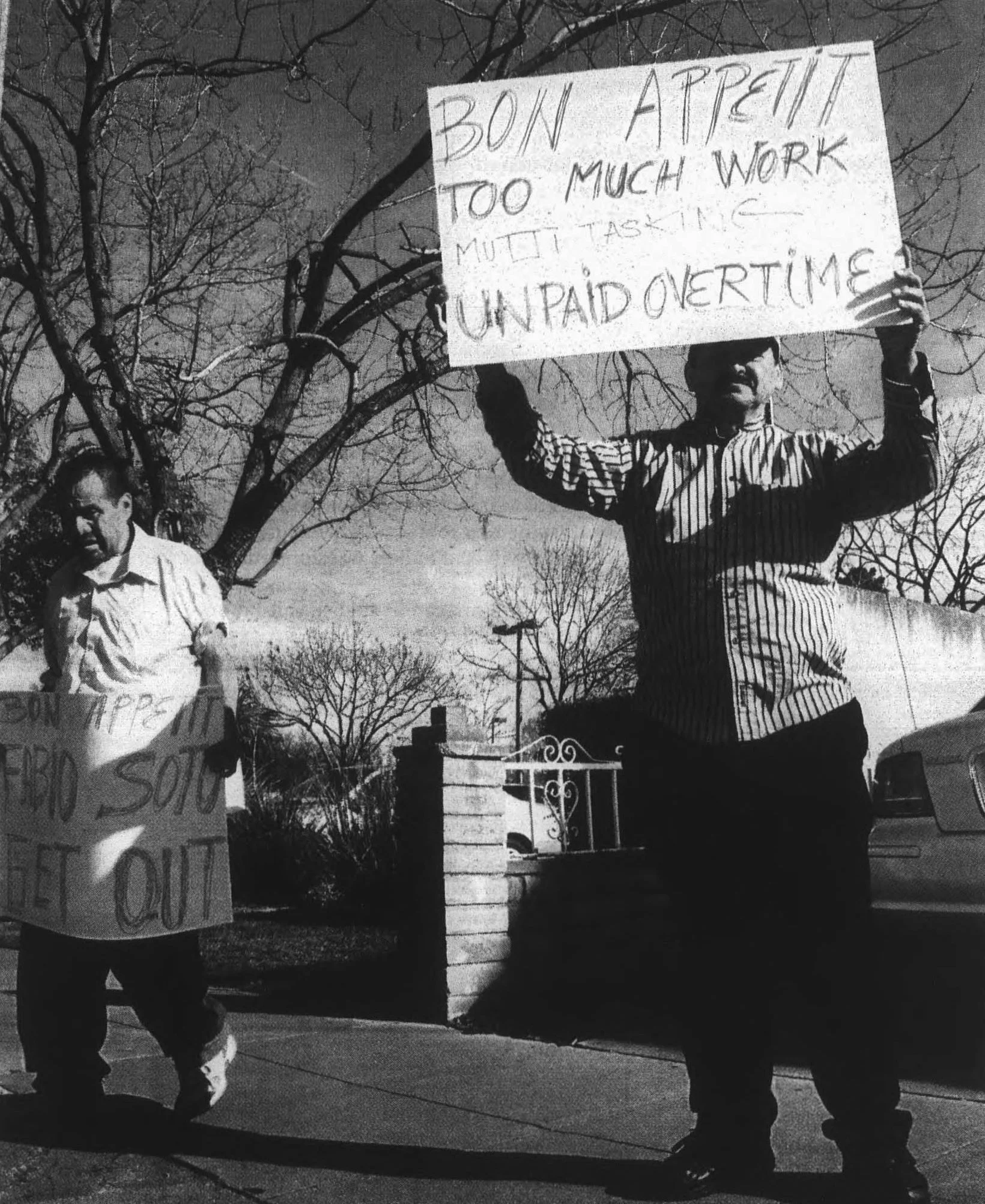
Protestors hold up signs during a protest against Bon Appétit in February 2011. (Samantha Juda/The Santa Clara)
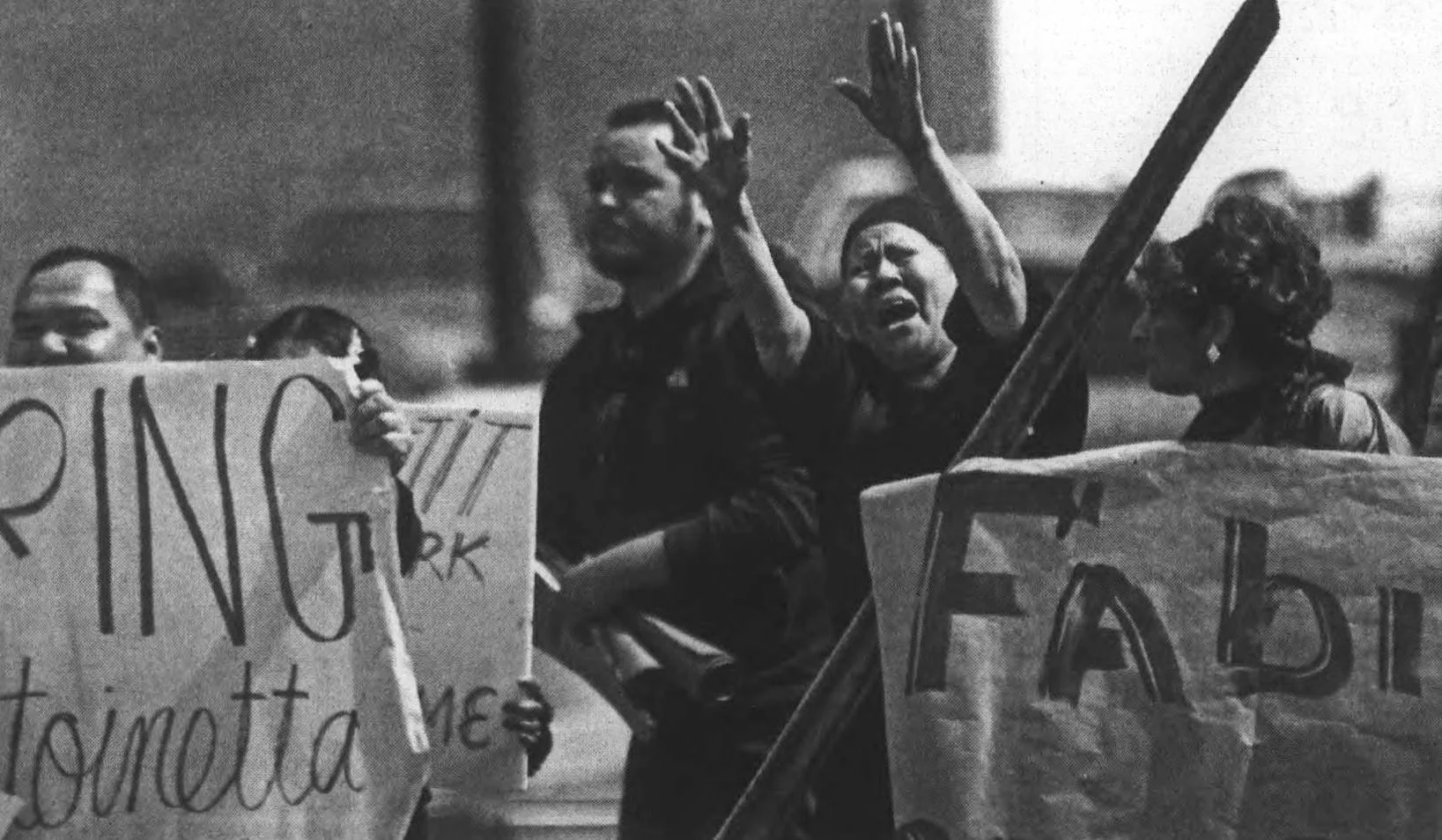
Benson workers cry out against the perceived injustice at a protest in April 2011. Some of the employees from Bon Appétit feel that their coworkers had been impatient and melodramatic in protests and that they have no problems with mismanagement. (Ryan Selewicz/The Santa Clara)
Similar protests were held by Bon Appétit workers in 2003.
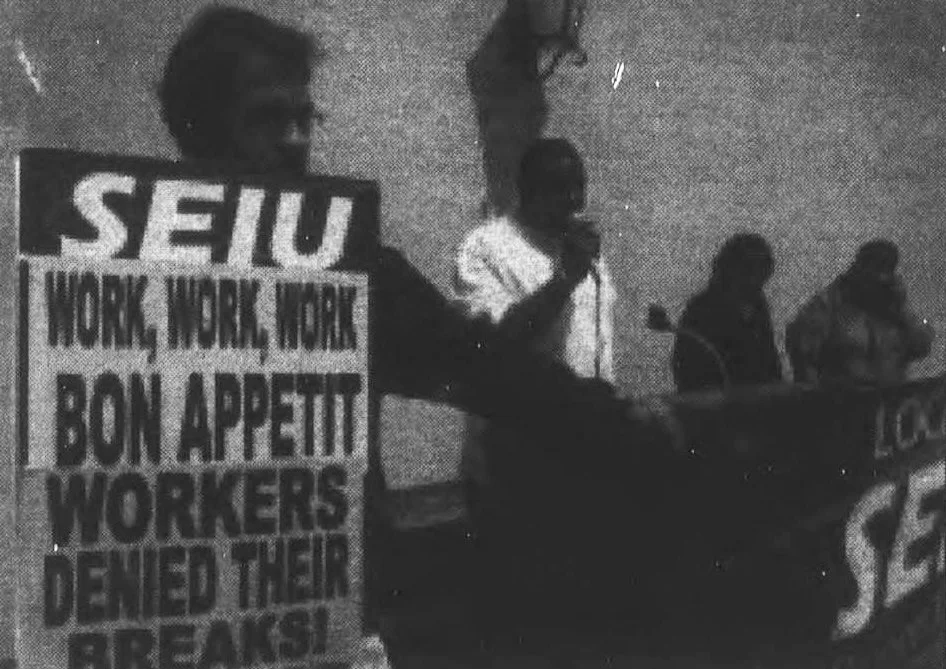
A Santa Clara University student joined 30 students, workers, and union representatives who held a rally outside the Benson Memorial Center to protest the “unfair labor practice committed by Bon Appétit Management Company and Santa Clara University Facilities Department.” (Cooper Carras/The Santa Clara)
Unionized facilities staff also held protests over their contract negotiations with the University the following year.
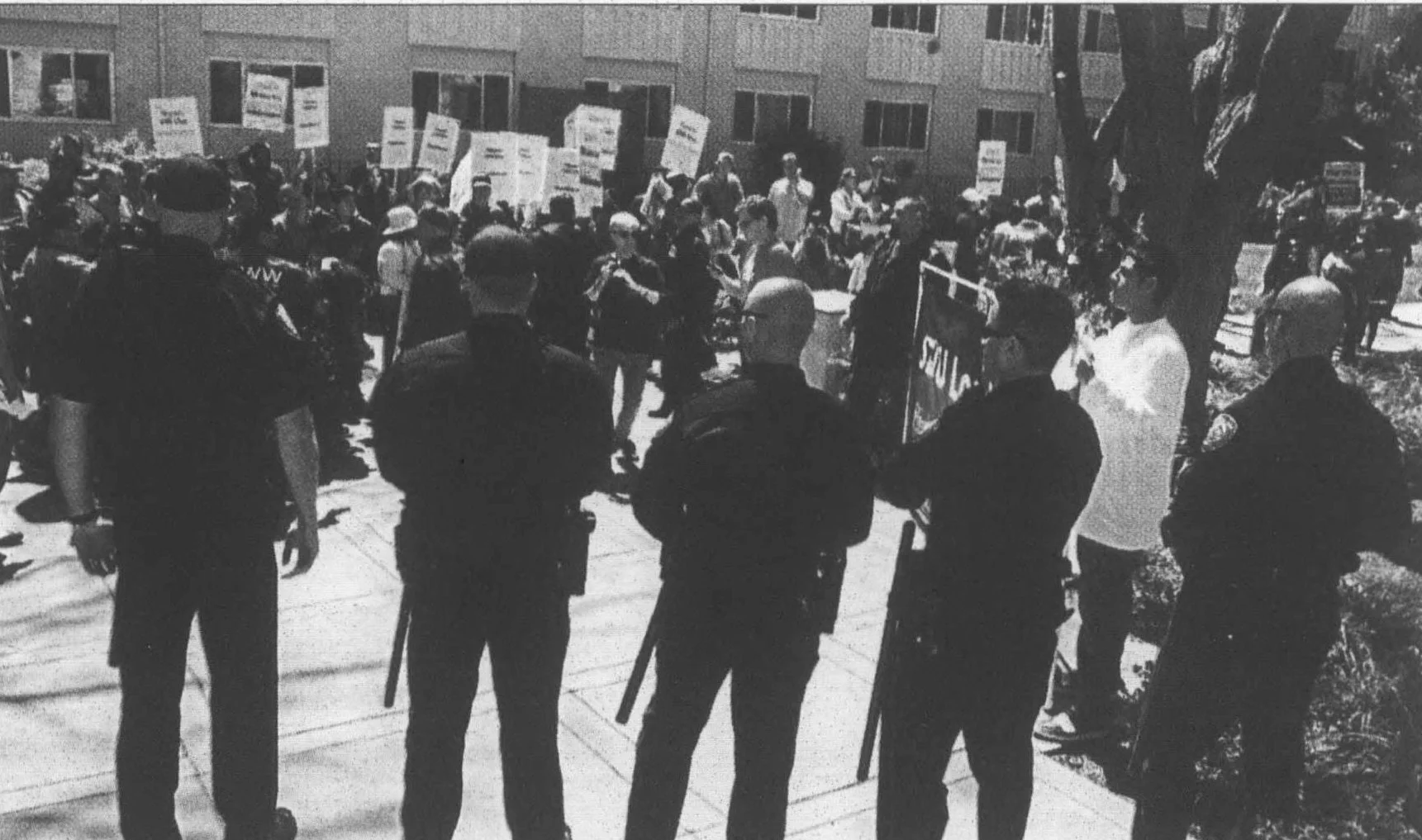
Facilities staff, their families and supportive students march in front of the Pat Malley Fitness and Recreation Center with Santa Clara police officers and Campus Safety look on during Preview Day in April 2012. (Ryan Selewicz/The Santa Clara)
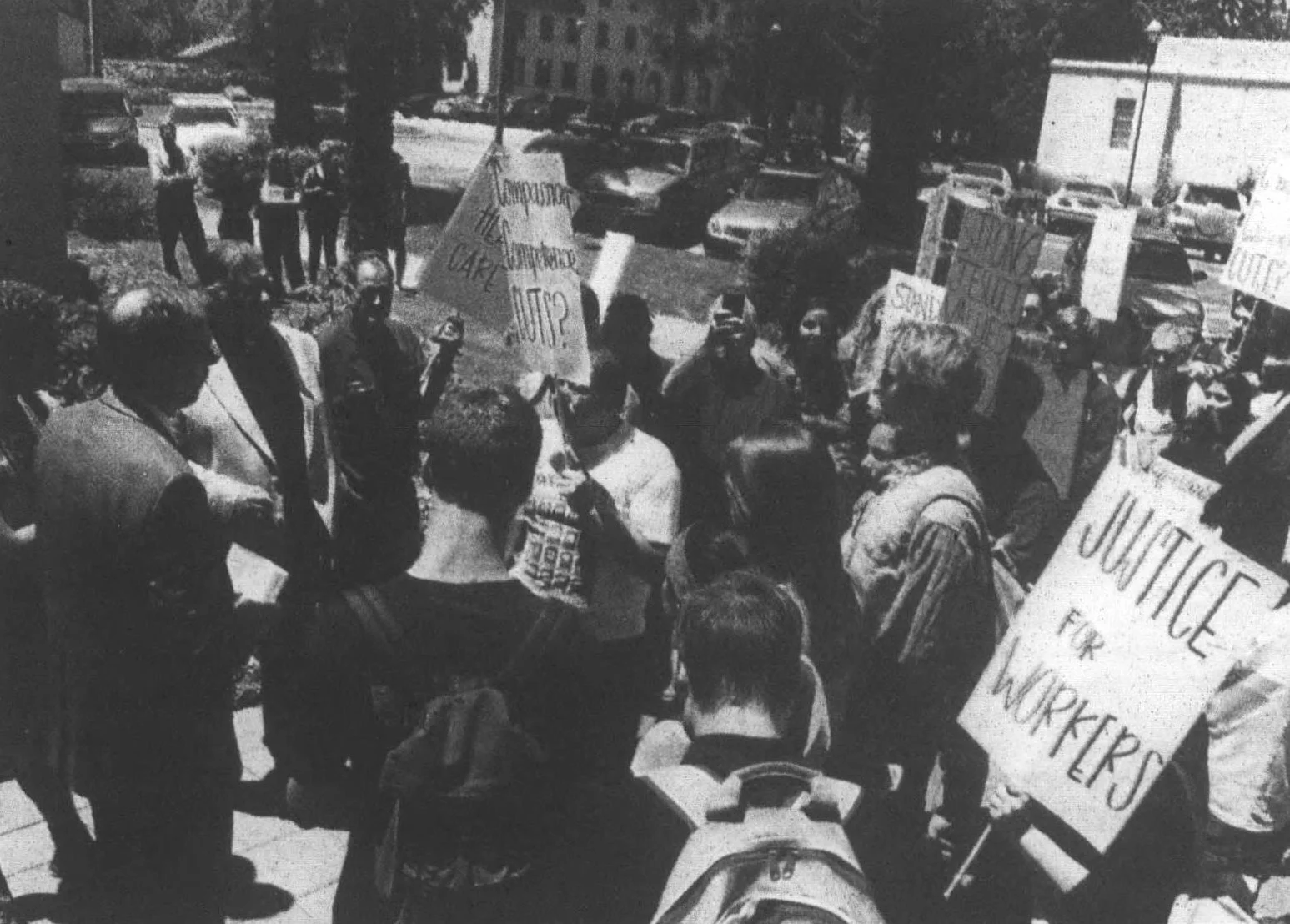
Students and facilities workers protest outside the Walsh Administration Building to protest the state of contract negotiations between facilities workers and the University in May 2012. (Malu Veltze for The Santa Clara)
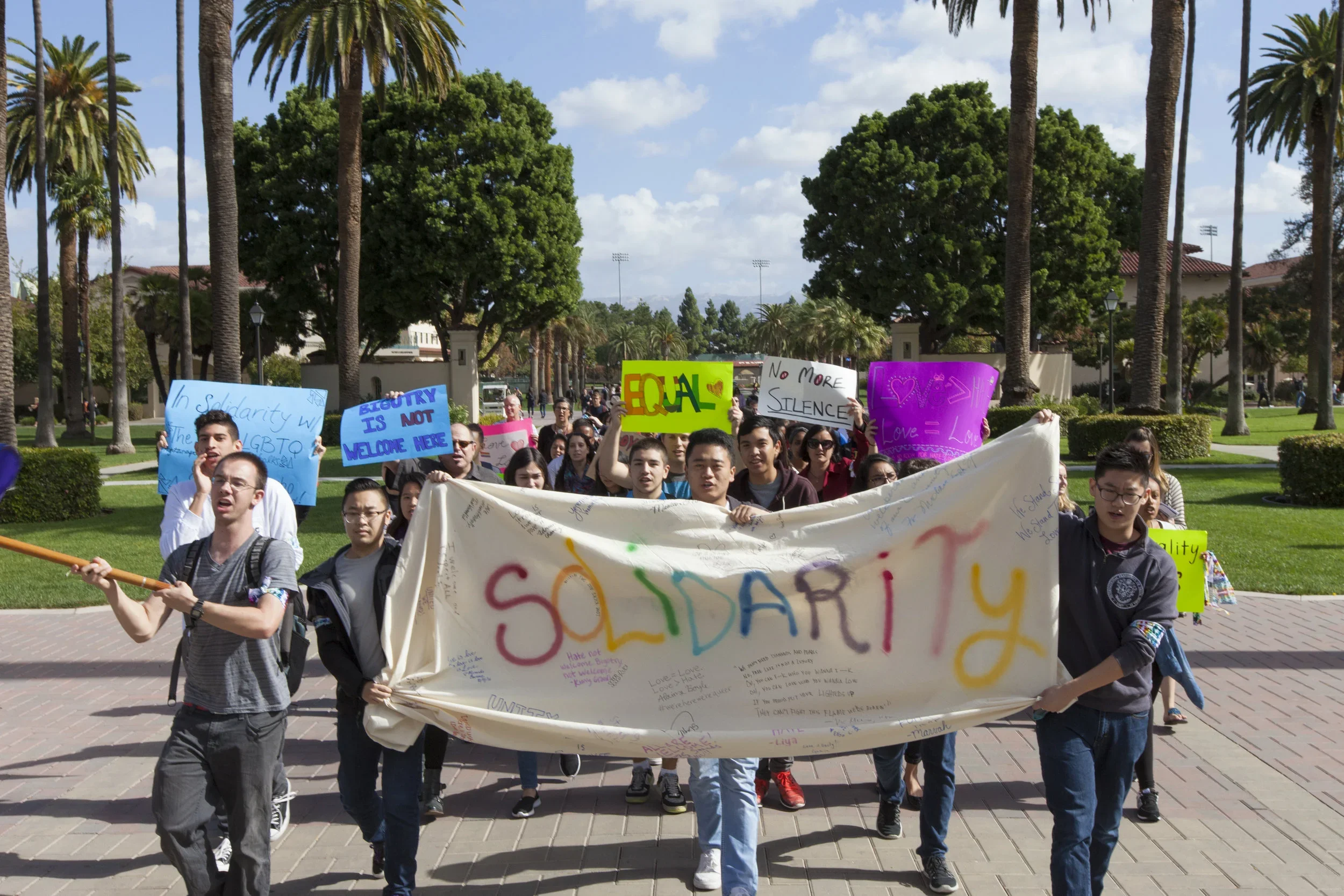
In 2016, a swastika drawn in blood and slurs directed at the LGBTQ+ community were found in Casa Italiana Residence Hall. Nine days later, over 70 students protested the acts and expressed their solidarity with members of the community impacted by the vandalism. (Ethan Ayson for The Santa Clara)
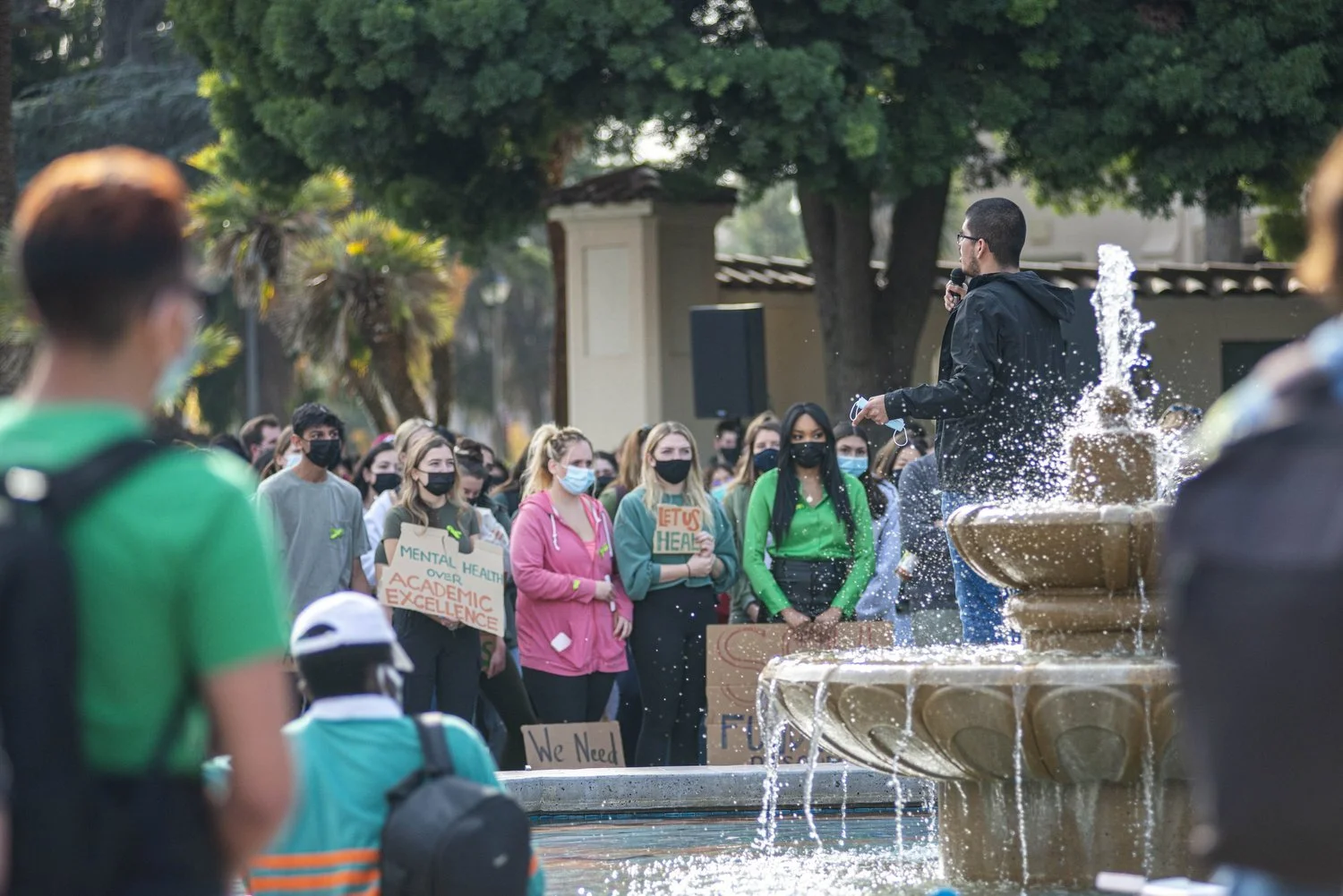
In December 2021, the Santa Clara University community gathered by the fountain outside of Vari Hall to demand policy changes concerning campus mental health resources and academic leniency for the fall quarter after a string of student deaths. In response to the demonstration, the Santa Clara University Board of Trustees committed to allocating millions of more dollars to mental healthcare at the University. (Mako Watanabe for The Santa Clara)