Behind the Seams
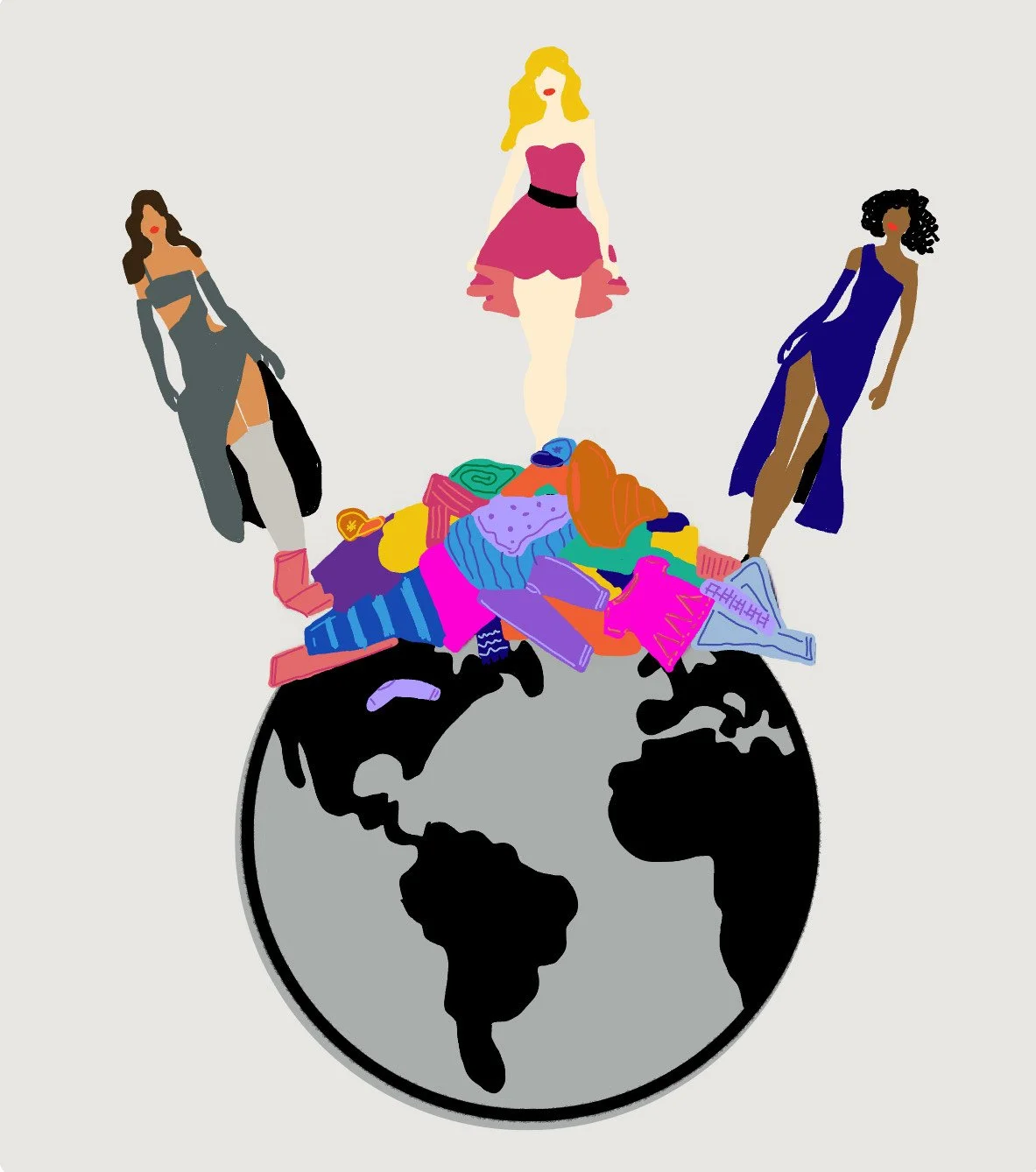
Graphic provided by Lucy D'Errico
There was a time when I proudly wore my $6 Shein top. It was the perfect combo: cute and cheap! What could be wrong with that?
Turns out, a lot.
One minute, I was on my phone watching haul videos; the next, I was in class researching how toxic dyes surround factory workers, children hand-sew buttons in cramped rooms, and 92 million tons of clothing are thrown out and piled up in landfills annually. That $6 top didn’t feel like a “steal” anymore. It felt like a weight thrown on me, following me wherever I went.
Fast fashion promises the latest style on demand at prices that seem too good to be true. To be honest, companies like Zara, H&M, and Shein nail it every single time. Behind the flashy trends and “green” marketing lies an industry that’s one of the most damaging to our planet.
Did you know that it takes “2,700 liters of water to produce just one cotton T-shirt,” according to the World Wildlife Fund? That is enough to hydrate one person for two-and-a-half years. I had no clue that around 60% of today’s clothes are made from synthetic fibers such as plastic. This plastic comes from fossil fuels, and as we know from the plastic straw phenomenon, it does not decompose. According to various sources, including the New York Times, every wash of clothing releases microplastics. These microplastics end up in our waterways, such as the ocean, lakes, and rivers, and eventually end up in our system. In our bodies! Nobody should want that.
So, do you still think that $6 top was a win? These big brands aren’t dumb. They are now slapping on an “eco-friendly” label to win consumers over. The stats don’t back it up. According to The Sustainable Fashion Forum: “A 2022 investigation into H&M found that their sustainability scores often contradicted their actual practices, and over half of European green marketing claims were considered misleading and lies.” France is making “greenwashing” illegal. Why can’t America follow that?
I bet you’re wondering: So, where does that leave us? We’re not naive. We know how to do our research. We know fast fashion isn’t good for our environment, but we also care about self-expression. Fashion is a big part of that. I challenge you to find ways to show off your style without ignoring the bigger picture.
Luckily, change is happening. Depop is cool. Threadup is cool. TheRealReal is cool. Nuuly is cool. Thrifting is cool.
The options aren’t limited.
If you’re like me—into fashion but tired of the guilt that comes with it—start small. Ask yourself: Do I really need this? Where will I wear it? Will I wear it more than once, or do I only want to take photos in it? Can I find it secondhand?
You’d be surprised how good it feels to say no to fast fashion and yes to a wardrobe that actually reflects your values and lasts longer, too.
Social media plays into this as well. It has a significant influence on what we buy. But it can also be a great platform to put change into action. Start selling and buying secondhand clothing.
So yeah, I used to brag about my $6 Shein top. Now I brag about my $20 Love Shack Fancy top that I’ll keep for years.
Fast fashion might be fast, but change? That’s in our hands.