Being A Mariners Fan, Near and Far
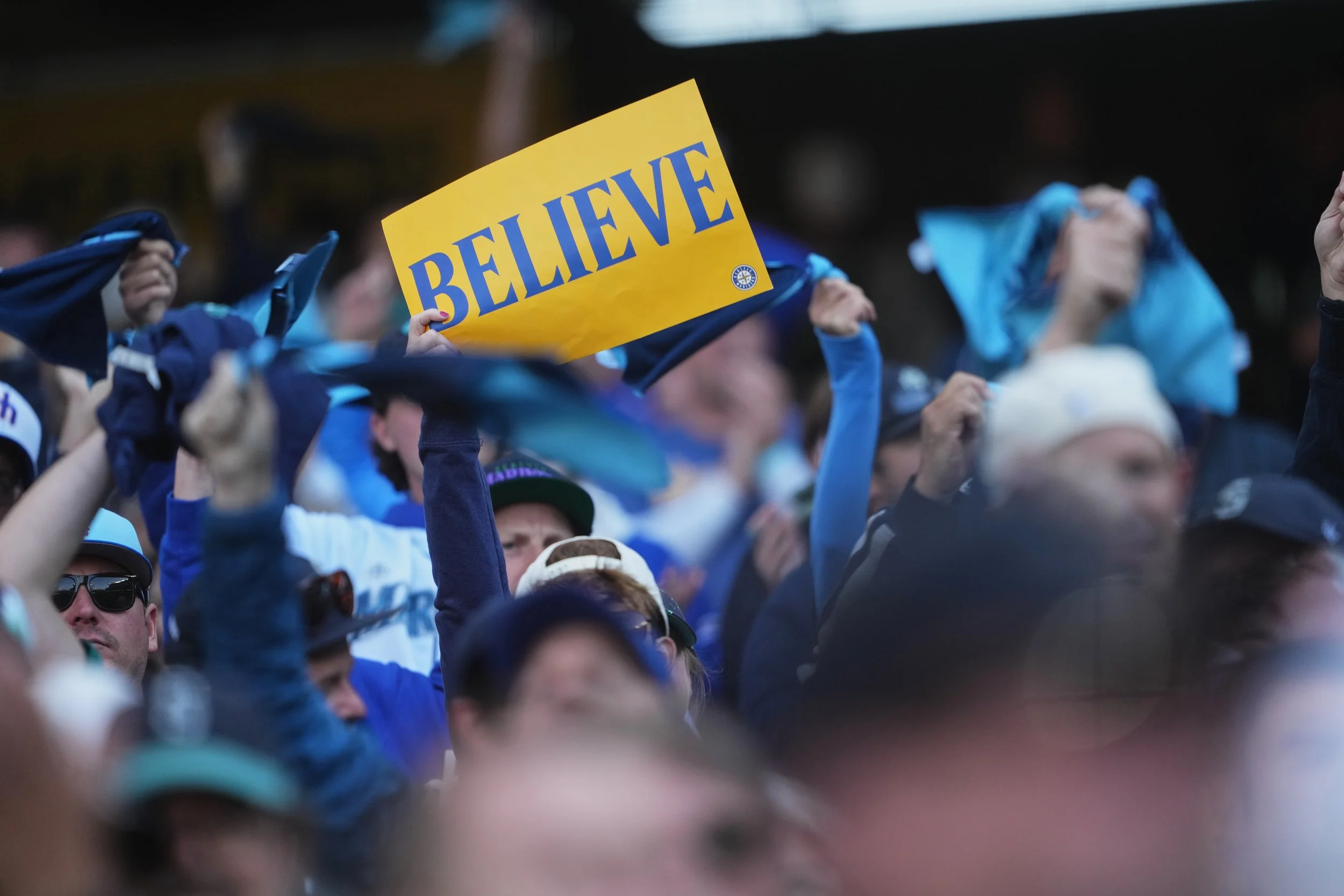
Fans cheer during Game 2 of baseball's American League Division Series between the Seattle Mariners and the Detroit Tigers, Sunday, Oct. 5, 2025, in Seattle. (AP Photo/Lindsey Wasson)
You probably met more people from Seattle than you thought possible during your first weekend at Santa Clara University. By my third night here, when I told someone I was from Seattle, the most common response was: “Just like half the school.”
The Seattle to Bronco pipeline was as evident as ever over the last few weeks, as the Seattle Mariners made their deepest playoff run in franchise history.
Hats and jerseys were on full display, accompanied by a buzz that could be overheard across campus. When George Springer delivered the final blow to eliminate the team in Game 7 of the American League Championship Series—a gut-wrenching three-run home run to put the Toronto Blue Jays in the lead—fans in Seattle, Santa Clara and all over let out a big sigh.
The Mariners remain the only team in Major League Baseball to have never played in the World Series, let alone to have won one. The 2025 season was yet another instance of falling short, but in a particularly painful fashion.
When they led 3-1 in the seventh inning of Game 7, the Mariners were nine outs from making the dreams of countless people come true and making it to their first World Series. This is uncharted territory. The fanbase so accustomed to losing is not accustomed to losing like this.
Where do Mariners fans go from here? They’re heartbroken, and next year brings with it some uncertainty. The team will retain much of its talent going into 2026, but some key players from this year’s playoff run will likely sign elsewhere in free agency.
Unless you’ve built a true superteam—like the Los Angeles Dodgers, the heavy favorites to win it all this year—it’s hard to count on consistent success year to year in baseball. In the NFL or NBA, a single player can consistently place their team in contention, even if they’re not champions at the end of the season.
In the MLB, a grueling 162 game season means that making it to the postseason requires a certain depth of talent, something the Mariners had in 2025, and aren’t guaranteed next year. For example, Josh Naylor and Eugenio Suarez, two players acquired by the Mariners at the trade deadline in July, played crucial roles in the team’s success but may turn out to have been rentals—players that join a team towards the end of a season to help with a playoff push, but don’t return the next year.
Growing up, I was made fun of by friends when they heard from me on multiple different occasions that the Mariners’ time had finally arrived, that this was the year. “That’s what they always say,” was the response. To tell the truth, I don’t make proclamations like that much anymore—not because I fear what others will say, but because I’ve learned that there’s a different way to be a fan.
Of course, I was thrilled watching the 2025 season and imagining my childhood team doing what has always felt unimaginable—winning it all. But my favorite times were the simple nights at the ballpark being a part of a community I’ve belonged to for as long as I can remember. When I watched George Springer crush that ball into the left-field seats, I was certainly disappointed, but I wasn’t completely destroyed.
While you may criticize my style of fandom for lacking the intensity and vigor that helps will a team to victory, I defend it, and think it can offer a good perspective to any sports fan. I think being a fan means being part of a family, in a certain sense. When someone in your family fails at something, you’re disappointed—for them, and maybe even for yourself. But at the end of the day, you take comfort knowing that you’ll support them no matter what.
This is how I feel about the Mariners. Yes, I was sad they didn’t make it to the World Series this year. But I know I’ll be back at the stadium next summer, eating all the good food and spending time with friends.
One day, when they become champions, it will be amazing—don’t get me wrong. Until then, though, I will enjoy the aspects of fandom that are consistent regardless of wins and losses.
This may not be how you choose to cheer on your team. Some people ride and die with their franchise, and if that’s how you’d like to do it, go ahead. It certainly demonstrates your commitment.
But I encourage you to build a relationship with your team that’s built around a sense of belonging. Success comes and goes, and World Series rings are extremely elusive, depending on who you’re rooting for. It’s great to show up for your team, and it’s even more imperative to do so when you’ve moved away—like how many Broncos from Seattle still represent the Mariners. But make something other than just winning be the reason you do it.