Shut Up and Listen: Volume II
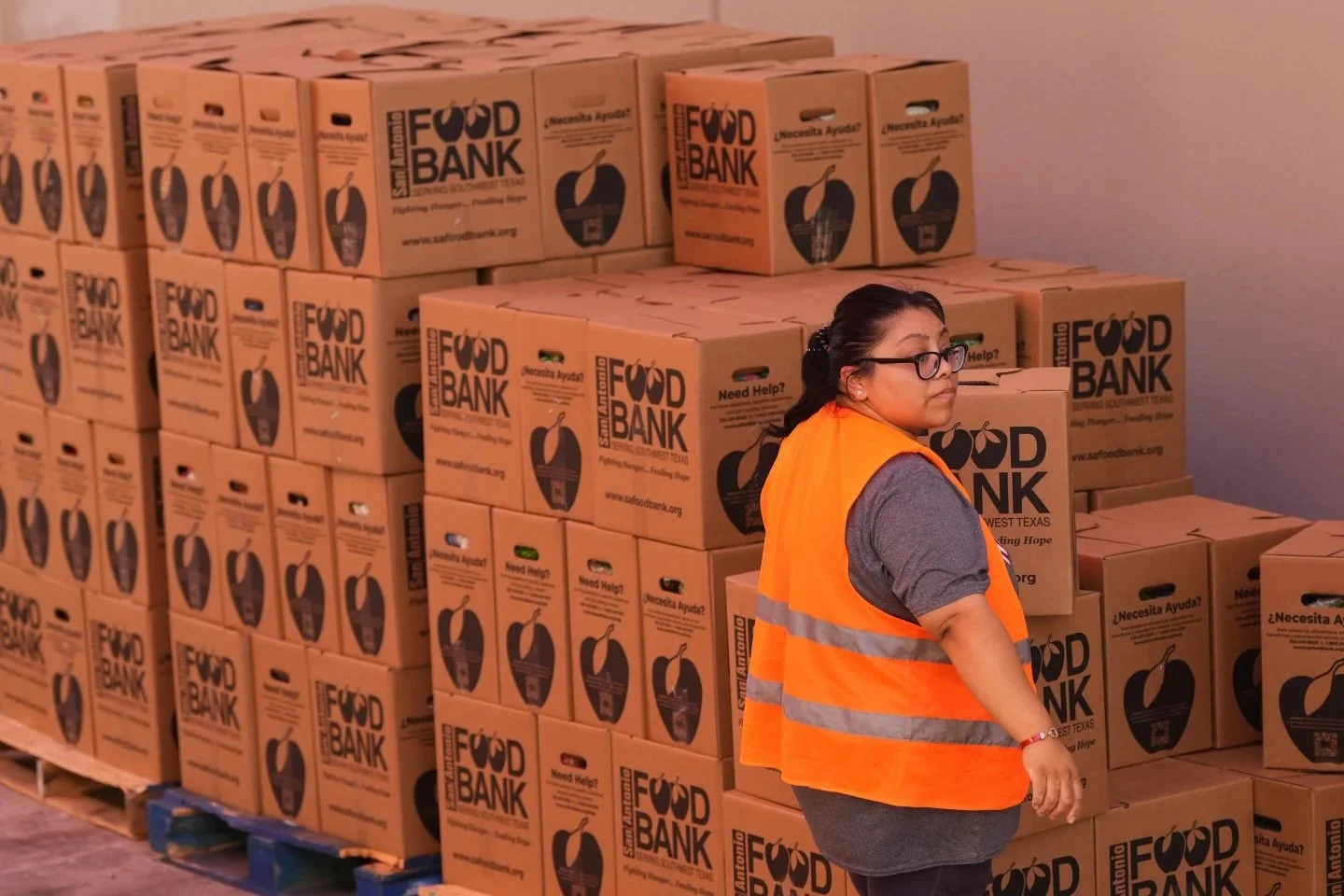
A volenteer helps load boxes of food for federal employee households and SNAP recipients impacted by the governemnt shutdown on Oct. 27, in San Antonio. (AP Photo/Eric Gay)
As of this issue’s print, the federal government has been shut down for 31 days. You can find a clock on the official White House website counting up the days from the beginning of this shutdown with the exhortation: “Democrats Have Shut Down the Government.”
Several federally-funded websites bear a similar message, including the Center for Disease Control and Prevention and Department of Health and Human Services, lamenting the “Democrat-led government shutdown.”
Embarrassingly, it might take going to a foreign news service like the BBC to read an unbiased account of the shutdown and what brought it about.
Looking into these services will show that the shutdown came about because of a lack of agreement between both Democrats and Republicans in Congress. And now, hundreds of thousands of federal employees are going without pay.
“At least 670,000 federal employees are furloughed, while roughly 730,000 continue to work without pay,” the Bipartisan Policy Center reports. 1.3 million active-duty military service members have dubious pay, considering the Trump administration had to specifically move money to ensure their pay on Oct. 15, and further pay-dates are unclear.
Ultimately, those who have caused this shutdown—members of Congress—are still getting paid themselves. While the government argues without worry, so many hardworking Americans go without essential paychecks.
This nearly month-long shutdown shows something important about American society today: we have become too divided to function, and American people are suffering.
Our nation’s political ideologies are more divided than ever. The median Democrat is much more liberal than in past decades, and the median Republican much more conservative, according to the Pew Research Center. Such polarization creates division, disagreement and demonization.
It’s completely valid to disagree with someone for their political beliefs, especially if they clash with your core values. But we are reaching a point in our nation where even those who are paid to converse and find points of agreement—our lawmakers—are failing to do so.
Part of this can be attributed to social media. Explored by the Netflix film “The Social Dilemma” and by researcher Max Fisher, the idea that social media contributes to political polarization is not new. It is ultimately a marketing tactic; promoting posts that fuel a moral outrage keeps people coming back, and gives people an increasingly poor view of those in opposing parties, impacting almost everyone in this digital age.
But, it is not only on the part of social media algorithms. For this administration to put these incredibly partisan messages on federal websites harms us all, and only serves to vilify.
We are seeing the impacts of this in real time, and issues will only continue to arise. The United States people—despite so much rhetoric asserting the contrary—need to find a way to get along again, or we are all in big trouble.