Capeltic Coffee Launch Party
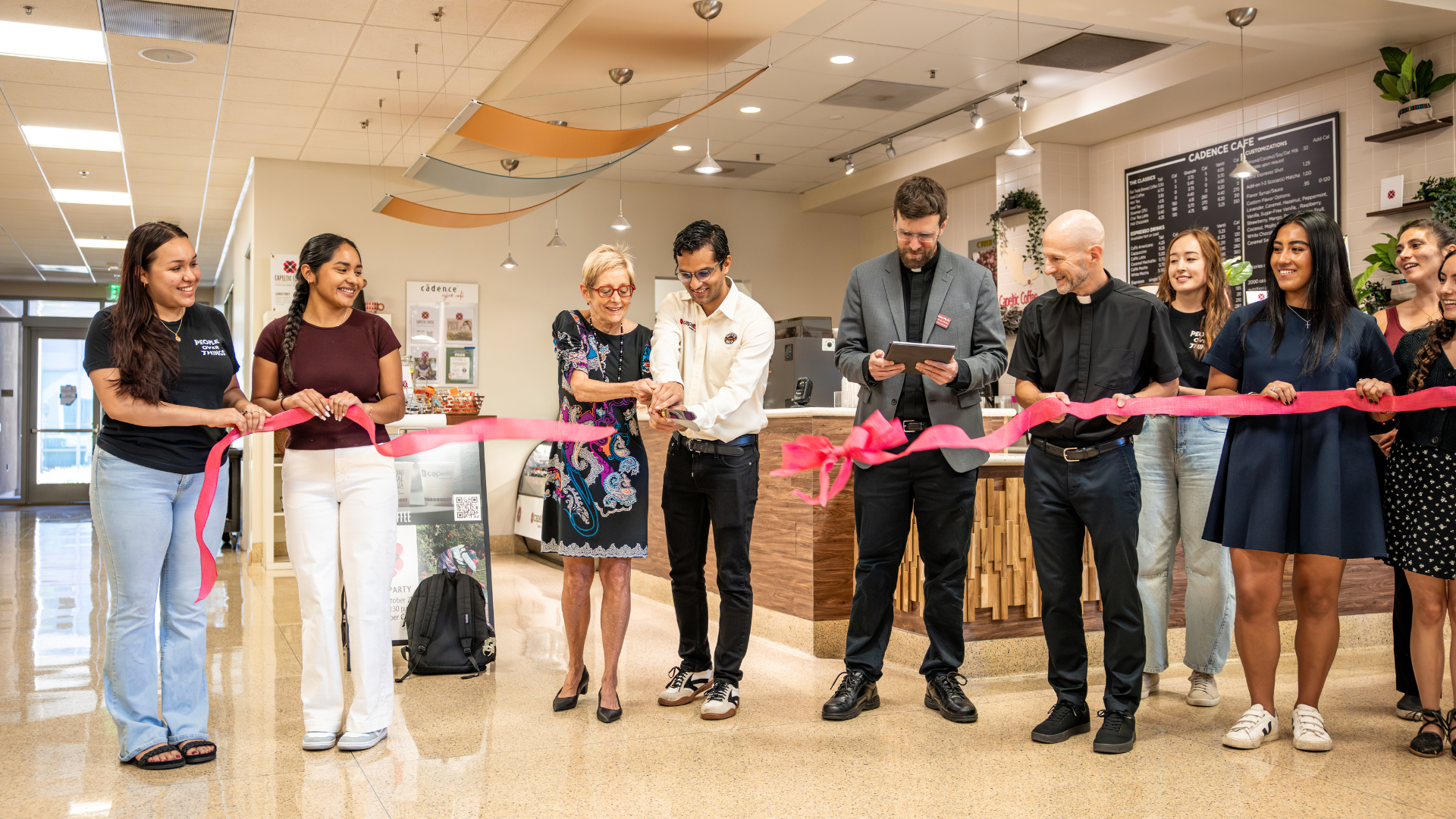
Santa Clara University President Julie Sullivan and Eduardo José Hernández Gilbert, a representative from Capeltic Coffee’s parent cooperative, cut a ribbon celebrating Capeltic Coffee’s introduction to Lucas Hall's Cadence Cyber Cafe at Santa Clara University on Oct. 22, 2025. (Elaine Zhang/The Santa Clara)
Santa Clara University welcomed Capeltic Nuestro Café Coffee to the Bronco family at the Lucas Hall Launch Party on Oct. 22, 2025.
The celebration invited the whole University community to join them in activities and coffee tasting, while also promoting ethical and qualitative consumption on campus. Capeltic aims to bring awareness to social justice for indigenous communities, specifically the Tseltal community in Chiapas, Mexico.
This partnership with Capeltic makes Santa Clara University the first Jesuit University in the United States to serve Capeltic’s coffee.
The University came across Capeltic during an immersion trip to Chiapas, Mexico, where students learned about the mission of Capeltic and got to meet the producers and try their coffee. Without these students, Capeltic’s arrival in Santa Clara may not have been possible
I spoke with three individuals to further understand their hopes for the partnership between Capeltic and Santa Clara University: a Jesuit priest who has ministered and conducted research on economic modeling in Chiapas; a representative from Yomal A’tel, the cooperative behind Capeltic Coffee; and a Santa Clara University student.
I asked each of them about their hopes for the partnership between Capeltic and Santa Clara, and what they want students and faculty to gain from it.
What should people feel when they take a sip of Capeltic’s coffee?
Cold brew with horchata was served at the launch party, offering a blend of coffee, creaminess, and sweetness.
“I think students are burnt out—we’re tired, especially nearing the middle of the quarter — and so I think that when we get our coffee, not only do we want it to taste good and not burnt,” said Olivia Isabel Carrillo ‘26, “But, I also think that if you think about it on a deeper level, you want it to be sustainable, right?”
“A sense of solidarity and connection,” said Father Stephen Pitts, S.J., a Jesuit priest who investigated the Capeltic company and coffee producers in Chiapas. “So often, in our market transactions, we don’t know the people who make products that we consume.”
Eduardo José Hernández Gilbert, a representative from Yomol A’tel, wants the consumers to start with the quality.
“In general in the world, we consumers have coffee, we have been used to having intense coffee—but Capeltic is doing good work with tasting different kinds of roastings,” Gilbert said. “hen you have a medium roast taste, you may feel like, ‘Oh, this is not that strong, so this is not good,’ but that doesn’t mean it’s not good.”
“The medium roast allows you to feel the quality,” he said. “We return to feel the quality, but as a second moment, to feel the origin.”
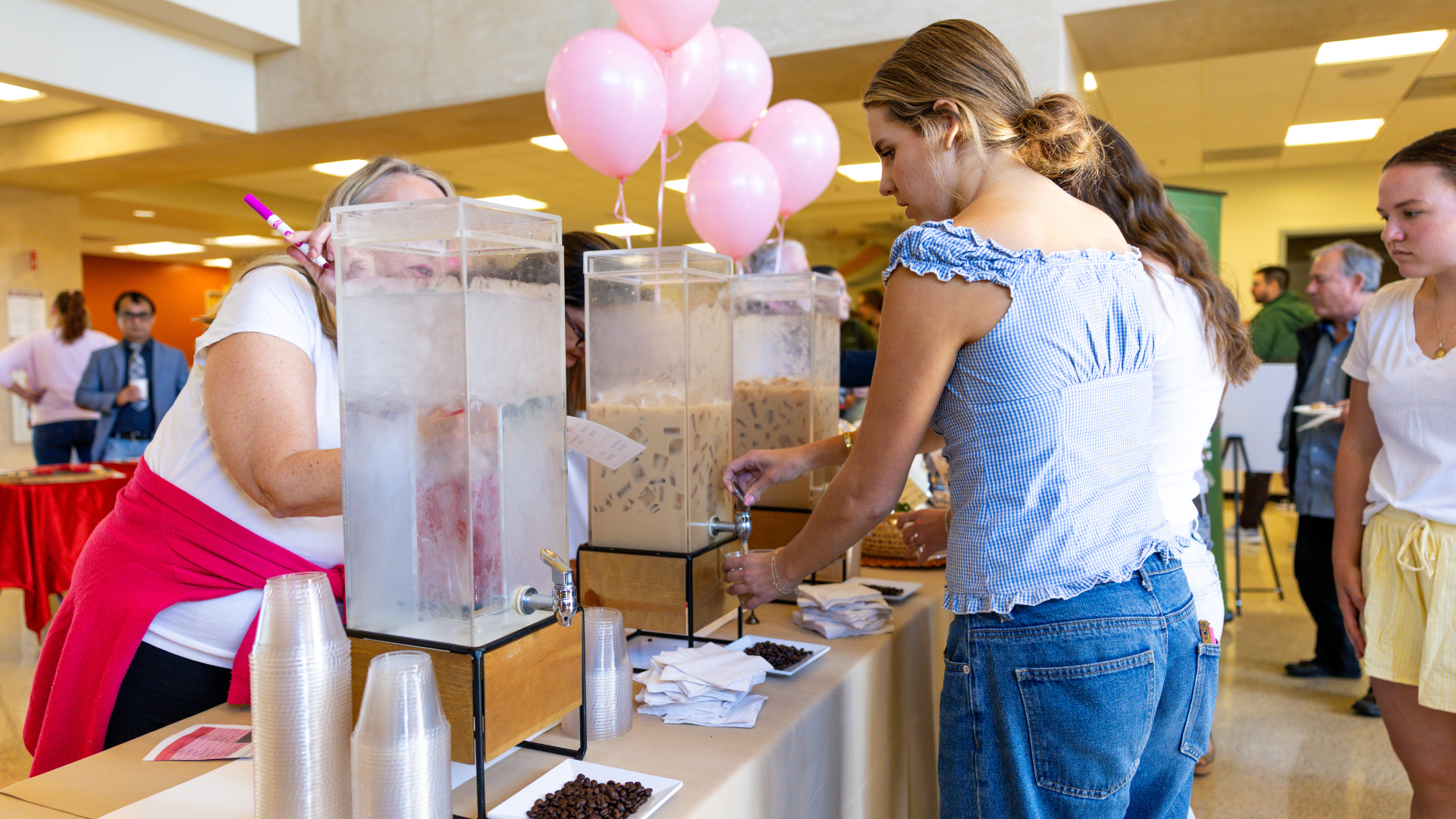
Students pour Capeltic Coffee into cups at the launch party in Lucas Hall on Oct. 22, 2025. (Elaine Zhang/The Santa Clara)
Why is it so important for Capeltic, who represents Tzeltal families and social justice, to be part of Santa Clara University?
Capeltic's mission is not limited to quality production, but also to work for social justice through the defense of their territory in Chiapas, and to develop social ownership and business efficiency.
They want to take care of the environment, promote sustainability and quality, and support Tseltal families that are part of the Capeltic company. Students would also be supporting the Tseltal community and promoting their organic products.
“For the Santa Clara community, it’s a way for us to be in a relationship with people in a very different place,” said Father Stephen. “Especially, I mean, so many of the students we’ve taken are of Mexican heritage, and so it’s a way for them to connect more into their raíces, to where they are from.”
“Santa Clara is giving the opportunity to the indigenous coffee farmers to not migrate, to make a living with the work of their hands and their own communities,” said Father Stephen regarding the number of workers who end up having to migrate to support themselves and their family.
Collaboration with Capeltic has brought a piece of Mexico—and the love and hard work of the Tseltal people—to Santa Clara.
What should we take away from the phrase “Yomol A’tel?”
“Yomol A’tel” in Spanish means “juntos trabajamos, juntos caminamos, juntos soñamos.” Which translates to “together we work, together we walk, together we dream.” The phrase is intended to emphasize the importance of standing up for the rights and beliefs of others and ourselves. We cannot simply do it on our own, it takes a community.
“I hope that it can bring people together and we can foster a little bit more community. I think the main thing we’re missing in the U.S. is community, and especially on college campuses with all the things going on,” said Carillo ‘26. “So, I’m hoping that by bringing in a sustainable coffee company, we can continue to have those conversations about how we can make campus a much more inclusive and enjoyable environment.”
“I hope that it shows them that they have big dreams,” said Father Stephen. “After five years, they can bring Capeltic to Santa Clara, and then, whatever they are passionate about, little by little, they can also dare to dream big and make this world a better place.”
“For the students of Santa Clara to feel part of Yomol A’tel is to realize that without them, this could not be possible,” said Gilbert. “As a future project, we want to connect the community of producers with the community of consumers—and maybe, the students from the business school go and create their own blend they want to be served here?”
Mi Casa es su Casa
Capeltic Coffee isn’t just about coffee; it’s a company that searches for connections between its consumers and producers. Their quality and work ethic are inspiring, especially to people who want to start businesses.
As a Latina student, it can be difficult to feel a sense of belonging, and it’s also hard for me as a first-year student to adjust to a new environment. I mentioned that drinking Capeltic’s coffee felt like home, and that’s because I miss waking up to the smell of fresh café in the morning, sharing laughs and thoughts with my family while drinking our coffee. I always felt that coffee brought me and my family closer together, and even though everything may be falling apart around us, we still had each other.
Capeltic has brought that feeling of belonging to me again—that feeling of home, comfort, and love. I hope it can bring this feeling and sense of belonging to many students here at Santa Clara. So let me end by saying: Bienvenidos Capeltic, a la familia de los Broncos! Nuestro casa es su casa.