More Than a Game: The Universal Appeal of Fantasy Football
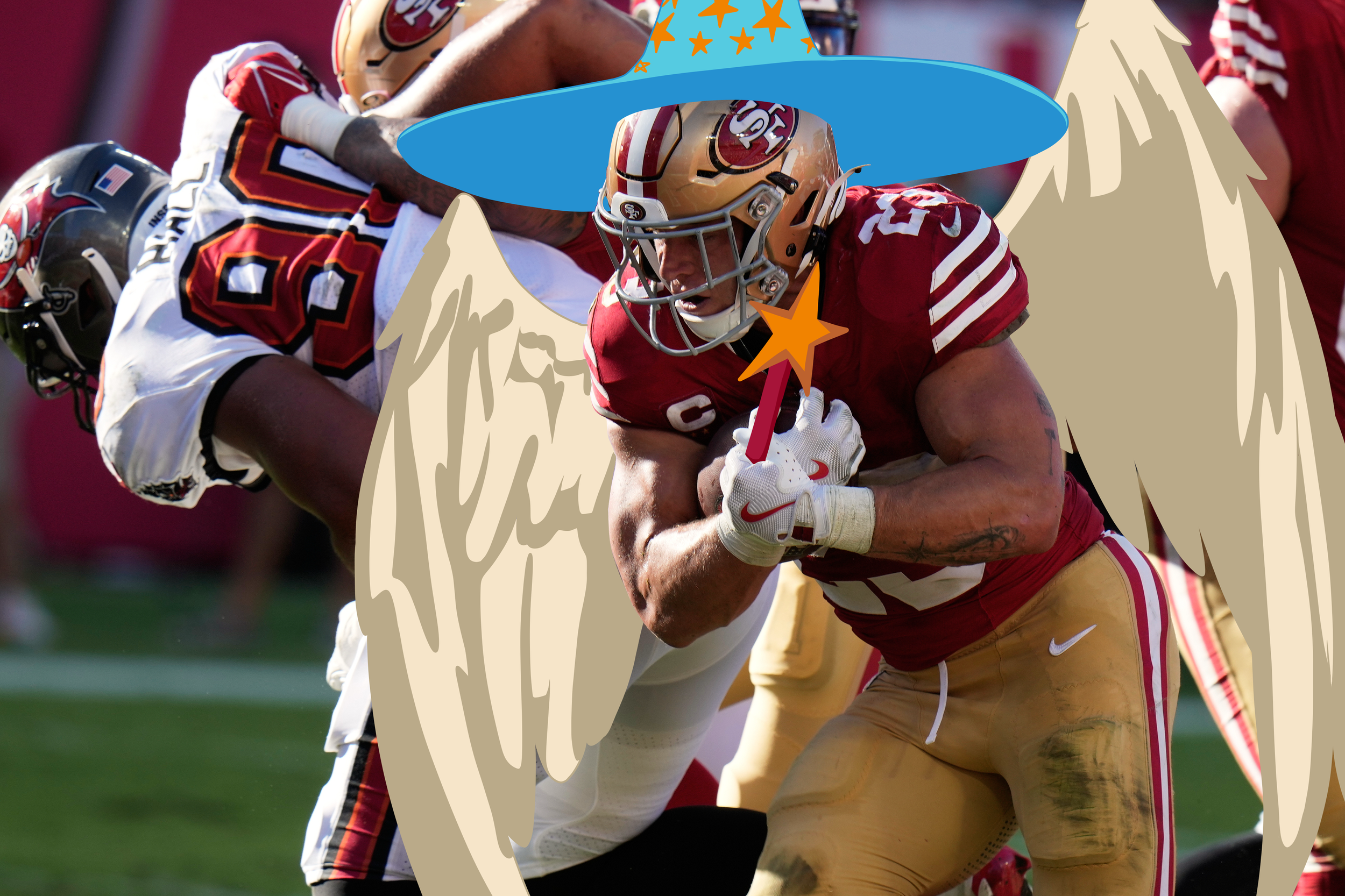
San Francisco 49ers running back Christian McCaffrey (23) runs for a touchdown against the Tampa Bay Buccaneers during the first half of an NFL football game in Tampa, Fla., Sunday, Oct. 12, 2025. Photo provided by AP Photo/Chris O'Meara, Illustration by Dylan Ryu
Tens of millions of Americans participate in fantasy sports each year, and no fantasy sport is as popular as fantasy football. With a whopping 14 million users on ESPN alone this year, this phenomenon has become an obsession across the country, and it has been running rampant on the Santa Clara University campus throughout the quarter.
“I think fantasy is a good way to bring people together and bring out their competitive spirit,” said Jordan Wong ’27. “With my Santa Clara friends, I try to have them over every Sunday, get together, be competitive, but also still have a good time.”
Fantasy sports are a part of everyday culture at SCU, with friend groups consistently spamming their chats and friends squabbling over trades being made in their league. For some, it’s a way to stay connected to the sport they love—for others, it’s simply about the thrill of outsmarting their friends. But for all, fantasy football has become a staple of the University’s sports culture
People play for different reasons—sometimes it’s for a cash prize, other times to watch one of their friends have to endure the forfeit that comes with a last-place finish.
“I think having a punishment is a great opportunity to promote that competitive spirit,” Wong said. “By the end of the season, that 9th vs 10th matchup at the bottom of the standings is just as important as the matchup in the championship.”
The best part of fantasy football is that you don’t have to have any knowledge of the sport to compete with your friends and even beat them. Fantasy has an element of luck to it, which is part of what makes it so appealing to the masses.
A rookie can outscore a seasoned veteran, a newcomer can topple an expert, and a last-place team can turn it around in dramatic fashion. That unpredictability, paired with the bonds it builds, is what keeps people coming back season after season.
Fantasy football involves a balance between the risk of playing roulette and sifting through YouTube for advice from people who carry no real credentials—because in reality, they are just like you. People can decide whether to take the game or “trust the experts”, but one thing remains clear: it gets people hooked.
“My friend who doesn’t know a whole lot about fantasy lets me set his team for him,” said Blake Sawyer ’28. “I think it’s a great way to get people excited, even about sports they don’t really follow.”
Will Christian McCaffrey stay healthy this year? What will the New York Giants’ backfield look like? How many weeks will Omarion Hampton be out? Questions like these continue to fly around campus. These discussions will only become further amplified as trade deadlines loom large and the midway point of the season begins to ramp up. One thing remains certain: fantasy sports are here to stay.