Chaotic Tariffs, Costly Consequences
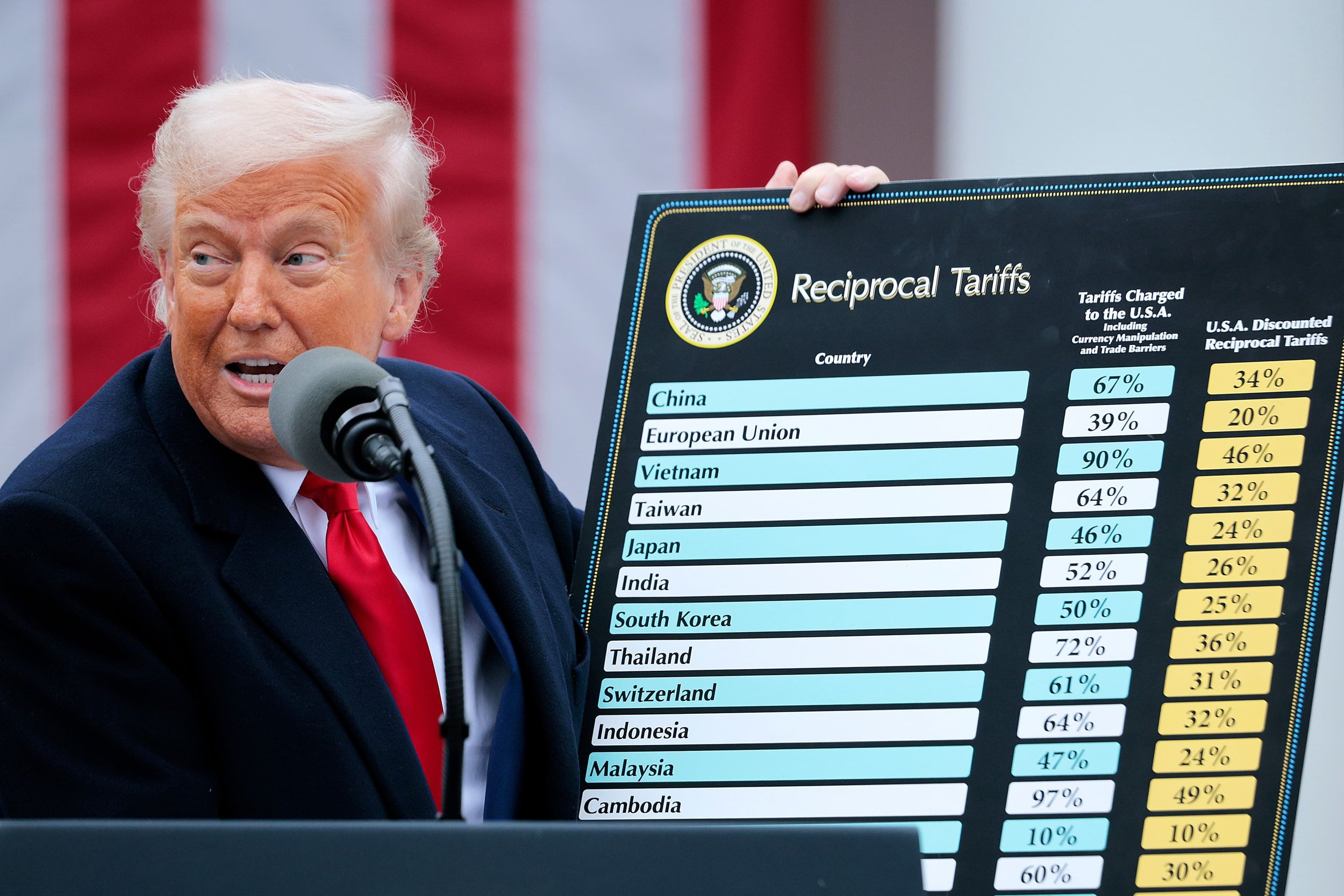
US President Donald Trump delivers remarks before signing an executive order on tariffs during the Make America Wealthy Again event in the Rose Garden at the White House in Washington on April 2, 2025. Photo by Yuri Gripas/Abaca/Sipa USA(Sipa via AP Images)
The Trump administration recently introduced a sweeping set of new tariffs affecting global trade. This sweeping move triggered a dramatic downturn in the stock market, leading American industry leaders and billionaires—including Elon Musk—to criticize the tariffs for their potentially disastrous effect on the economy.
Since taking office, the Trump administration has threatened, imposed and retracted a laundry list of tariffs to gain better trade deals, bolster American industry, weaken Chinese influence in the global economy, increase revenue, and lower consumer prices. While it’s unlikely most of the goals will be realized, increased government revenue may come at a significant cost to the American consumer.
The Trump administration’s strategy is more disruptive than effective, creating instability in both domestic and global markets. Without a clear, consistent plan, the long-term economic consequences will be disastrous.
Within a day of the country-specific tariffs on dozens of U.S. trading partners taking effect, the administration agreed to halt most of the tariffs for 90 days, opening the door for negotiations. However, a baseline 10% tariff on all imported goods will remain, as will the previous 25% tariffs on steel, aluminum, cars and car parts. The administration also increased the tariff on Chinese goods from 20% to a whopping 145% because of perceived disrespect from the Chinese government.
The tariffs on Chinese imports will have an acutely negative impact on American consumers, making things like toys, clothing, and electronics more expensive. Out of U.S. imports, Chinese goods make up 73% of smartphones, 78% of laptops, 87% of video game consoles, and 77% of toys coming into the country. Low-cost clothing also heavily relies on Chinese imports. Shein and Temu make up 17% of the discount e-commerce market in the U.S. and depend on Chinese suppliers. These tariffs will make everyday essentials more expensive for American consumers while offering little in return.
It is difficult to imagine the administration will actually be able to make real trade gains through this mode of attack because other countries are just as capable of hurting American industry through retaliatory tariffs of their own. Retaliatory tariffs—when countries respond to U.S. tariffs by imposing their own—create a ripple effect that harms both U.S. and global economies. Retaliatory tariffs can escalate to trade wars, which destabilize global markets and make global supply chains more expensive and unpredictable, making it more difficult for companies to operate efficiently. Retaliatory tariffs drive up the cost of American goods for foreigners, which decreases the demand for U.S. goods abroad.
The administration claims the tariff strategy will revitalize the manufacturing industry. However, their on-again off-again approach makes it difficult for American companies to respond with such chaotic market fluctuations.
Tariffs make goods more expensive, and amid the uncertainty of trade negotiations, inflation is likely to occur. Inflation occurs when the overall price of goods and services rises, reducing the purchasing power of consumers. Tariffs contribute to inflation by making imported goods more expensive, which in turn raises the costs of goods that rely on those imports. whether it’s raw materials or finished products.
As businesses face higher input costs, they will likely pass the burden of the costs onto consumers through price hikes. Unfortunately, widespread price hikes cause inflation, which strains household budgets and stifles economic growth.
Although the administration will increase government revenue if they maintain their current tariffs, it will come at the expense of domestic consumers.