Could Football Return to Santa Clara University? A Look Into The Program’s History and Its Potential Comeback
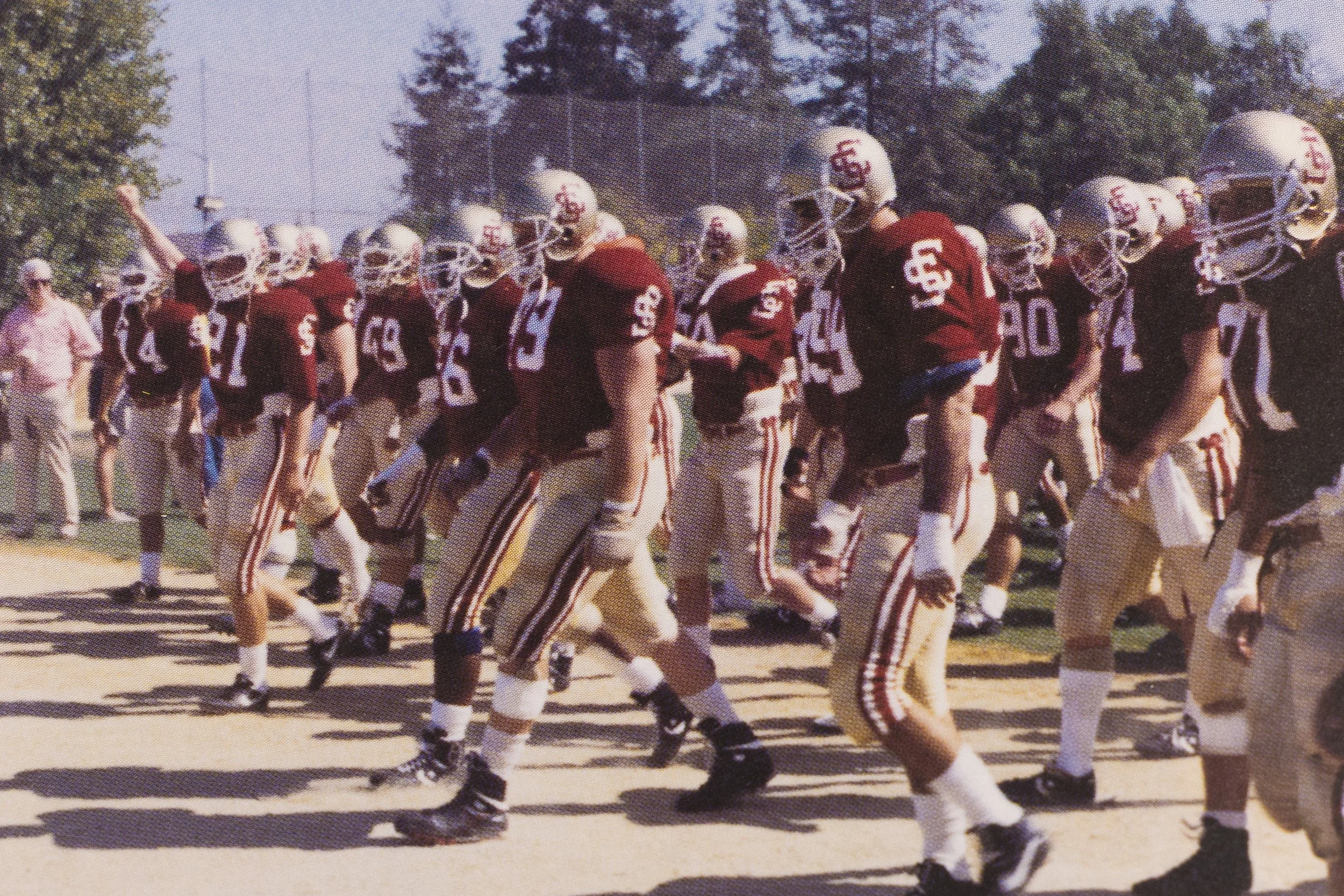
Santa Clara University’s football team walks off the field after beating Southern Utah State in 1988. (Courtesy of the Redwood Yearbook)
Across the country, most college Saturdays revolve around football—filled with tailgates and pregame rituals.
On an average fall Saturday at Santa Clara University, many students roam a quiet campus without knowing their school was once a West Coast football powerhouse. Without the usual parties or major weekend events, the campus seems empty.
For your typical college campus, this is not the case. But, back then, the streets of Bellomy and the Alameda were packed with students tailgating before kickoff. It’s been more than 30 years since the University eliminated its varsity football team, yet its absence is still present within the student body.
Today, the need for football is felt in more subtle ways.
“We don’t have a sports culture in the same way as some other places,” said Vice Provost for student life Jeanne Rosenberger, noting the challenge of building consistent student engagement around athletics.
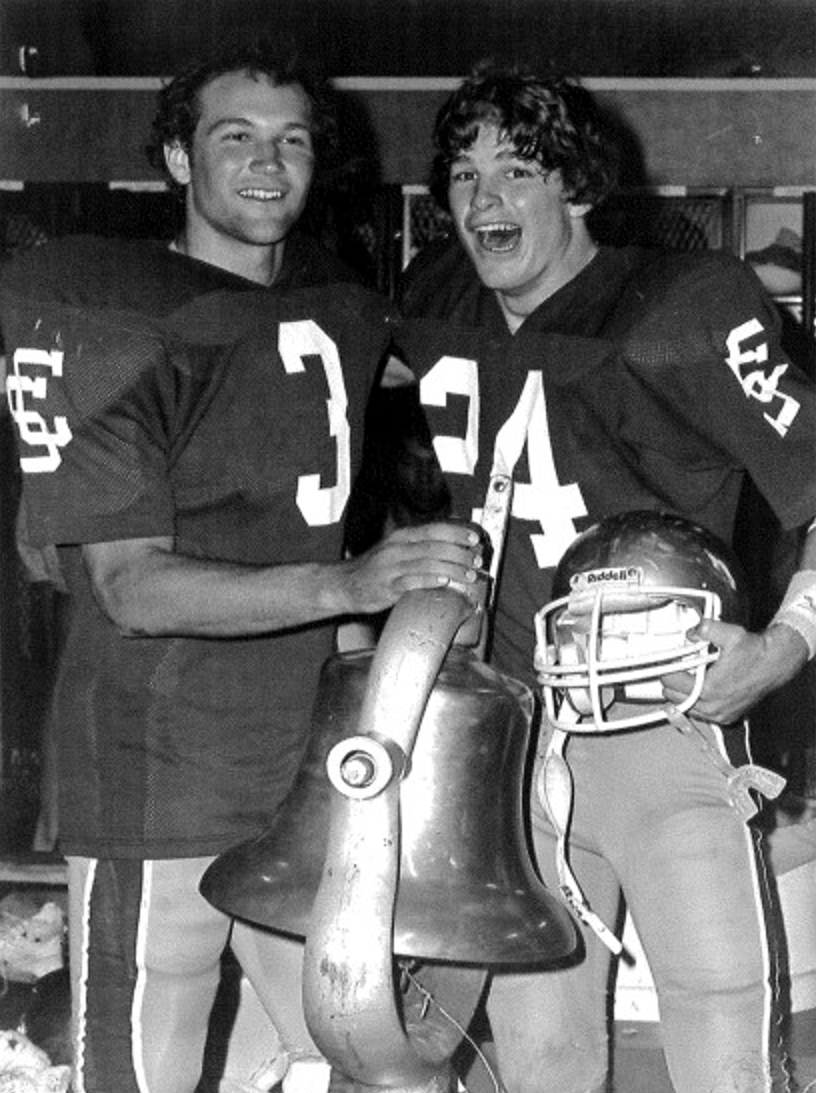
Andy Schatzman(3) ’83 and John Faylor (24) after their win against St Mary’s in 1981’s edition of “The Little Big Game.” The bell shown in the image was passed between the two teams with the winner keeping it for the year. (Courtesy of the Redwood Yearbook)
Santa Clara’s football program was founded in 1896, and success followed soon after. The Broncos had become a nationally recognized team by 1930, with back-to-back Sugar Bowl victories in 1937-38. These wins helped establish Santa Clara as a major competitor at a time when the West Coast wasn’t known for having strong football programs. According to University records, football elevated the University’s national profile and contributed to increased enrollment.
Football has played a major role in shaping campus culture. Pregame rallies and postgame bonfires were common, with games regularly drawing thousands of fans. Students filled the stands and sang fight songs, creating a strong sense of community. Former linebacker and Bronco Hall of Fame inductee Andy Schatzman ’83 recalled the atmosphere vividly. “10,000 people. It was packed. The campus went crazy,” he said. One of the most iconic traditions was the “Little Big Game,” a rivalry matchup against Saint Mary’s College. The Little Big Game used to draw crowds of up to 40,000. These events connected students, alumni and the surrounding community in ways that extended far beyond the field. That special atmosphere is hard to replicate.
“Game day culture is, frankly, easier to generate with football, with the tailgating and all that,” Santa Clara University President Julie Sullivan said.
Despite the early success, the program eventually declined. After World War II, the cost of college football rose significantly, leading to the program’s discontinuation. For several years, Santa Clara went without a football team. In 1959, a group of sophomore students formed a committee to bring football back to their beloved school. “It was the students who brought football back to Santa Clara,” coach Pat Malley ’51 noted.
The revived football program saw periods of competitiveness and steady support. Attendance remained consistent, including a 1991 season that drew over 40,000 total fans, averaging about 3,700 per game. However, the financial challenges of maintaining a football program only worsened.
In 1993, Santa Clara University discontinued football once again. In a letter to the campus community, Paul Locatelli, the University’s then-president, said the increasing financial strain was the primary reason. “The reason was financial, and there wasn’t much attendance,” Schatzman added.
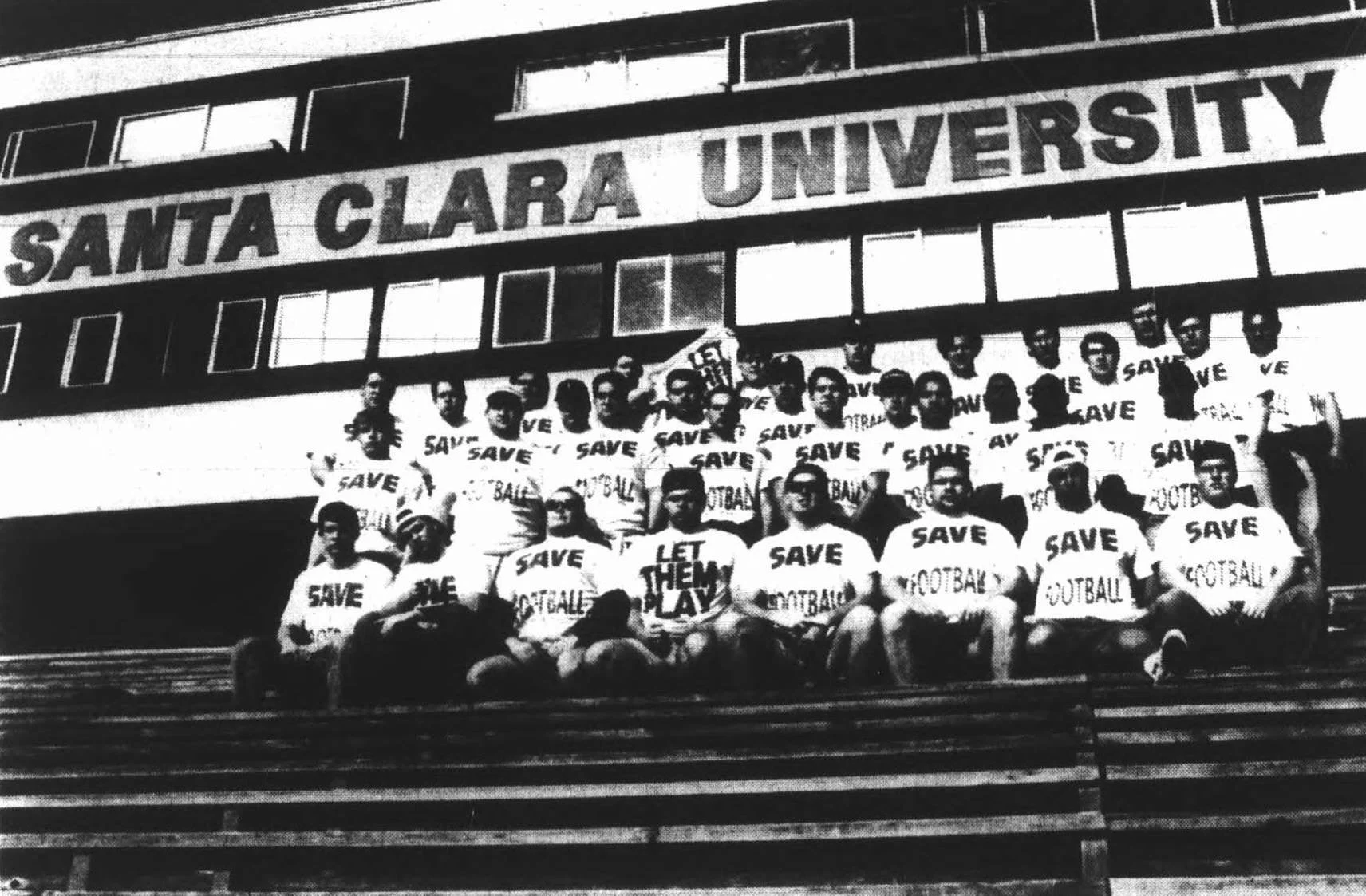
A photo of University football players wearing shirts “Save SCU football…let them play” at Buck Shaw Stadium in a last-ditch effort to save the program was printed in The Santa Clara on February 11, 1993. (Justin Pettit/The Santa Clara)
While football once helped define campus life, today’s student experience looks different. Even with successful teams, consistent attendance remains a challenge for most. “Our teams are playing their hearts out, and we still aren’t filling the stands,” Rosenberger said.
“The student body is not as enthusiastic about athletics as it was when I was there,” Schatzman added.
Both perspectives suggest that the issue is not solely about football, but reflects a wider change in campus culture. Sullivan touched on this issue, noting that the issue extends beyond a single sport. “I don’t think it’s that simple. You do need successful teams, and then you need things that attract students to go and get them involved,” she said.
Bringing football back today is far from simple. Universities launching new programs face significant financial barriers. The University of Texas Rio Grande Valley recently introduced football; its administrators estimated operational costs alone at $2 to $3 million annually, with stadium construction ranging from $40 to $60 million.
Sullivan also noted another factor other than cost. Football is not geographically feasible, conference-wise. “If we were going to be in a football conference,” Sullivan said, “that changes things dramatically.”
Adding football would affect all other Santa Clara athletics teams. “Every sport’s going to have to play in a much more geographically dispersed footprint,” she said, pointing to the broader challenges that would create challenges for the University’s other teams. With the recent conference realignments, teams such as the University of Oregon and the University of Washington spend their away games traveling across the country every other week.
However, the investment has its benefits. Officials from the University of Texas Rio Grande noted increased school pride, stronger student engagement and a visible shift in how students connect with the university. They also said the school’s visibility has been growing alongside its enrollment, but they noted that this cannot be solely attributed to football.
Today, Santa Clara remains a Division I athletic program competing in the West Coast Conference, with several teams such as men’s basketball, men’s tennis and women’s soccer achieving recent success. Still, questions about campus culture and school spirit remain.
While the University continues to thrive academically and athletically, football lives on in the University archives and in the memories of alumni who remember when Saturdays once revolved around Bronco football.