Diversity Forum Examines Anti-Blackness, Divestment and Campus Safety
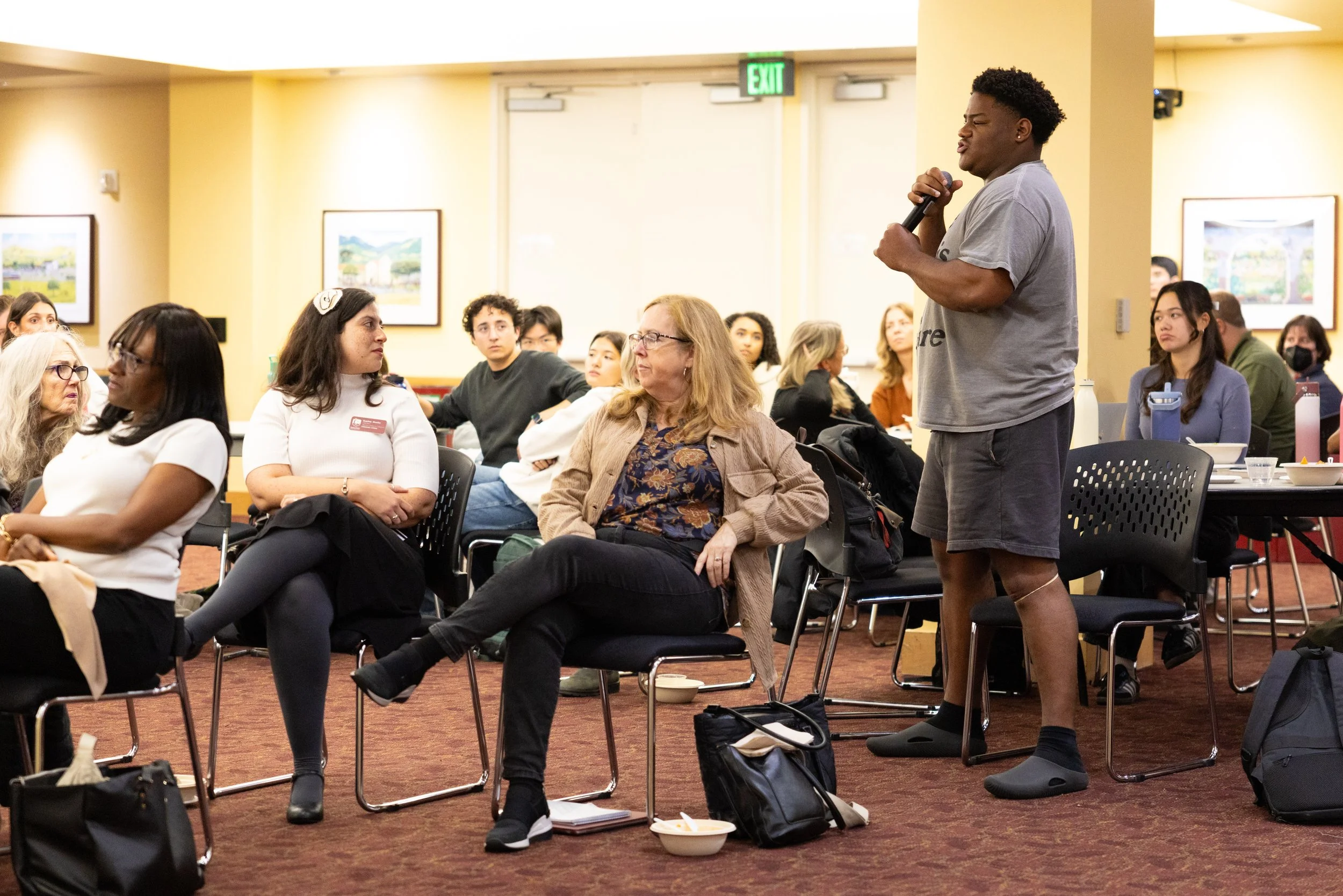
Elijiah Goss ’28 speaks in front of faculty, staff, and students during the open forum section of Diversity Forum in the California Mission Room on Monday, Oct. 27, 2025. (Nina Glick/The Santa Clara)
Santa Clara University students, faculty, staff and administrators gathered at the Fall 2025 Diversity Forum, a quarterly event organized by the Associated Student Government and the Multicultural Center. The forum, held in Benson Memorial Center, focused on three topics: Anti-Blackness, University Divestment and Student Safety.
The forum sought to find “common ground between students and administrators” and to facilitate an environment in which different parts of the campus community could collaboratively identify solutions to campus concerns. The discussions followed up on topics raised during the spring forum and were informed by recent events on campus and across the country.
“It’s always helpful to see progress since the last Diversity Forum,” said Jeanne Rosenberger, vice provost for student life. “But it’s also where I feel like we still have work to do. This gives us an opportunity to say, what are we hearing from students now, and what should we be doing to support the issues they surface?”
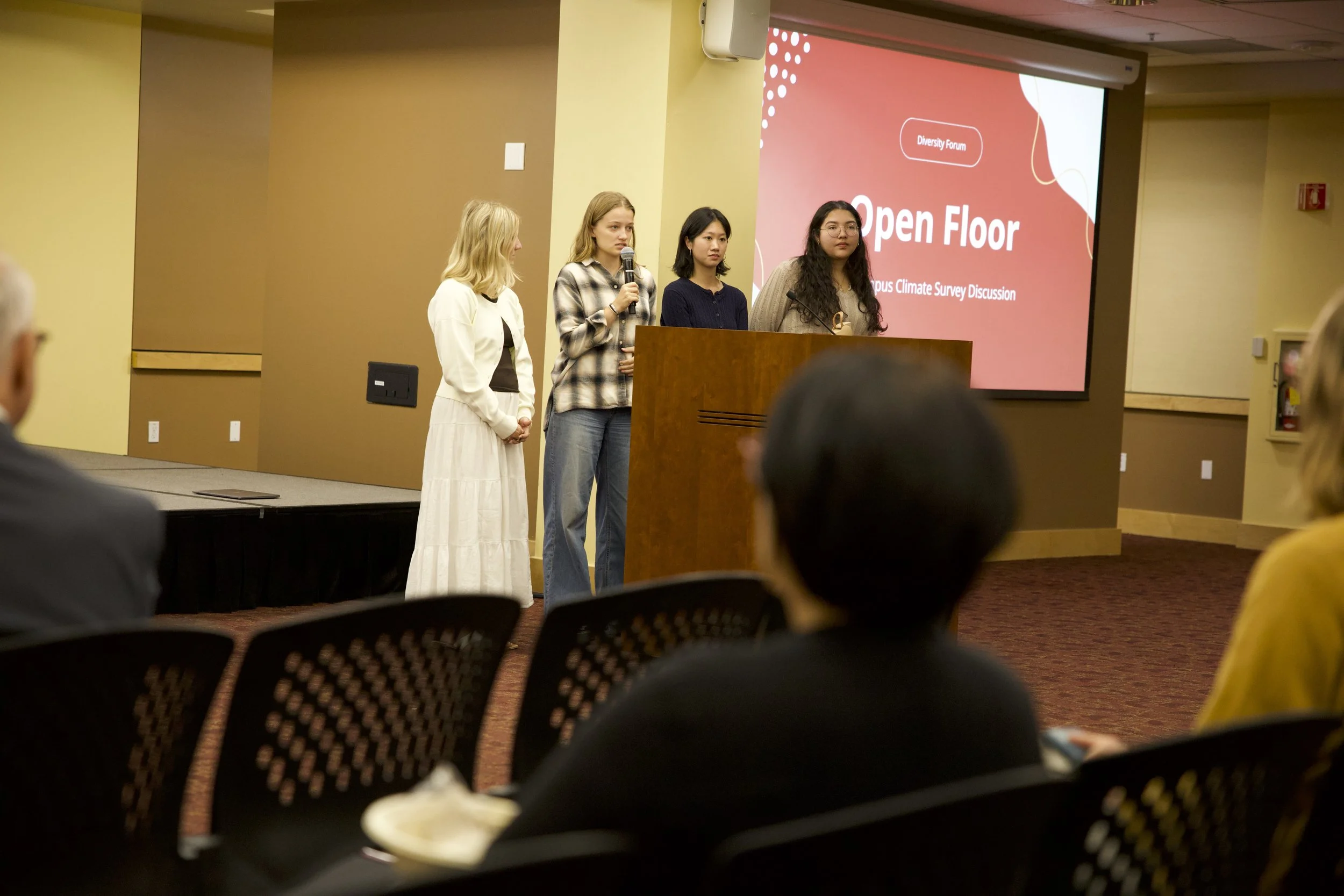
(left to right) Sophia Standard ’26, Claire Krebs ’26, Erin Wu ’26, Jacklyn Alonzo Heredia ’26 stand in front of participants at the Diversity Forum as Krebs asks the audience for their thoughts and questions. (Nina Glick/The Santa Clara)
Forum on Anti-Blackness Highlights Structural Gaps
The breakout group discussing anti-Blackness focused on classroom representation, faculty diversity and the need for consistent administrative follow-through on diversity initiatives. The forum’s stated goal was to “address the pervasiveness of anti-Blackness on campus” and ensure University policies “reflect the needs, experiences and voices of Black community members.”
Participants cited ongoing challenges in recruiting and retaining Black students, faculty and staff. Students expressed concerns that awareness campaigns and cultural programming often appear during specific times, such as Black History Month, without broader institutional support throughout the year. Several attendees said they wanted more integration of Black scholarship into course curricula and more permanent forums for communication between Black students and administrators.
One student participant described the University’s approach to well-being and care as “very white-centric,” saying that mental health practices should focus more on community-based support rather than the individual. Faculty members in attendance discussed ways to improve accountability through department-level progress reports and peer evaluations of inclusive teaching.
Rosenberger said she was surprised to learn that many anti-Blackness initiatives were organized informally. “The commitment is there,” she said. “But what I didn’t realize was that there wasn’t a structure for regular feedback. We need that to advance topics quarter over quarter.”
Divestment Session Centers on Ethics and Transparency
The discussion about divestment focused on the University’s investments and how they align with its Jesuit values. The conversation, led by student government senator Noah Karnowski ’28, focused on the ethical responsibilities of investing University funds and on how to make those investments more transparent.
Karnowski, who facilitated the session, said the group sought to consider both financial and moral implications of the University’s endowment. “It comes down to keeping each other accountable,” he said. “How do we make sure students are keeping that momentum forward—and how is the University ensuring that investment managers are adhering to our values?”
Students raised concerns about the opacity of the University’s investment portfolio and the lack of public information on which companies the University invests in. Several participants referenced the Socially Responsible Investment Committee, which previously met quarterly to review ethical investment practices. Students suggested that reinstating the committee could help improve transparency and align investment strategies with student and faculty expectations.
Past divestment efforts were also cited as examples of institutional change, including the University’s historical decisions to withdraw investments from South African companies during apartheid and from tobacco firms in the 1990s. Participants called for the University to take similar action on fossil fuel investments and defense industry partnerships.
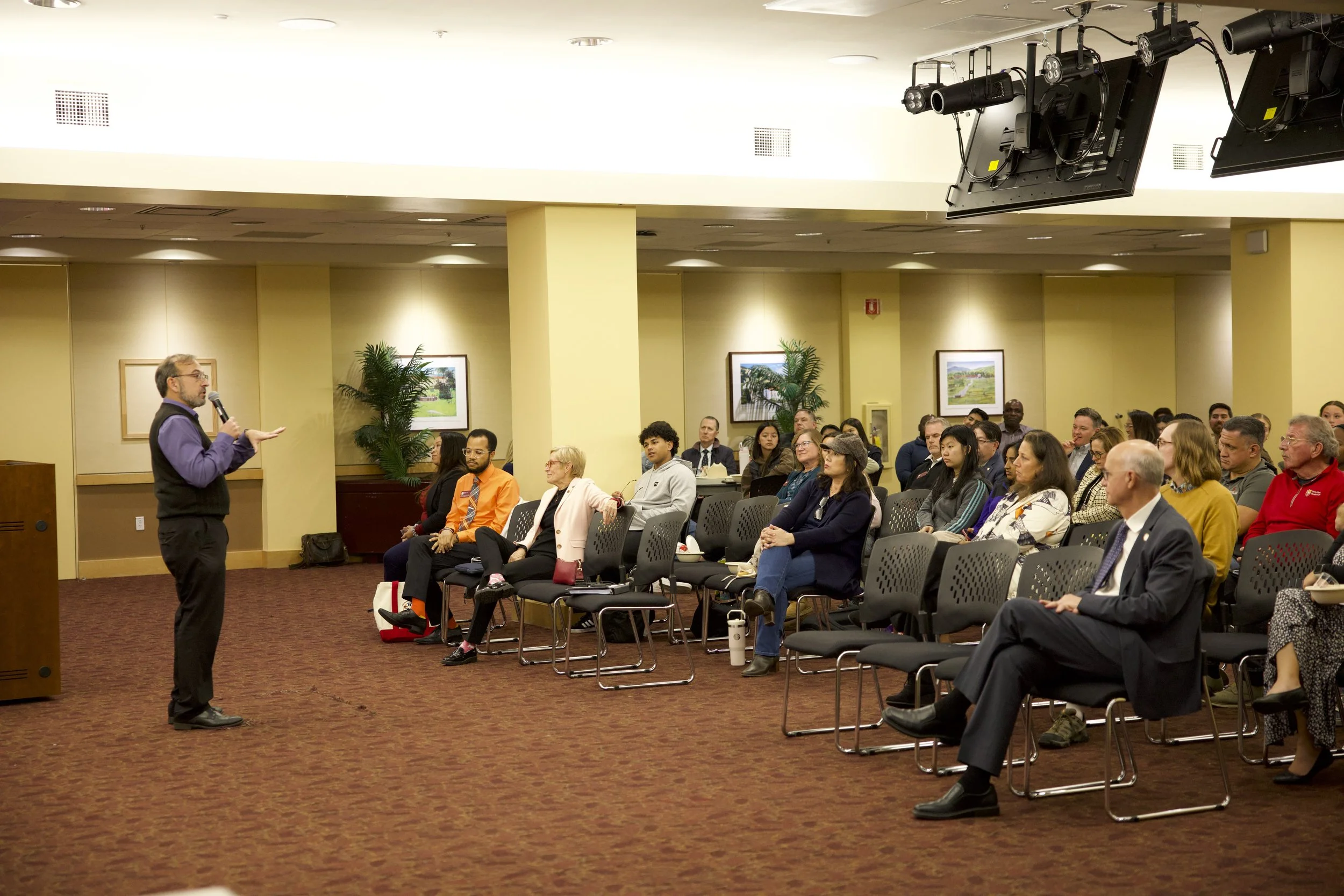
Ray Plaza, the director of the Office for Diversity and Inclusion, shares updates from the Spring 2025 Diversity Forum. (Nina Glick/The Santa Clara)
Safety Discussion Focuses on Communication and Policy
The student safety discussion drew administrators from Campus Safety, the Dean of Students Office and Counseling and Psychological Services, among others. The session addressed how the University responds to emergencies, manages communications and ensures the physical and emotional safety of students.
Jacklyn Alonzo Heredia ’26, director of the Multicultural Center and one of the student moderators, said she appreciated the collaboration between her organization and Campus Safety but noted that many students are unaware of ongoing safety measures. “I feel more secure knowing there are people who care,” she said. “But other students don’t know that because they’re not sitting in the room getting that information.”
Campus Safety Director Phil Beltran described ongoing training and partnerships with local police departments to improve emergency response coordination. He said the University enforces a no-guns policy and focuses on de-escalation and preparedness rather than armed response. Beltran also noted the rise in “swatting” incidents targeting college campuses nationwide and said the University had developed internal checklists to verify the credibility of potential threats before responding.
Rosenberger added that the University is shifting away from the Ad-Astra scheduler to a new event-planning software, expected to launch in the new year, which will include safety-related questions to help organizers anticipate potential concerns in advance.
The conversation also addressed immigration enforcement. Rosenberger explained that the University’s response to immigration detainment varies by case but said the administration works to connect affected students to legal and financial support as quickly as possible.
Continued Dialogue
By the end of the evening, organizers emphasized that the Diversity Forum is meant to promote accountability and ongoing dialogue. Rosenberger said that while topics shift each quarter, the goal remains the same: to respond to student concerns in real time.
“When the MCC and ASG come together and ask, ‘What are we hearing right now?’ it helps us stay on the pulse of student concerns,” she said.
Across the three breakout discussions, students called for clearer communication, measurable accountability and stronger structural support from University leadership. Many said they hope that the conversations at this forum lead to consistent, transparent progress before the next one in winter.