Santa Clara Grads are Entering a Challenging Job-Market
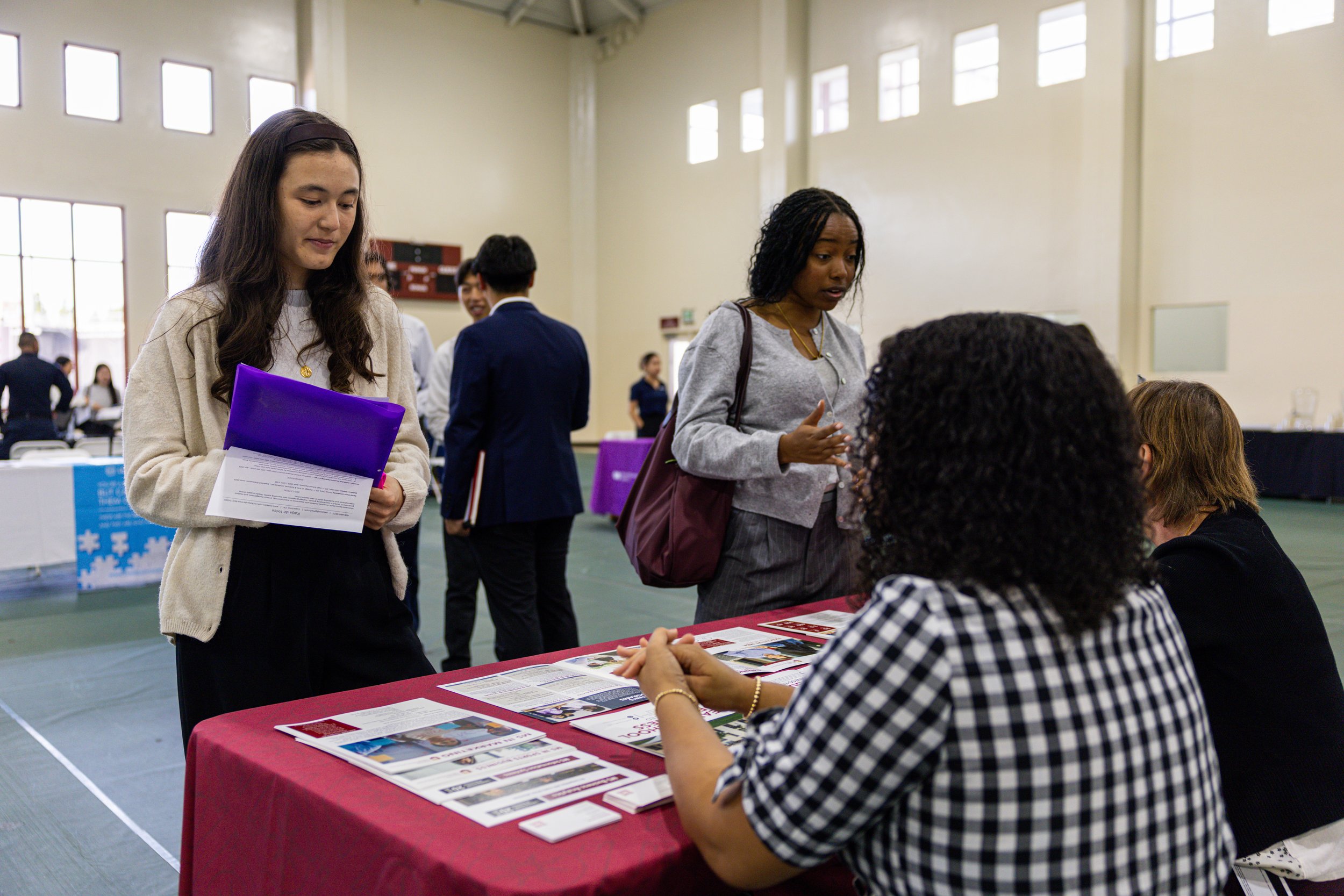
Santa Clara University students participate in the Fall BASH Career Fair on Oct. 2, 2025. (Elaine Zhang/The Santa Clara)
For many Santa Clara University students, Fall Quarter means interviews and applications for summer internships and post-grad jobs. However, this application season is looking and feeling different for many Santa Clara University students and undergraduates across the country.
Over the summer, the Federal Reserve Bank of New York released a report on the job market.. NBC reported that for the first time since 2015, the unemployment rate among recent graduates is significantly higher than the labor force as a whole.
The report summarized the unemployment and underemployment of recent college graduates following the second quarter of the 2025 fiscal year. The unemployment rate for recent graduates has risen to an average of 5.3%, well above the approximate 4% rate for the entire labor force.
“Recent college graduates are on the margin of the labor market, and so they’re the first to feel when the labor market slows and hiring slows,” said Jaison Abel, an economist at the Federal Reserve Bank of New York, in an interview with NBC News.
“Definitely not a good sign,” Finance and Psychology Major, Elliose Danielo ’26, said. “I wasn't happy to hear that.” Starting in July, when the report was originally released, Danielo applied to around 12 jobs and 25 internships before landing her current positions.
Director of the University’s Career Center Dylan Houle said he “wasn't surprised” by this report of an increasingly challenging market.
“I think there have been some macroeconomic decisions made that have made the economy more challenging,” said Houle. “There have been technological advancements that have introduced uncertainty into the economy, especially around internships and entry-level jobs: I am talking specifically about AI.”
“From a correlative standpoint, AI got introduced 2 years ago and we also see less internship postings on Handshake, or on LinkedIn, are those two things related?” he said. “The national chatter is saying they are. But they could also be related to other macroeconomic trends.”
This increased competition is, in part, due to the mass federal layoffs last summer. Layoffs indicate an abundance of skilled and experienced labor in the workforce, looking to enter the private sector with more experience than post-grads entering the same market.
“You’re not just competing against other college grads from Berkeley, Stanford or San Jose State. All of a sudden, now you're competing against a lot of mid-level professionals that have been laid off and are now entering the job market,” said Houle.
He believes this may lead universities to replicate the internship experience for students through on-campus jobs and internships. The University already has relationships with Redbull, Lululemon, General Electric and Bank of America to provide asynchronous work simulations for students.
The career center also signed a contract with LinkedIn Learning so that all University students have free access to the training and learning platform. LinkedIn Learning allows students to get certifications and take classes that they can then put on their resume.
Additionally, many upperclassmen students can't afford rent in a major city on an internship stipend, or have to be at home in the summer.. Traditionally, internships have been mostly unpaid, so only accessible to students who could afford to not be paid for three months.
Now, while most internships are paid, that makes them that much more competitive and many interns aren't being paid a livable salary. To bridge this gap, the University offers a stipend for unpaid internships through the REAL Program.
“Some students can do the unpaid internship and it's not a financial burden; for some students, that's a real struggle,” said Houle.
However, as many resources the Career Center has for students, it is not required for students to actually step foot in the office.
“The career center is an optional office on campus…its called an op-in model…there is no requirement in your educational journey to visit the career center,” said Houle, “I would argue that given the challenges of the economy, the career center should be more integrated so that a student couldn't avoid the career center.”
Career development is already a part of the Leavey School of Business’ curriculum. Students studying business are encouraged to do resume work and create LinkedIn accounts. Additionally, the business school encourages and/or requires students through different assignments to attend networking events with individuals in the Santa Clara University alumni network.
“They helped with resume prep and LinkedIn prep. I learned a lot of that in my freshman year business 70 class” said Haggerty ‘26, reflecting on her experience at the career center.
However, the same career-building assignments are not integrated into the College of Arts and Sciences curriculum.
Alumni have shared similar experiences about how the University helped them get their job.
“The connections I got from reaching out to professors and mentors are the reason I got interviews at the jobs I did,” said Abby Matson ‘25.
Matson also emphasized the importance of internal referrals and connections to get you in the door.
“I think a lot of people could apply to jobs through Handshake or LinkedIn and then say things like “I’ve applied to 75 jobs and haven’t heard back from any of them” and that fuels the narrative that the job market is bad,” said Matson. “Now, being on the reverse side of things and recruiting for my office here, we received thousands of applications from pretty similar college kids; between 3.5 and 4.0 GPAs, solid school, solid job experience and it’s just really hard to differentiate candidates. So we rely a lot on internal referrals to help us identify strong candidates.”
So, while the Career Center may be helpful for students who don't know what they want to do, or need basic help with Linkedin and Handshake, most of the hiring action comes by connecting with professors, alumni and other mentors at the school.
“Applying for jobs is overwhelming and it feels like you're the only one doing this even though you're not,” said Tara Kelly ‘26 who is studying psychology.
“We know that this is a challenge, and it's a challenge whether the economy is good or bad; if you're a student without a job, it doesn't matter if it's a good economy; you're still frustrated, you're still challenged,” reminded Houle.
In the face of this increased competition, Houle encourages students to visit the Career Center, career fairs, and connect with their mentors in the Santa Clara community.
“You’re not alone, and you don't have to do this alone,” said Houle.