Built by Broncos
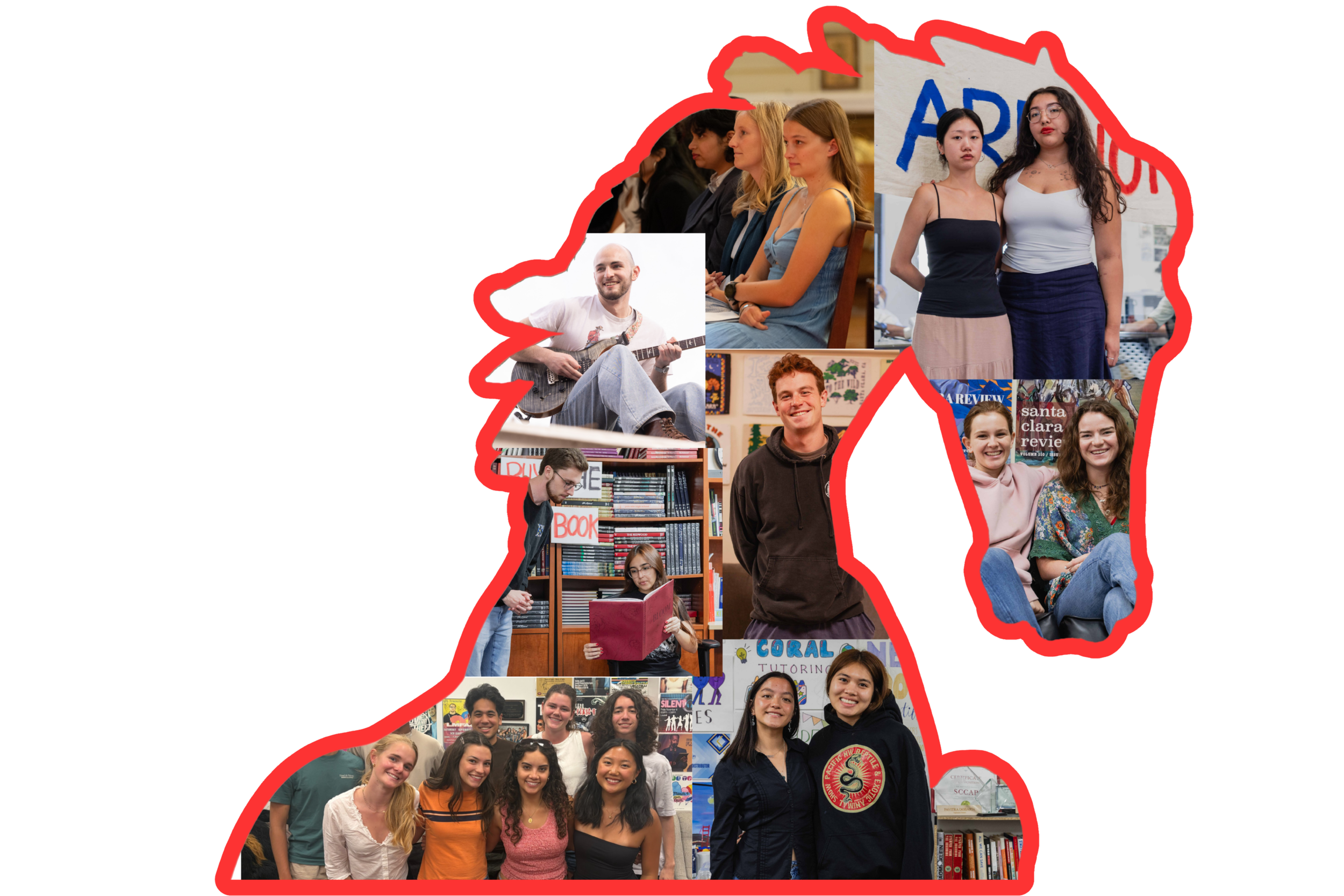
At Santa Clara University, chartered student organizations are where student life becomes something students can touch: meetings that turn concern into action, centers that become homes, events that make campus feel alive, trips that turn strangers into friends, radio shows, magazines, yearbooks and volunteer programs that give the year its shape.
As the academic year came to a close, CSO leaders reflected on their year, their time in their organizations and the work they hope will last beyond them. Together, their reflections show that CSOs are not just extracurriculars—they are the student-built infrastructure of belonging.
Broncos Helping Broncos
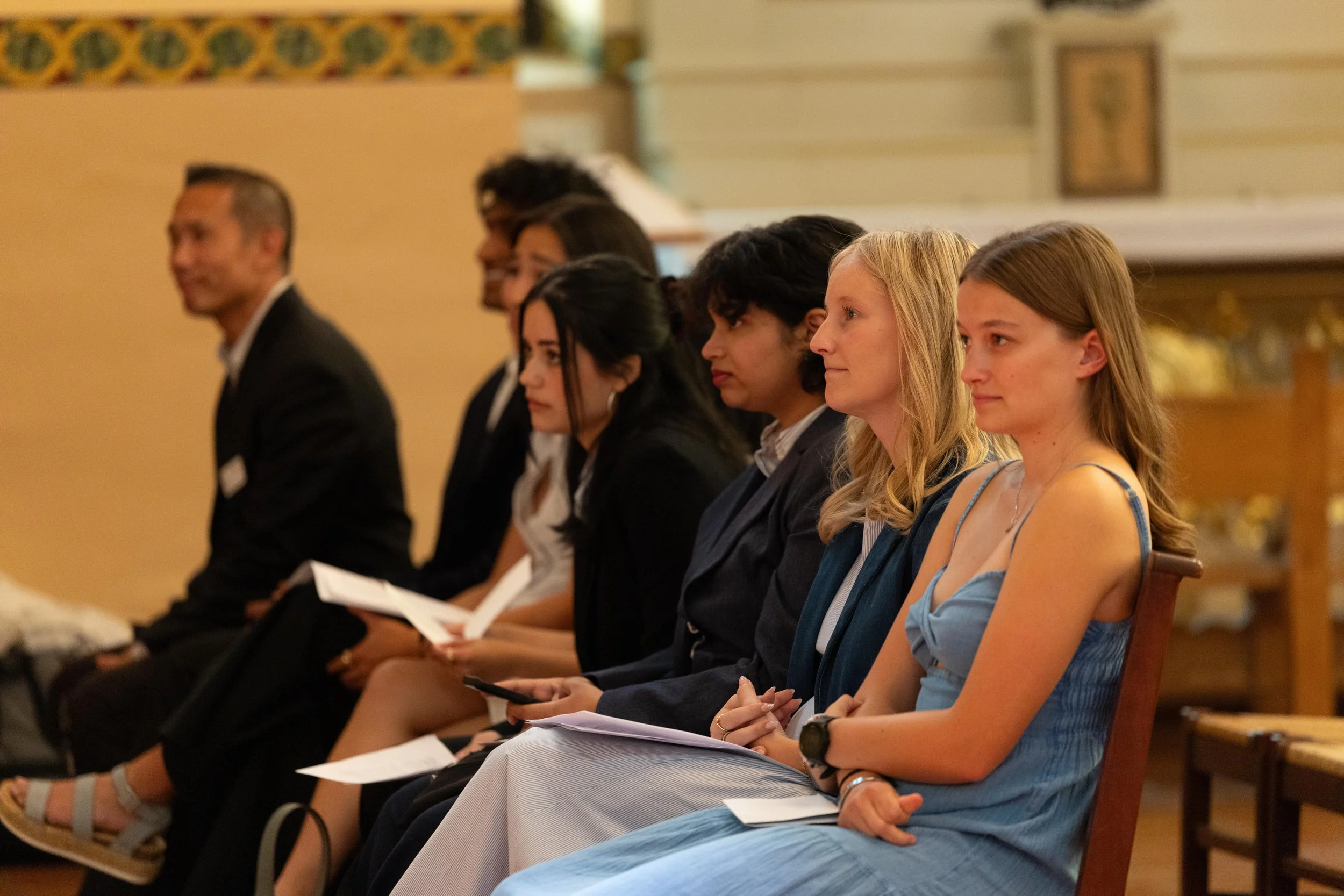
Claire Krebs ’26 (right) and Sophia Standard ’26 (left) sit in the Mission Church as they listen to Matthew Van Dyke, former vice president of public relations speak during the ASG transition ceremony. (Elaine Zhang/The Santa Clara).
For most students, student government looks a certain way.
A Senate meeting in the Williman Room. A campaign poster. A resolution. A table outside Benson Memorial Center. A name attached to a title: president, vice president, senator, chair.
But for Claire Krebs ’26 and Sophia Standard ’26, who led the Associated Student Government as president and vice president this year, the work of representation became less about the image of power and more about the responsibility of holding it.
Both had spent most of their college careers in ASG. Krebs joined during first-year elections in fall quarter. Standard joined later that year, starting in the public relations branch. Over time, ASG became more than another campus involvement. For Krebs, it redirected her future. She came to Santa Clara University as a pre-med student, but said she fell in love with the legislative and advocacy pieces of ASG.
“ASG has been a big, big, big part of my life,” Krebs said. “It’s really changed my future.”
For Standard, ASG helped her realize that she could create space for others, even before she saw herself as someone who belonged in student government. She remembered entering the organization without fully knowing what ASG did, then watching Senate meetings and seeing the culture shift.
“Those three and a half years in the Williman Room every Thursday definitely impacted me a lot,” Standard said.
Viewed together, their leadership was a study in what student power can look like when it is both public and deeply personal. They advocated for a campus therapy dog, supported a basic needs funding pitch that Krebs said helped secure more than $150,000 for the program and met one-on-one with every ASG member each quarter.
The one-on-ones mattered because, for Standard, representing the student body required knowing the students inside ASG first. She said ASG could only advocate well externally if it was functioning well internally.
Krebs described that same philosophy through the group’s motto: “Broncos helping Broncos.” To her, the phrase mattered because it was not “ASG helping Broncos.” ASG leaders were not separate from the student body. They were part of it.
Standard saw the motto in smaller gestures: noticing quieter voices in class, giving someone space to speak, pulling someone aside to ask how they were doing. “I think it’s those quiet moments where you’re really just making an effort to pay attention to what people need,” she said.
That was the harder, less visible version of leadership. Both said the role often required putting their own lives on hold when student concerns came up. Standard said her identity as a student sometimes felt like it was placed “on the back burner.” Krebs said she tried to remember that she had made a commitment to serve.
“The student body is like our boss in a way,” Krebs said.
By the end of the year, what Krebs and Standard hoped to leave behind was not only a list of initiatives, but a model of approachability. Office hours, “Cookies and Concerns,” CSO relationships and one-on-one meetings were all attempts to move ASG out of the hidden rooms where students might not find it.
Their version of representation was not just being in the room. It was trying to make the room easier for other students to enter.
The Home that Students Built
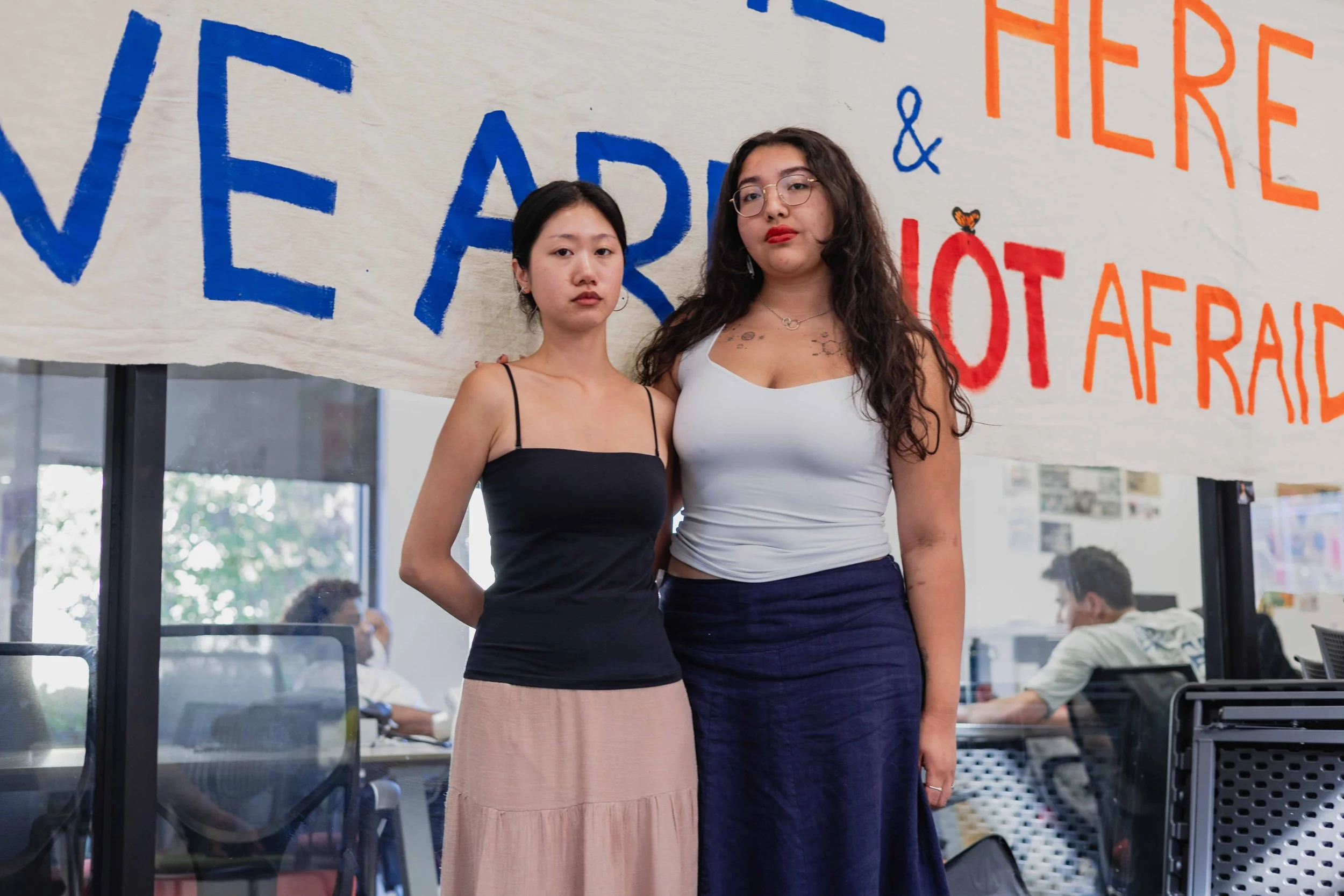
Erin Wu (left) and Jacklyn Alonzo Heredia (right) stand in front of an advocacy banner inside the Shapell Lounge. (Dylan Ryu/The Santa Clara)
The Multicultural Center is much more than a physical space.
It is the blue couch where students nap between classes. The flags and decorations that make the room feel lived in. The place where, after a long-awaited renovation, students can now gather with running water, a bathroom, a kitchen and more room to breathe.
But for Director Jacklyn Alonzo Heredia ’26 and Associate Director Erin Wu ’26, the MCC’s importance this year was never only about the room. It was about what the room had to hold.
Wu described the center as her favorite place at Santa Clara University and “a little family.” Alonzo Heredia called it “a second home” and “a second family,” a place of comfort and solitude that shaped her four years. This year, they said, the Center became warmer, louder and more unified. Students from different cultural clubs ran events together. People attended general meetings that were not their own. Culture show attendance grew. The Center felt less awkward, less quiet, more alive.
That shift, they said, took work.
Wu said the MCC had previously lacked structure and accountability, so this year’s leadership brought back accountability groups, created transition documents and tried to leave future staff members with resources they had not always received themselves. Alonzo Heredia said she was proudest of creating a culture where students felt comfortable coming directly to MCC leadership with questions, safety concerns and personal issues.
“We’re students, like all of you,” Alonzo Heredia said. “We tried really hard to connect with students individually.”
That accessibility became more urgent because the MCC’s work, they said, was also emotionally and politically heavy. Alonzo Heredia described the role as carrying an added layer of responsibility beyond budgets and events: responding to safety concerns, navigating administrative issues, thinking about federal and legal pressures, supporting vulnerable students and protecting the Center itself.
“There’s so many people relying on the two of us,” Alonzo Heredia said.
Wu said the difficulty came from being a first point of contact when something happened. The center’s leaders had watched previous teams handle heavy issues, but “it’s very different when you’re kind of the first point of contact,” she said, “and you’re the person that has to respond or be prepared to respond.”
In the current political climate, Alonzo Heredia said, the MCC felt more necessary than ever.
“In the nicest way possible, the MCC is a big middle finger to the federal government,” Alonzo Heredia said.
For her, the Center was not only a gathering place, but “a physical embodiment of resistance” and proof that “as much as you try to scare us, we’re still here.” Because the MCC is fully student-run, she said, its leaders carried both pressure and power.
“It’s on behalf of the students,” Alonzo Heredia said. “The MCC is for students, by students.”
Wu put it even more simply: “This Center is not just like a physical place,” she said. “It is, within itself, a movement.”
That movement, they said, was guided by a “MCC first” and “people first” mindset. For Wu, every system and decision came back to the students who make the center what it is. For Alonzo Heredia, future MCC leaders should recognize that they are part of a “full village of people” positioned to support one another.
By the end of the year, what they built was not only a more organized center or a busier room. It was a place where students knew who to ask for help, where clubs saw themselves as connected and where belonging had to be protected as much as celebrated.
Come One or Come Many
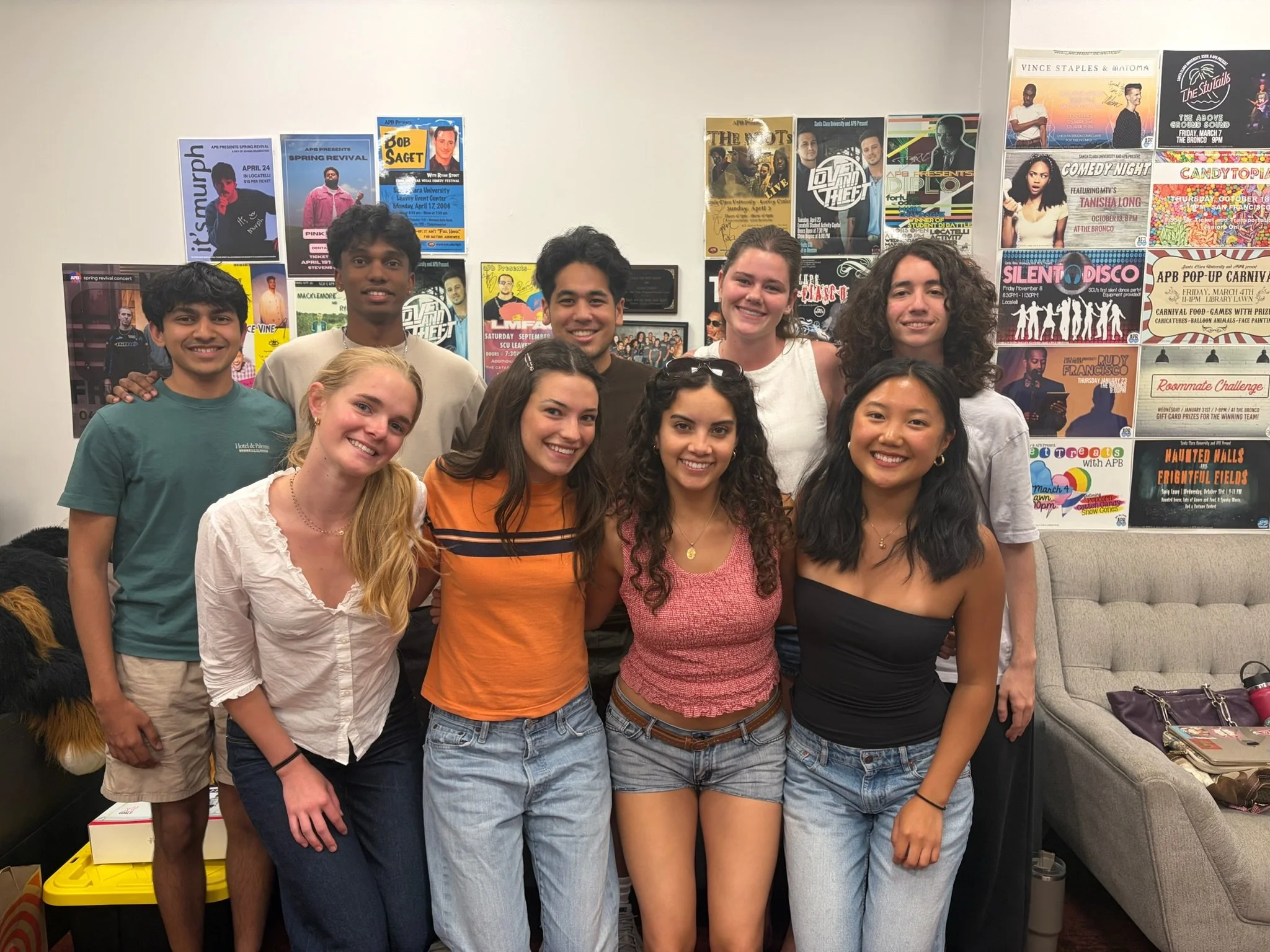
(From top to bottom, left to right) Rayhan Rani, Aravind Viswanathan, Tevin Atwal, Lily Kruse, Robbie Kolek, Lucy Filippini, Addie Brown, Sofia Aguilar, and Olivia Chi pose in the APB office. (Courtesy of Lily Kruse)
There are not many student organizations whose entire job is to make campus feel like somewhere worth staying for the night. But then again, most student organizations are not the Activities Programming Board, Santa Clara University’s unofficial party committee, where the invitation is already printed on the hoodies: “join the party.”
For APB, the party can take several forms. A soccer challenge outside Benson. A movie night during a busy week. A free trip off campus. A discounted concert ticket. A table with Boba students pass on their way to lunch. The point is not always grandeur. Sometimes, it is simply giving students a reason to stop, gather and feel like campus is not empty after class.
“Our brand is events,” Associate Director Lily Kruse ’28 said.
But the brand, she said, is also meant to do something more practical: offer students something new at a lower cost. APB buys tickets, plans free experiences and creates events for students who may not know the Bay Area, may not have plans for the night or may not feel like the social life of Santa Clara University has an obvious place for them.
“We’re really just building on a student experience,” Kruse said.
Director Tevin Atwal ’27 sees that experience in the students who come back. He said the annual concert was one of APB’s biggest successes this year, but he also noticed the smaller rhythm of weekly events with familiar faces, friend groups returning and students finding something to do together.
However, there is a less glamorous anatomy of “join the party.” Behind the food, prizes and posters are finance approvals, virtual cards, 25Live reservations and long emails with administrators.
“There’s just a lot of moving parts when it goes to event planning,” Atwal said.
Still, he does not want APB to feel closed off. Atwal said he sees the organization as a “two-way street,” where students can bring ideas for events they want to see.
Kruse’s pitch is even simpler: “Come make friends, come by yourself or with friends,” she said. “Come one or come many.”
That might be APB’s real trick. It makes hospitality look casual. Someone else handles the room, the budget and the details, so students can do the one thing APB keeps asking of them: show up.
The Door to the Outdoors
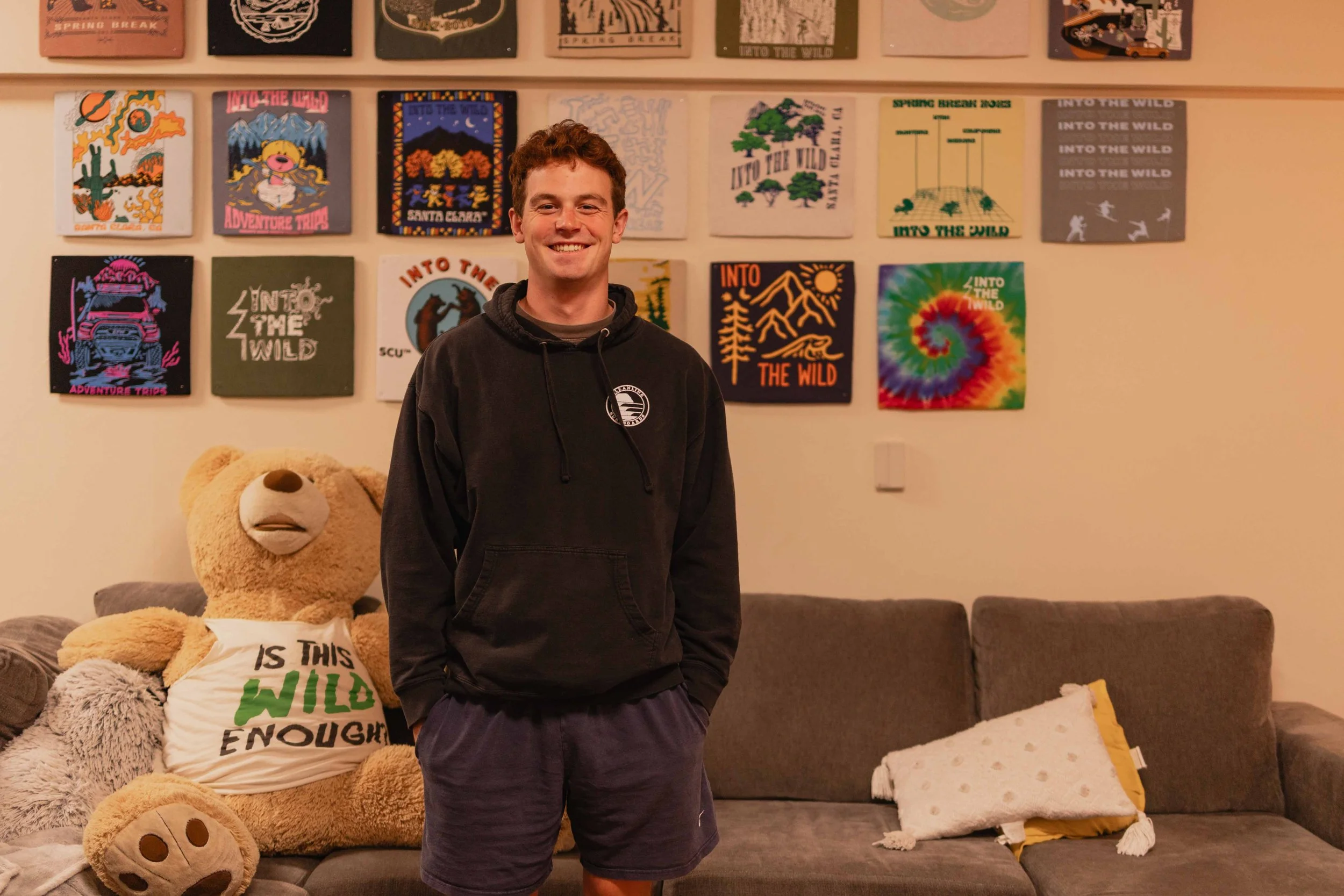
Cooper McCarthy stands in front of Into the Wild’s t-shirt design wall in the Into the Wild office. (Dylan Ryu/The Santa Clara)
When Cooper McCarthy ’26 first came to Santa Clara University, he already knew he loved the outdoors. He had grown up in Washington, where summer meant backpacking, biking and swimming, and Into the Wild seemed like an obvious place to keep doing the things he already knew how to do.
But somewhere between his first trip and his year as president, the point changed. The outdoors became something he wanted other students to feel invited into.
“I started off wanting to do more of it myself,” McCarthy said, “I continued the work because I really enjoy watching other people get outside.”
Into the Wild is easy to imagine one way filled with backpacks, tents, trailheads, vans leaving campus before the weekend. McCarthy knows the organization can also look, from the outside, like a friend group that has already formed. He did not dismiss that entirely. Many of his friends are in Into the Wild. He even lived in the Into the Wild House. Sometimes, he said, the line between organization, work and personal life became hard to separate.
But McCarthy said the organization’s actual mission is the opposite of closed off. Its purpose is to bring students outside, especially those who may not already see themselves as outdoorsy.
That is why adventure trips matter to him. They happen before classes begin, when incoming students have barely stepped onto campus before they are getting into cars with people they do not yet know. During McCarthy’s time at Santa Clara University, Into the Wild doubled those trips from four to eight, with 93 participants this past fall.
The trips are free, he said, and meant to be accessible. What the organization still needs, he said, is better advertising, so students know that “regardless of ability, there are trips for you.”
For McCarthy, being a good Into the Wild leader is not only about knowing how to pitch a tent or plan a hike. A lot of leaders, he said, do not come in with extensive outdoor experience. That can be taught.
What matters more is whether they can make people feel “comfortable,” “safe,” “included” and “welcomed.”
In that way, Into the Wild is not really selling the outdoors as conquest. It is offering it as permission: to try something once, to be new at it, to meet people without needing to already belong. As McCarthy put it, every student would benefit from going on at least one Into the Wild trip during their Santa Clara University experience.
Not because everyone has to become a backpacker. Because sometimes, one weekend outside is enough to make campus feel a little less unfamiliar when you come back.
A Frequency of Their Own
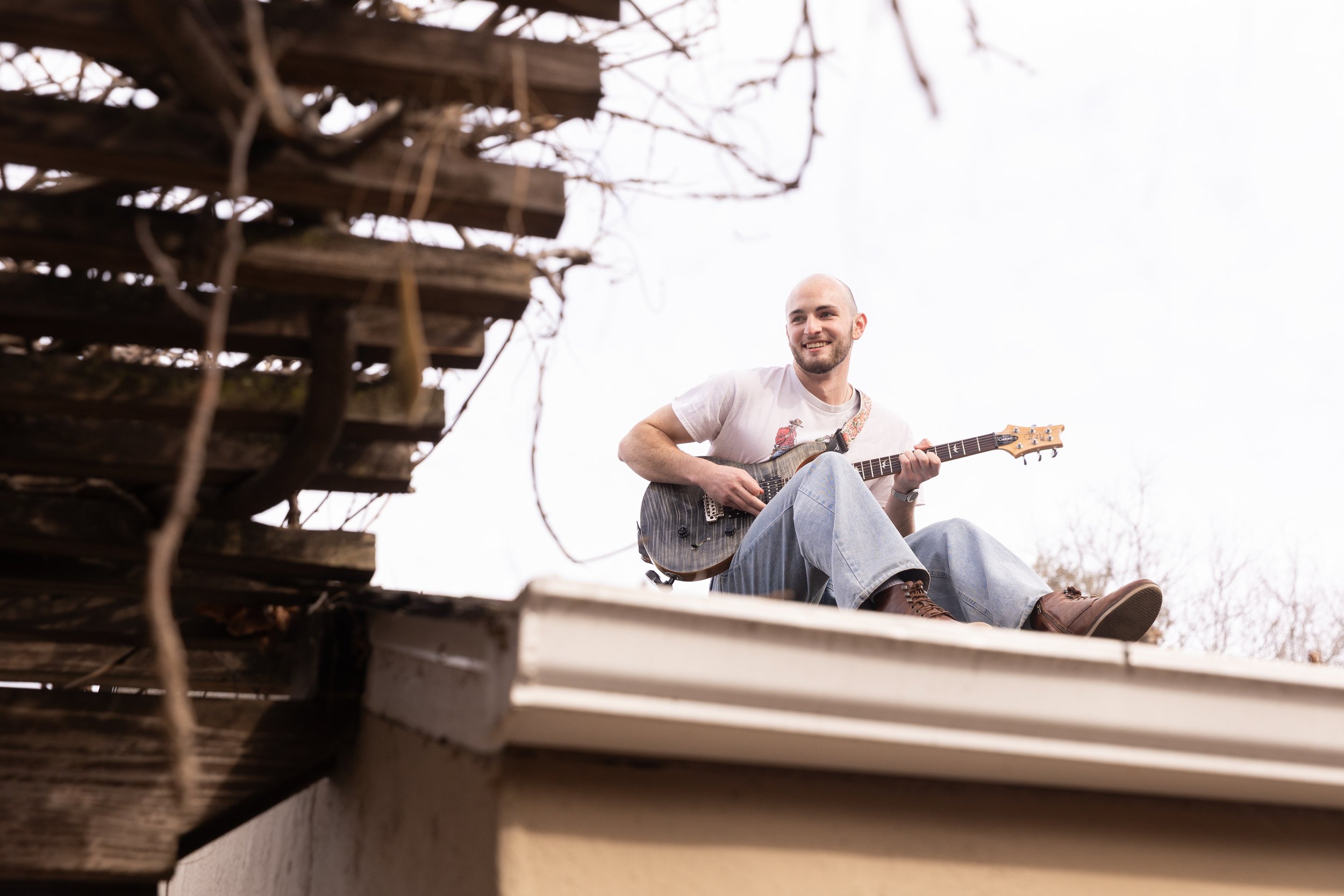
Colin Friedel plays guitar on top of the roof of the Base Camp shed, Feb. 7, 2026. (Nina Glick/The Santa Clara)
Before Colin Friedel ’26 became the general manager of KSCU FM 103.3, he was a freshman with a guitar, some friends and the early outlines of a band.
He was trying to find his way into the University’s music scene, and KSCU helped open the door. The station gave him a place to perform, a reason to stay close to campus music and, eventually, a job keeping that same doorway open for other students.
“KSCU was super helpful,” Friedel said. “They provided me with the opportunity to perform and to get into that world.”
Against the odds, college radio still has a strange kind of cool. Most students do not need a station to find music anymore. They have playlists, headphones, algorithms and phones that can produce almost any song in seconds. But KSCU offers something less polished and more human: students choosing what they want to play, what they want to say and how they want to sound.
For Friedel, that is the station’s real value.
“I think the biggest thing for me is the creative freedom and artistic expression,” Friedel said.
As general manager, Friedel oversaw a staff of 16 students, each with their own role in keeping the station running. He ran weekly meetings, checked that events were on track and helped tie up whatever needed tying up. It was a sharp jump from his junior year, when he was associate production director, to suddenly being responsible for the whole operation.
The challenge was not only the radio. Last year’s staff was senior-heavy, leaving Friedel and just two other returning members to rebuild the group. Hiring and creating a new staff, he said, was one of the hardest parts of the year.
Still, what he remembers most is not the difficulty. It is the sound of students trying something for the first time.
One of his favorite memories was listening to two close friends host their first radio show this quarter. Sometimes he tuned in. Sometimes he sat in the studio with them. What stayed with him was how much fun they were having.
KSCU’s live music scene gave him a similar feeling. Friedel said he was proud of how large live music had become in students’ lives at Santa Clara University, especially for underclassmen starting bands, performing and “opening up” through music.
In an age when radio can seem like an old machine, Friedel still believes in the broadcast. Students can stream KSCU online, but he said there is something important about a person sitting in a car, turning to 103.3 FM and hearing a friend on air.
The signal matters because it gives student voices a place to travel.
“I think college radio is really important,” Friedel said. “There aren’t that many places that students get the opportunity to really express themselves in this way.”
That is KSCU’s quiet argument for itself. It is not only a station. It is a little room where a student can put on headphones, lean toward a microphone and learn what it feels like to be heard.
The Small Practice of Change
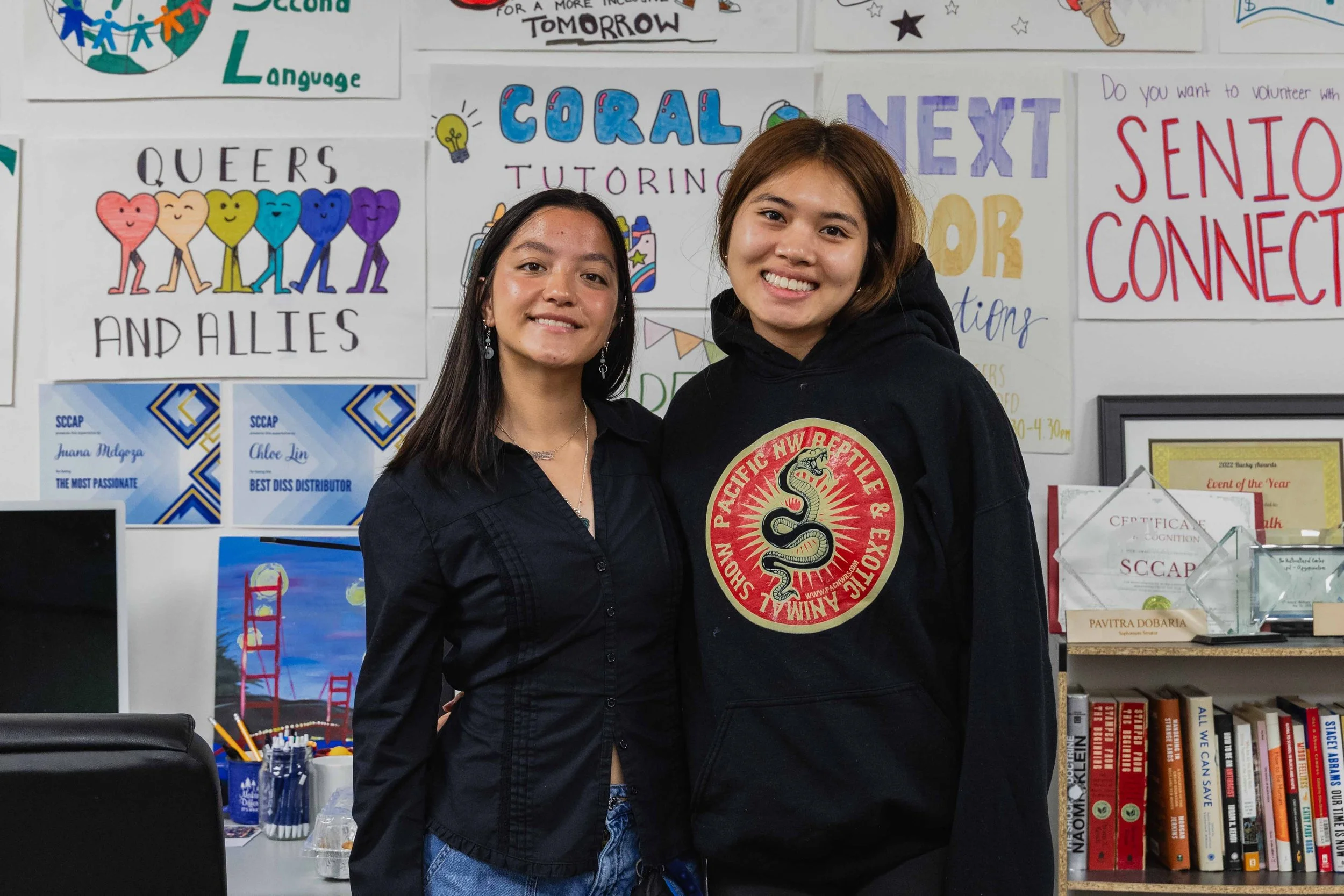
Dylan Caballero (left) and Jasmine Vu (right) stand in front of handmade advocacy and protest posters in the SCCAP office. (Dylan Ryu/The Santa Clara)
On a winter afternoon in the Shapell Lounge, the Santa Clara Community Action Program gathered around gingerbread houses.
The first person in each group was blindfolded. Their department stood around them, calling out instructions. Every couple of minutes, someone new took over. The room got loud. The sugarcoated houses went from upright to candy rubble. To someone walking by, it might have looked like a holiday game that had gotten slightly out of hand.
But for SCCAP Director Dylan Caballero ’26, that was exactly why it worked.
“It was very silly,” Caballero said. “But also the basis of that was that team building, how we communicate.”
SCCAP’s work is often described through its public programs: volunteering, advocacy, social justice events, on-campus conversations. But Caballero and Associate Director Jasmine Vu ’26 kept returning to the work that happens before any of that reaches the rest of campus. The staff has to know how to trust one another. It has to know how to talk. It has to know what kind of community it is trying to become before it asks other people to join it.
Caballero and Vu both came into leadership quickly. Caballero had only been in SCCAP for a few months before becoming director. Vu began as a volunteer, then ran a program before becoming associate director. The jump was intimidating, they said, but it also gave them room to imagine the organization differently.
“We spent a lot of time crafting different things and bringing new ideas,” Caballero said.
For them, SCCAP’s strength was not only that its members cared about similar issues. It was that they came to that care from different majors, ages, backgrounds and identities. Caballero said the group was united by shared values, but shaped by difference—a combination visible in its volunteer work, advocacy programming and the students who kept showing up even when events had to change.
When rain forced this past year’s Slut Walk indoors, Caballero said, students still came. They paid attention to the change. They wanted to be in the room.
That mattered to her because SCCAP’s conversations are often about things students want to discuss but do not always have a place to say out loud. During SCCAP Fair, she said, the conversations felt genuine, driven by real interest. The goal was to make SCCAP a space where students could take what they needed from it.
Vu described that as part of the organization’s broader presence. SCCAP, she said, tries to create a safe environment where students can talk about what matters to them, while also encouraging others to speak up.
The work also pushes students beyond campus. Many volunteers are first-years and sophomores looking to get out of what Caballero called the “Santa Clara bubble.” Through tutoring, shelter work and other programs, they can see a more direct form of impact.
Nothing is required, Caballero said. Students do not have to hit a certain number of hours. They come because they want to.
“For us, we focused a lot more on internal building and making sure we had a really good foundation,” Caballero said. “I couldn’t be prouder of a group of people.”
That is SCCAP’s quieter argument. Change is not only the event, it is the practice before it with the icebreakers, the meeting, the trust built between people who may not have known one another otherwise.
Sometimes, it starts with a blindfolded student, a gingerbread house and a room full of people learning how to guide each other.
From Submission to Shelf
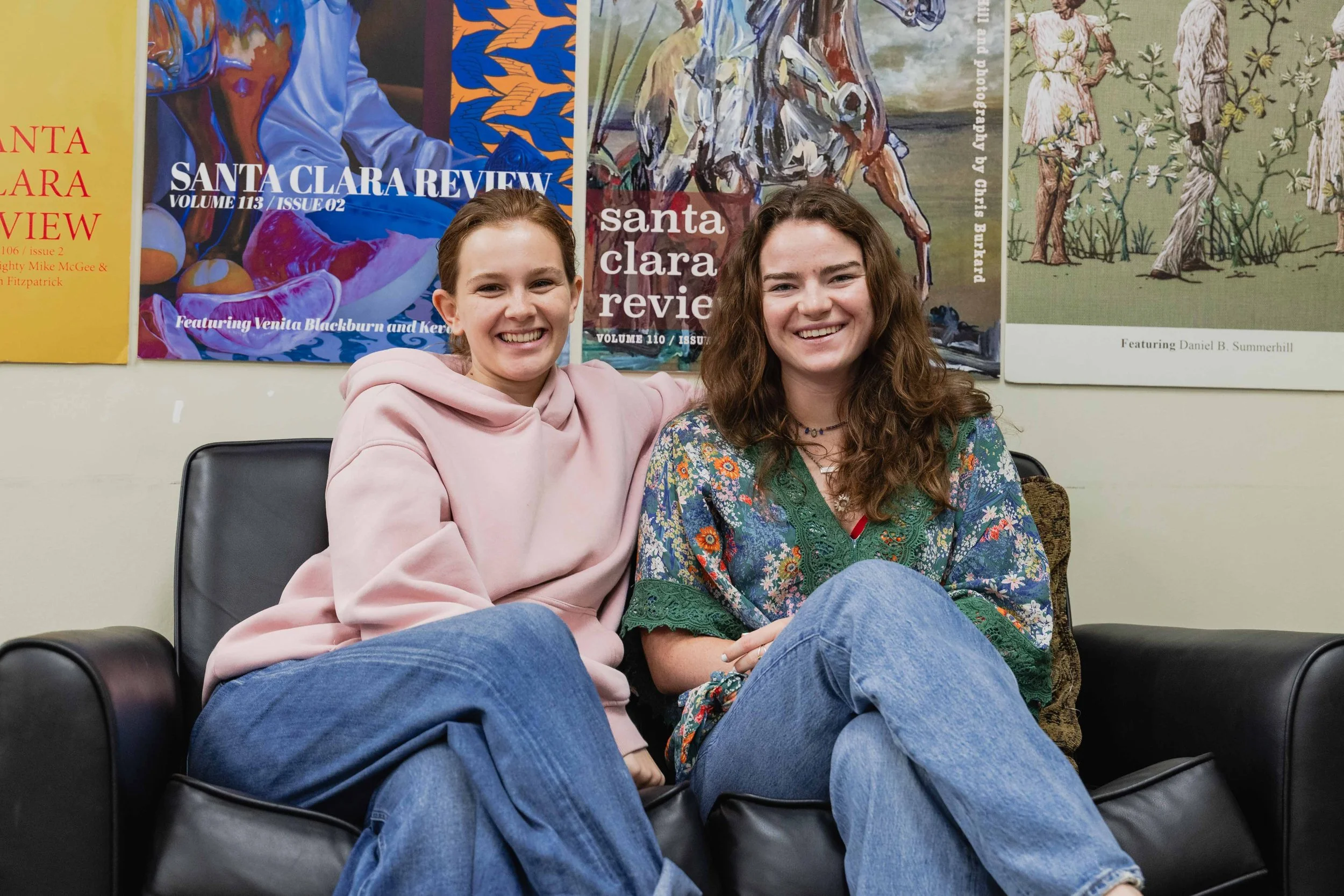
Sophie Copple (left) and Charolette McManus (right) sit in the Santa Clara Review office in front of large posters of past Santa Clara Review journals. (Dylan Ryu/The Santa Clara)
If you want to know pressure, try deciding which poem, short story or essay deserves to live in print.
Read. Pause. Reject. Maybe. Read again.
At the Santa Clara Review, that pressure is part of the job. The magazine is not simply a campus showcase or a stack of pages arranged neatly for a publication party. It is an undergraduate-run literary journal with an international reach, one that asks students to read like editors, think like publishers and make decisions that will outlast the meeting where they were made.
Sophie Copple ’26, the Review’s editor-in-chief, was responsible this year for managing editorial production, marketing, submissions, printers and the magazine’s larger creative direction. That kind of authority, she said, was both exciting and heavy.
“At the end of the day, they are looking to me for guidance,” Copple said.
They should. The Review’s work depends on judgment. Editors sort through submissions, argue for pieces, think about voice and originality, and decide what kind of magazine each volume will become. Charlotte McManus ’26, the associate editor, said recent submissions have pushed toward the unique—work that makes editors ask, “How did you even think of that?”
That pickiness is the point. The Review gives students the rare chance to practice the real work of literary publishing, not just loving writing, but choosing it.
The job also includes the less romantic side of art. Copple said she was proud the staff produced two books this year despite printer and production problems that threatened major delays. The California-themed edition was especially meaningful, she said, because the Review is the second-oldest literary magazine in California.
McManus said people would be surprised by how much students actually do. Tasks range from managing large budgets, planning events, leading teams and solving problems when the original plan fails. When the first volume was not going to arrive on time, the staff had to reschedule its publication party and search for other printing options.
Still, the work made the magazine feel bigger than campus. At a writers conference in Baltimore, McManus met writers from around the country who had published in the Review or wanted to submit to it.
“It’s surprising to see how far it reaches,” McManus said.
And then, after the reading and debating and emailing and waiting, the books arrive. Copple described opening the box and seeing the finished magazine after months of work.
“There it is,” she said. “We made something.”
The Shape of a School Year
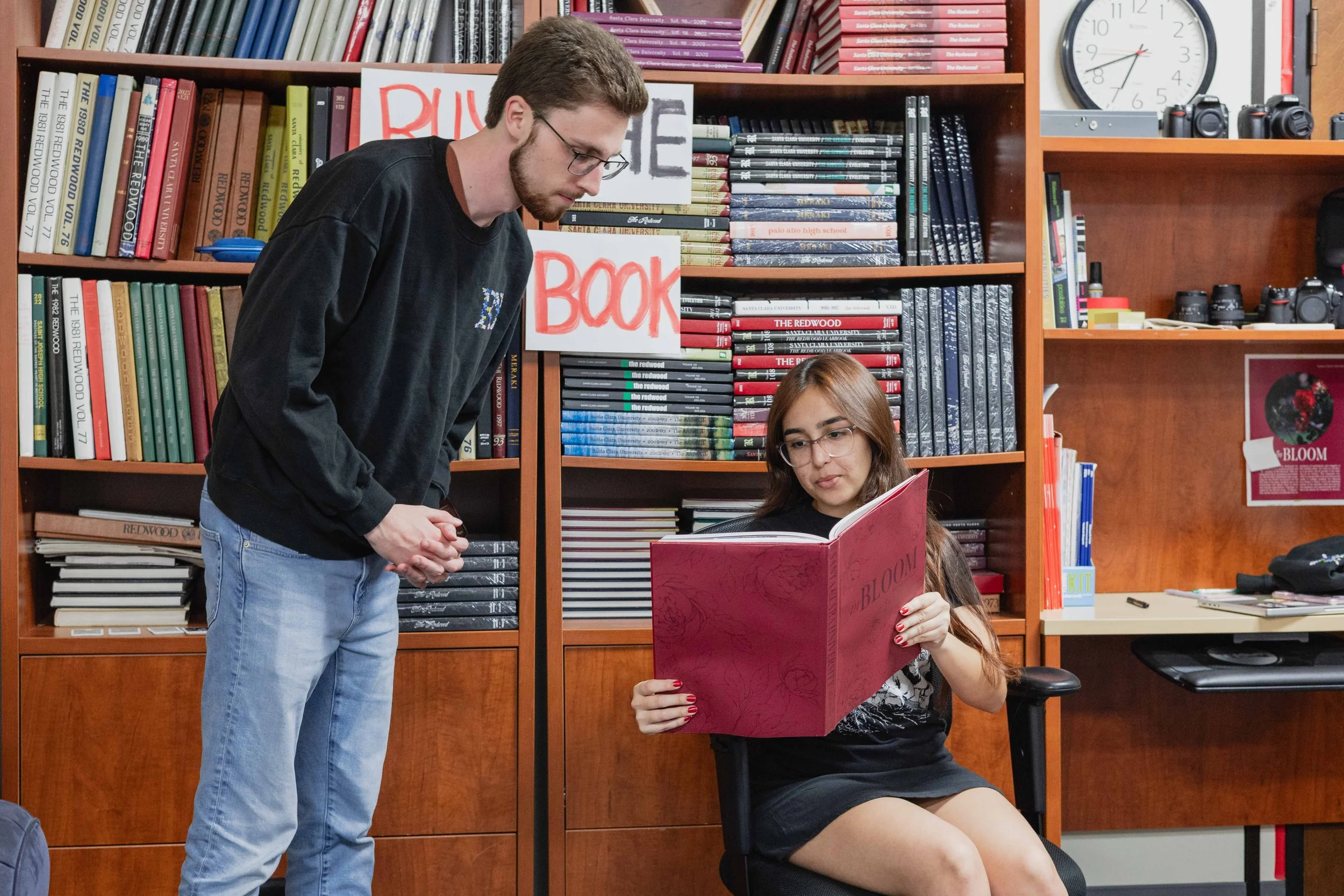
Nicholas Gibson (left) looks at design in a Redwood Yearbook with Izzy Hoerr (right) in front of a bookshelf containing past yearbooks across the past century. (Dylan Ryu/The Santa Clara)
Imagine if nearly the entire Santa Clara University campus, from corner to corner, could fit inside one small book.
For The Redwood, the University’s yearbook, this imagination becomes a reality through hours of planning, designing, writing and photography. The process is methodical—and it lets the book’s creators become familiar with campus in a way most others aren’t.
“It’s really interesting to be able to see all different parts of SCU at the same time through all the photos your photographers are getting, and all the copy that your copywriters are writing,” said Nicolas Gibson ’26, The Redwood’s design director. “And it’s really interesting to be able to condense that into a book that has to try to fully capture all that experience.”
The Redwood was founded in 1903, beginning humbly as a monthly publication featuring University happenings and student literary work. Over the years, the publication transitioned away from monthly issues to several select installments a year, before eventually becoming the yearbook students know today.
For the Redwood’s leaders, the history of the organization stays on the mind when considering what the yearbook means to campus—and how important it is to the future.
“One thing I would love to see the yearbook do is keep making amazing print books, like I think it’s a staple of Santa Clara,” said Gibson.
The labor to bring the book together is one of love; each one carries something special, both those who make it and the students who read it.
“I guess it sounds kind of like pretty basic or corny, but like I’m very proud of the final book that we’ve made this year—I guess that we’re making, it’s not done yet—but I feel like everyone's worked really well together, and all the pages look really good,” said Editor-in-Chief Izzy Hoerr ’28, who took over as the Redwood’s leader only her second year at the University.
“I’m just a sophomore,” said Hoerr. “But I feel like between last year and this year I've learned like a lot more about Santa Clara that I probably wouldn’t have known before taking this position.”
As for advice they’d pass on to leaders of the future—it’s all about the balance between taking chances and staying in sync with others.
“Design what you want to see in a yearbook, because if you are designing something that you don’t like, it won’t be good,” said Gibson.
Together, the CSOs show how much of student life is built by students themselves. Their work becomes the events people attend, the rooms they return to, the publications they keep and the communities that make campus feel less anonymous. Each organization leaves something behind for the next group to inherit: a stronger space, a fuller record, a clearer invitation and a reminder that campus culture is not automatic. Someone has to make it.