Super Bowl Deal Fuels Tension Between Santa Clara Mayor and City Council
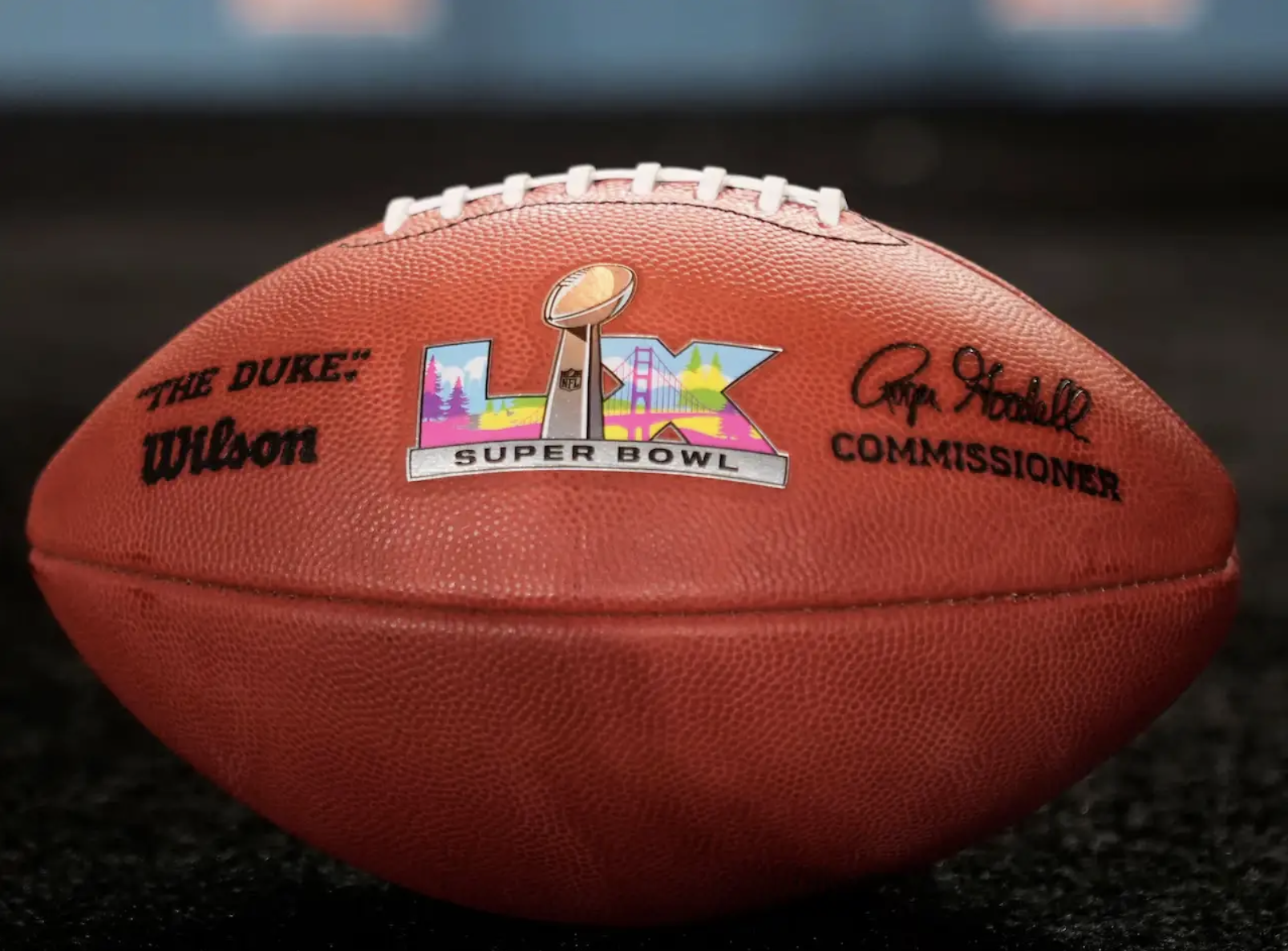
A ceremonial football with the Super Bowl 60 logo sits on the stage. (AP Photo/Gerald Herbert)
The City of Santa Clara is preparing to host Super Bowl LX at Levi’s Stadium on Feb. 8, 2026. However, the NFL has opted to place many of its major media and fan events in San Francisco rather than in the host city.
The NFL Honors, Pro Bowl, fan zones and concerts—including Benson Boone, Post Malone and Chris Stapleton, among others—will be held in San Francisco, continuing the pattern from Super Bowl 50, where most festivities occurred outside of Santa Clara.
Despite the “San Francisco” in the team’s name, the 49ers are deeply rooted in Santa Clara. Levi’s Stadium stands as one of the city’s most significant landmarks and the area’s primary venue for large events beyond football.
So a burning question arises: why is the NFL shifting all activity to San Francisco? One possible factor is the economic tension surrounding hosting agreements, led mainly by Santa Clara Mayor Lisa Gillmor.
In September 2025, the Santa Clara City Council approved a deal ensuring that the city would not pay out of pocket for Super Bowl-related costs. Under this agreement, the Bay Area Host Committee would reimburse the city for all expenses, and if the committee could not cover them, the 49ers’ stadium company, Stadco, would be responsible.
The agreement passed 5-2, with Mayor Lisa Gillmor and Councilmember Kelly Cox voting against it. Gillmor argued that the city faced a high financial risk, adding that hosting the Super Bowl would cost Santa Clara over $6 million for security and police services.
“The host committee and Stadco don’t have tangible assets, so the main organization paying us back has no assets, and the backstop has no assets,” claimed Gillmor.
Cox shared a similar concern, calling it “foolish to use our own assets as a backstop.”
However, Jihad Beauchman, executive vice president and general counsel for the 49ers, told the council that Stadco is required to reimburse the city’s costs, emphasizing that this is standard procedure for NFL host cities.
Gillmor expressed frustration that the “49ers have such strong, unquestionable support on the City Council. Even if they don’t pay us, this council will support it. They’re 100% on the 49ers’ side.” Her comments highlight a continuous divide in Santa Clara over the 49ers’ influence on the city’s political structure.
Though Gillmor is a Santa Clara native, she has been known to frequently clash with the team and vocally criticize major event-related deals.
This vote highlights a broad split: the council majority generally supports hosting major events and views them as new opportunities, while the mayor is hesitant about large financial commitments.
Whether the political drama surrounding the city influenced the NFL’s decision to host most of its media events in San Francisco is unclear.
When the host city’s leadership is publicly divided over economic deals, it becomes increasingly easier to understand why the NFL may have chosen to focus on a more unified and well-known city, such as San Francisco, for its largest event of the year.