Protein Pandemonium
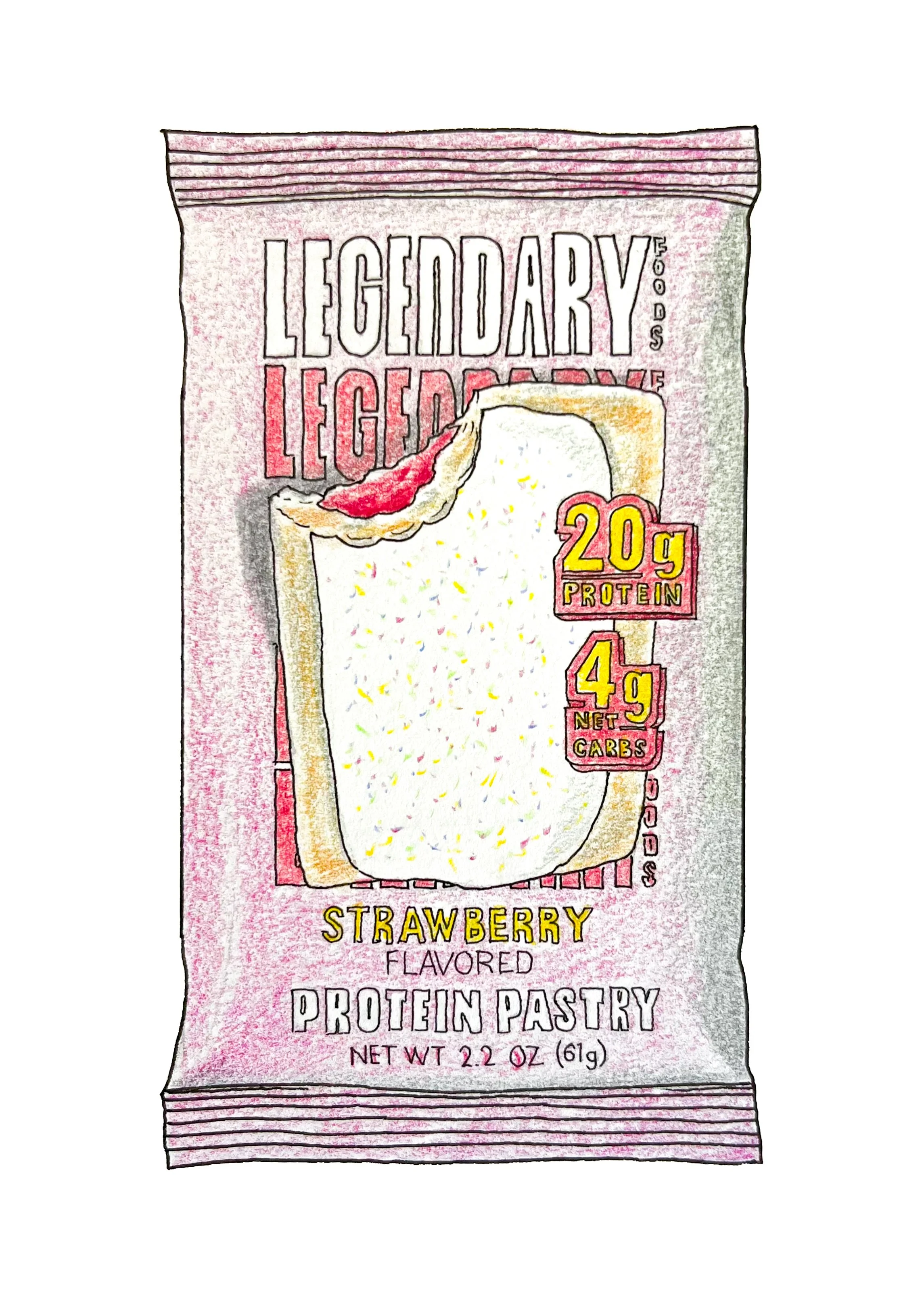
Legendary Foods produces a "Protein Pastry" that has 20 grams of protein. Graphic by Morgan Drake
An epidemic has taken over grocery stores, social media and even Amazon—and it's one you may not expect: protein. The United States seems to have universally concluded that protein is the one true path to health—and it's gone too far.
Gone are the days of a simple protein shake or greek yogurt bowl for gains at the gym. Companies now market protein as a prime factor in any product. For example, nuts have always been a prime healthy snack, with healthy fats and dietary fiber, but now labels on almonds proudly display "6g of protein" on the front.
Protein is certainly important; it's essential to building and maintaining muscle, and generally staying healthy—especially in the age of sugary snacks and sodas everywhere. Perhaps the almond industry is just capitalizing on a new protein trend in the market—but where does it end?
Part of this narrative of high-protein revolves around the idea that the regular person needs an exorbitant amount of protein. The USDA recommends 54g of protein for a 21-year-old woman and 65g for a 21-year-old man who are both "active."
But, many influencers advertise something very different. Accounts with hundreds of thousands of followers like @fitness4lazygirls advertise the intake of 150g a day that are likely only realistic for those with very flexible jobs, or working from home. Such influence may make average individuals think they need to supplement with ultra-processed protein snacks to reach some magical number of protein intake.
Walking through Sprouts takes one through aisles of protein chips, protein pretzels, protein poptarts, protein brownies and protein coffee. Khloe Kardashian recently debuted Khloud Protein Popcorn with 7g of protein per serving.
Even Costco has gotten in on the gig, with new protein sparkling water boasting 30g of the precious nutrient, in case regular H2O just isn't cutting it for your macros.
Sure, protein is healthy, and looking for ways to up your daily consumption is a good way to stay full and strong. But is everything with protein healthy? Certainly not. NPR relays that, while many words in food marketing—such as "healthy"—are restricted by the FDA, “high protein” is not, making it a great buzz word for sales.
“So saying something is ‘high protein’ can be a way of working around the regulations while signaling to consumers that a food might be good for them,” Reyna Gobel says in her NPR article.
The key word here is “might.” As foods become more processed to try to live up to the protein hype, potentially harmful additives follow.
For example, Legendary Jalapeno Cheddar Popped Protein Chips have over 30 ingredients, including oddities like Lupin Flour and Tocopherol-Rich Extract. Alternatively, Popcorners, while still highly processed, are not protein-branded and have significantly fewer—and easier to pronounce—ingredients.
Protein treats like brownies and Pop-Tart-like toaster pastries have also made headway, often containing multiple artificial sweeteners, to curb sugar content, raising the question of the danger of such chemicals. Those consuming these products are likely trying to increase their health by decreasing sugar intake and increasing protein. However, these artificial chemicals can actually lead to more sugar cravings, which can end up harming those who are buying into the healthy narrative of high-protein products.
And finally, it's expensive. On Amazon, those Legendary Popped Protein Chips go for $3.60 per single-serve bag, with Popcorners comparing at $0.75 each. Snacks that don't brand their protein like yogurt, peanut butter and meat sticks are likely to be much cheaper, while still packing plenty of protein to keep you full.
There is a premium on protein; people are buying into a luxury that they likely don't need—and one that could ultimately be harming them with chemicals and cravings.