Editorial: Standing for Free Press, Standing with the Indiana Daily Student
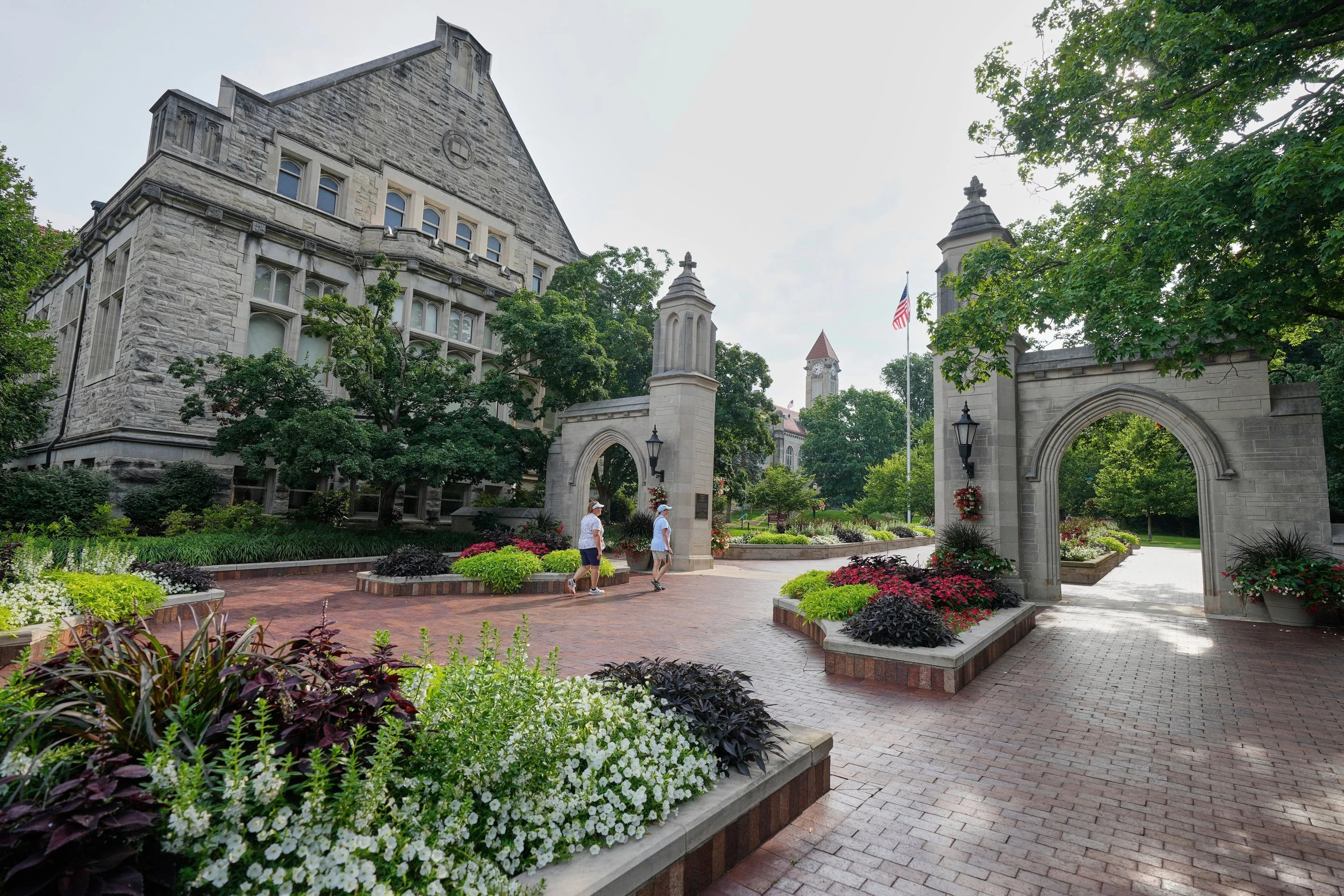
Guests walk on the campus of Indiana University, Thursday, July 17, 2025, in Bloomington, Ind. (AP Photo/Darron Cummings)
This past week, Indiana University in Bloomington censored its student newspaper, the Indiana Daily Student.
Indiana University barred students from printing a Homecoming edition of the Indiana Daily Student—a themed issue the university itself had requested as part of its new “Action Plan for Student Media.”
Ahead of the Homecoming edition, administrators directed the paper not to include any news content in the paper—“nothing but information about homecoming,” as adviser Jim Rodenbush wrote in an Oct. 7 email to editors, relaying the Media School’s order.
When the Indiana Daily Student editors raised concerns that the directive violated their editorial independence, administrators insisted the restriction was not censorship because stories could still be published online. Rodenbush refused to enforce the order, telling the dean that doing so would be “literally against the law.”
For standing by his students, Rodenbush was fired on Oct. 14. Within 24 hours, Indiana University canceled the Homecoming print issue and suspended all remaining print editions.
Both the Student Press Law Center and the Foundation for Individual Rights and Expression have condemned the choices made by Indiana University.
According to a recording obtained by the IndyStar, Galen Clavio, the Media School’s associate dean for undergraduate education, told Rodenbush that stopping the Indiana Daily Student from printing was not a form of censorship due to the existence of their website.
“The content is the stories,” Clavio said. “The way the stories are published is a business decision.”
The Santa Clara newspaper is appalled to witness such a blatant attack on another college newspaper’s independence and on the First Amendment’s right to freedom of speech.
We are disturbed to know that for Clavio, the ability to publish a physical newspaper—and to decide which stories are printed—boils down to a mere “business decision.” Clavio and Indiana University fail to grasp the importance of the First Amendment as it relates to the vital role that newspapers provide to college campuses.
The Indiana Daily Student had faced years of financial strain, operating under a $1 million deficit that the university agreed to cover in 2024. In exchange, the Indiana Daily Student consented to reduce its weekly print schedule and instead produce themed “special editions”—such as a Homecoming issue—which the university claimed would help cut costs while preserving print learning opportunities for students.
While fiscal sustainability is a legitimate concern, it does not grant a university the authority to dictate what stories student journalists may print. Administrative intervention in editorial decisions, regardless of financial context, crosses a line from stewardship into censorship.
This incident, unfortunately, is one of many that news outlets, especially local and college outlets, have experienced in recent years.
At Tufts University, Turkish Ph.D. student Rümeysa Öztürk was detained by ICE for allegedly supporting a terrorist organization—the sole evidence being an opinion piece she co-authored in The Tufts Daily calling for the university to divest from companies linked to Israel.
At the University of Texas at Dallas, The Mercury, the university’s official student newspaper, was assigned a new adviser and later suspended after Editor-in-Chief Gregorio Olivares Gutierrez refused to alter coverage of pro-Palestinian demonstrations.
At Columbia University, federal investigations into student protesters in spring 2024 cited their authorship of op-eds in the Columbia Daily Spectator as justification for accusations of antisemitic activity against the institution.
Indiana University ranked 255th out of 257 schools in the 2026 College Free Speech Rankings. Indiana’s ranking came even before the university censored the Indiana Daily Student, making its latest attack on student press freedom unsurprising.
To the writers, editors, photographers, designers and all staff of the Indiana Daily Student—we, The Santa Clara—stand with you in solidarity. We call on student newspapers across the country, as well as local and national outlets, to join us in condemning this act of censorship. An attack on one newsroom’s right to publish is an attack on all of us.