Indian Taco Talkback
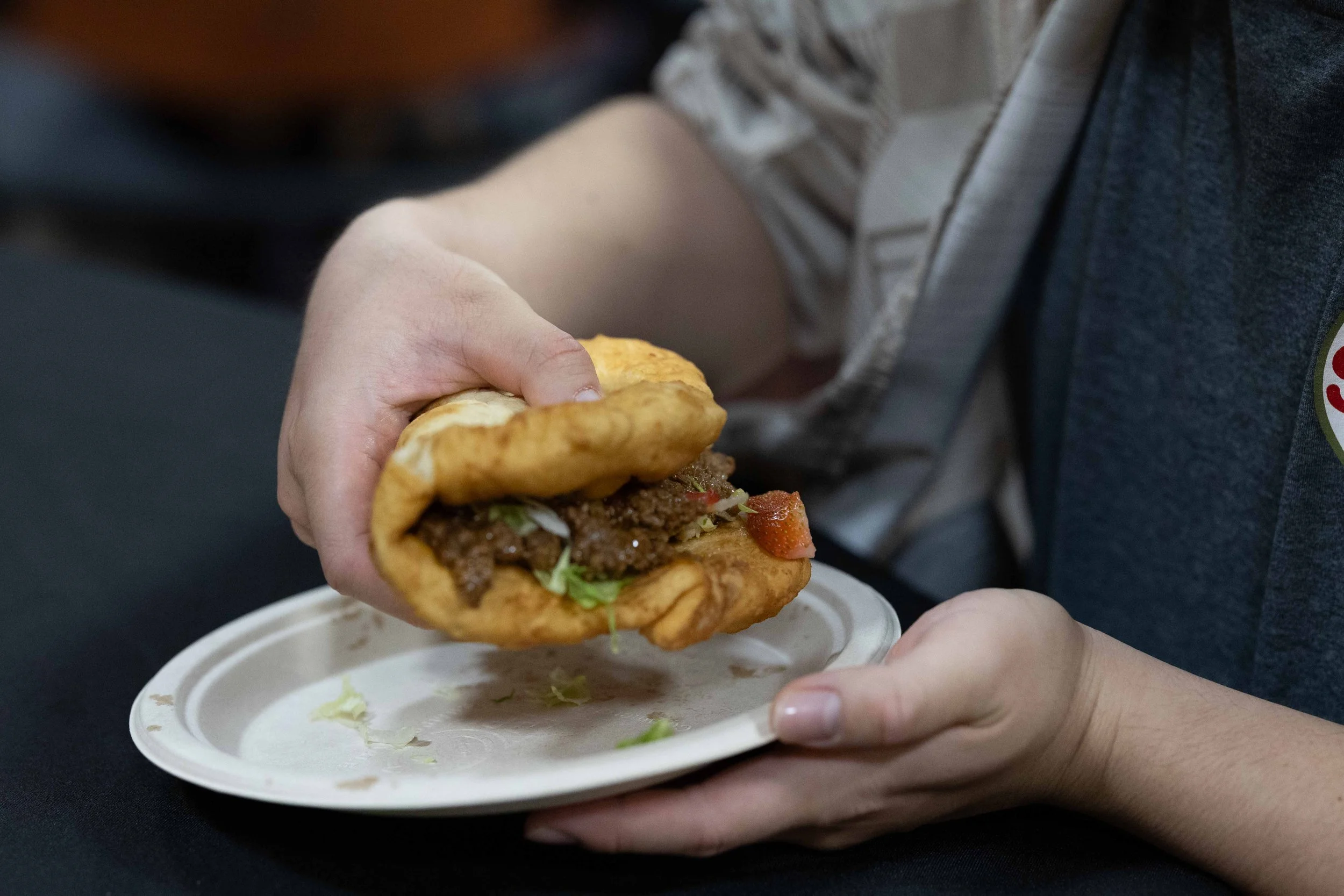
Attendees chose from a variety of toppings to put in the frybread including ground beef, lettuce, and tomato. (Dylan Ryu/The Santa Clara)
The Native American Coalition for Change kicked off the celebration of Native American Heritage Month by hosting an Indian Taco Night in the Williman Room in Benson Memorial Center on Nov. 11, 2025.
“Food weaves people together, connects families through generations and is a life force of identity and social structure,” said Sean Sherman, an Oglala Lakota Sioux chef, in the introduction to his book “The Sioux Chef’s Indigenous Kitchen.”
During Native American Heritage Month, Santa Clara University led their efforts with a celebration through food.
The event featured a screening of “Reservation Dogs,” which follows four Indigenous teens in Oklahoma who are saving money by any means possible to get to California.
Along with the film was a joint culinary infusion of Mexican and Native American roots that offered both sweet and savory Indian tacos.
These Indian tacos are centered on frybread—made from a simple mixture of flour, salt, water and baking powder—which has its origins in Indigenous adaptation.
Frybread, the ingredient that takes the place of a tortilla in Indian tacos, emerged nearly 150 years ago when the U.S. government forced Indigenous individuals from their homelands, cutting them off from their natural sources of food. After being relocated to reservations, the government controlled what foods Indigenous communities could access, limiting traditional diets and the resources available to them.
Although frybread reflects the impact of this displacement and food restriction, it also became a staple in Indigenous communities, made from the ingredients that were provided.
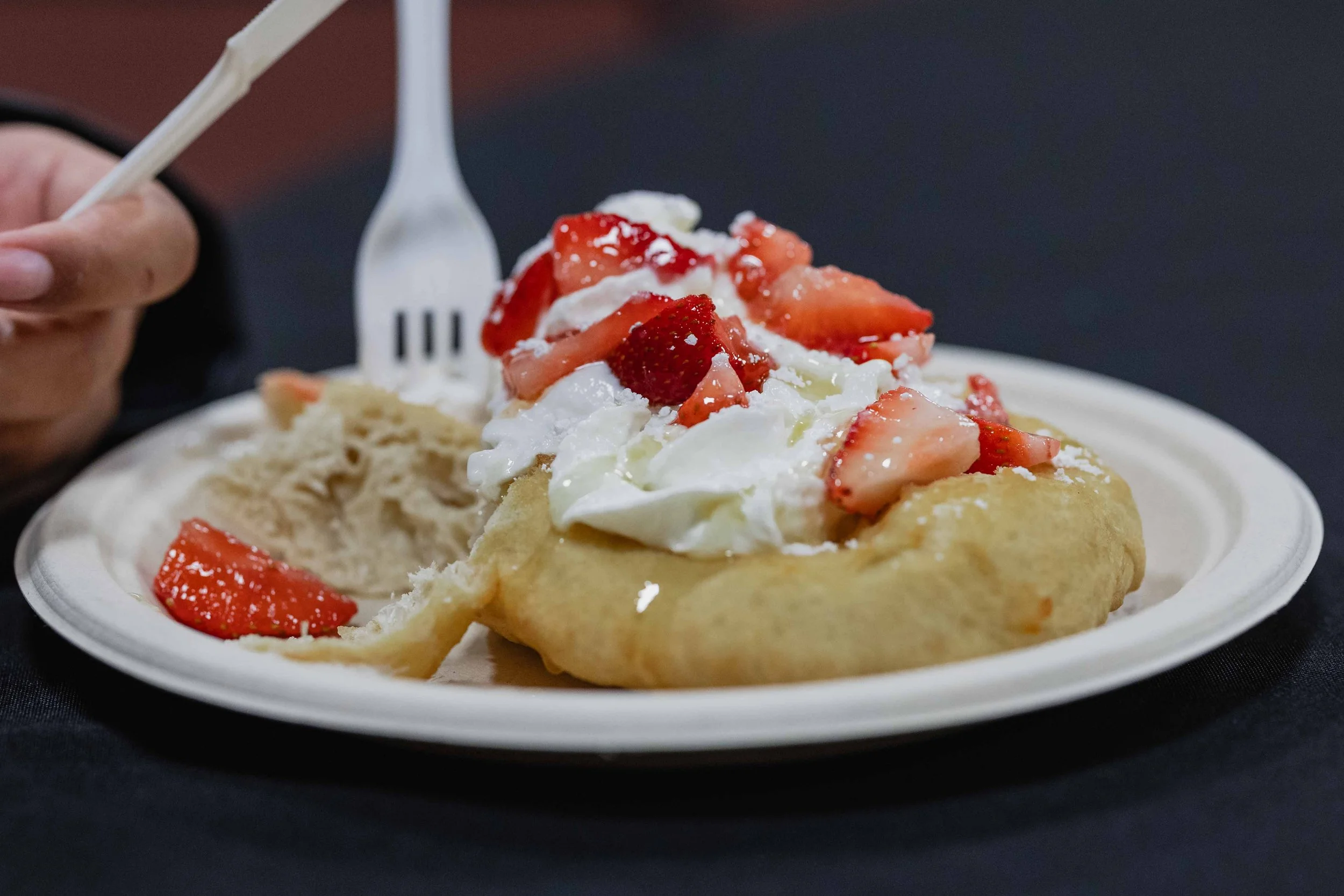
Toppings for the sweet tacos included honey, strawberries, and whipped cream. (Dylan Ryu/The Santa Clara)
Todos Unidos: Infusion of Native American Culture with Mexican Culture
“It really shows the intersectionality of our cultures, how diverse native communities are,” said Isabella Amne Gomez ’27, the first Muwekma Ohlone student to attend Santa Clara University.
Indian Taco Night demonstrated the union of two cultures, showing points of diversity and similarity between Native American and Mexican traditions. Mariah Aragon ’28, an enrolled member of the Northern Cheyenne Tribe and a member of the Native American Coalition for Change, made frybread by hand using a family recipe so people could enjoy both sweet and savory tacos.
“It’s a tight-knit community. We all have our cousins, aunties and uncles, and I always had a lot of love and support,” said Aragon in an interview with the University about her Indigeneity, specifically about reservation life.
Both communities have been shaped by the history of colonialism, including the legacy of the Santa Clara Mission. Their cultural practices—artwork, mannerisms and community values—remain central to how that heritage is expressed during celebrations like Indian Taco Night.
“It’s really beautiful to see the tangible result between the two, so it really just shows that Indigenous peoples are able to collaborate. It’s really special because it just shows how there’s not one single look or depiction of what it is to be Native,” said Gomez.
Taco Talkback for Survival
The Native American Coalition for Change provided an opportunity for people to connect with Native communities and their culture. This event highlighted that, although Native communities at Santa Clara University are small, they are not silent. Gatherings like this offer hope and encouragement for current students, helping them feel at home.
“I want people to know that we are still here, that we are still present,” said Gomez. “It’s really special to have an event where you share food from our culture. We’re hoping to have an event where we talk about the connection between food sovereignty and Native plants.”