Years in the Making: Santa Clara University’s First Quarter Offering Gender Inclusive Housing
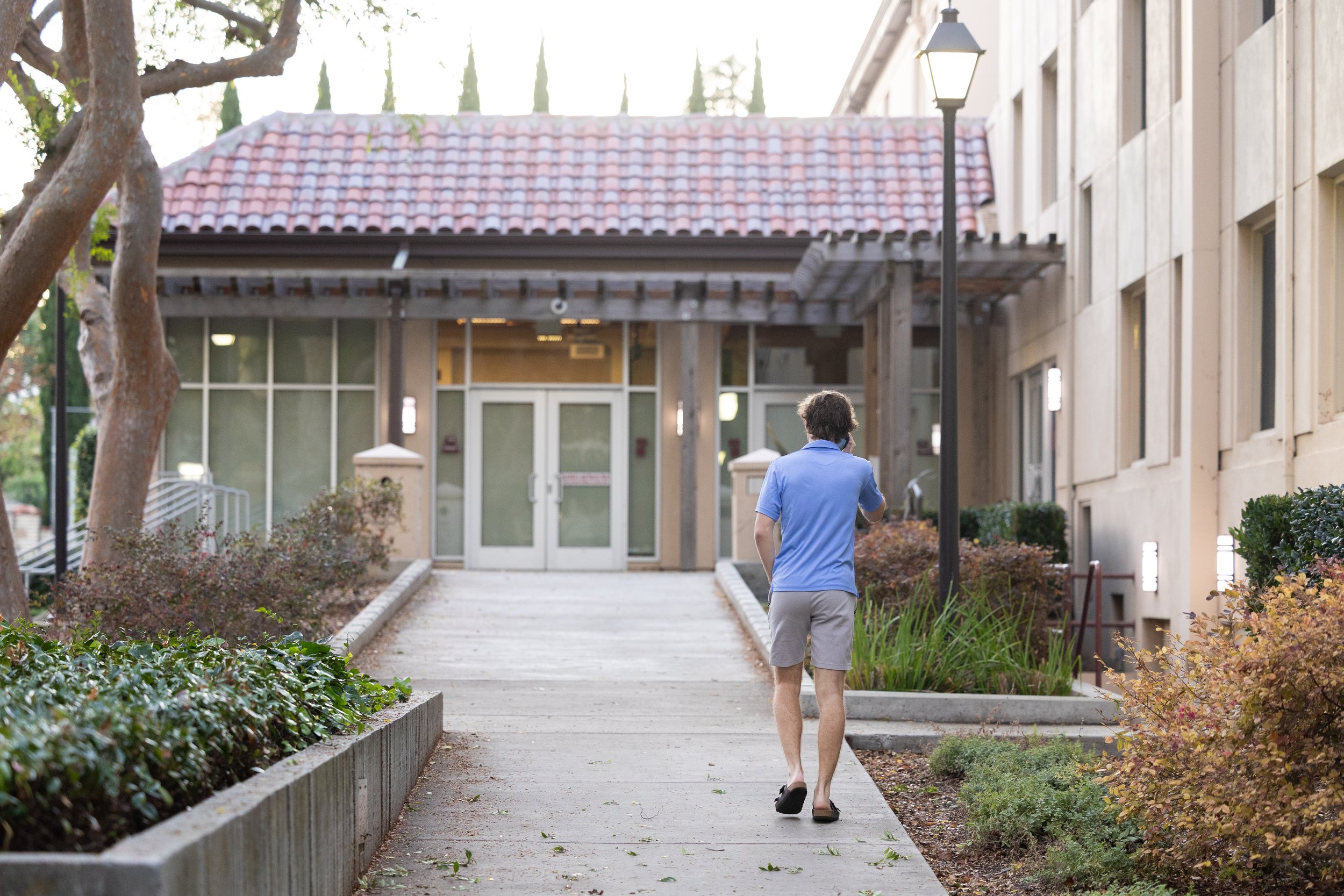
A student walks towards McLaughlin-Walsh on Tuesday, Nov. 18, 2025. (Nina Glick/The Santa Clara)
For the first time in its history, Santa Clara University has opened gender-inclusive housing on campus, marking the end of a decade-long push from students, staff and faculty to create living spaces that reflect the needs of LGBTQ+ students.
A change announced this past year and in the works for upwards of 10 years is now finally up and running smoothly this quarter, according to Director of Residence Life Lafayette Baker.
“It’s very welcoming, I feel very comfortable there,” Izzy Hanselman ’29 said, a current student living in the Gender Inclusive Housing Community.
The University currently offers two gender-inclusive housing areas on campus: one in Nobili Residence Hall and the other in McLaughlin-Walsh Residence Hall. These spaces serve as the University’s first dedicated communities for students’ gender-inclusive living options.
Hanselman lives in the McLaughlin-Walsh Residence Hall Gender Inclusive Housing Community and chose Santa Clara University partly because of this initiative. “It was actually one of the big draws to the school for me is that they started doing the gender inclusive housing,” Hanselaman said.
The idea for gender-inclusive housing isn’t new on campus. The discussions have been ongoing for years, but the initiative gained some real momentum just a few years before the implementation.
“Over the past two or three years, it seemed to gain some traction and actually seemed to have some more support from the institution and from key stakeholders,” said Chris Harris, the director of the Office for Multicultural Learning.
A leading group for the initiative was the LGBTQ+ Equity, Justice and Belonging working group, which Harris is a part of alongside other faculty, students and staff. They pursue and advance initiatives, bring awareness, and advocate for the LGBTQ+ community.
Since gender-inclusive housing is new, staff and faculty are still focused on observing and learning how to improve the space.
“We’re just in a learning phase, and then once we gather more information, and then we could then utilize that information to make changes if needed,” Baker said.
To support the learning quarter-by-quarter approach, a steering committee has been created, made up of staff and faculty who Baker described as having “expertise” or “passion” for LGBTQ+ issues, specifically gender-inclusive housing, to discuss ways to continue developing gender-inclusive housing.
In collaboration with the steering committee, residence life will collect feedback from students and the residence director of the Gender nclusive Housing Community to learn and make any necessary changes to focus on “building a community, creating a safe environment for the residents who live there,” Baker said.
According to Harris, because the community is still new, they are still shaping its culture and figuring out its norms. Still, “this space seems to be lively,” he said.
This initiative reflects the Jesuit values that the University emphasizes, particularly the commitment to the care for the mind, body and soul of the whole person. Having a community committed to gender inclusivity captures that mission by giving students a space where they can “think about how their mind and soul works in community,” Baker said. Staff make many resources available through flyers and bulletin boards in order to provide the students with as many resources as possible around campus.
“We want our students to be able to have different communities on campus that support them, that care for them, that provide programming that can sort of understand the different needs that our students have,” Baker said.
The GIHC offers students more than a place to live; it also provides a space to explore how they function within a larger community.
“Creating a gender-inclusive housing community, allows them to sort of think about how their mind works, their soul works in community, how their body works in community,” Baker said.