To the Future of Associated Student Government
Correction 3:17 p.m. June 5, 2026: The original version of this article incorrectly listed Tiago Moreno ’28 as one of the Associated Student Government members working on changing the Resident Learning Community side door policy. The ASG members currently working on the side door policy are senators Ethan Pessoa Jinian ’29 and Emerson Strub ’29. The article has been updated to better reflect Moreno’s involvements in ASG. If you believe there is an error in an article published by The Santa Clara, please email the editor-in-chief at editor@thesantaclara.org.
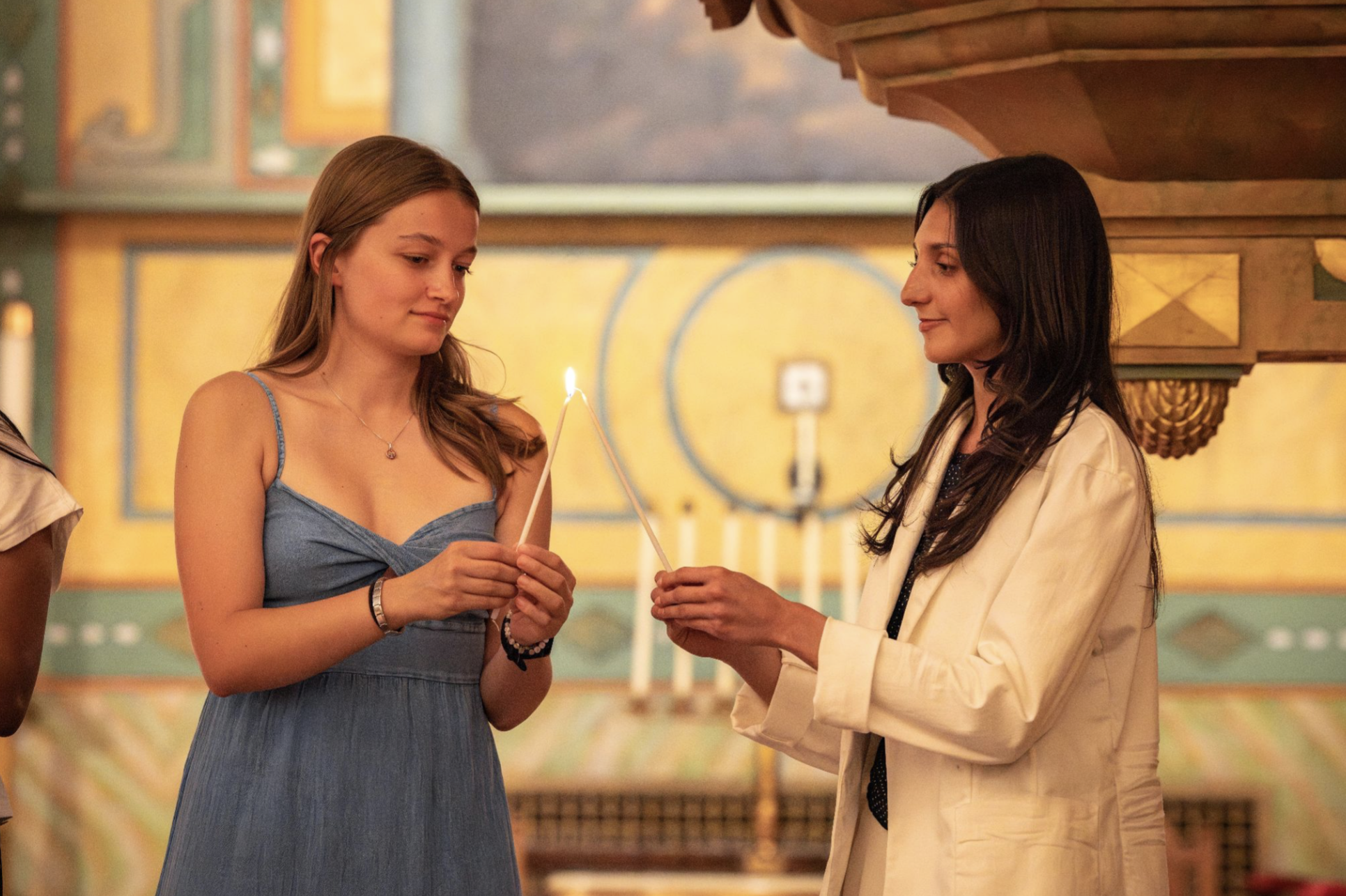
Outgoing ASG President Claire Krebs ’26 lights the candle for incoming President Laura DaCosta Locatelli ’27 during ASG executive board transition ceremony at the Mission Church, May 19. (Elaine Zhang/The Santa Clara)
Week five of spring quarter marked the beginning of a new era as the Associated Student Government elections took place. Congratulations are in order for Laura DaCosta Locatelli ’27 and Bella Rene ’27, who will serve as the 2026-2027 student body president and vice president.
Winning, however, was the easy part; now comes time to actually implement their campaign’s promises.
DaCosta Locatelli and Rene’s campaign was centered on three main pillars: outreach, equity and collaboration. With their perspectives as members from underrepresented communities—as Da Costa Locatelli is a first generation college student—their aim is to bring a better understanding and a voice to those who are often overlooked.
“Student Government is a really great place for all of these concerns to be expressed,” said Tiago Moreno ’28, sophomore senator and chair of the housing task force. Moreno has been a member of the Associated Student Government for two academic years and has worked on a handful of past pieces of legislation.
In recent years, however, it has become apparent that there is a lack of connection between the student body and members of ASG.
The disconnect can likely be attributed to the COVID-19 pandemic. For many students—especially those in California—virtual learning was the norm for over a year.
Spanning from March 2020 to April 2021, students could log on from the comfort of their bedroom—or in some cases, their bed. The return to in-person learning was a shock to the system, to say the least, and revealed a huge gap between many students’ academic and social lives. While there has been significant progress at moving past this, residual effects continue to linger on.
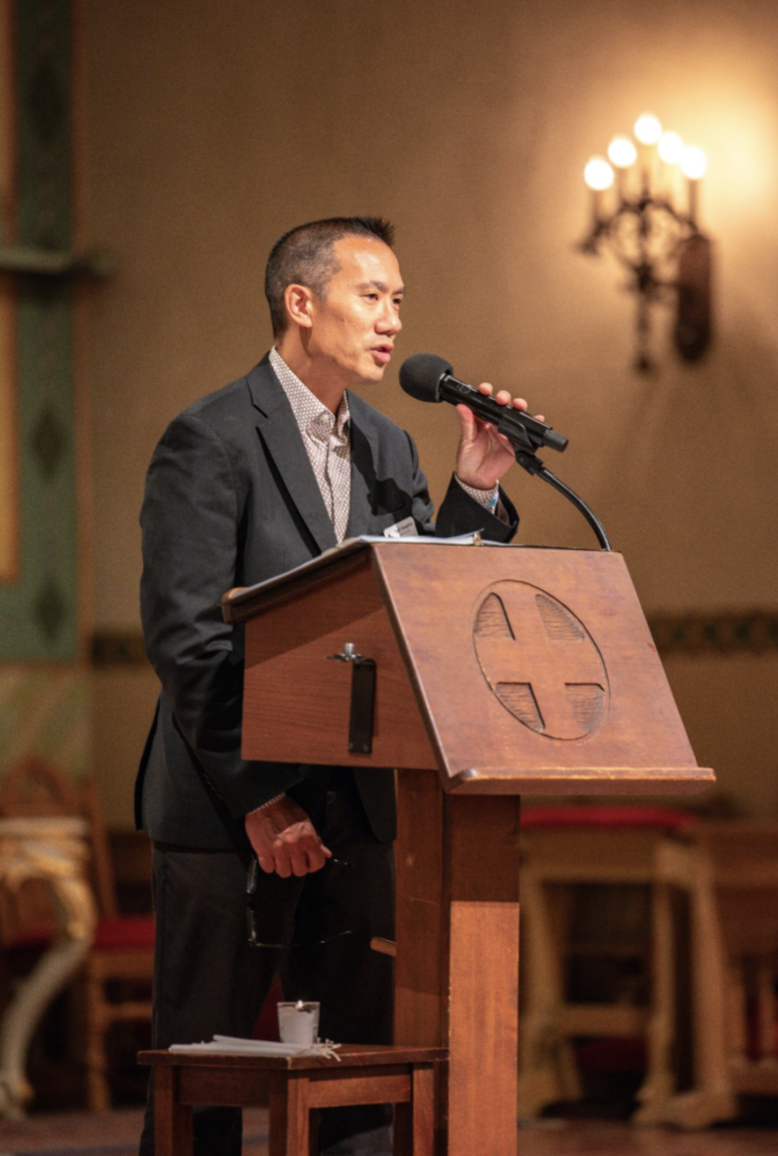
Tedd Vanadilok introduced student speakers at the ASG transition ceremony. (Elaine Zhang / The Santa Clara)
Tedd Vanadilok, current the director of the Center for Student Involvement, has worked at the University for 16 years. I asked him about the effects the pandemic had on students, particularly upon their return to in-person learning. “A student organization could say, ‘hey we have a meeting this Friday at five o’clock in Lucas Hall,’ and a student would see it but they wouldn’t know how to act on that,” Vanadilok said, addressing the gap he saw in adjusting back to life post-pandemic.
The student government has seen similar effects from this social withdrawal. Directly after the start of the pandemic, candidate participation saw a decline: in spring 2020 and 2021, president and vice president candidates ran unopposed. It was not until spring 2022 that candidates had competition again. The last election cycle which saw candidates running unopposed was in 2024.
Vanadilok was able to tally 744 students voting in this most recent election, however when he went to tally the votes from 2019, the system which is used to collect the data had purged all information up until 2025, making it impossible to know if student participation in campus elections took that same hit. The 2025 election had 904 students voting.
The change of campus life and participation starts within its own student government. If it is true that the student government is to act as a funnel from the student body to administrators, then their accessibility and publicity needs more attention.
For those unfamiliar with the runnings of student government, election week takes place over the course of six days, two of those days being on the weekend. For this year’s presidential election, candidates for the president and VP were announced on Friday, April 24.
The “Meet the Candidates” event took place the following Monday in Charney Hall. Tuesday’s debate also took place in Charney. Finally, students could cast their vote via their Workday account on Wednesday.
The six day campaign period is a problem in and of itself. It’s like getting married to your significant other a week after meeting them. The two of you certainly don’t know everything about each other, and talk about a poor time to realize that you are nowhere near as compatible as you thought.
The question must also be asked, why are the elections taking place in the law building? If this is the election for the undergraduate student body, it should be taking place somewhere—among the many spaces—in the undergraduate campus.
Election “week” is not the only deficiency, as the aforementioned connection with the student body has lessened significantly. A fundamental aspect to a governing body is a need to connect with the people they are leading. Increased tabling outside of Benson Memorial Center, while a good start, needs to be just a part of the steps towards building that connection.
For DaCosta Locatelli and Rene, the win is an incredible accomplishment. As rising seniors, it marks the beginning of—what I imagine will be—a bittersweet culmination of their time spent as members of ASG and Santa Clara University. I have the utmost respect for the two women, however it is my hope that they can fulfill their campaign promises and not be limited by the bureaucracy within the University.
The 2026-2027 school year is just around the corner, while there are many tasks that are out of their control, they still have a promise to uphold. My intention with this article is to alert our newly appointed student representatives of the state of our student body.
If their promises are to uplift the marginalized voices on this campus, it starts with changing the inner workings of their own student government and seeking to involve the student body in a deeper way.