A Walk Through History
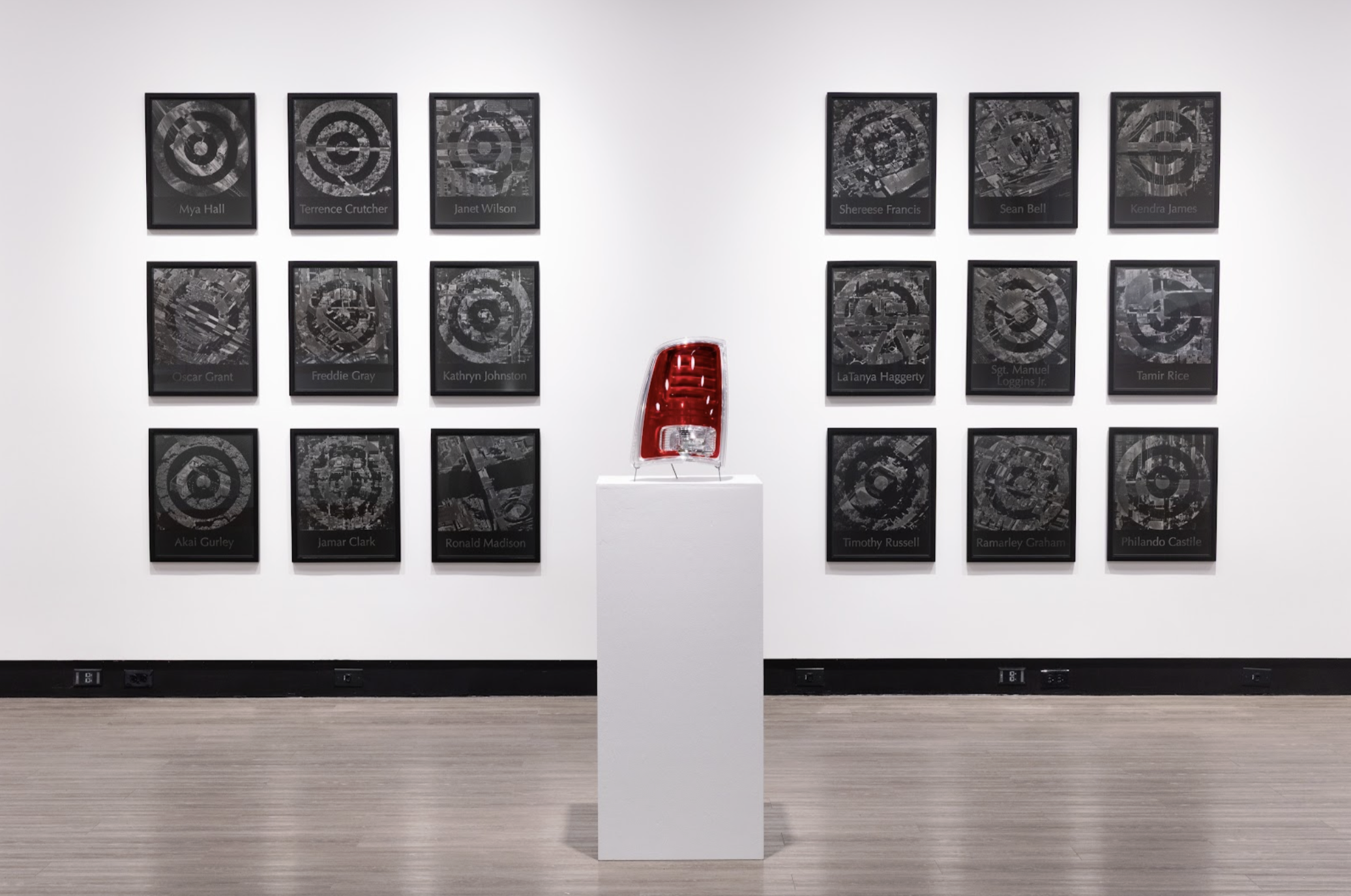
A broken car headlight sits on a pedestal in front of images from artist Jonathan Calm’s series Travel is Fatal to Prejudice, on display as a part of Calm’s exhibition To Wherever, Forever: Archives of Absence & Sites of Passage. (Nina Glick/The Santa Clara; Artwork courtesy of the Artist and Rena Bransten Gallery)
Santa Clara University is hosting artist and Stanford University professor Jonathan Calm’s journey into the past and present, on display for community members to view and walk through.
The Art and Art History Gallery Exhibition can be seen in the Edward M. Dowd Art and Art History Building from Jan. 5 through Feb. 20, while the de Saisset Museum Exhibition will run from Feb. 5 to Jun. 13.
The assistant professor of photography hosted a meet-and-greet on Jan. 7, where faculty and students had the opportunity to speak with Jonathan Calm and Santa Clara University professors about the exhibition's impact.
The Purpose
Calm’s photographs explore the sites where historically Black Americans were forcibly excluded. He showcases his travels using the Green Book, where he reveals patterns of erased stories, history and truths.
“The Green Book allowed folks to travel the highways, to go from town to city, to know where it was safe to get food, gas and lodging as a Black person,” said Calm. “The photographs in the exhibition are me traveling those same paths, going to those same locations, and documenting what exists at those places now.”
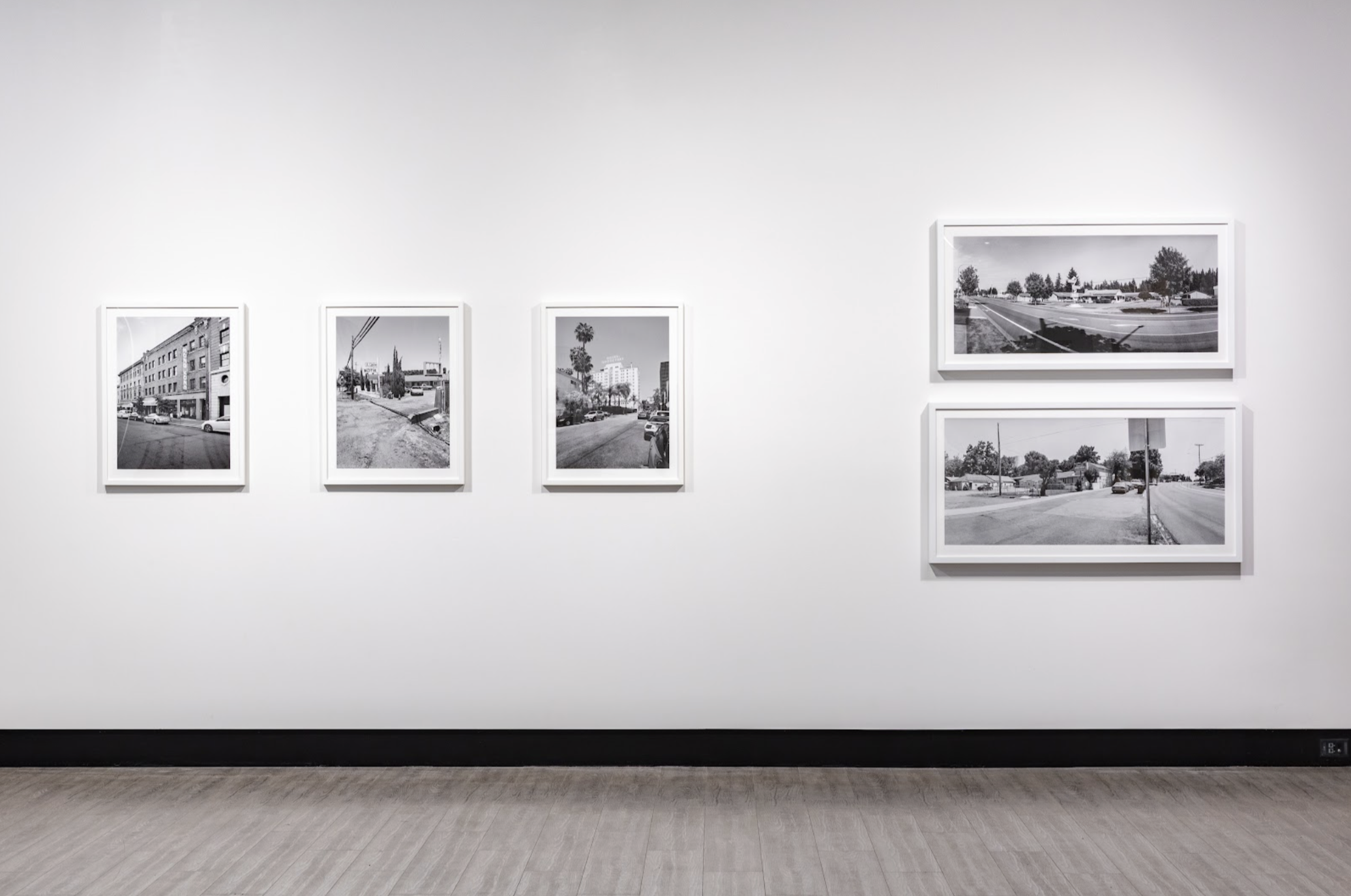
Images from artist Jonathan Calm’s Green Book series are on display in the Department of Art and Art History's Gallery, which is located in the Edward M. Dowd Art and Art History Building. (Nina Glick/The Santa Clara; Artwork courtesy of the Artist and Rena Bransten Gallery)
Not only is Calm here to showcase his exhibition to the community, but he’s also here to work directly with students taking photography at Santa Clara University.
“He’s one of our fellows,” said Kelly Sicat, director of the Lucas Artist Program at Montalvo Arts Center. “He’s a selected pillar at Santa Clara partially through a partnership with Montalvo Arts Center.”
Dr. Ciara Ennis, director and chief curator at the de Saisset Museum, added that Calm would be “working specifically with Professor Takeshi Moro’s class.”
Journey Through Pain
Calm began his work on this exhibition in 2016, encountering what he described as “painful history” in the towns he photographed. He noted that despite all the changes, there are still gaps yet to be filled.
Calm stated that, while traveling, he encountered contemporary historical events.
“The Target series, for example, is when men and women were pulled over by police and brutalized,” he said, “Some people have told me that they still feel there could be a Green Book for today’s times. Based on what is happening in the country now in terms of immigration, it’s all interconnected.”
“What happened 60 years ago is still happening today. What happened 100 years ago is still happening today. Looks a little different, but the foundation is the same,” said Calm.
Where There is Art, There is Inspiration
Jonathan Calm’s photography not only allows viewers to see history. According to viewers, it also inspires.
“I’m really interested in the way, as a photographer, he can capture undiscovered, undiscussed histories and pull those forth with documentation. I think that’s going to be a really interesting exercise for the students in Takeshi’s class,” said Sicat.
“Jonathan Calm wants us to think about places, history, and look at cityspace landscapes thoroughly, thoughtfully. And in my class of course, I like my students to see that submission,” said Professor Takeshi Moro. “I think he has encouraged us and impacted us to think about, again, this history, place, and our individual connections to it.”
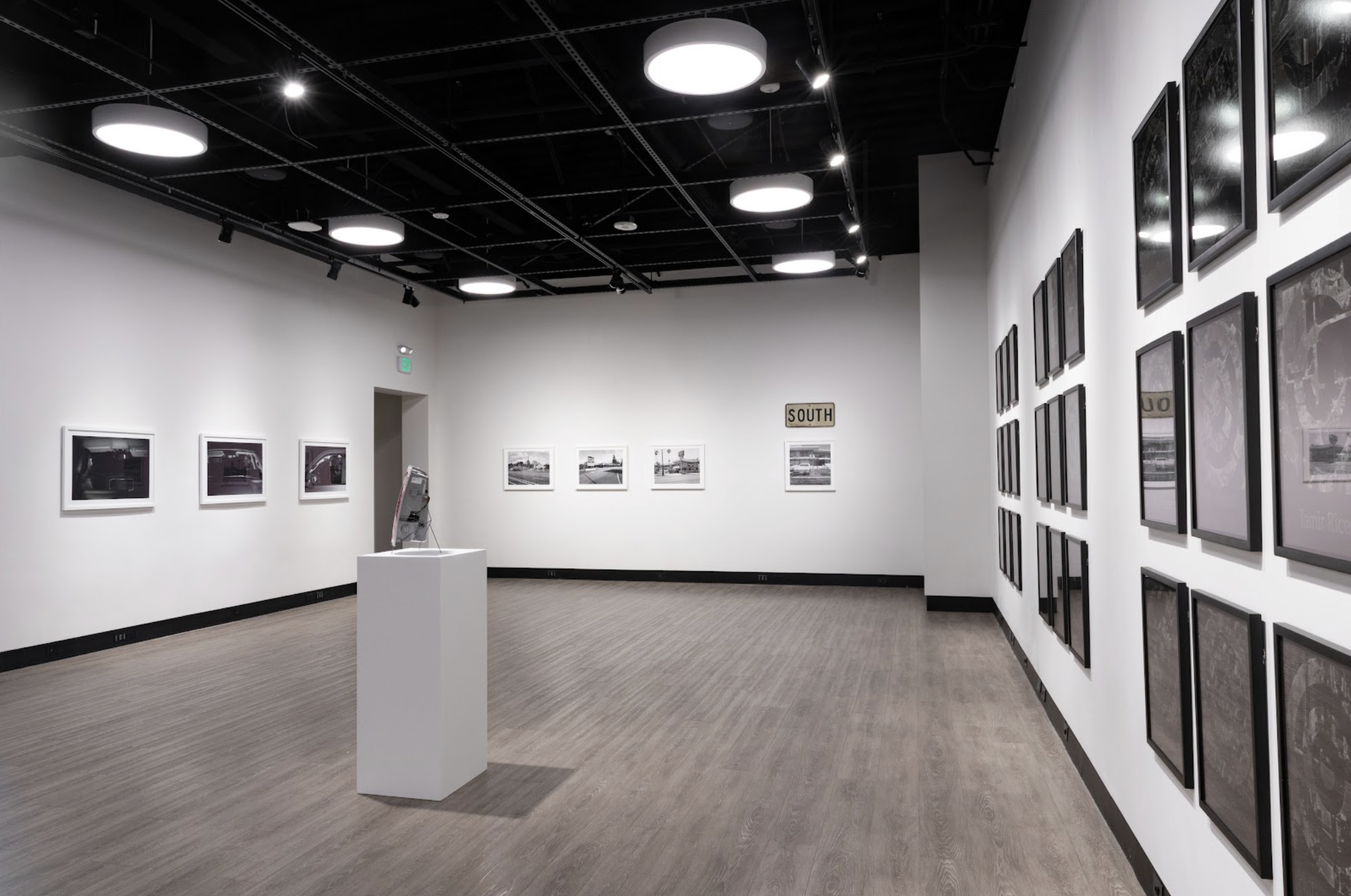
A view of the left side of the gallery. (Nina Glick/The Santa Clara; Artwork courtesy of the Artist and Rena Bransten Gallery)
To the audience: these photographs document aspects of history, race and mobility. They show how race and mobility have shaped—and continue to shape—who is seen and remembered. They also illustrate patterns of who has been able to move freely in America, both historically and in contemporary society.
“The works are so aesthetically seductive, they really link to specific traditions,” stated Ennis. “Jonathan’s work has the ability to engage first and foremost with the image itself, then delve deeper into history.”
Calm offered a parting message to visitors, stating, “I hope it will help you look inward at where you are positioned within the works that you’re looking at, in the topics that are being visually created in that space, and that maybe you think about place and politics and personal safety—and what small act you can do to make this overall place better for everyone.”