The Corset-ification of Halloween
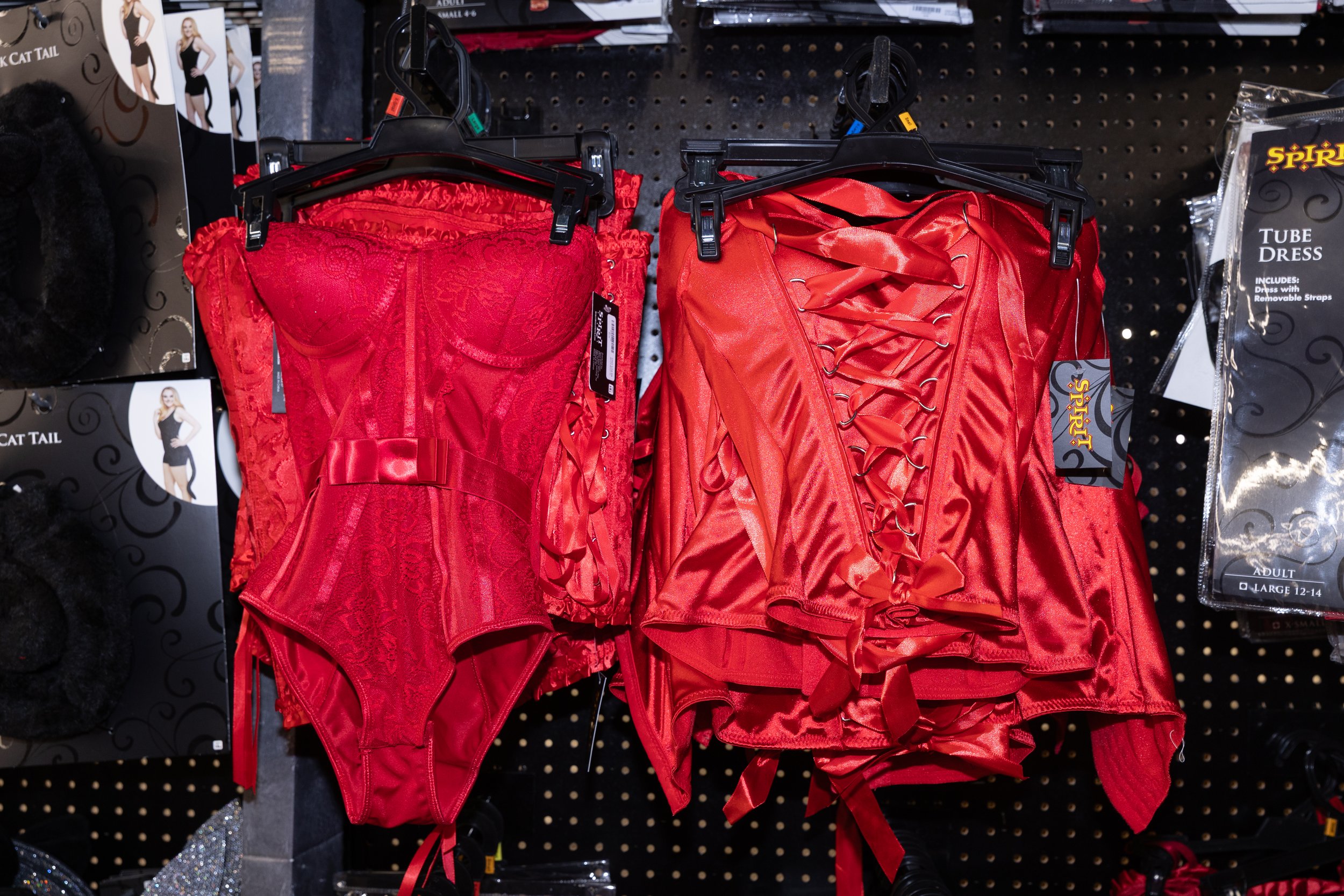
Costumes hang on a wall at Spirit Halloween in Campbell, California on Oct. 24, 2025. (Nina Glick/The Santa Clara)
Halloween has finally arrived—but fake blood and creepy masks are no longer the face of everyone’s favorite “spooky season.” Now, it’s all about cinched waists and recorded fit checks. The corset-ification of Halloween is afoot, and people have a lot to say about it.
Gen-Z students all over the world have been following the trend of dressing in corsets instead of traditional, fully-formed Halloween costumes.
Over the past few years, social media—TikTok, in particular—redefined what it means to dress up for Halloween.
“Going on TikTok makes it so much more accessible to find ideas for costumes, especially last minute,” says Alise Dixon ’27, a Communications student with an interest in social media marketing. “In the last couple of years, I have found all my Halloween costume ideas by scrolling on social media for inspiration and trends that were being worn each year.”
The vibe of Halloween has changed, but why?
While several trends have gone viral over the past few years, corsets have become the centerpiece of the modern costume. From pirates to vampires, the structured bodice has become a shortcut to looking cute for Halloween. For some, it’s the simplest and most cost-efficient way to dress cute for a night out. Others think that it is basic and oversexualized, thus, not the vibe for Halloween.
There’s a lot of speculation about why corsets have become so popular—fueled by social media hype, the aesthetic and purchasing convenience.
“Many young adult women feel pressured to dress in sexually provocative Halloween costumes,” said Dr. Laura Ellingson, a professor of Communication at Santa Clara University who has done research on gender dynamics. “Some feel empowered by this style of costume as a sign of their sexual agency, others experience feminized and hyper-sexualized costumes as reinforcing sexist stereotypes or even as degrading.”
The discussion highlights a broader change in how people view Halloween today: the belief that Halloween has evolved from a night of horror and transformation into one focused on presentation and social media presence—especially for women.
“Research shows that there are marked gender differences in Halloween costumes,” said Ellingson. “The majority of women in traditionally feminized, sexualized costumes while men dress in super hero or funny costumes.”
On the other hand, many use corsets in creative ways to channel famous figures, embracing the playful aspect of costume culture. Pop culture continues to have a huge influence on Halloween, with fans dressing as characters from trending TV shows, viral memes or their favorite musicians.
“I love Halloween.” says Natalie Hanna ’26. “I plan my costumes months in advance and usually do about three or four a year. My favorite part is posting my costumes on Instagram, but I usually make parts of my costume, and try to be as creative as I can.”
Last year, Hanna dressed as Sabrina Carpenter in her signature pink look from her concerts.
Despite the bulk purchase of corsets and skirts for costumes this year, popular stores like Spirit Halloween are still catering to the classic Halloween aesthetic.
“Cop costumes have been really popular lately,” said Rashell Ormeno, a Spirit Halloween employee. “The angel and devil costumes are selling out quickly as well.”
Notably, the accessory wall features multiple corsets in white, red, and black, often paired with matching wings or headpieces for these costumes.
Even so, many shoppers turn to the internet for faster and simpler options.
Online retailers like Amazon, with their overnight delivery options, have made last-minute costume shopping even easier. The rise of fast fashion, combined with the ability to mix and match clothing items from these websites, has helped many people quickly put together the perfect outfit for a Halloween party.
“I buy my Halloween costumes from Amazon not only for convenience and quality, but also for the quick overnight shipping that I can get,” said Caitlin Smith ’28, who expressed excitement for her first “Halloweekend” at the University.
Shopping habits may be evolving, but the joy of transformation that defines Halloween remains the same. Whether achieved through special effects makeup or a colorful corset, the holiday continues to celebrate creativity, self-expression and the simple fun of becoming someone—or something—else for a night.