The People Who Feed You
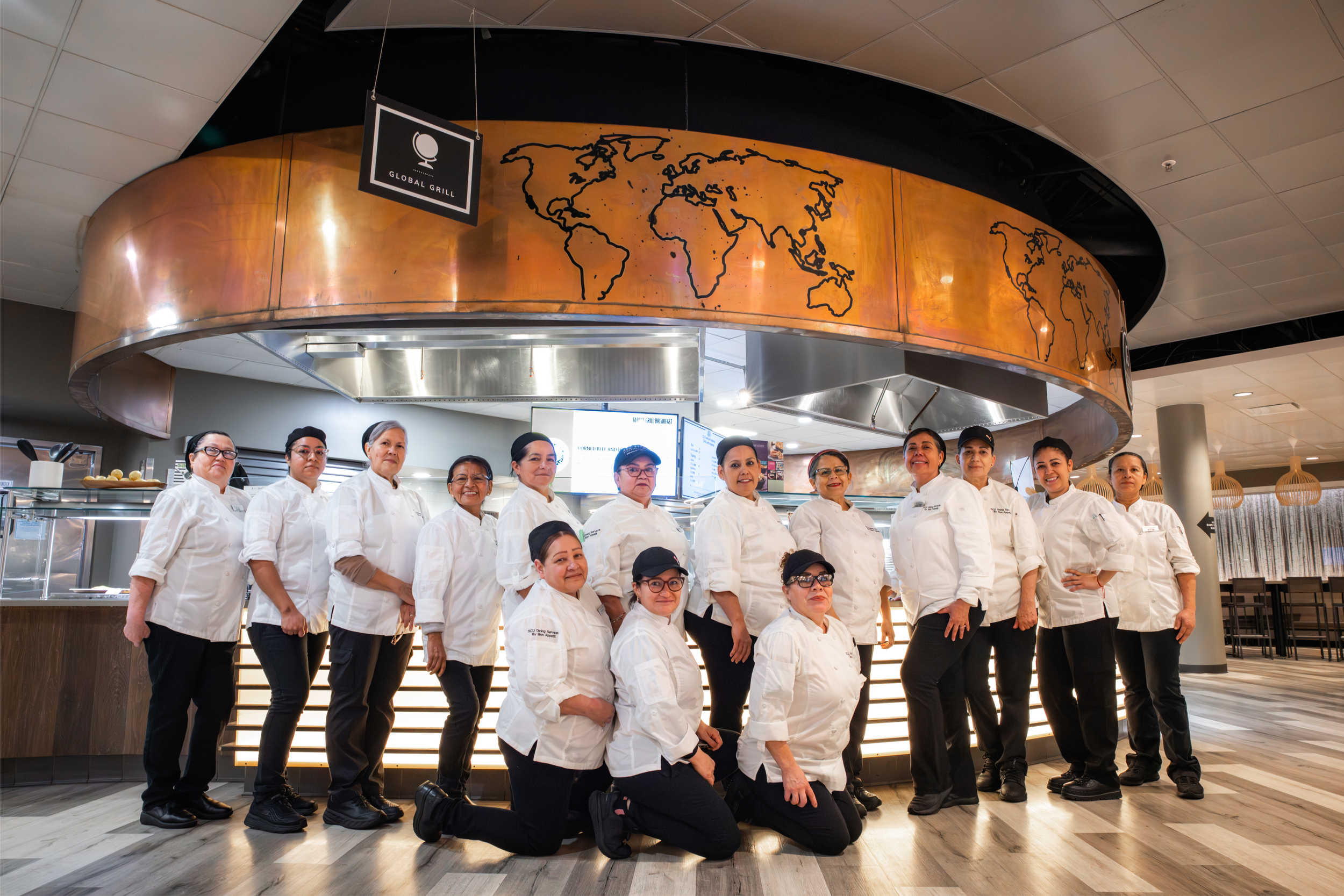
The women workers of Benson make up 2/3 of the entire production staff. (Elaine Zhang/The Santa Clara)
Seven days a week, before most of Santa Clara University’s students have opened their eyes, a delivery truck pulls up to Benson Memorial Center and begins unloading. Meat. Fish. Bread. Produce.
Inside, a kitchen crew is already at work—chopping, seasoning, checking the rice—so that by the time the dining room opens, everything is ready.
The person who knows this rhythm better than almost anyone is cook Maria Guadalupe Cardenas, who goes by Lupita. She has worked in Benson for 16 years and does not wait for the doors to open. She is already inside, already moving, already thinking about what the students will want that day. “It’s fun making every day something different,” she said.
But more than anything, she appreciates the people: “I love the kids.” She means the students; to her, they’re her kids.
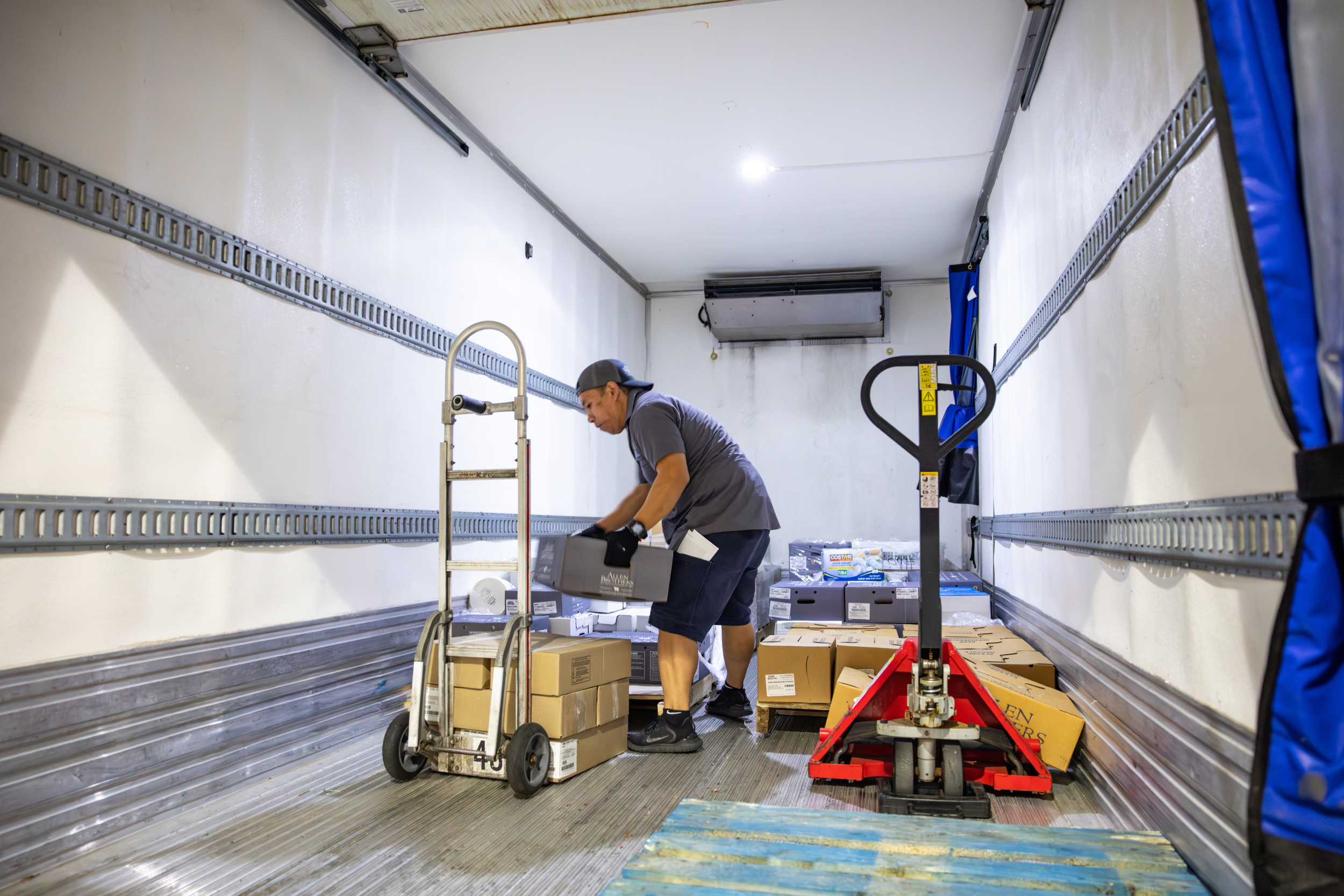
A worker from Allen Brothers unpacks the morning delivery of meat. (Elaine Zhang/The Santa Clara)
The logistics of feeding a university campus every day are more elaborate than most people realize. Eugene Zelditch, the executive chef, can recite the delivery schedule the way someone might recite their own phone number. Produce comes before six, so early that by the time the kitchen crew arrives, it is already waiting for them. Meat, fish and bread follow daily.
Sysco, the national foodservice distributor, sends what Zelditch calls “a big truck—a long truck, like an 18-wheeler, you know, blown up on the back” three times a week, hauling dry goods, frozen items and proteins. John, a driver for Allen Brothers who has been delivering specialty meats to Benson for nearly two years, arrives between six and eight every morning. “They’re big customers,” he said, “and I’m happy to serve them.”
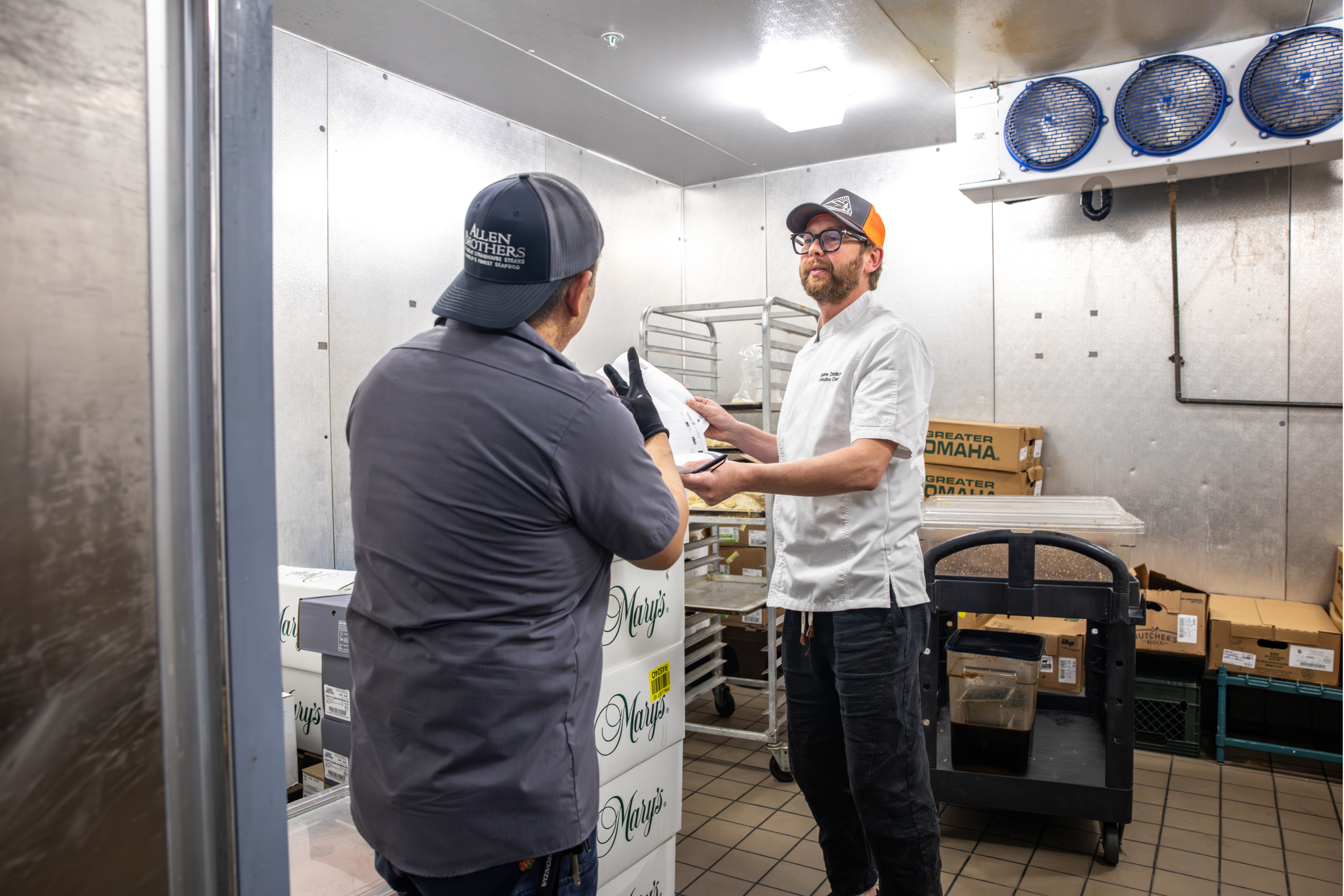
A worker from Allen Brothers reviews the meat manifest with Executive Chef Eugene Zelditch. (Elaine Zhang/The Santa Clara)
By the time the dining room opens, the supply chain has already done its job. What happens next is up to the kitchen.
Heriberto Zamora, a chef three months into working at Benson, came to the job with experience in Asian, Indian, Latin and American cooking. He has found that all of it comes in handy. Benson runs multiple stations—Global Grill, Simply Oasis, Spice and others—each rotating its menu weekly, which means the kitchen is rarely making exactly the same thing twice in a row.
That variety, he said, is the best part. “We’re able to be very creative. We can shape the meals, make our own menus.” The challenge is keeping up. “Every day is a different challenge—getting familiar with new cuisine, you know. But I look at it more as a challenge than a hardship. I don’t look at it too much as a job, because I really like it.”
Zelditch sees the kitchen’s makeup as something worth recognizing. Women make up roughly two-thirds of the production staff, he said—a fact he wanted to highlight, particularly during Women’s History Month. He described them as “the force behind production.”
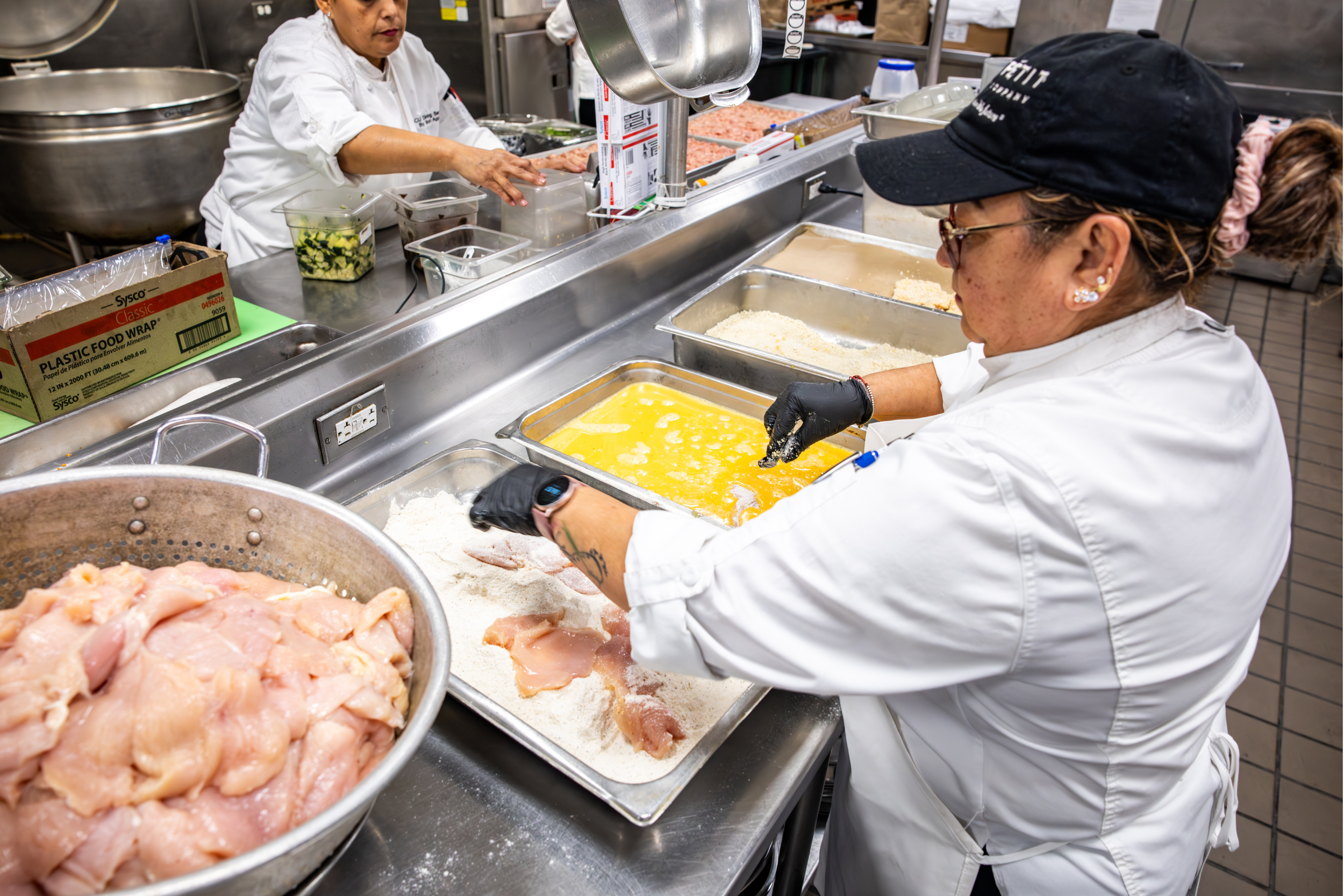
Benson Memorial Center cook Lupita breads chicken to prepare for the lunch rush. (Elaine Zhang/The Santa Clara)
Lupita, for her part, does not seem to need the recognition. She has her own way of measuring a good day. Her favorite things to make are the things students love most—Philly cheese steak and tacos, especially fish tacos with freshly made salsa. “There’s too many things,” she said, laughing, when asked to pick just one. “The kids love tacos.”
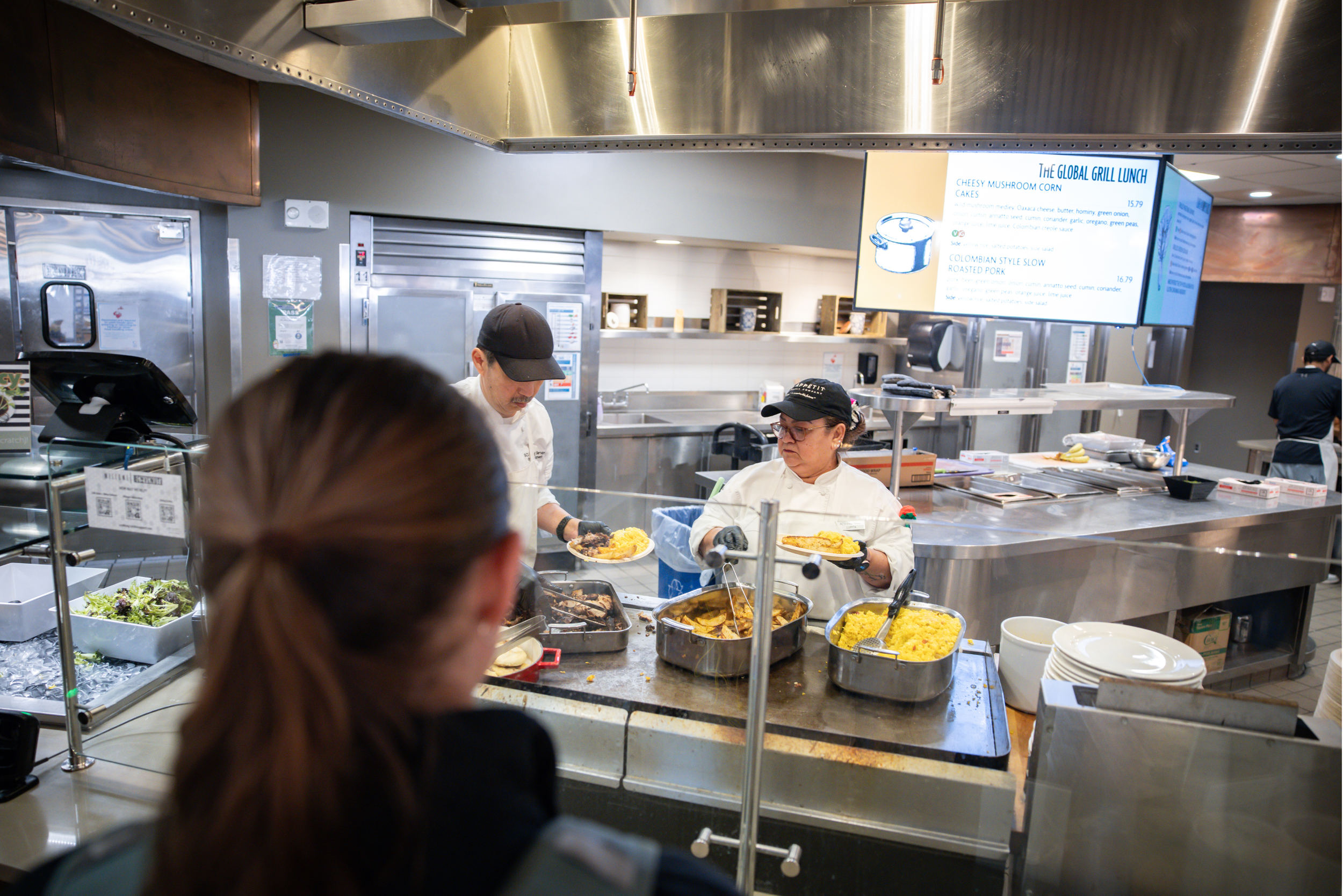
Lupita plates food for a waiting student at the Global Grill station in the Benson Memorial Center. (Elaine Zhang/The Santa Clara)
At the end of each service, the question of what to do with leftover food falls to Zamora. He opens an app called Copia on his phone, logs whatever the kitchen cannot use—a tray of breakfast sandwiches, some rice, a bean stew that didn’t make the menu—and schedules a pickup. Drivers from local organizations arrive in the early hours to collect it. On heavier days, multiple drivers come.
Chef Jaime Dominguez, who oversees the early-morning handoffs, described how the donations are routed carefully depending on who is receiving them. “We’re sending chicken this time, for the Muslims,” he explained one morning, “because we cannot serve pork. So we just try to pretty much help everybody.”
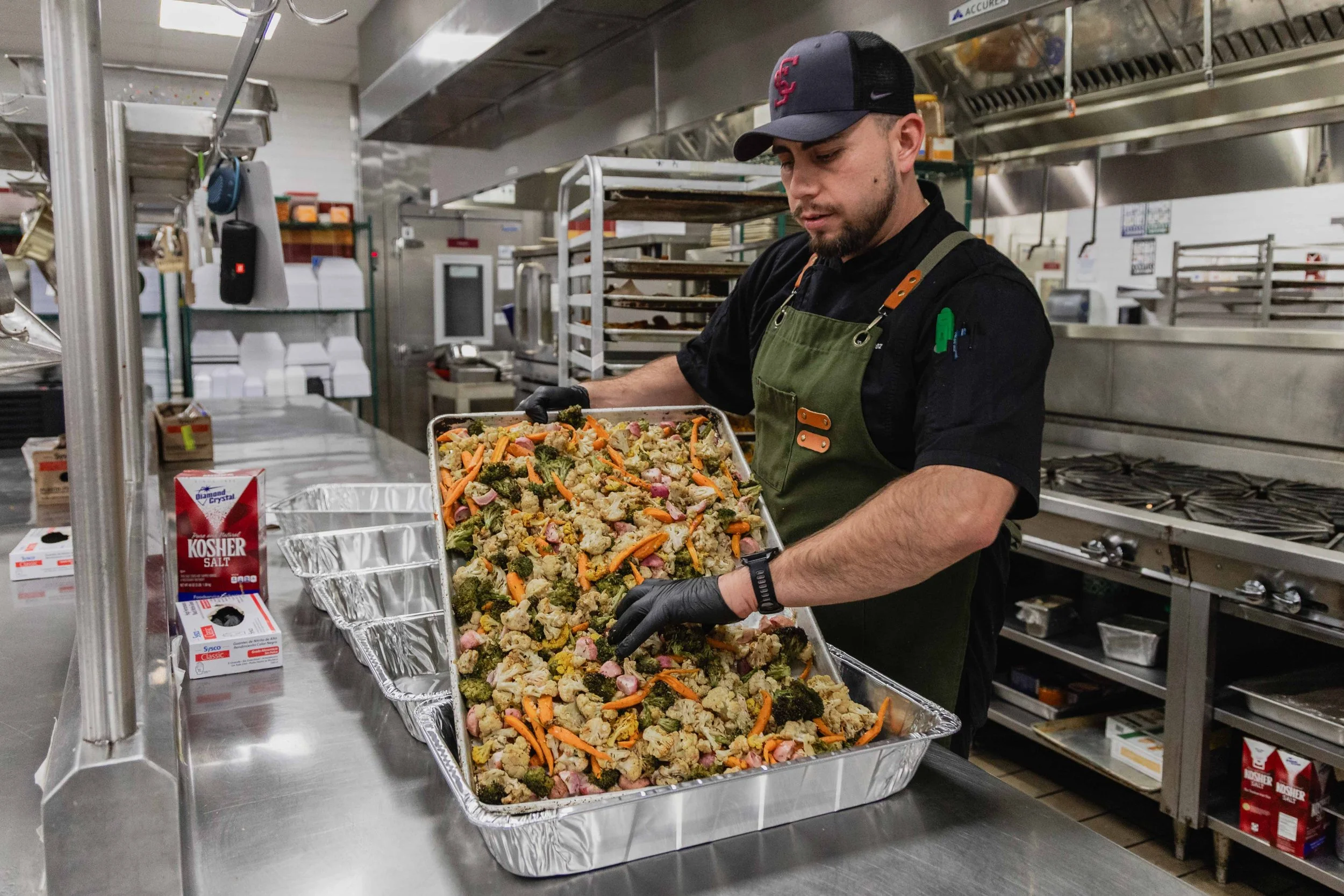
Lupita plates food for a waiting student at the Global Grill station in the Benson Memorial Center. (Elaine Zhang/The Santa Clara)
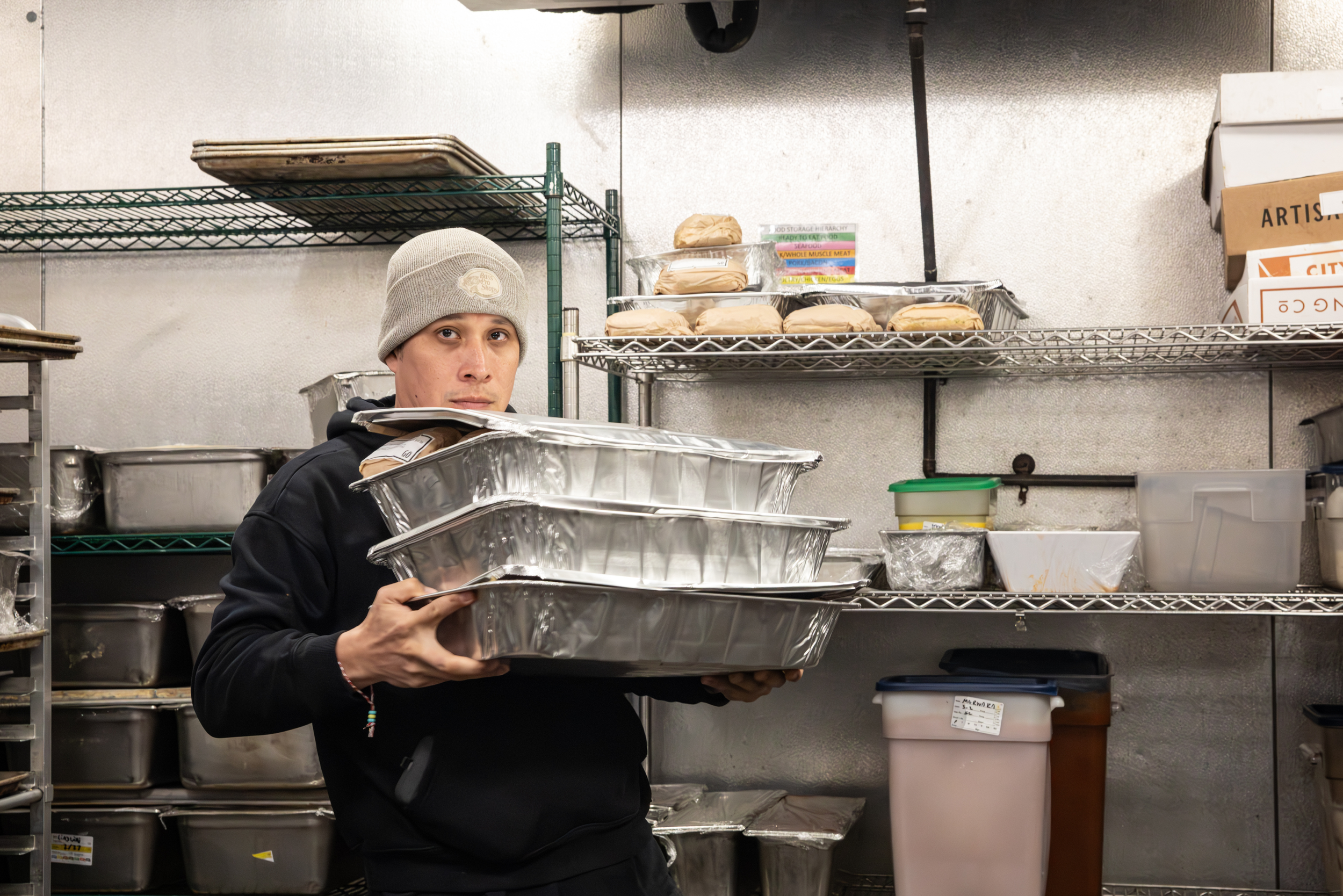
A Copia driver picks up packaged donations at 6:28 a.m. (Elaine Zhang/The Santa Clara)
What students tend to notice is something harder to quantify. Dulce Capetillo ’29 eats at Benson most days and has started looking forward to talking with the staff in Spanish, which many of them speak. “It makes me kind of feel like I’m at home, like back with my family,” she said. “I think they’re super duper nice. I haven’t had a bad encounter yet.”
Not everyone has exclusively positive experiences. Aarush Zarabi ’29, a vegetarian, appreciates what Benson tries to do but tempers his enthusiasm. “Some days the vegetarian options can be nice,” Zarabi said. “I like eggplant Parmesan. I was really excited when I saw that.”
“Other days it’s not nearly as appetizing. It’s a mixed bag,” he said. “But that’s just what every college dining hall would really be like.”
Zamora, who is still relatively new, already thinks about the students the same way Lupita does. “We also want you guys to enjoy it,” he said. “We know there’s so many restaurants out here you can choose from. But if we’re able to keep you here on campus—that’s what matters.”
Lupita has been keeping students on campus, happily, for 16 years. She knows most of them will never learn her name, or know that she arrived before dawn, or understand quite what it takes to have their food ready when they show up hungry. That is fine with her.
“I try the best I can,” she said. “I try to make the students happy.”