The Post-Grad Reality
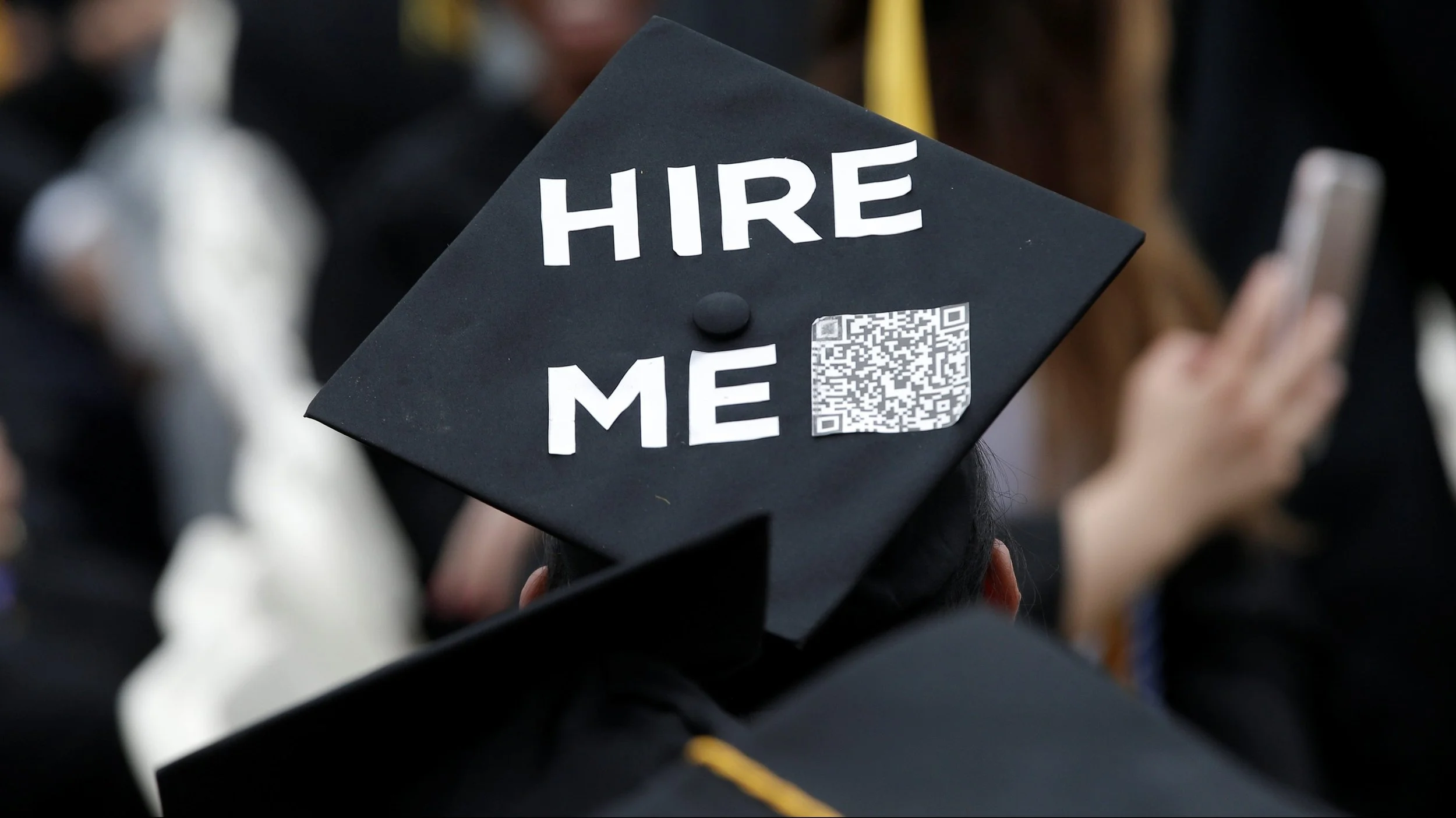
Many new young graduates described a job market shaped by tightening opportunities, the rise of AI and shifting employer expectations. (Spencer Platt/Getty Images)
Study hard, get a degree and doors will open up to you is the familiar narrative that has produced over 2 million caps and gowns in the United States this graduation season. Many young Americans will walk across the stage with their long-anticipated degree this summer, but for some, it seems these opportunities are out of reach.
Increasingly, graduating students report difficulty finding suitable employment, if there is employment at all. The Bureau of Labor Statistics reports an unemployment rate of 5.3% among new graduates; however, when accounting for underemployment, this number jumps to 41.5% . That accounts for those seeking full-employment but only working part-time. So, while most University graduates will be leaving college with a degree and a job, only half will be leaving with a career.
To evade this career lag, many students are seeking refuge back on campus. Some students at Santa Clara University report enrolling in masters programs as an alternative. This decision, although a milestone in their career trajectories, appears as students see further education as a shield from the current labor market.
“I’m actually doing the 4+1 program, partly because finding a full-time role right now is so brutal,” said Joshua Colleran ‘26, a computer science and engineering major. “It buys me time and a stronger position rather than fighting into this market with nothing lined up.”
Joshua boasts multiple hackathon wins, first prize in his senior design division and has co-founded two startups. Despite his experiences, Colleran noted that his job search has been “exhausting and kind of demoralizing” with a market that “feels broken, or at least structurally stacked against applicants.”
Colleran’s sentiments seem to echo the experience of many graduating engineers, many of whom report difficulty in landing full-time positions.
Even graduates like Maria Reiblein ‘26, who has managed to secure full-time employment, it seems difficult.
“Keeping an open mind during my job search was crucial,” said Reiblein.
Reiblen noted that she was forced to check multiple job platforms each day for new openings.
“It’s important to be persistent in looking,” Reiblein said. “My best advice is to keep an open mind, to not sell yourself short, and apply to a variety of roles to keep your options open.”
Some say it wasn’t always so competitive but in the wake of new AI technology, the Iran-conflict, tariffs and other geopolitical trends, graduates are seemingly swimming upstream.
“The overall unemployment rate has crept up over the last three years, the hiring rate has fallen, and job growth has slowed,” said professor William Sundstrom when asked about unemployment trends. “The job growth numbers are affected both by macro conditions and immigration policies that have slowed the growth of the labor supply.”
Sundstrom noted, though, that the number is comparatively low to the past.
“Even with the current unemployment rate up a little—at 4.3%—tt is still very low by historical standards,” said Sundstrom. “It has rarely been this low over the past half century.”
Sundstrom also soothed concerns about AI.
“It remains to be seen whether AI is a substitute for skilled workers or a complement,” said Sundstrom. “Given other major technological shifts historically, it may also open up new opportunities for humans. Also, we may also be seeing employers delaying some hiring decisions until they see how the technology plays out.”
For seniors trying to map out their next moves in a shaky environment, Sundstrom leaves graduates with some wisdom
“What I have to offer here is probably common sense,” said Sundstrom. “Flexibility and open-mindedness are important. If AI is indeed displacing some jobs, grads who are trained in ‘vulnerable’ skill sets such as computer science may have to be particularly nimble in adjusting their expectations.”
There are also silver linings for new graduates.
Employers are increasingly showing remorse over recent AI-driven layoffs, announcing plans to bring software talent back into the office. Just this month, OpenAI CEO Sam Altman even walked back previous claims of an AI-driven “jobs apocalypse” stating that “AI won’t replace humans, but humans who use AI will replace those who don’t.”
As for University students, there might be a special silver lining. Forbes magazine has recently ranked Santa Clara University as #16 on its 2026 list of America’s Best Employers for New Grads.