The Sinister Sensation of Ozempic
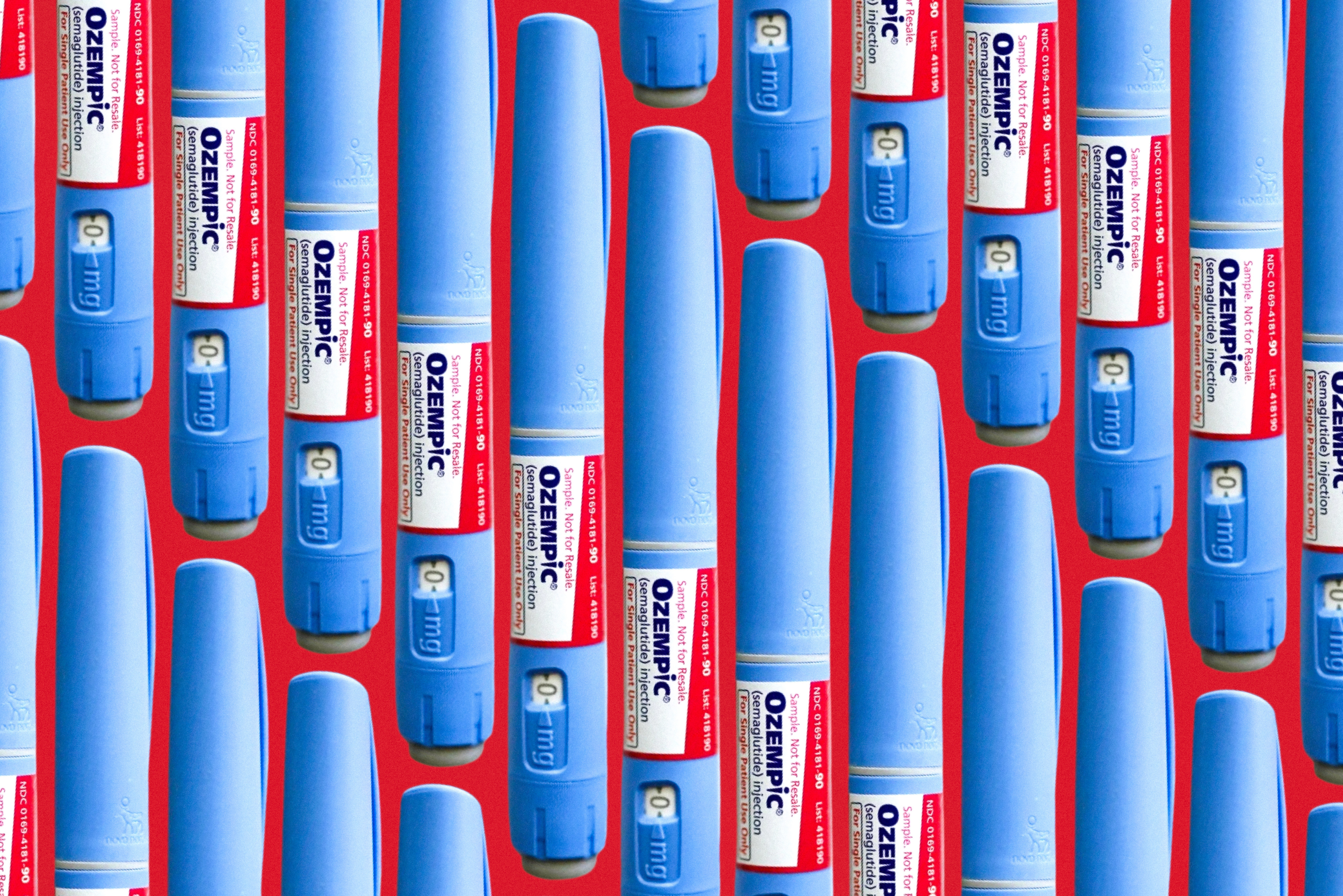
Photo provided by David J. Phillip, File, Graphic by Nina Glick/The Santa Clara
One drug has become ubiquitous in the past couple of years. Everyone has heard of it; everyone seems to know someone on it: Ozempic. While Ozempic has been available since 2017, it’s recently become impossible to ignore. The drug is certainly helpful and healthy for some, but has it gone too far?
Ozempic and other similar drugs were initially rolled out for the treatment of Type 2 diabetes. The drug works by “mimicking the natural GLP-1 hormone. This hormone is released by the gut in response to eating and has several effects that help regulate blood sugar levels, hunger and slow digestion,” Harvard Health says. Ozempic is a GLP-1 medication, of which there are many including Mounjaro, Wegovy and Zepbound. While these medications are slightly different, they work in similar ways.
Some of these drugs have also been approved for weight loss. The Cleveland Clinic notes that some GLP-1 medications are approved as weight loss drugs for those with obesity. But, they may also be prescribed for those who are overweight and have other health conditions.
Rumors of various celebrities being on the drug—with some even confirming their use—have inundated news sites for months. Celebrities such as Meghan Trainor, Oprah, Rebel Wilson and Josh Gad have admitted to being on some form of a GLP-1 medication. This drug can certainly be helpful for many people who hope to improve their health and desire support in this endeavor, and this is certainly reasonable. It is important for people to feel control over their health, something that these medications may aid in.
But something more sinister is happening in our culture that is fueled by—or is fueling—our society’s obsession with Ozempic. A recent article from The Cut discusses the so-called “Era of Emaciation,” the time we are living in now where every red carpet features a new celebrity looking newly—and concerningly—thin. This is impacting American culture and perceptions of beauty.
The article references an appearance by Natalia Dyer at the premiere of “Stranger Things,” as well as the stars of “Wicked,” Ariana Grande and Cynthia Erivo, who have been the topic of ample conversation about their weights in recent months.
It’s not known whether these celebrities are on Ozempic, but really, it doesn’t matter. American celebrity culture is not only accepting, but welcoming and embracing a new era of thinness, perhaps setting back or erasing years of chasing body acceptance.
The Cut discusses the impact of “Wicked” on eating disorders, saying, “Almost every client Heidi Hartig has seen over the past months has brought up Wicked. The eating-disorder therapist says her younger patients tend to view the stars’ bodies as ‘thinspo,’ and a few have even relapsed after watching the movie or seeing the press tour.”
By no means are these celebrities promoting Ozempic, but celebrities undoubtedly impact our beauty standards. This is likely to drive people to crave weight loss, even those at healthy weights. And GLP-1 marketers are capitalizing on this trend.
I came across this ad the other day on my Instagram which said, “PSA for the girls: you don’t need to be obese to start a GLP-1.” The text was plastered on a picture of a cake, and I found the whole thing rather unsettling. Why are we telling “the girls” that they should be starting GLP-1, even if they are not obese?
With this experience in mind, I polled our Instagram followers on our official account, @thesantaclara, to see how many of my peers had been similarly marketed these medications. 55% said they had been marketed GLP-1s. That’s more than half of responders being marketed a certain kind of prescription drug. Such a level of commercialization of a medical drug is staggering and is certainly influencing our society’s perception of health and body image on a large scale.
The ads for these drugs are everywhere, on almost every platform. Serena Willams, former tennis star and world-class athlete appeared in an ad for Ro, a weightloss service that offers GLP-1s both as injections and pills.
The reality of such a prominent figure in the athletic world not only promoting such a drug, but calling it what her body “needs,” is shocking and hard to stomach. Not everyone is on board. The comments on the ad speak volumes:
“Is this the new black mirror teaser?”
“Dystopian and unethical.”
“APPALING and disgusting to advertise GLP-1 as being what a body ‘needs’. This ad is disservice to public health…”
And from our poll, one respondent said, “Scary how many people are taking it…good if you truly need it.”
Certainly, there is nothing wrong with any person, celebrity or otherwise, using a medication that they are prescribed and need for health reasons. Undoubtedly, obesity is a problem in our country, and celebrities are not exempt. 40.3% of the U.S. population is obese, which contributes to health issues like hypertension, high cholesterol, cancer, heart disease and kidney disease, according to the CDC’s report from 2021-2023.
Ozempic is not solving the root problems that are making Americans overwhelmingly unhealthy and largely overweight. Individual action is not the problem either. A 2018 study from Kevin D Hall dissects the myth that population obesity is a result of each person’s individual overconsumption, although this contributes. Instead, he writes, “obesity probably resulted from changes in caloric quantity and quality of the food supply in concert with an industrialized food system that produced and marketed convenient, highly-processed foods from cheap agricultural inputs.”
This answer is complex. The United States has policies increasing the production of corn and soy in our food supply, because these products are subsidized by our federal government. We have an “industrialized food system that produced and intensively marketed inexpensive, convenient, highly-processed ‘added value’ foods,” according to Hall’s study. Moreover, many people do not have ready access to healthy, high quality foods.
But who truly “needs” Ozempic? The line becomes finer and finer as the drug becomes more and more popular, and the beauty standard becomes skinnier and skinnier. Ozempic may be causing more problems than solutions.
Instead of accepting normal weight diversity in our communities and looking at systemic problems in our food systems, individual people are relying on drugs that are disrupting their bodies’ normal functioning for the sake of aesthetics.
In the U.S., we have strayed away from real and nutritious food. This coupled with a celebrity culture praising thinness at all costs is likely causing people to resort to drugs like GLP-1s, even when they are already at a healthy weight, or could be through simple dietary and lifestyle changes.
Of course, this can only be true if our country invests in changing this food crisis. Health is important, but the way GLP-1s are being consumed and marketed in the U.S. is not healthy. As a nation, we must invest in health through quality foods, not a bloated pharmaceutical system. We will all be healthier—mentally and physically—for it.