College Campus as a Place of Protest?
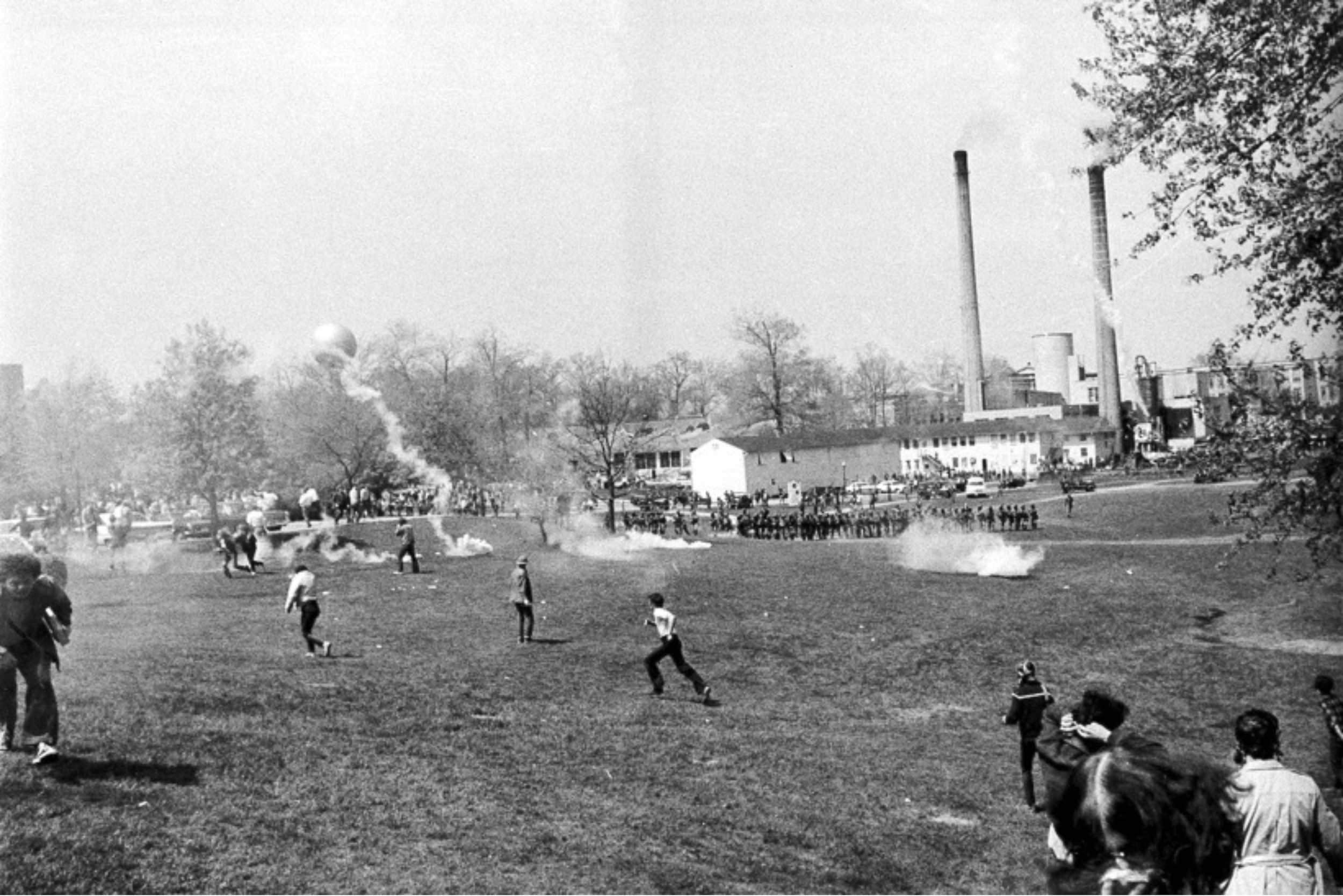
A general view shows tear gas and students during an anti-Vietnam war protest at Kent State University in Ohio on May 4, 1971. U.S. National Guardsmen opened fire during the protests, killing four students and wounding five. (AP Photo/Larry Stoddard, File)
University campuses have historically functioned as hubs of student activism, but the number of student protesters is dwindling today. One of the most memorable examples of student activism occurred in 1970 as students across the country walked out and protested the United States’ involvement in the Vietnam War. This anti-war movement severely disrupted national politics, proving that uniting over a cause can make a difference. Today, pressure to succeed academically has impacted the way many students protest. Namely, making their voices heard is not always worth the strain on students’ professional lives in the age of internships and career pressure. Should activism be forced to the side for students to succeed in their careers?
Student activism looks different now, even if a lot of the causes involve similar themes such as protesting foreign policy and supporting anti-war movements. These protests are less frequent and less violent compared to those of the 1960s and 70s, according to Associated Press. The Kent State University massacre, in which the National Guard killed four students, caused national outrage in May of 1970. While student protests are less violent in the 21st century, this does not mean that activism comes without risk and disruptions to the personal lives of students.
I sat down with Graciella James-Hickey ’26 to discuss the role students play in activism. “I truly believe that great movements begin with students,” James-Hickey said. She told me that the causes that come to mind when she thinks of student activism are “the Vietnam War protests and the climate protests led by Greta Thunberg.”
James-Hickey has been involved in student activism and notes that she’s seen “amazing public displays of communal power.” The teach-in led by Students for Justice in Palestine in May of 2024 and the more recent Peace is Climate Justice teach-in were two powerful examples of student activism in which she participated. James-Hickey notes that students “have both the hope that better can be achieved” and “the fervor to fight for it.”
Santa Clara University’s teach-in regarding Palestine and recent anti-ICE protests demonstrate the desire of many students to get involved in activism. However, the University’s level of activism is dramatically less than that of larger universities like the University of California, Berkeley or Columbia University, both of which had much more rigorous protests, including serious disruptions to classes and even hunger strikes.
One possibility for the decrease in activism is increased access to the internet. The internet provides opportunities for people to access information and get involved by donating to causes and signing petitions. One can also more easily access contact information for their state representatives to make their voice heard. Some college students might find this to be preferable to attending protests in person.
One of the biggest factors that has shifted in college activism involvement from the late 20th century to now is the sheer cost of tuition. Tuition for public colleges has increased 312.4% since 1963, according to the Education Data Initiative. Student activism often takes the form of a walkout and boycott of classes. The increased cost of education increases the pressure students feel to succeed, making it less likely that they will skip classes to partake in activism.
Concerns about securing employment post-grad as well as the fast pace of internship applications, especially given Santa Clara University’s location within Silicon Valley, lead students to focus more on attending class and other career opportunities rather than participating in activism. The culture of college life has changed for many students since the 1960s and 70s, and the pressure to consider future opportunities has taken precedence over college activism.
The right to protest in the United States has served as a route to foster change. Students continue to represent the future of America and demand that their voices be heard through organized walk-outs and marches. They continue to speak on war, climate change and government decisions. The decrease in student protesting is concerning—student activism is crucial for change, and Santa Clara University students should be able to take on this challenge without fear of threatening academic achievement. The University students are committed to the classroom, but the courage to commit to activism cannot be left in the past.