Santa Clara Powwow Challenges Erasure
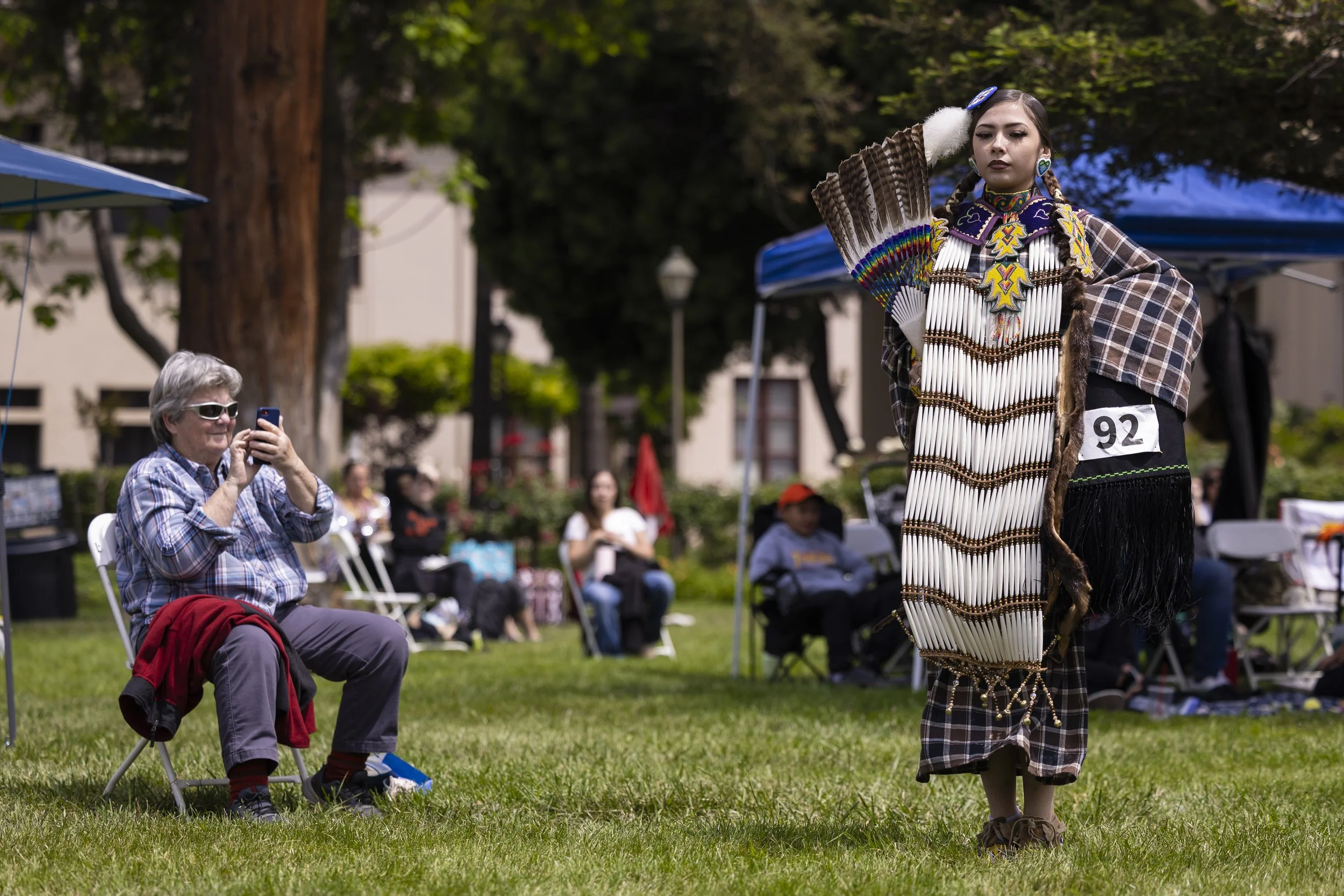
Autumn Rain Hackett dances while an audience member films at Santa Clara University’s sixth annual powwow on Saturday, May 2, 2026, on St. Ignatius Lawn. (Nina Glick/The Santa Clara)
The Native American Coalition for Change hosted its sixth annual powwow on Saturday, May 2, 2026, on the St. Ignatius Lawn at Santa Clara University.
The event—held from 10 a.m. to 6 p.m.—featured a variety of vendors, dancers, food and cultural exhibitions intended to further outreach from the University community to Indigenous communities.
“It’s part of an ongoing reconciliation,” said Ray Plaza, senior director of Campus Climate and Belonging as well as advisor to the Santa Clara Powwow.
Santa Clara University resides on the unmarked graves and unceded land of the Muwekma Ohlone people, and in recent years, the University has made particular strides to improve relations and build connections with the Ohlone, including the implementation of an augmented reality tour and the hosting of the powwow.
“We started this in 2019 in the Mission Gardens,” said Plaza. “This was an opportunity for our Native students who wanted to see a powwow on this campus. It’s helped us build relationships and maintain rapport. People now know that the first Saturday of May is the Santa Clara Powwow.”
The Dance
Grand Entry—marking the beginning of the event and featuring a ceremonial procession of dancers into the Circle, the sacred dance space—took place shortly after noon and signaled the start of the contest dances.
Dancers were divided into a variety of categories based on tribal affiliation and gender, as well as Northern and Southern styles, with the Northern drum led by All Nations and the Southern drum by Bear & Co. That said, there were also several intertribal dances.
All ages were encouraged to participate, with young children often dancing alongside older siblings or parents.
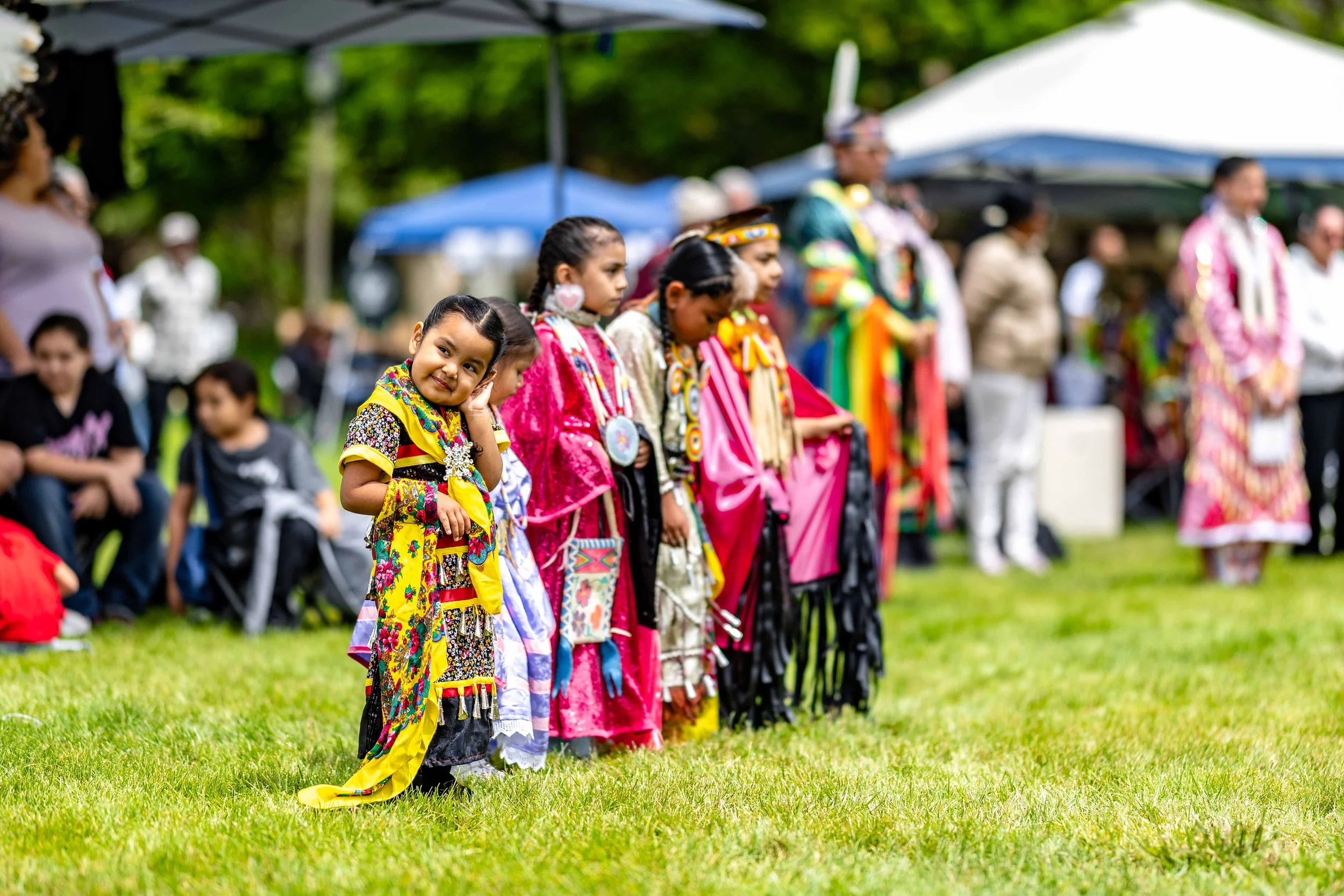
Children participate in the Santa Clara Powwow. (Dylan Ryu/The Santa Clara)
The regalia reflected a blend of personal and cultural significance. Feathers, colors, beadwork, jingle dresses, and other elements are shaped by tribal affiliation and lived experience within one’s community. Each outfit is intricate and symbolic of the dancer who wears it.
Dancers Autumn Rain Hackett and Aaliyah Calvillo, both of the Oglala Lakota Nation, spoke to the particular importance of performing at Santa Clara University given its history. Hackett is also of Omaha and Ponca heritage.
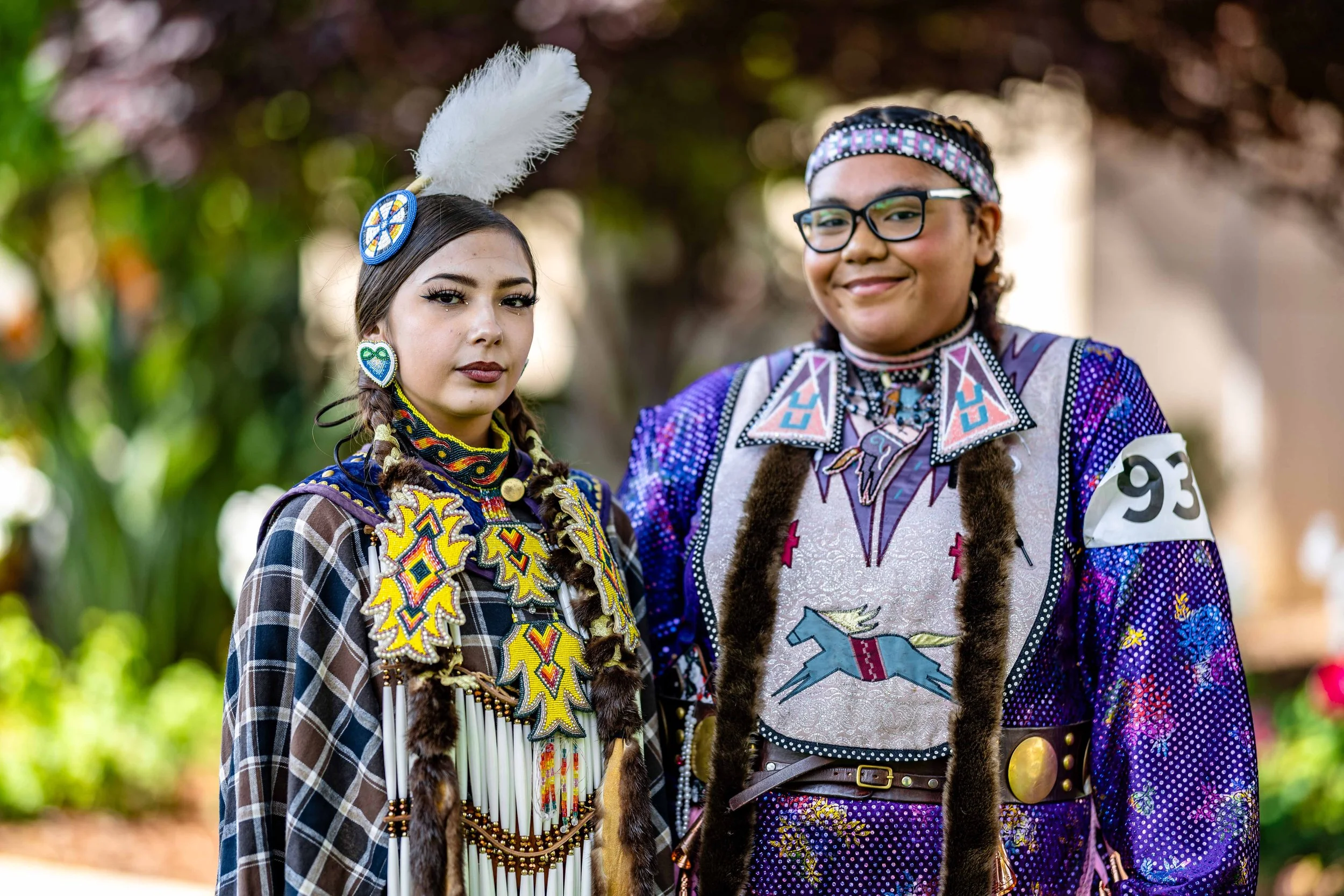
Dancers at the powwow Autumn Rain Hackett (left) and Aaliyah Calvillo (right). (Dylan Ryu/The Santa Clara)
“Being on this land feels very honorable to us,” said Rain Hackett. “I feel respected here. I’m very grateful to dance for our people today and to represent us, especially on this campus. I’m so glad and grateful that we can all be here.”
Calvillo added that events such as the powwow serve to reject the “lasting” narrative often imposed on Indigenous populations—the idea that Indigenous people are not contemporary people.
“It’s special to be on college campuses,” said Calvillo. “People try to downplay Natives, and I feel like it shows that we’re still here.”
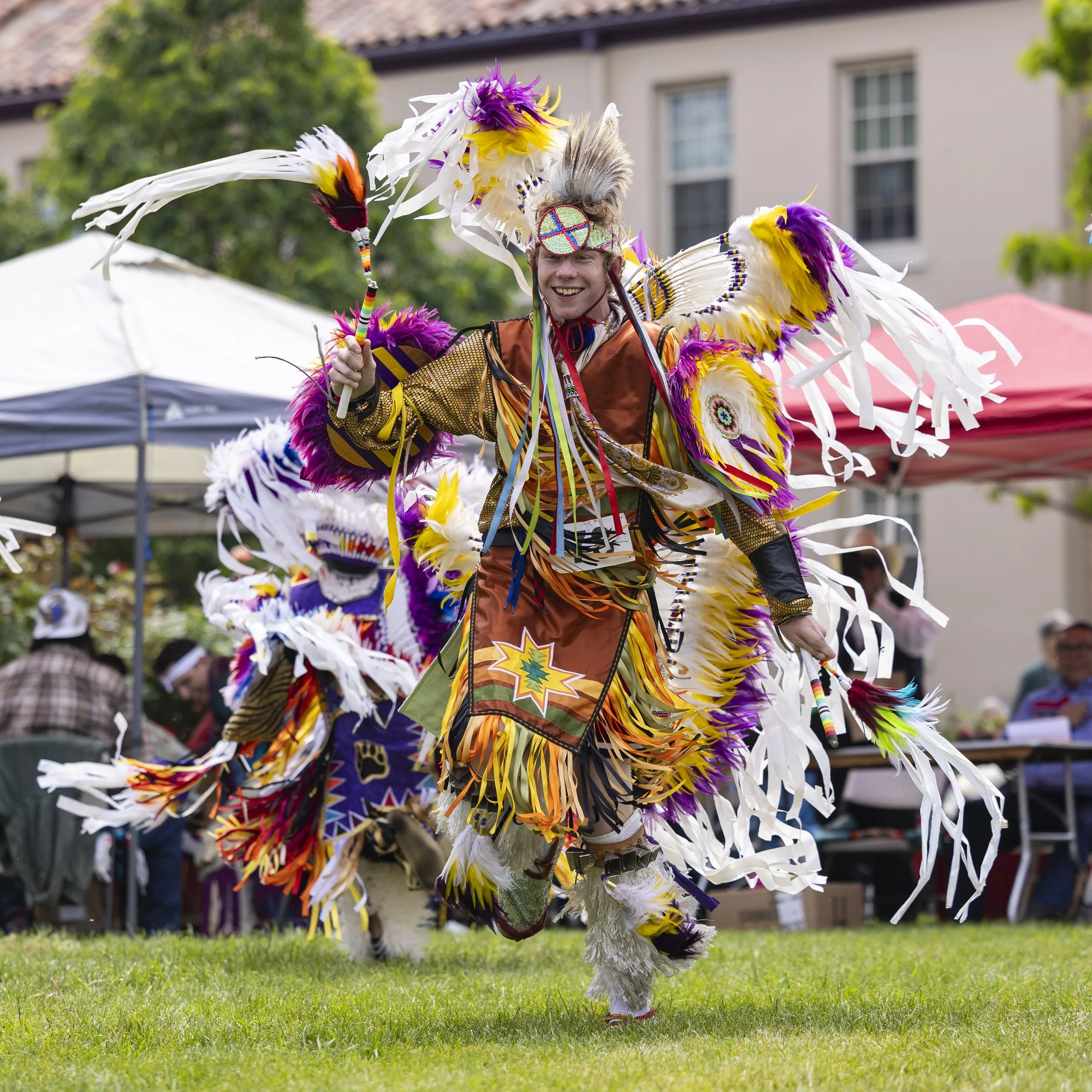
Murphy, a dancer performs the Men’s Fancy Dance at the Santa Clara Powwow. (Nina Glick/The Santa Clara)
The Vendors
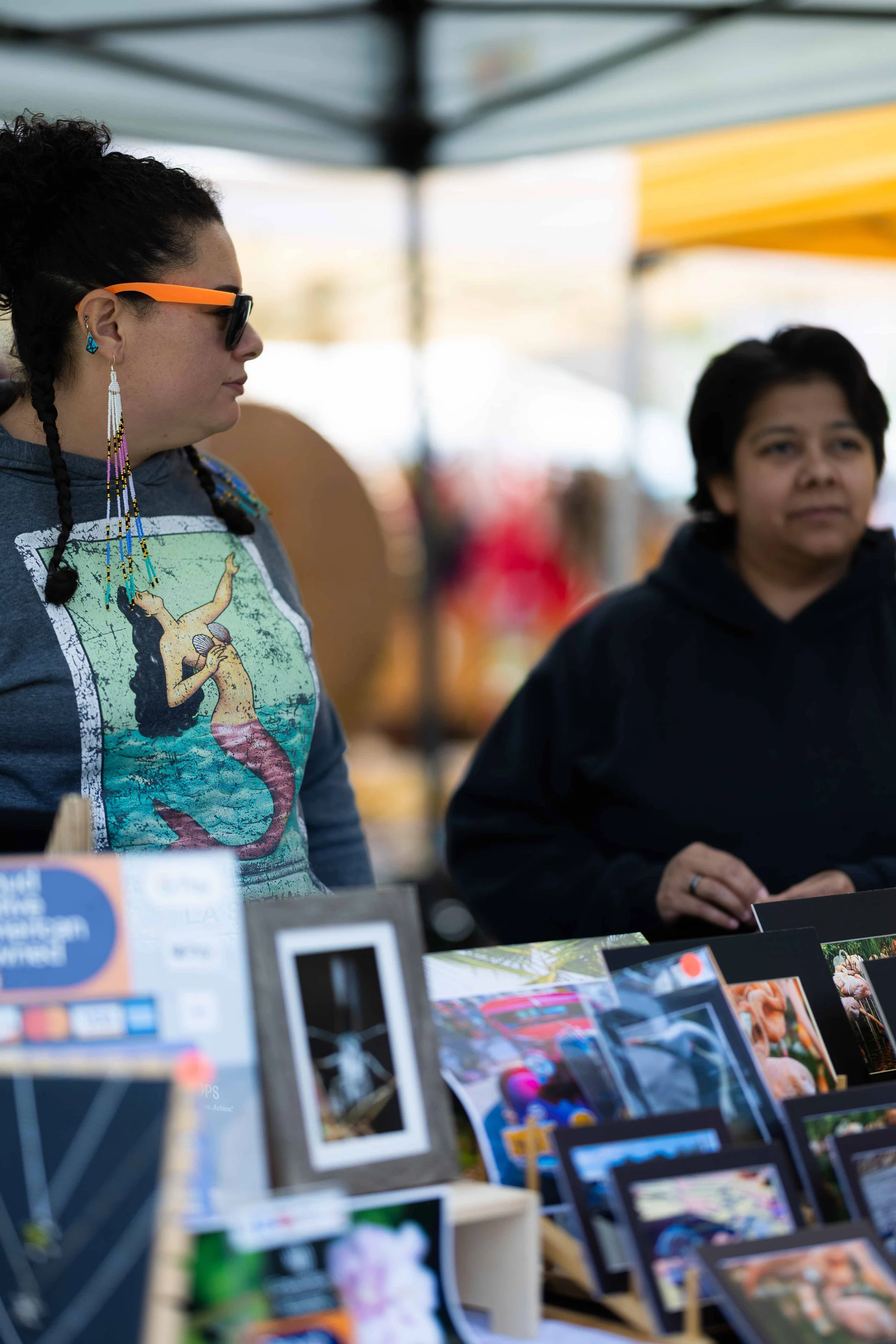
Ariana Perryman (left). (Dylan Ryu/The Santa Clara)
Vending began two hours prior to Grand Entry, with each booth offering a variety of crafts unique to the Indigenous artisans running the stands. Items included beadwork, embroidery, skirts, medallions, jewelry, frybread and Indian tacos, as well as pottery, dolls and other culturally significant goods.
The items made at each stand varied by the tribal and national affiliation of the artist—and also served as a reflection of the hours of work put into vending for this event.
“It depends on the piece,” Ariana Perryman—affliated member of the Mvskoke, Yaqui, Aztec, Blackfoot and Pueblo de Sandia—and founder of the Turtle Clan Collective, told The Santa Clara about her beadwork. “Maybe 30 minutes, maybe a couple days. I’ve been doing this since I was 10 years old.”
The Turtle Clan Collective was among the many vendors present—their mission being to promote and sell authentic Indigenous art in order to directly benefit their community.
Several of the booths among the vendors also served as outreach for the Indigenous adults and youth present, offering surveys on healthcare and college readiness.
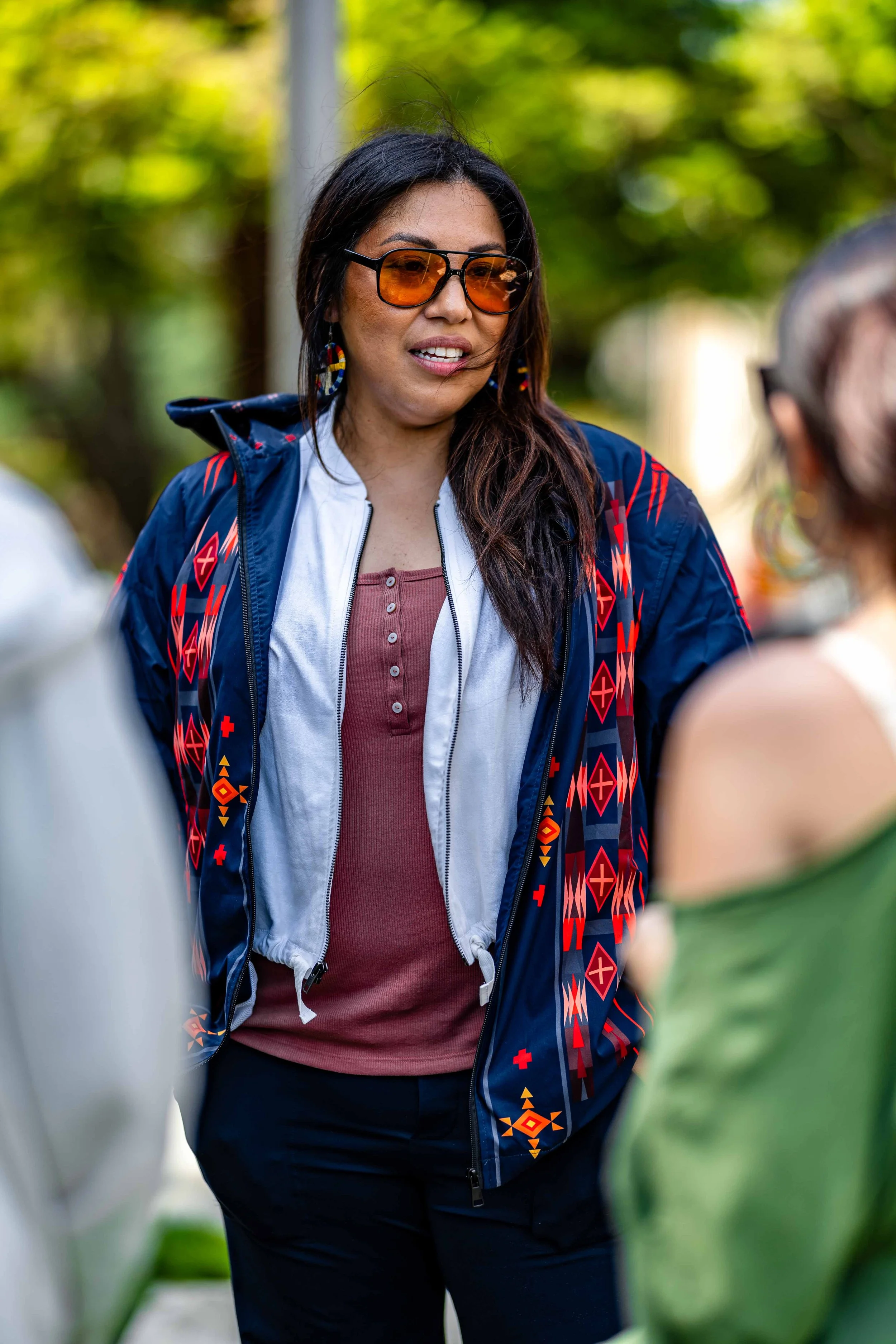
Elena Dutra. (Dylan Ryu/The Santa Clara)
Elena Dutra of the Sicangu Lakota, Rosebud Sioux Tribe, spoke about her experiences with Indigenous students in higher education while serving as an academic counselor for the Student Success Program at San Jose City College.
“I support our Native, low-income and first-generation students because no one does,” said Dutra.
Dutra referenced “data genocide”—the omission of Indigenous peoples’ presence in data, often in favor of their more dominant identity—which contributes to the erasure of Indigenous people and their needs.
“No one sees the Native population because we’re so underrepresented in higher education,” said Dutra. “It’s hard to find us.”
Dutra also reflected on her own experiences attending powwows, describing them as an important form of community connection and outreach.each.
“It’s a social event. It’s a good way to connect with family and friends and just have a good time,” she said.
Visibility
For many vendors and participants, the powwow extends beyond dance and trade, serving as an essential space for community participation and visibility within the Native community.
Olga Enciso Smith, founder of the Machu Picchu Gallery of the Americas, ran a booth sharing Indigenous Peruvian and other Latin American traditions and spoke about her broader mission of inclusion and cultural representation in the Bay Area.
“Here, diversity is not a slogan—it is the essence that has allowed revolutionary ideas to be born and thrive,” said Enciso Smith in a February op-ed in The Los Gatan, which she shared with The Santa Clara.
Encisco Smith echoed the sentiment at the Santa Clara Powwow.
“I ask myself why God put me here, away from Peru, after all these years,” said Enciso Smith. “I think—it’s for this.”