What Moving to a Semester System Could Mean for Santa Clara University
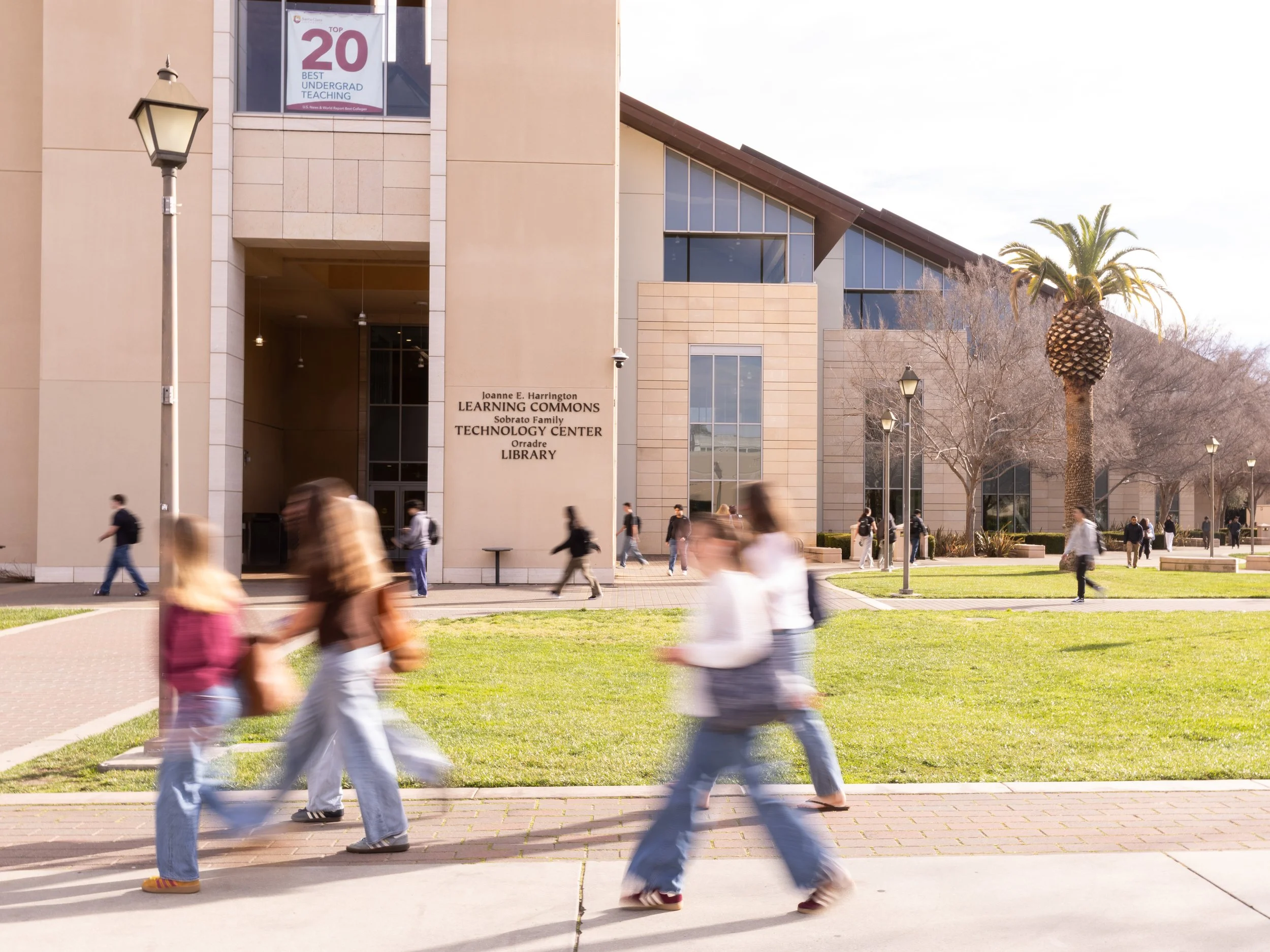
Students walk past the Learning Commons, which is home to a banner touting Santa Clara University’s former ranking in the top 20 for best undergraduate teaching by U.S. News & World Report. (Nina Glick/The Santa Clara)
Santa Clara University is considering a significant move from its long-standing quarter system to a semester calendar, a change that could redefine how students will map out their four years.
A report from the Semester Analysis Working Group published January 2026 outlines why University leaders are revisiting the issue and what such a transition would require. When asked to examine the opportunities and challenges of switching calendars and to provide data for a future decision, the working group did not recommend for or against the change.
At the center of the conversation is timing: Santa Clara University students currently finish the academic year in mid-June, weeks after many peers at semester schools who are out by May. The Career Center told the working group that recruiting cycles and career fairs often align more closely with semester calendars, which can give those students a head start.
Some University students have reported negotiating final exam dates or declining job opportunities because of calendar conflicts.
“From a recruiting perspective, transitioning to a semester system would significantly benefit Santa Clara students,” said Jasmine Santacruz ’27, who works at the Career Center. “Starting and ending the academic year earlier would give students more time to engage in the internship search process and better align with common internship start dates, without the pressure of a 10-week sprint.”
Santa Clara University’s study abroad program presents a similar challenge. About 400 students go abroad each year, and 90% do so in the fall.
Most partner institutions operate on semesters, meaning winter and spring study abroad can create credit misalignment and complicate planning, especially for students on financial aid. A semester system could reduce that disconnect and expand partnership options.
Faculty have also pointed to academic reasons for reconsidering the calendar. A 15-week semester would allow professors and students more time to build meaningful relationships, complete more in-depth projects and go deeper into course material.
“A longer term allows more time for community building,” said communications professor Hsin-I Cheng. He noted that quarter-system classes move at a fast pace that can make it harder for students to build deeper relationships.
At the same time, the University is in the middle of revising its undergraduate core curriculum, creating a natural moment to rethink the academic structure.
The report notes that if a semester model were to be adopted, the 120 unit requirement for graduation would likely remain. Students would take about five courses per semester instead of three or four per quarter, and they would complete fewer total courses over four years. Classes would last 15 weeks, plus a week for exams.
For current students, the transition would require careful advising. It also anticipates the need for temporary transition courses to help students finish multi course sequences during the shift.
Implementing the move to semesters would require departments and professors to revise their courses. “All faculty will need to redesign courses to align with the new academic calendar, a process that requires significant time and energy and could substantially increase overall workload,” said Cheng.
It does not set a specific implementation date, but it makes clear that a transition would require extensive planning, accreditation approval and multi-year preparation.
Santa Clara University last remodeled its academic structure in 1964 when it adopted the quarter system. Now, more than 60 years later, the University is again weighing how the rhythm of its academic calendar shapes the student experience.