NCAA’s Decision Permitting Athletes to Bet on Professional Sports is Disastrous for the Industry
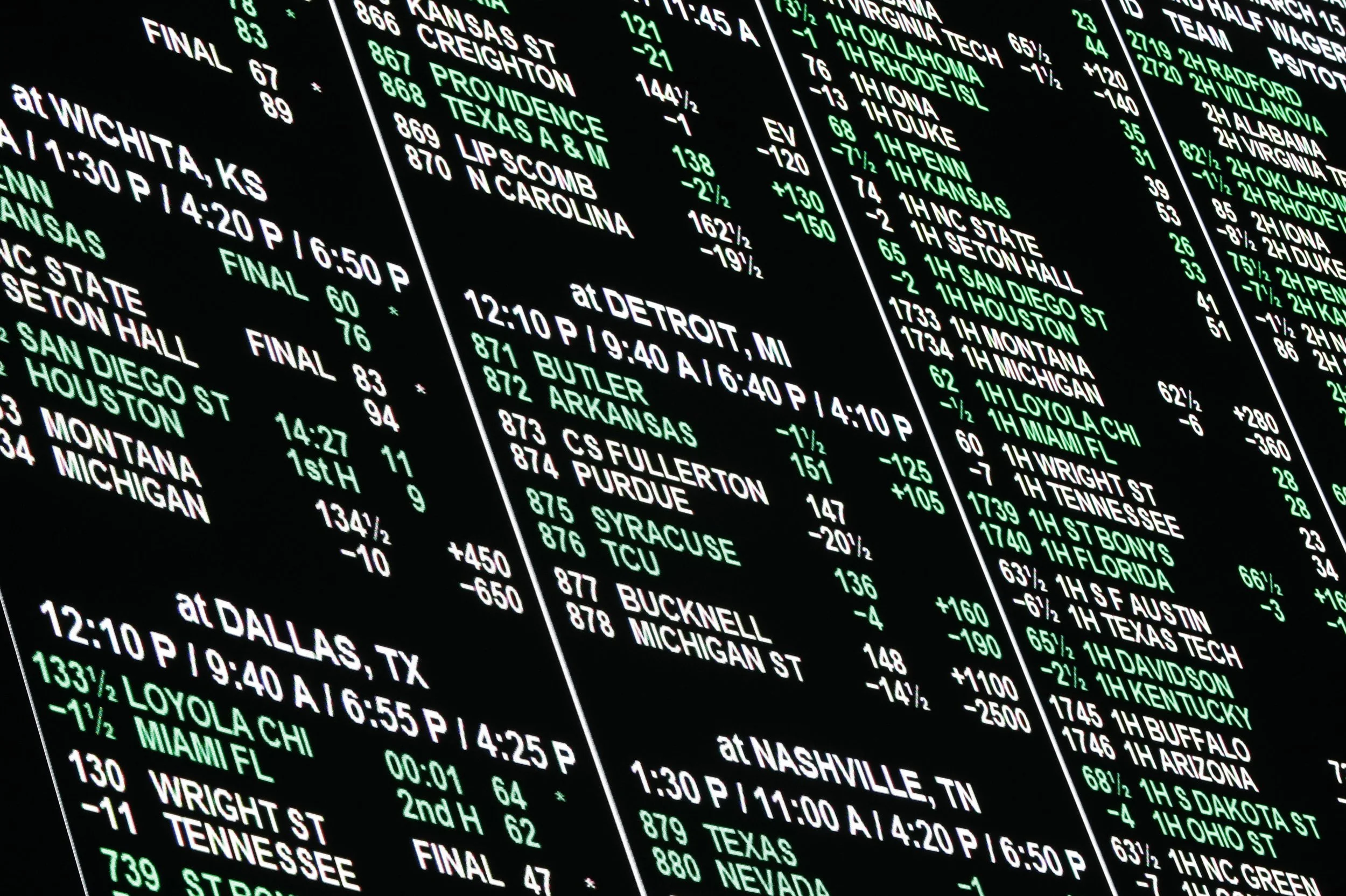
A board displays odds for different bets on the NCAA college basketball tournament at the Westgate Superbook sports book, in Las Vegas. (AP Photo/John Locher)
In a shocking decision, the NCAA recently announced on Oct. 22, 2025 that it would permit its student-athletes to gamble on professional sports. The NCAA has since delayed the proposed rule change by three weeks from Nov. 1 to Nov. 22, but with this announcement, the damage has already been done.
“This change recognizes the realities of today’s sports environment without compromising our commitment to protecting the integrity of college competition or the well-being of student-athletes,” said Roberta Page, athletic director at Slippery Rock University and chair of the Division II Management Council.
That reads like a bad joke. How does any form of gambling among athletes align with “protecting integrity?”
“My message to everybody on this would be simple: be really careful,” said Charlie Baker, president of the NCAA.
Are these people out of their minds? This isn’t leadership. It’s one thing to recognize the changing sports landscape and pressure to adapt in this NIL-driven reality, but allowing student-athletes to gamble shows the foresight of a flea.
This world where college athletes can now profit off their name, image and likeness has eroded the traditional “student-athlete” model and given way to an industry dominated by money. I understand the NCAA and universities alike are trying to keep up financially, but this ruling further swings open the door to a culture where this becomes normalized inside locker rooms and team dynamics, the very spaces meant to teach discipline and teamwork.
Southeastern Conference commissioner Greg Sankey called the rule “a policy change that represents a major step in the wrong direction.” In a letter to Baker, Sankey said the rule would compromise the integrity of competition and “sends the wrong signal.”
He’s absolutely right. The message here isn’t about responsibility, it’s about profit. University of Pittsburgh head football coach Pat Narduzzi went further, calling the ruling “absolutely one of the stupidest I’ve ever seen.”
“I totally disagree with the NCAA on this, and I was very vocal about it,” said University of Texas head football coach, Steve Sarkisian. “Here we are in an era where we have revenue sharing and NIL publicity rights. So the players now have money. So now let’s give them the freedom to take that money and gamble it away?”
“We’re in a space of educating young people, and part of educating young people is what to do with their money. To say now you can gamble on pro sports, to me that does not make any sense from a logical standpoint,” said Sarkisian.
Logic, it seems, is what the NCAA abandoned here. This is a potential disaster for college sports. Look no further than recent headlines: NBA head coach Chauncey Billups and Miami Heat guard Terry Rozier were arrested by the FBI as part of a federal investigation into illegal gambling. Just last week, the NCAA banned six college basketball players for betting on their own games.
At a time when trust in American institutions is fragile, when the line between amateur and professional is already blurred, the NCAA has chosen to do the same between competition and corruption. Allowing gambling—even just on professional sports—creates a slippery slope that could erode what little moral credibility college athletics has left.
Yet, quite frankly, this decision is not too surprising. Sports wagering is now legal in 39 states and is commonplace among college students. If you turn on a game, it is likely that you will see a gambling ad during each commercial break. But the NCAA’s job is to lead, not to follow. It should not just be a mere reflection of the problems that already exist in this world.
“This is not an endorsement of sports betting, particularly for student-athletes,” the organization stated when the rule was announced on Oct. 22. Yet, how can you expect anyone to believe such a blanket statement? The NCAA insists this change is just an acknowledgement of the current reality that sports betting is widely accessible and acceptable in America.
But the organization cannot simultaneously say “we don’t support betting” while creating a policy that permits it. I understand the NCAA is trying to avoid lawsuits—as it has become especially vulnerable as of late—but a statement like this just is not true and they know it.
The NCAA says it wants to modernize. And to give it some credit, it is trying to. That is no easy task. But what it’s really done is gamble with the soul of college sports—and the house always wins.